Chris von Wangenheim
65 replies · 7855 views
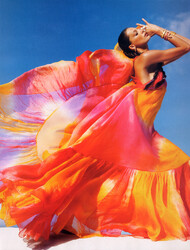
QuoteChris von Wangenheim was one of the most groundbreaking fashion photographers of the 20th century. From 1968 until his death in a car accident in 1981, he ranked alongside Helmut Newton and Guy Bourdin in his masterful encapsulation of the 1970s zeitgeist. Now, a forthcoming Rizzoli monograph about the pioneering image-maker gives us a welcome excuse to revisit his brilliant oeuvre.
Von Wangenheim was born in Breig, in what was then a war-torn East Prussia, in 1942. His father, an officer in the German Army, died in Soviet captivity in 1953 (most likely a suicide), a tragedy that would go on to inform his son's dark nature. By this time von Wangenheim was living in the Bavarian mountains with his mother and sister and, inspired by a kindly photographer living in the upstairs flat, had developed a burgeoning interest in photography.
Von Wangenheim carried this fascination with him into adulthood, particularly identifying with the work of American fashion photographers, and in 1965 he relocated to New York City to kickstart his own career. He cut his teeth as an assistant for Harper's Bazaar photographer James Moore, and as a result secured a few pages in the magazine. But it wasn't until von Wangenheim captured the attention of newly appointed special features editor at Vogue Italia, Anna Piaggi, in 1969 that the young photographer found his moment to shine.
The flamboyant Piaggi had a vibrant and provocative vision that perfectly aligned itself with von Wangenheim's aesthetic, and under her reign he began to develop his unique, yet definitively 70s style. The 60s and 70s saw a wave of violence seep its way into all areas of popular culture, from Andy Warhol's Death and Disaste period to films like Dirty Harry and Taxi Driver, and von Wangenheim simply thought, “the violence is in the culture so why shouldn’t it be in our pictures?” What ensued were hugely impactive images filled with gun-toting beauties, teeth-baring dobermans, blood, bare breasts and billowing smoke. Von Wangenheim's work was macabre, sexy, incendiary, chic and in very high demand, and before long he was shooting for everyone from Dior to US Vogue to Playboy.
anothermag.com
Vogue Italia September 1970
"Bellezza: Come Sar? La Nuova Donna D'autunno"
Models: Donna Mitchell, Jan de Villeneuve & Unknown
Photographers: Chris von Wangenheim, Alfa Castaldi & Barry Lategan
Hair: Aldo Coppola & Leonard
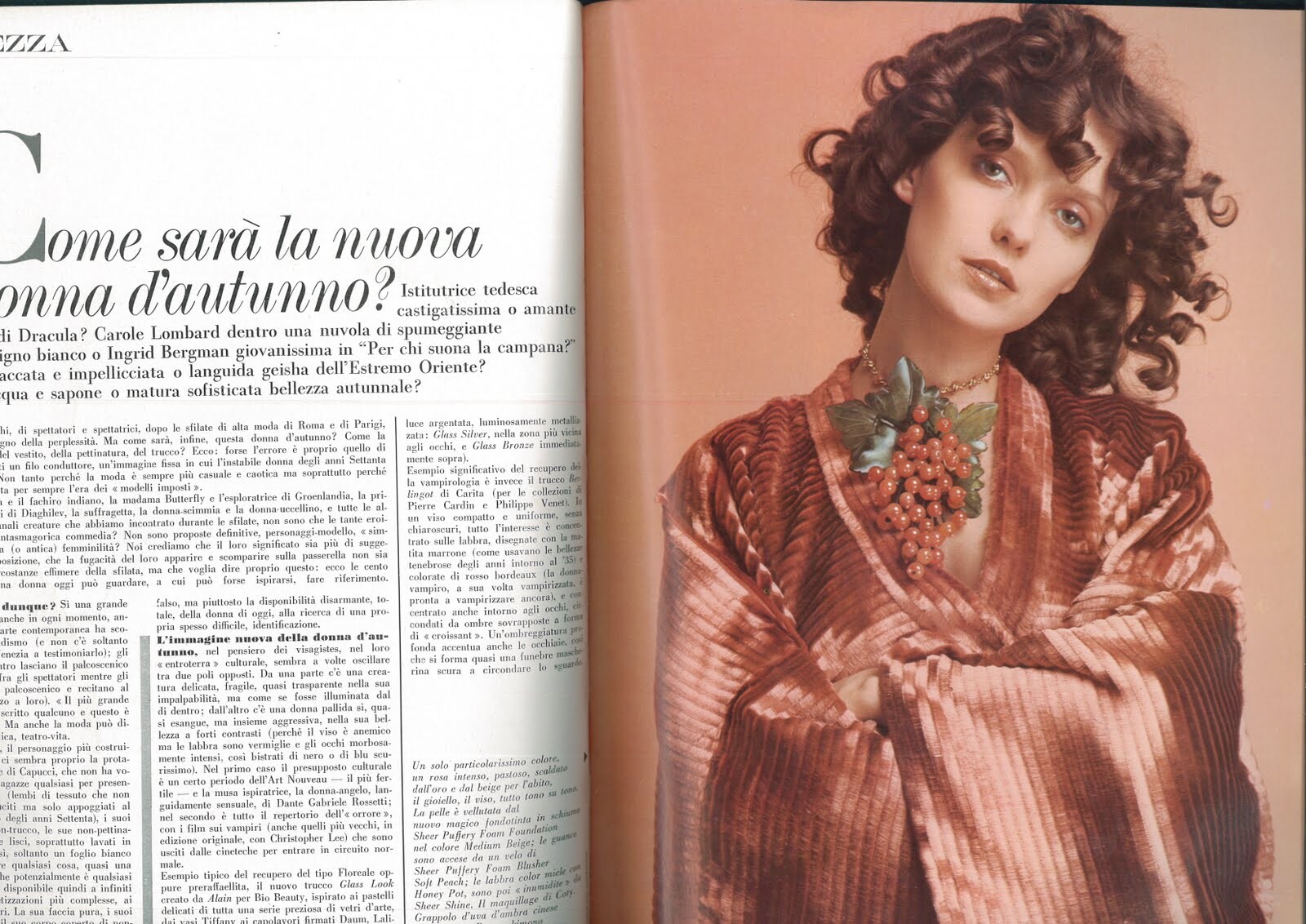
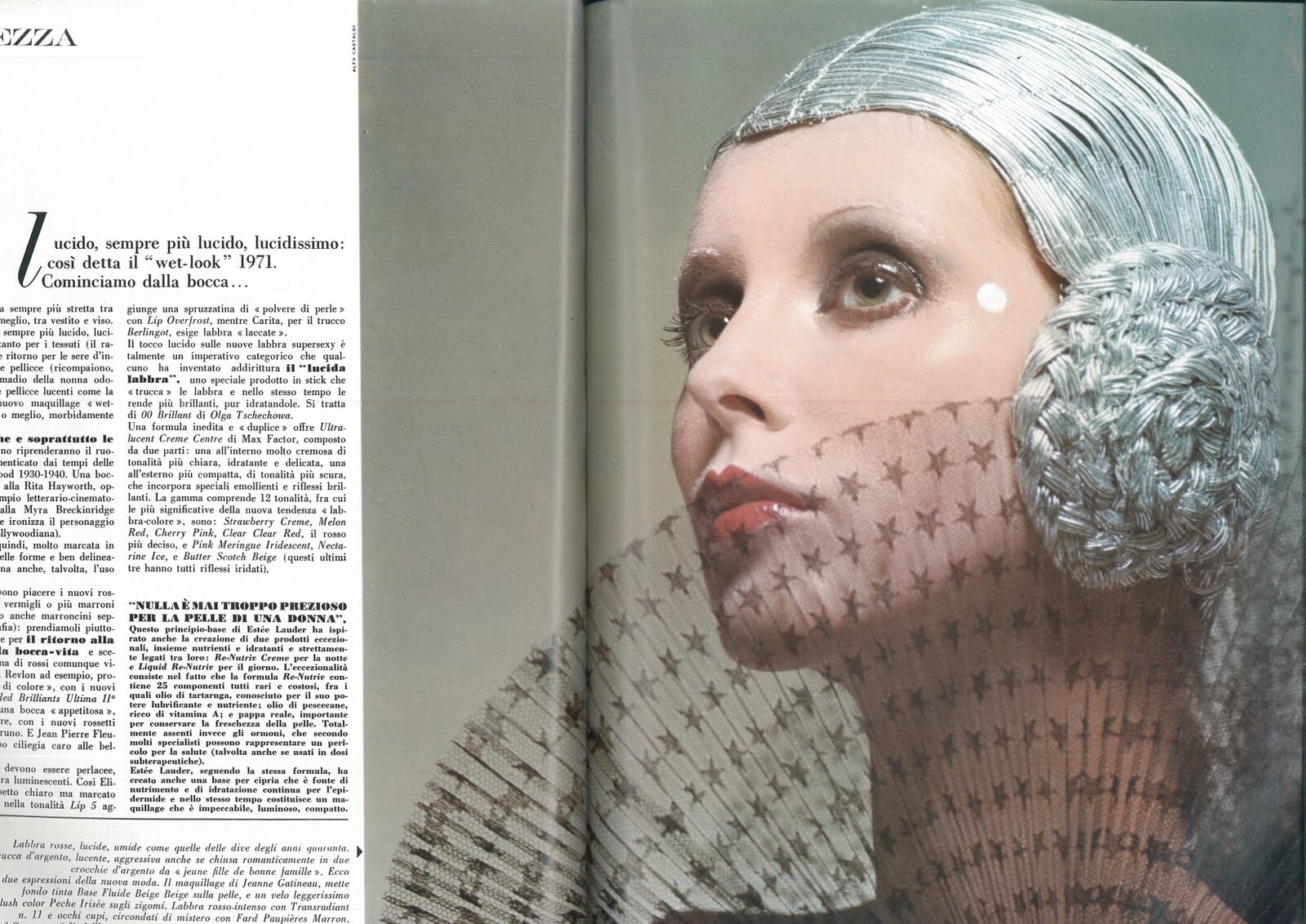
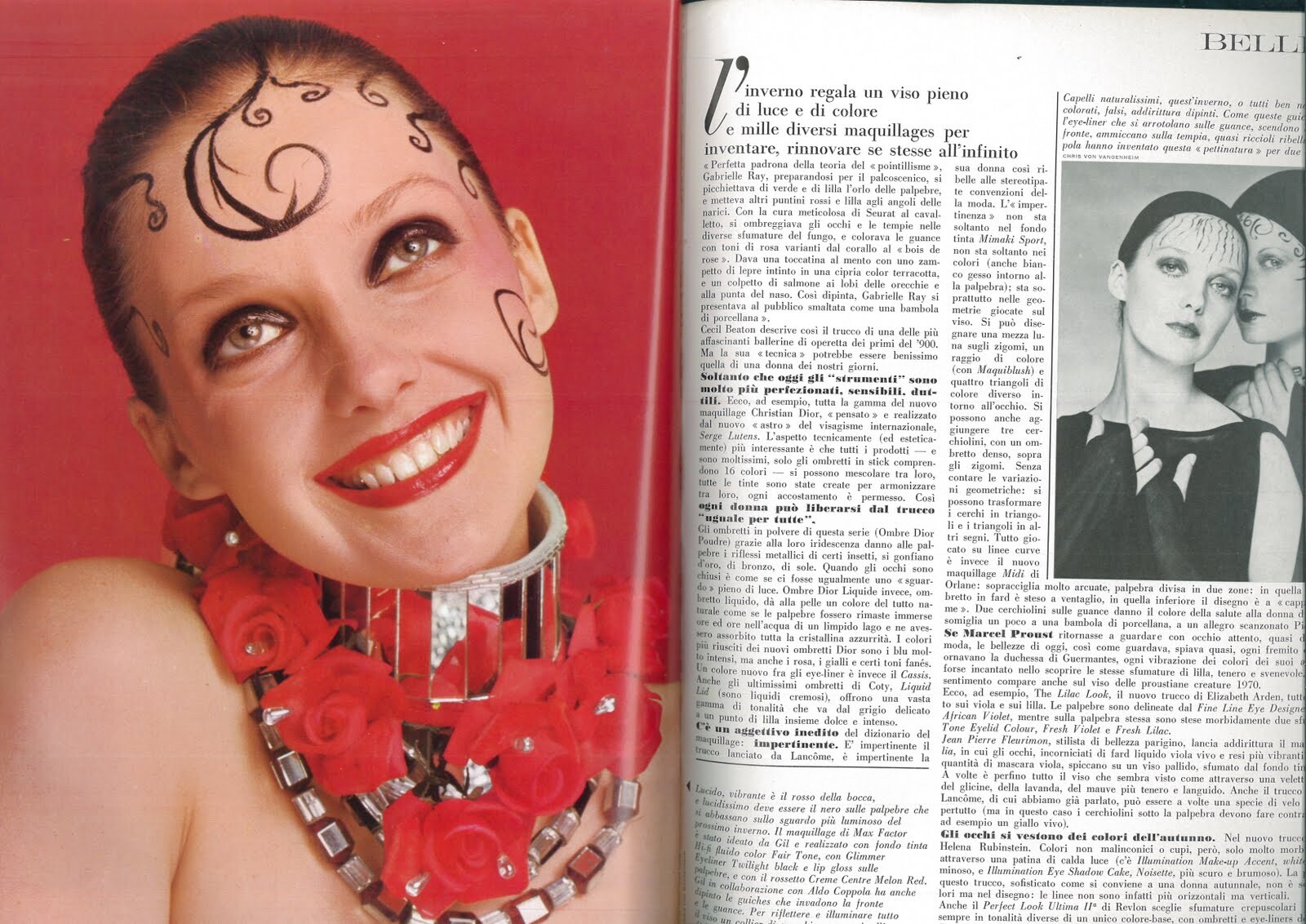
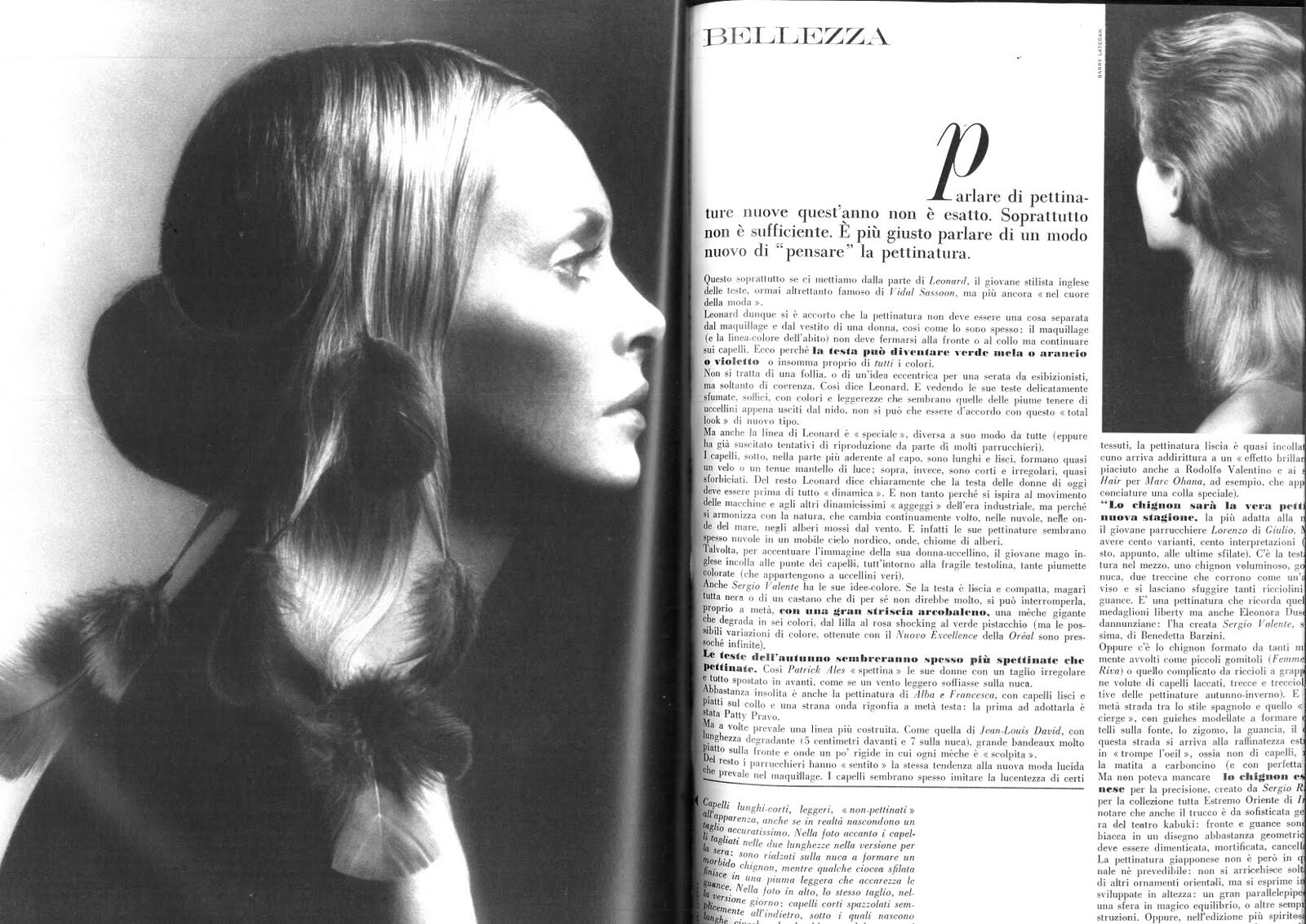
Scanned by Freya @ ciaovogue.blogspot.com
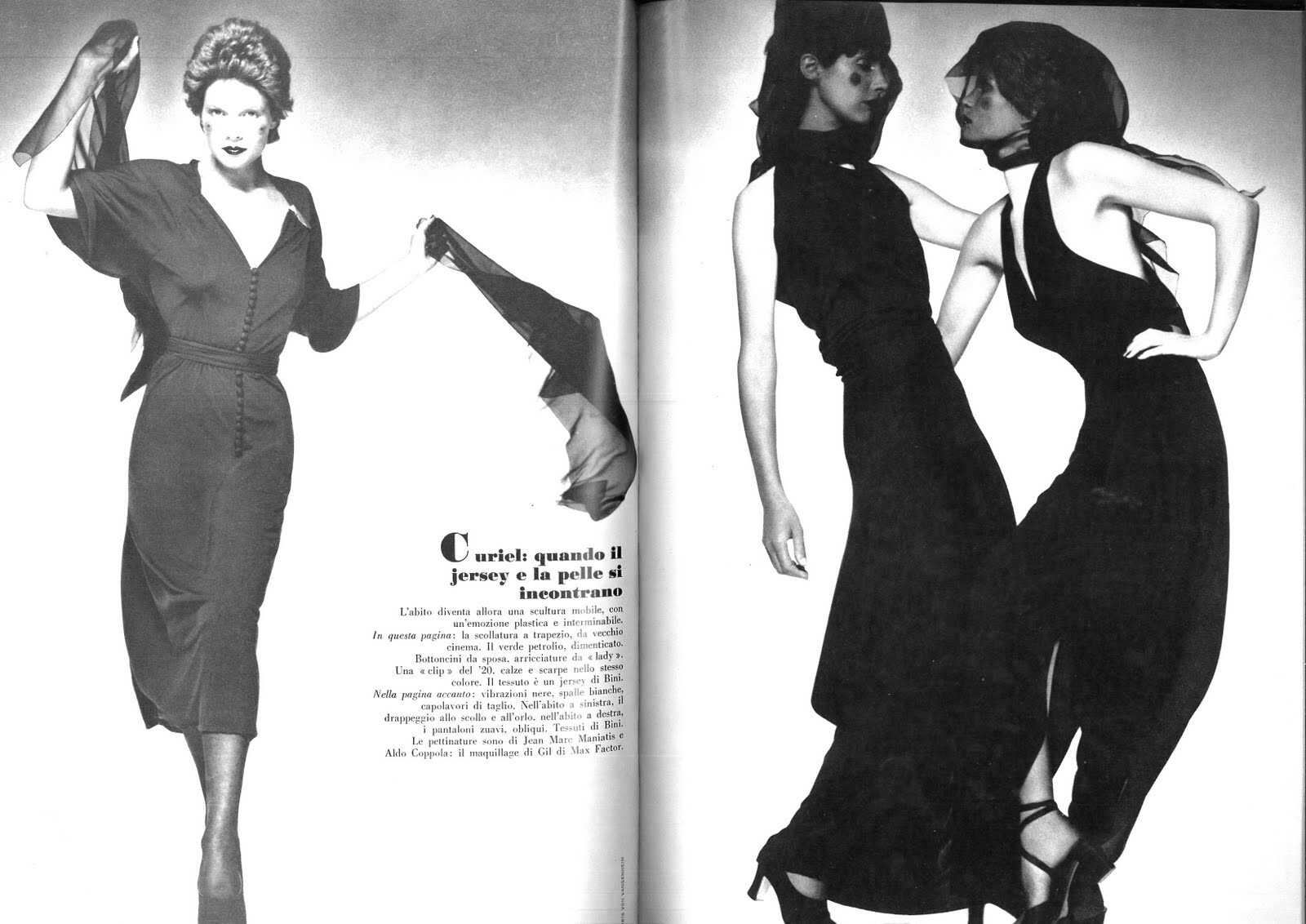
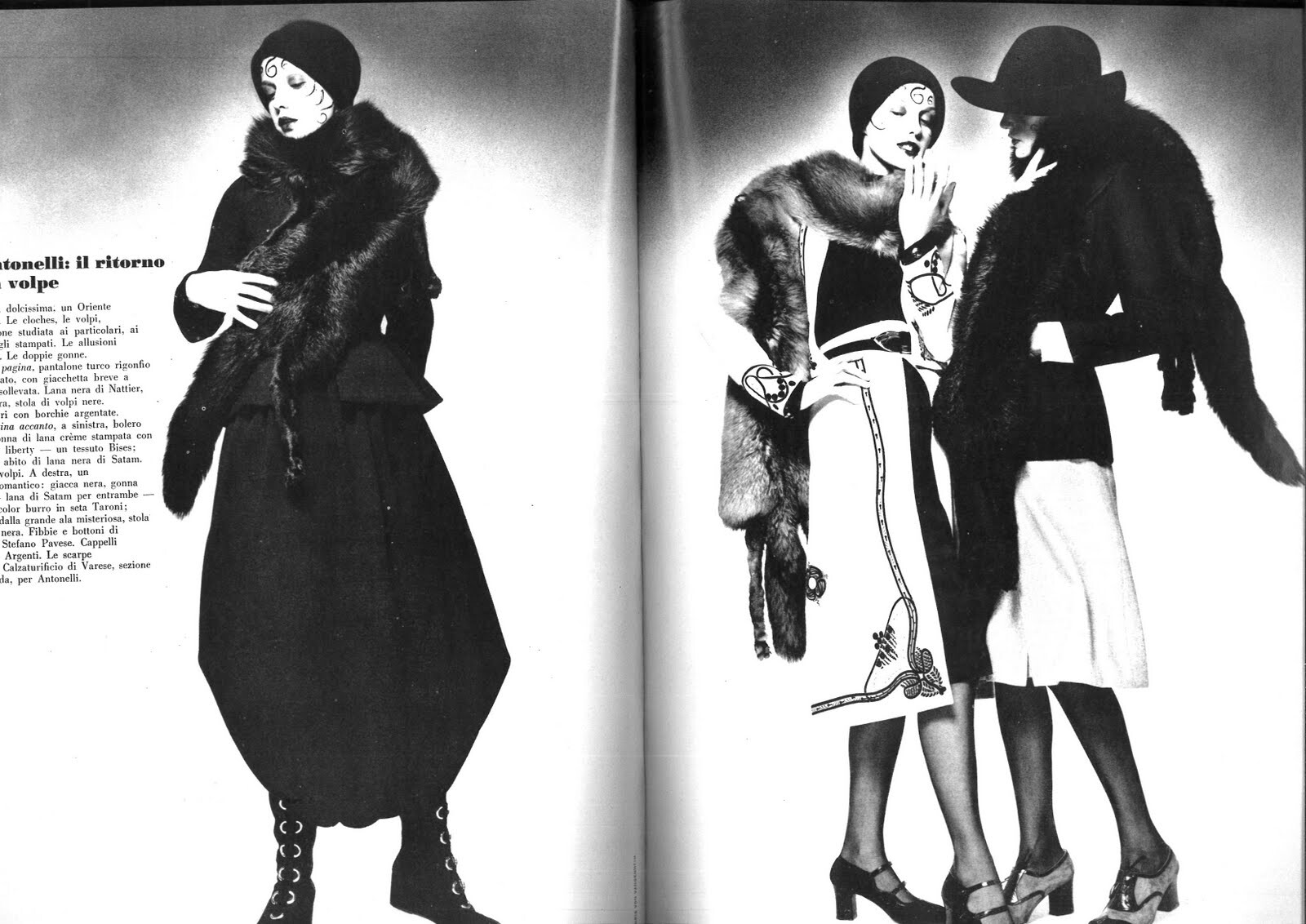
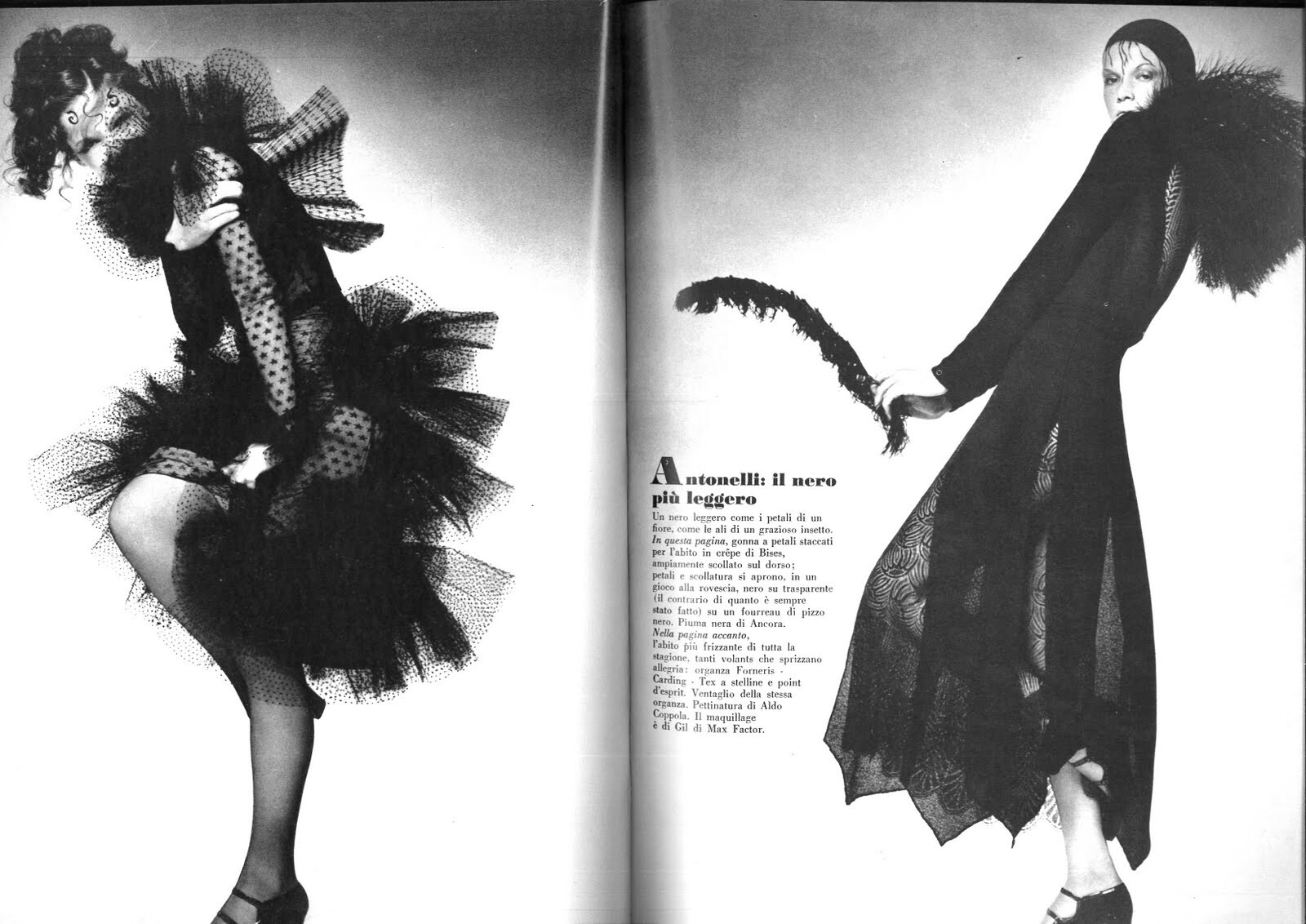
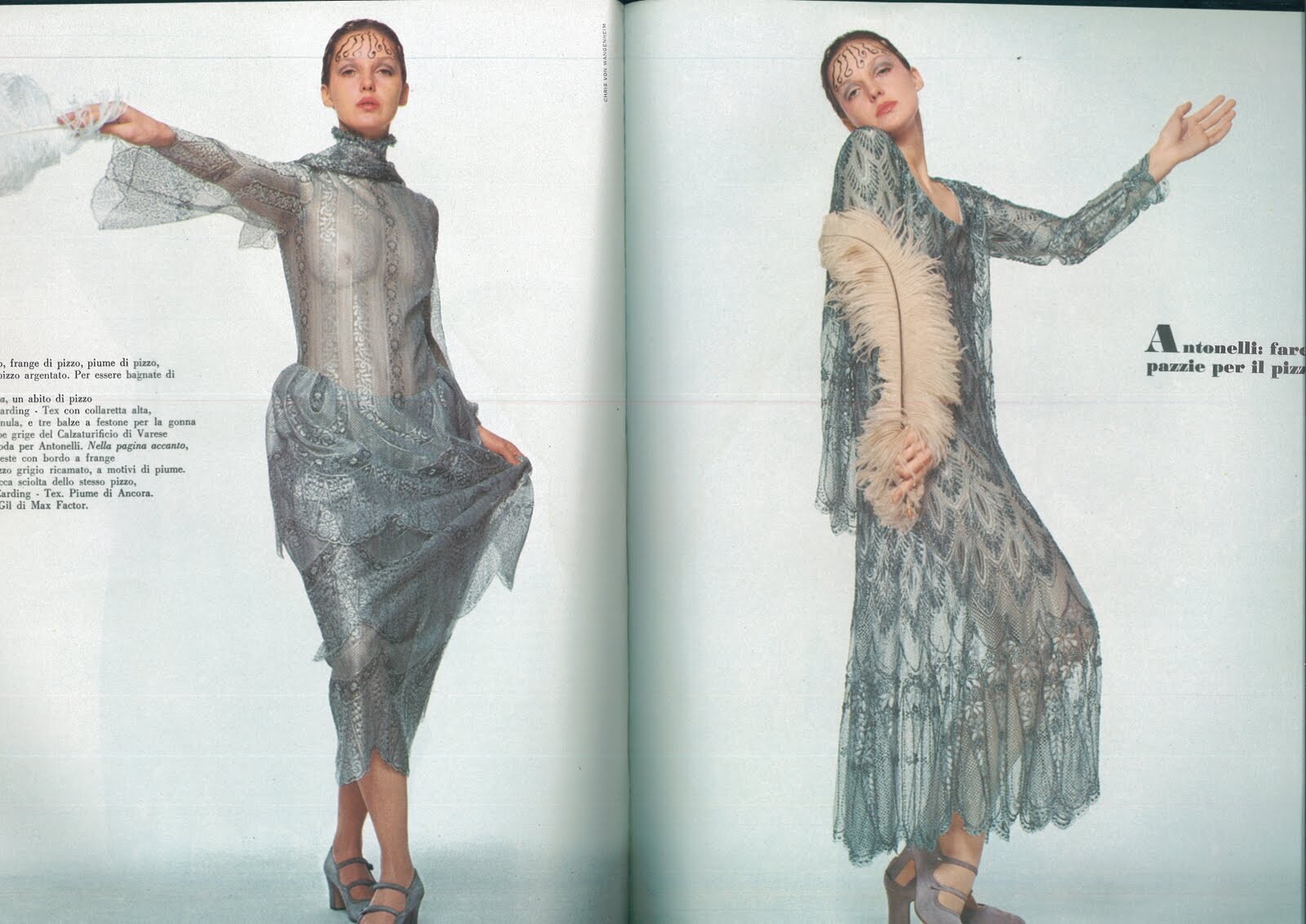
Vogue Italia September 1970
"Un'alta Moda Fattaper Essere Vissura"
Models: Willy van Rooy & Donna Mitchell
Photographer: Chris von Wangenheim
Hair: Jean-Marc Maniatis
Makeup: Gil
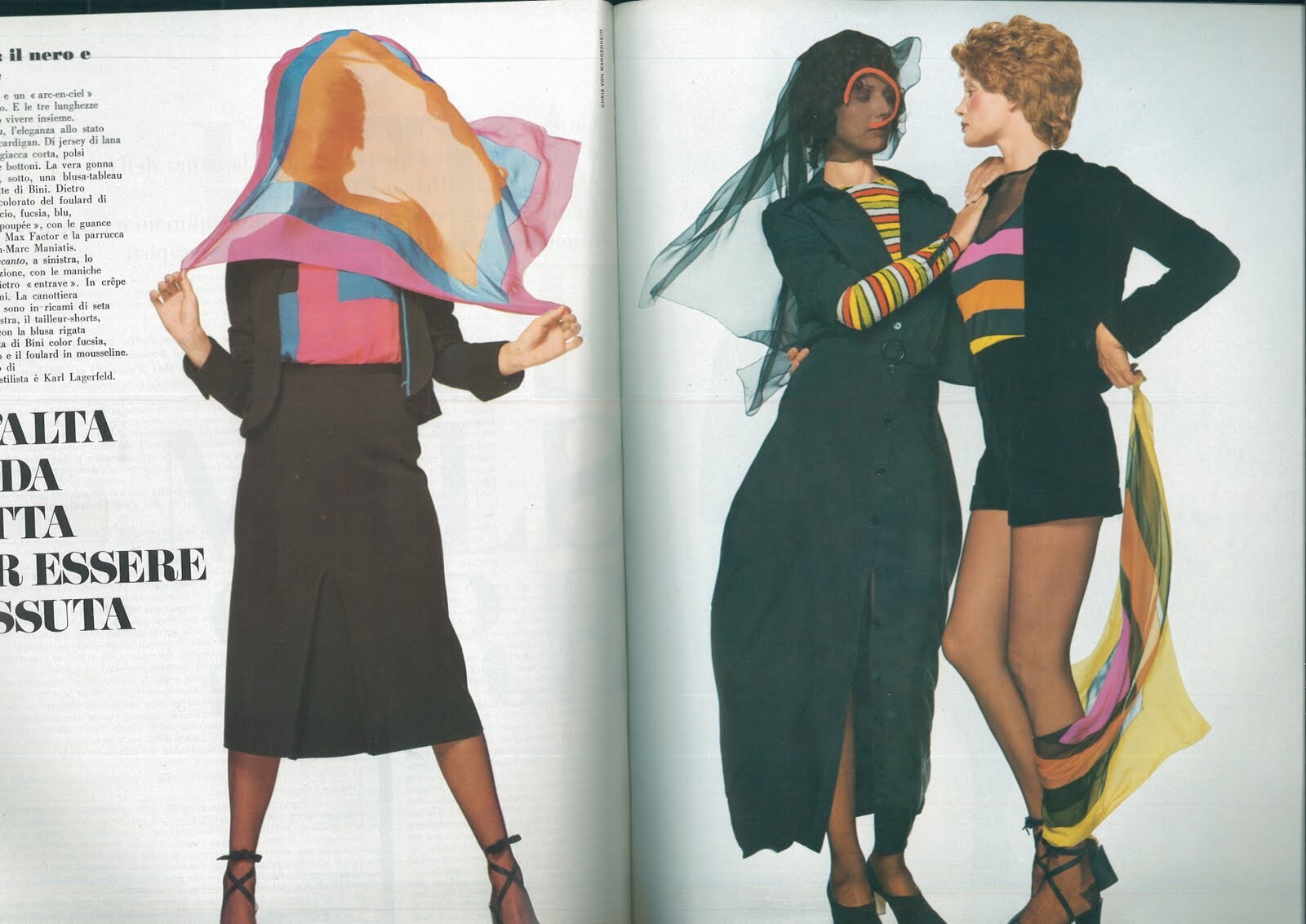
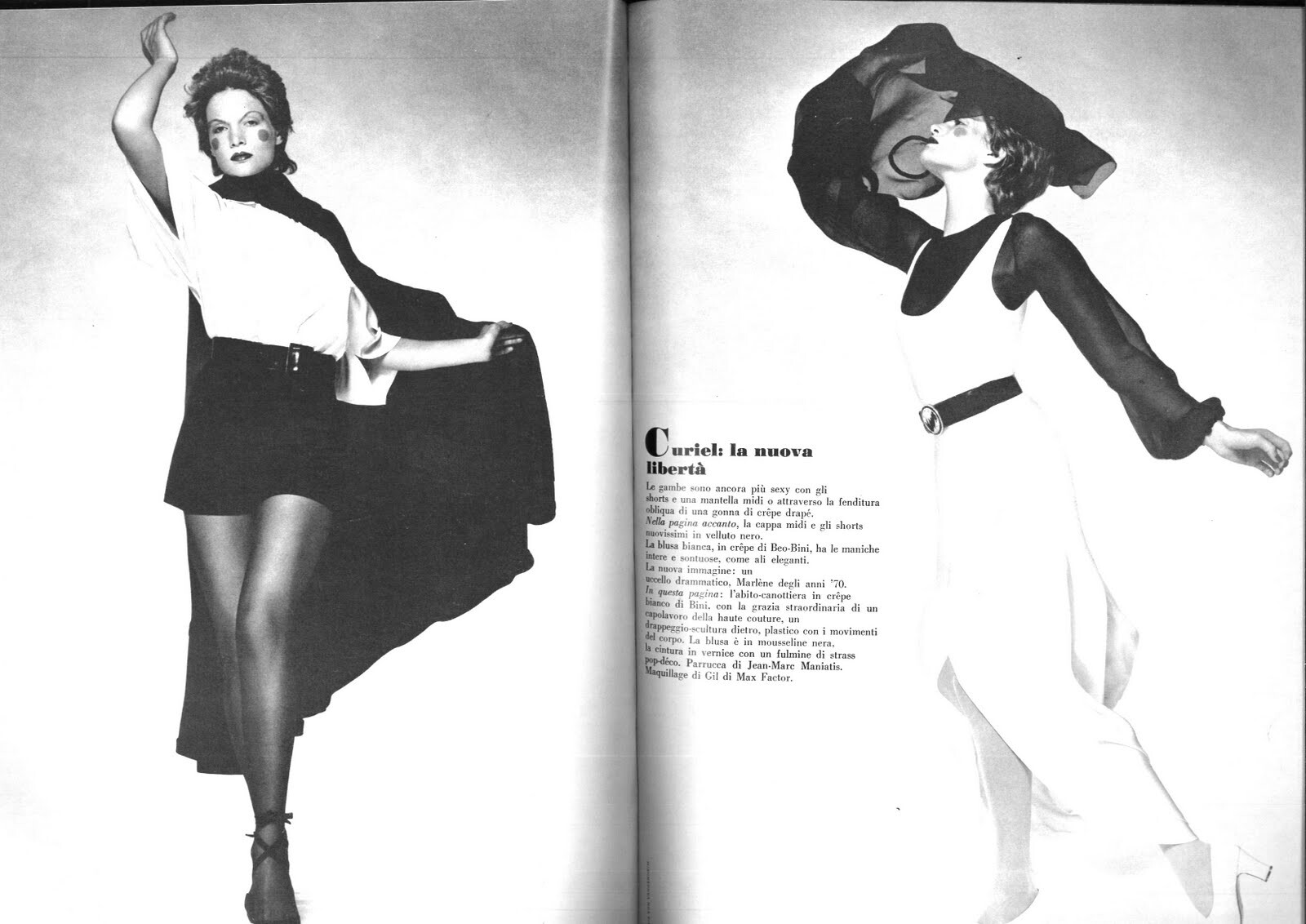
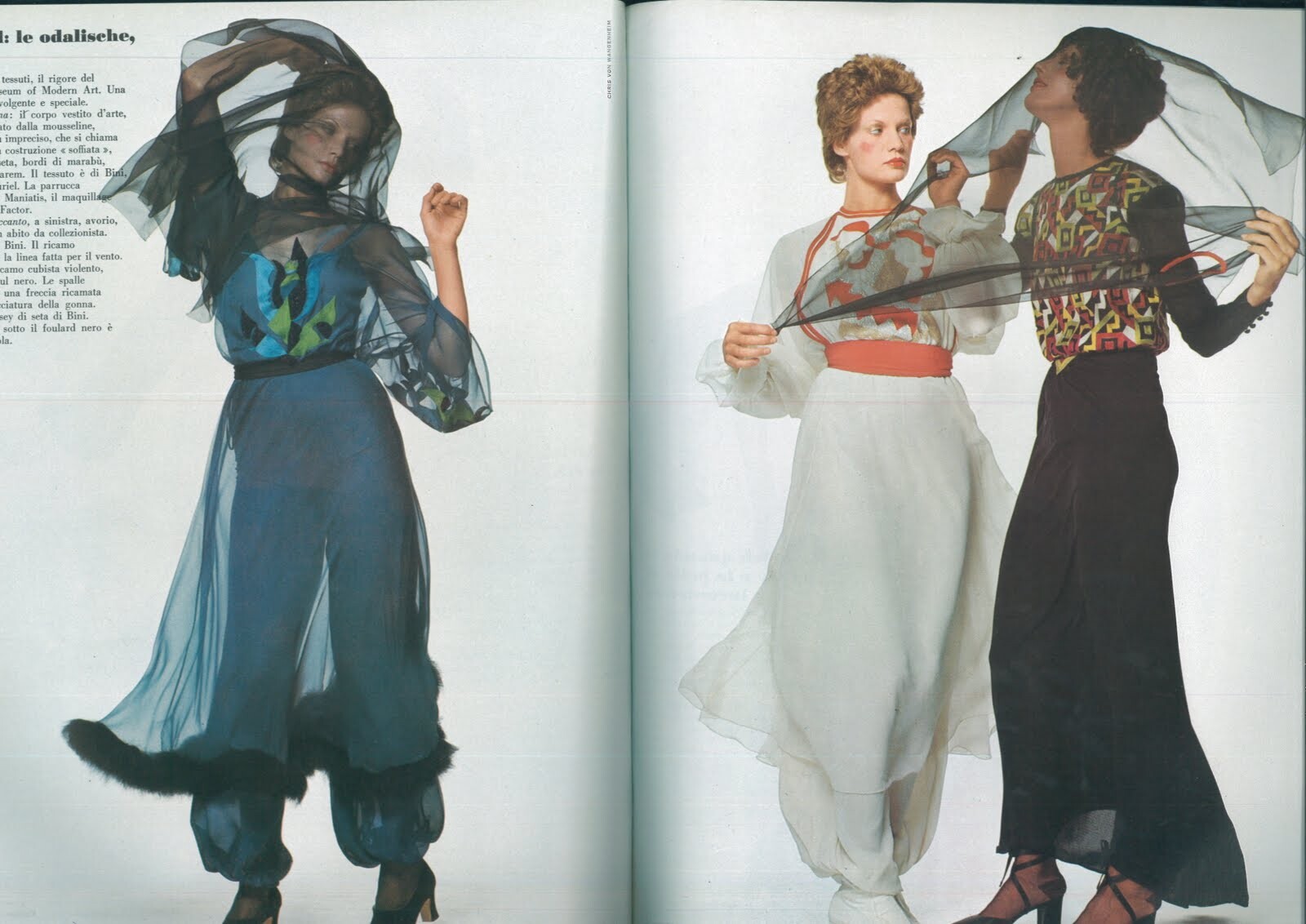
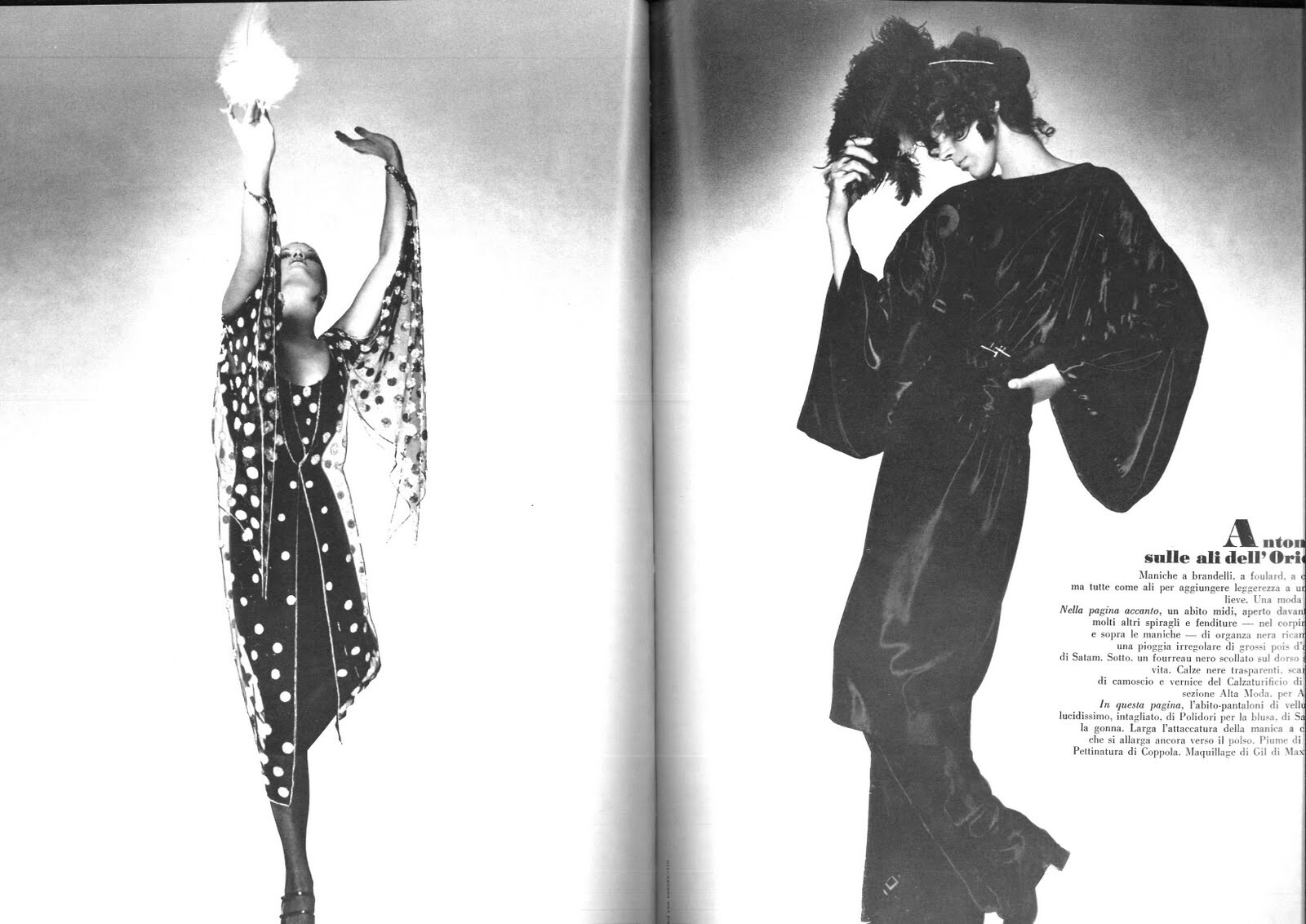
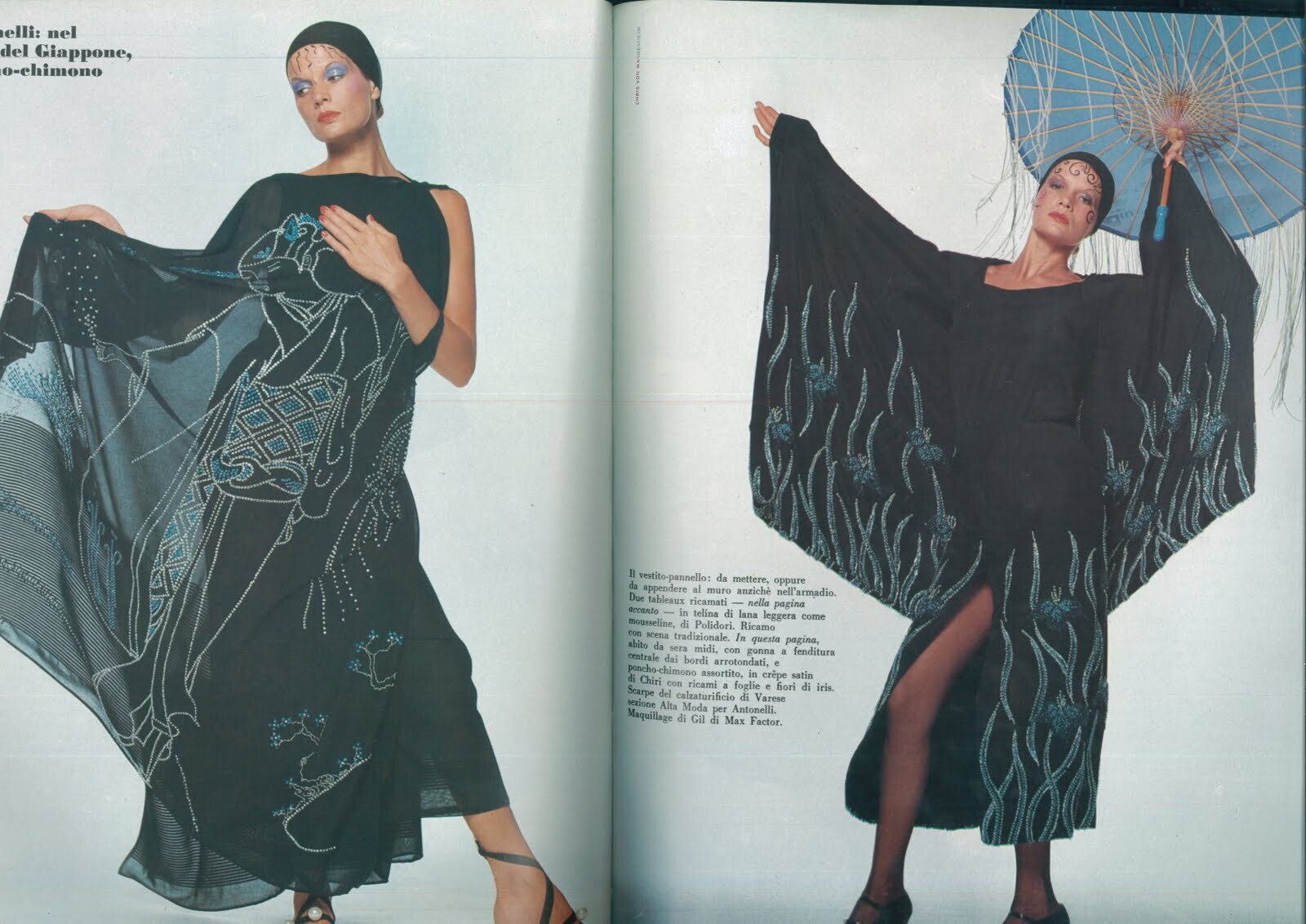
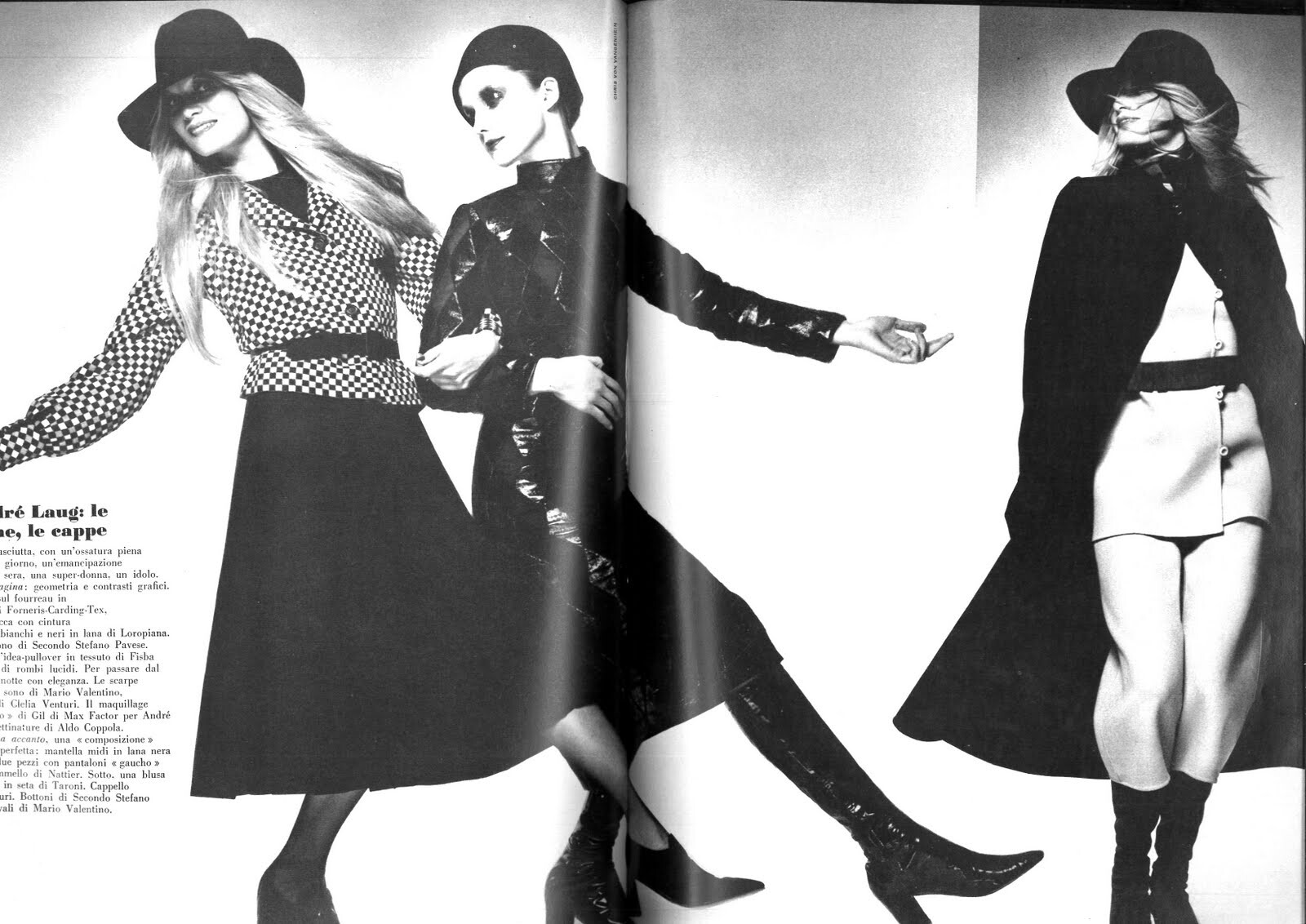
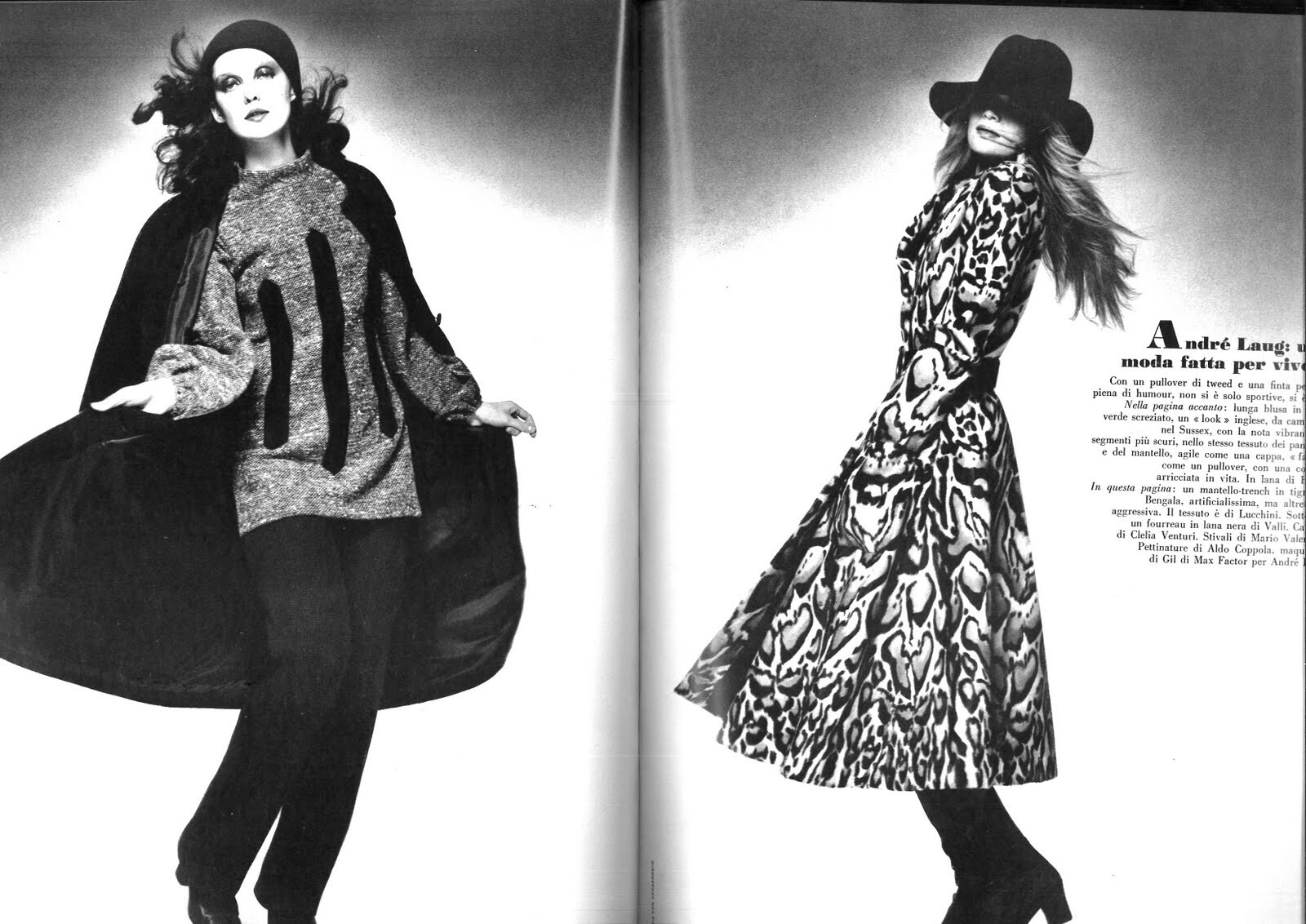
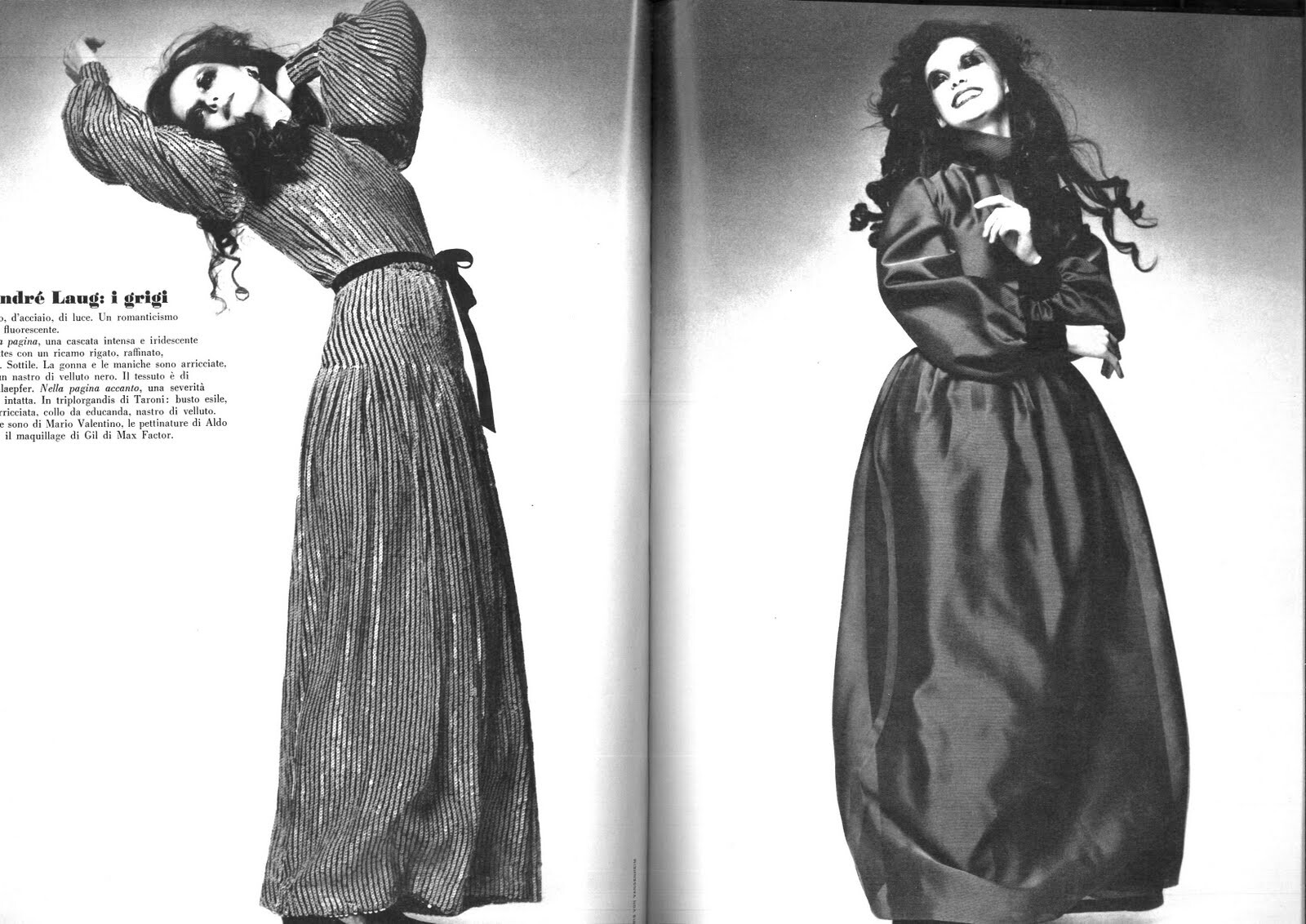
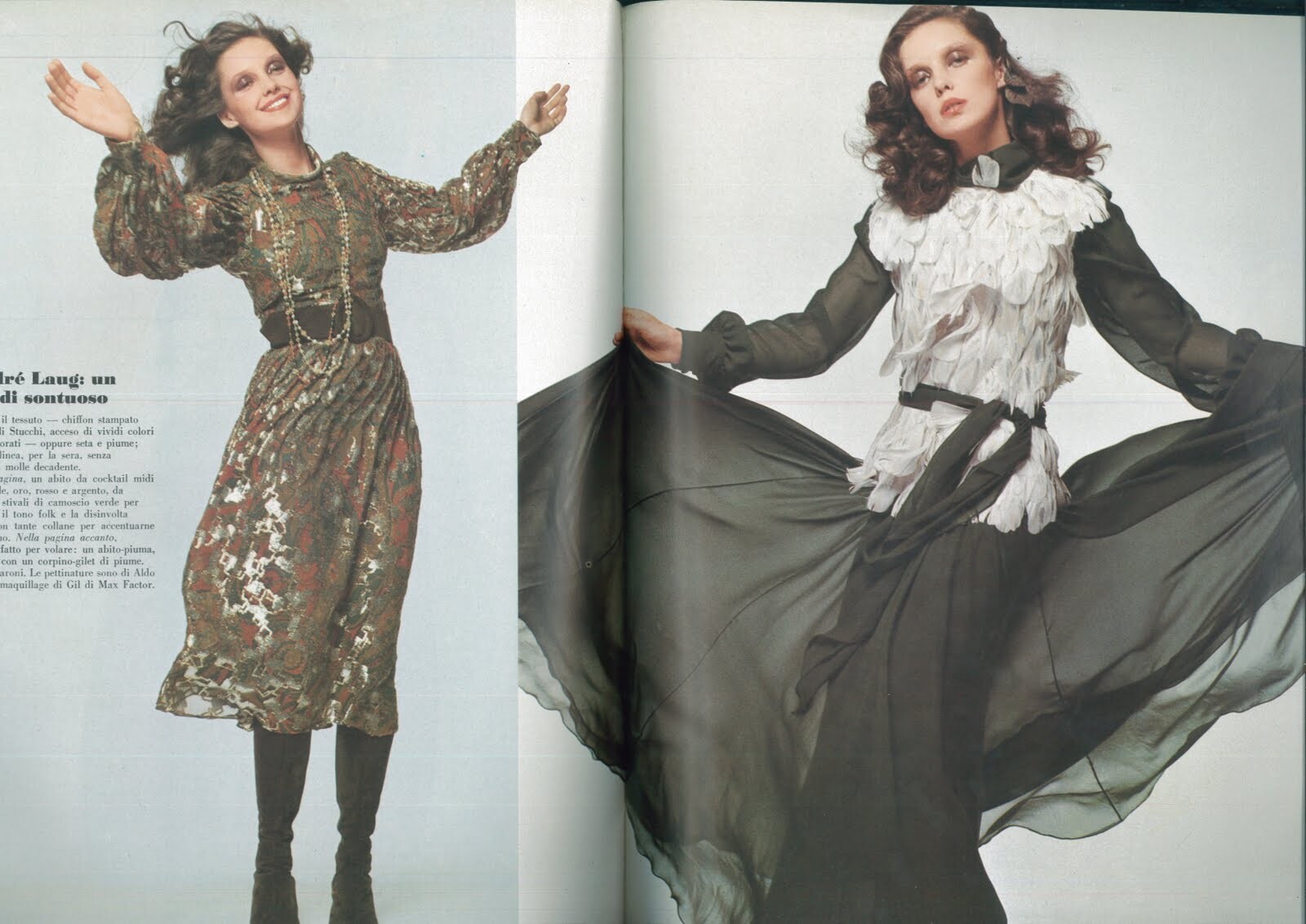
Scanned by Freya @ ciaovogue.blogspot.com
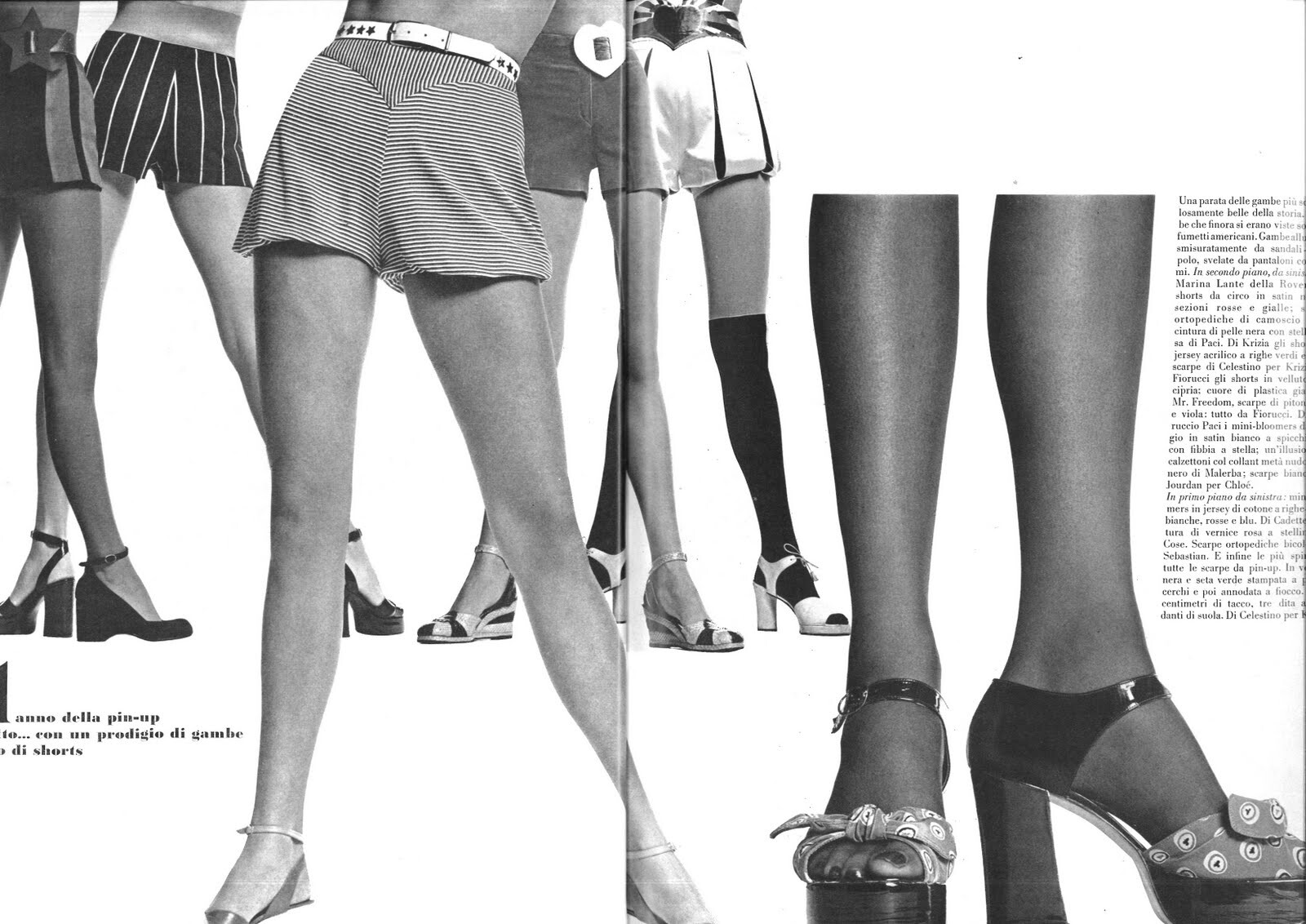
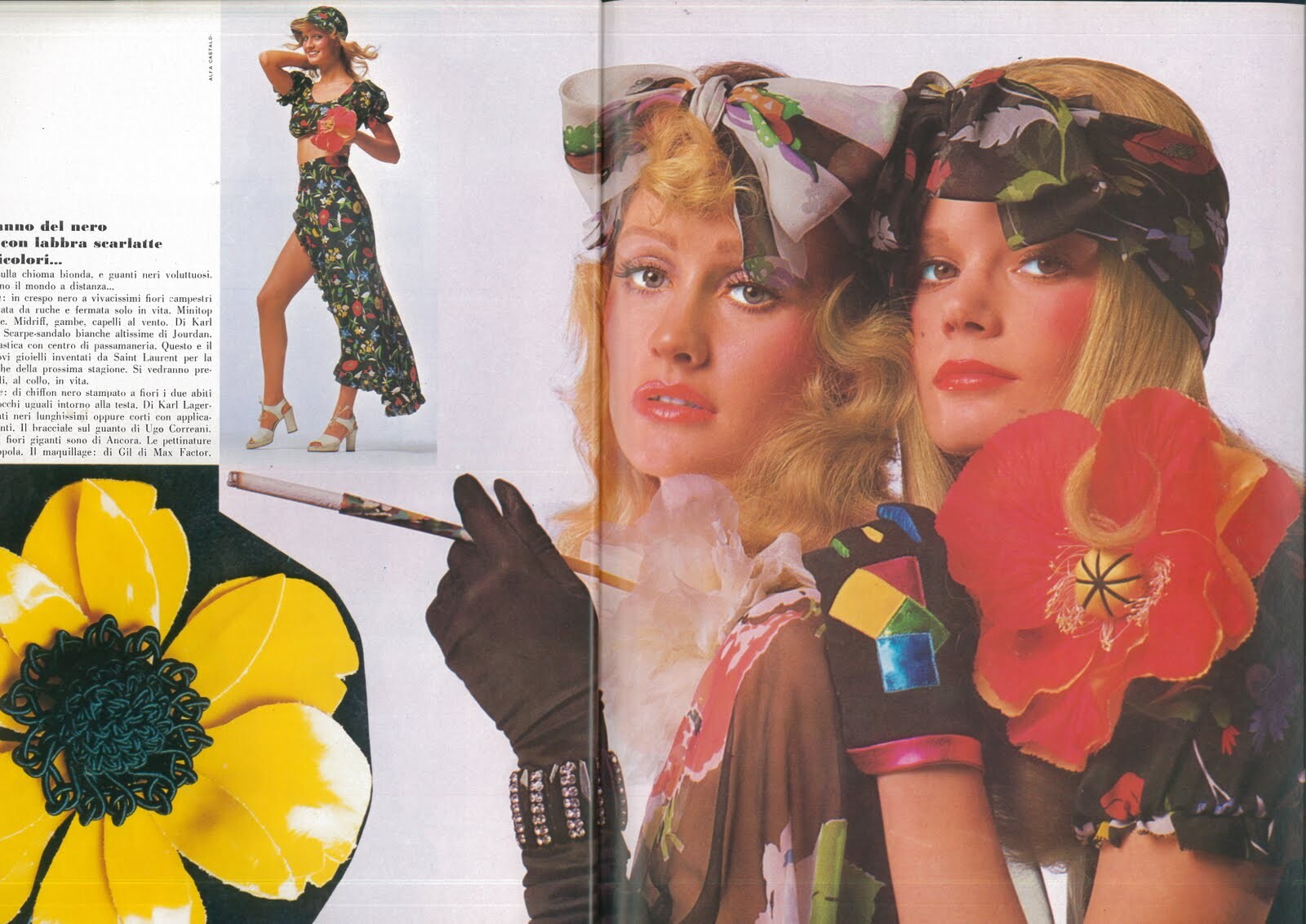
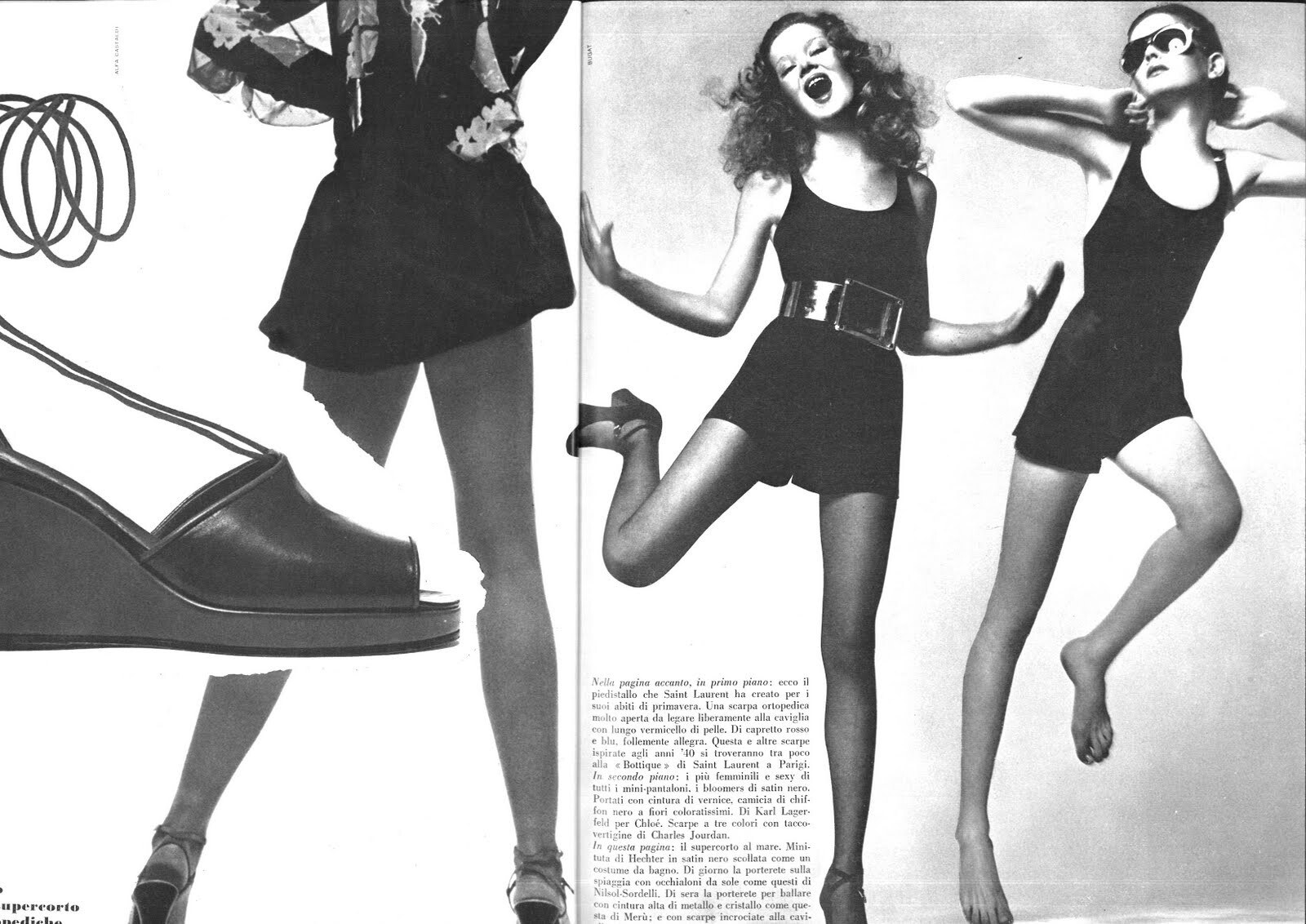
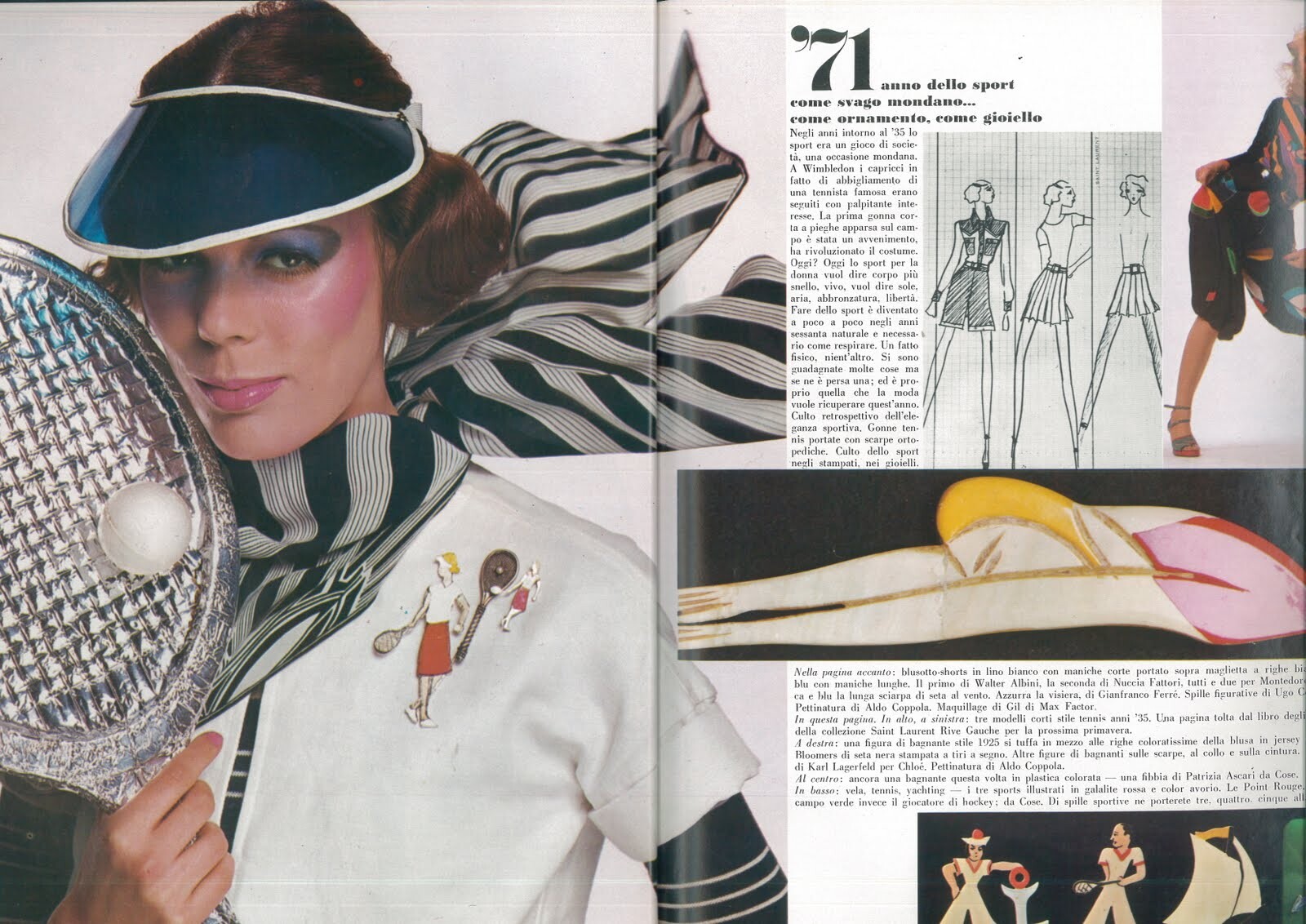
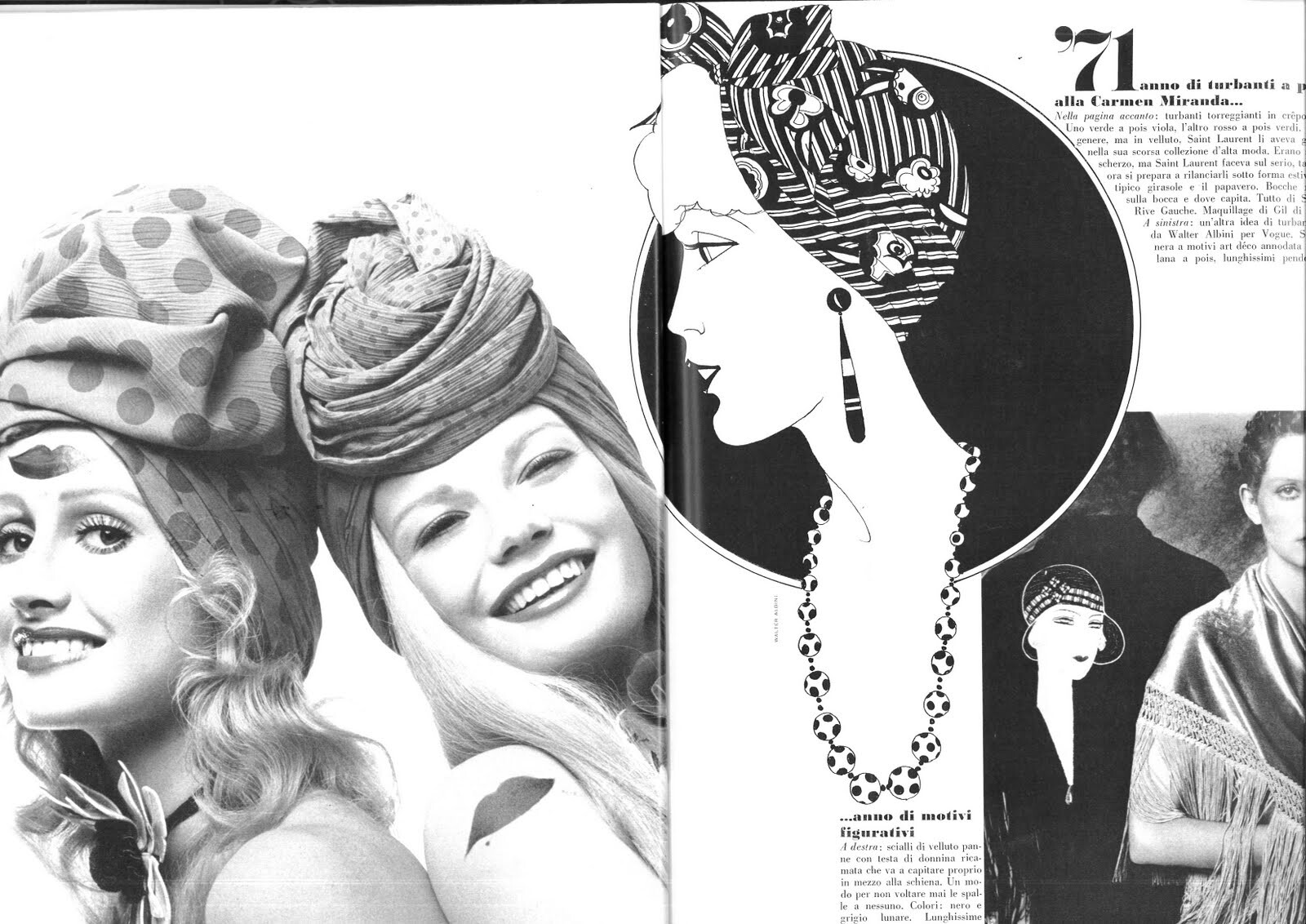
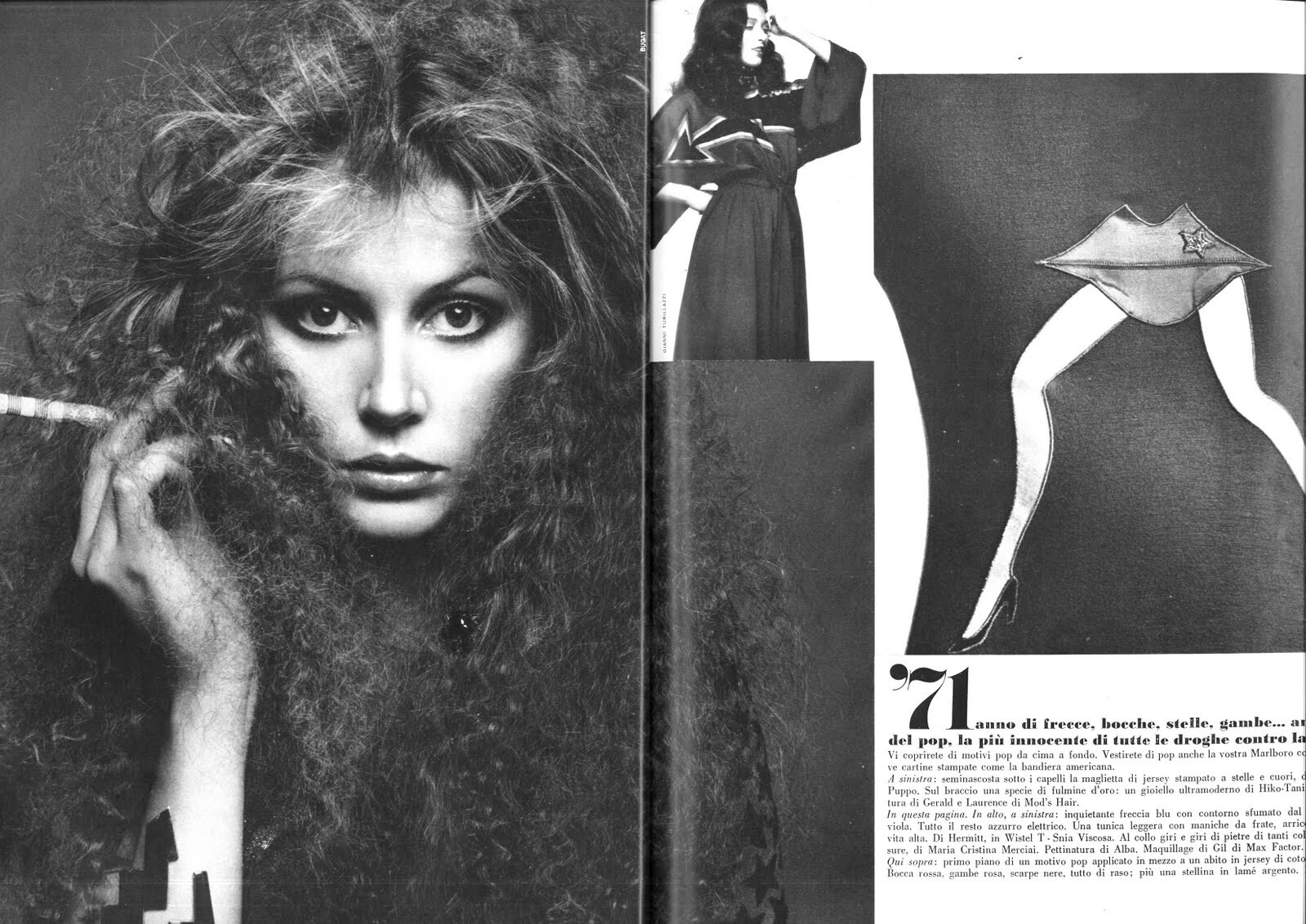
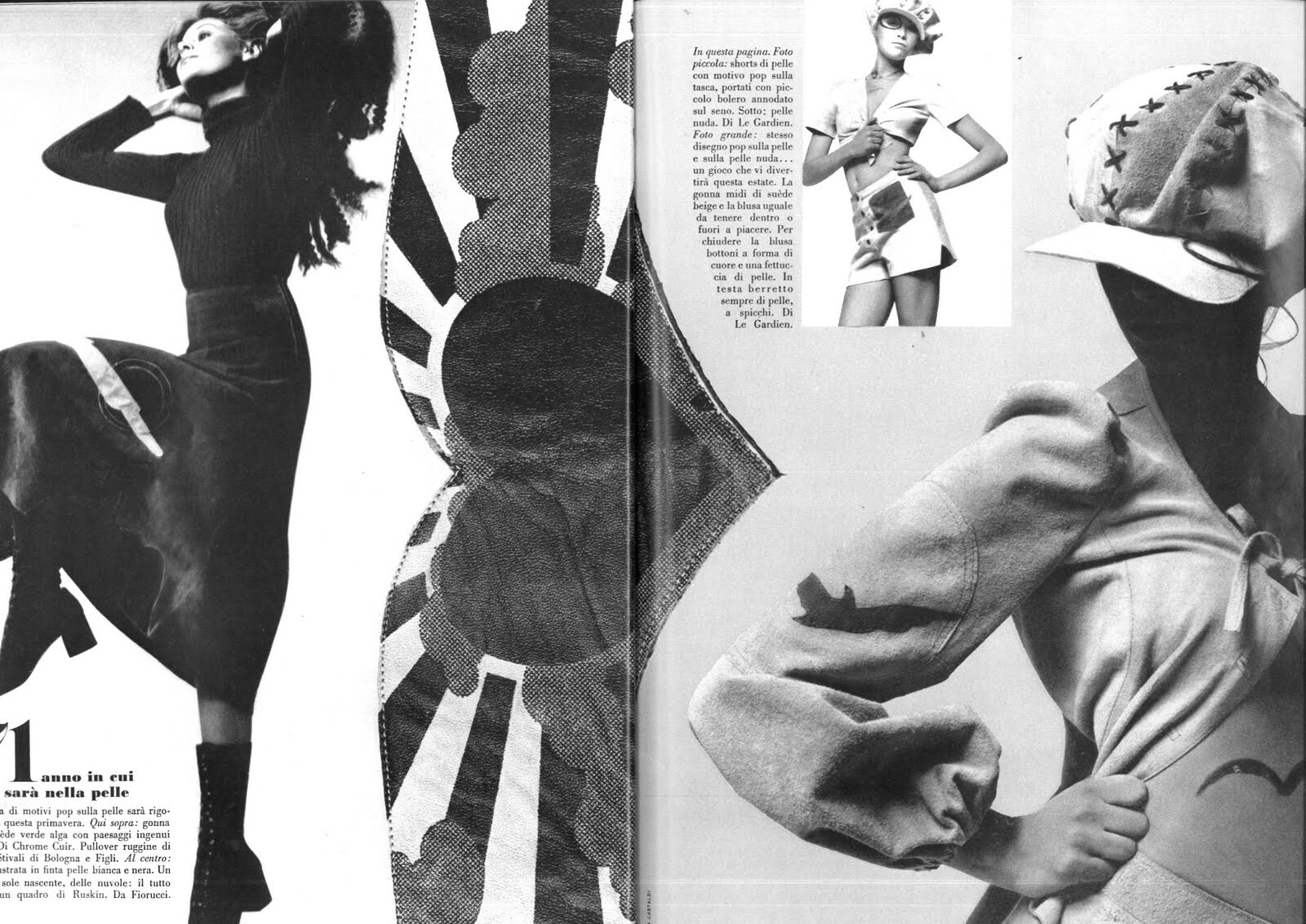
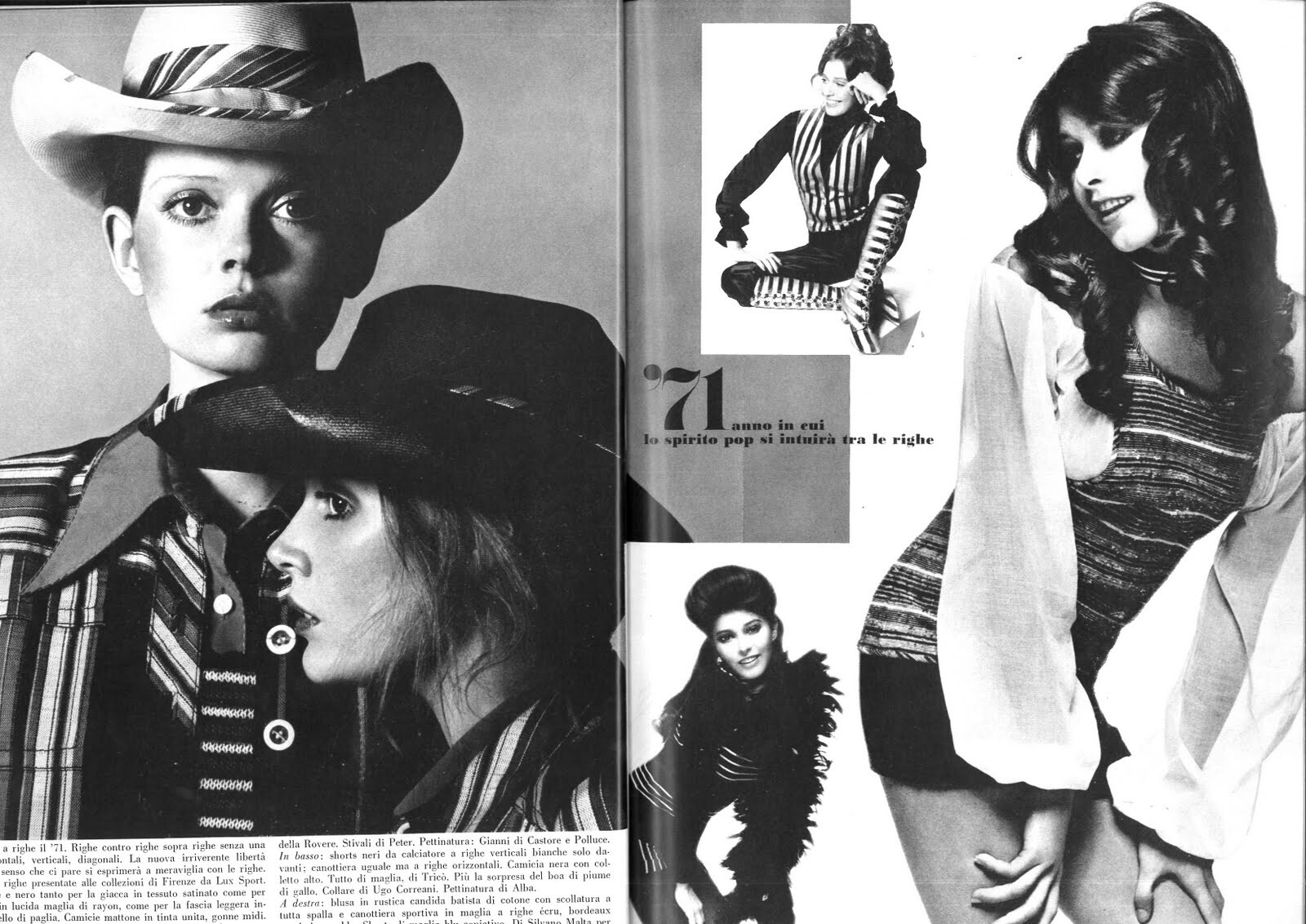
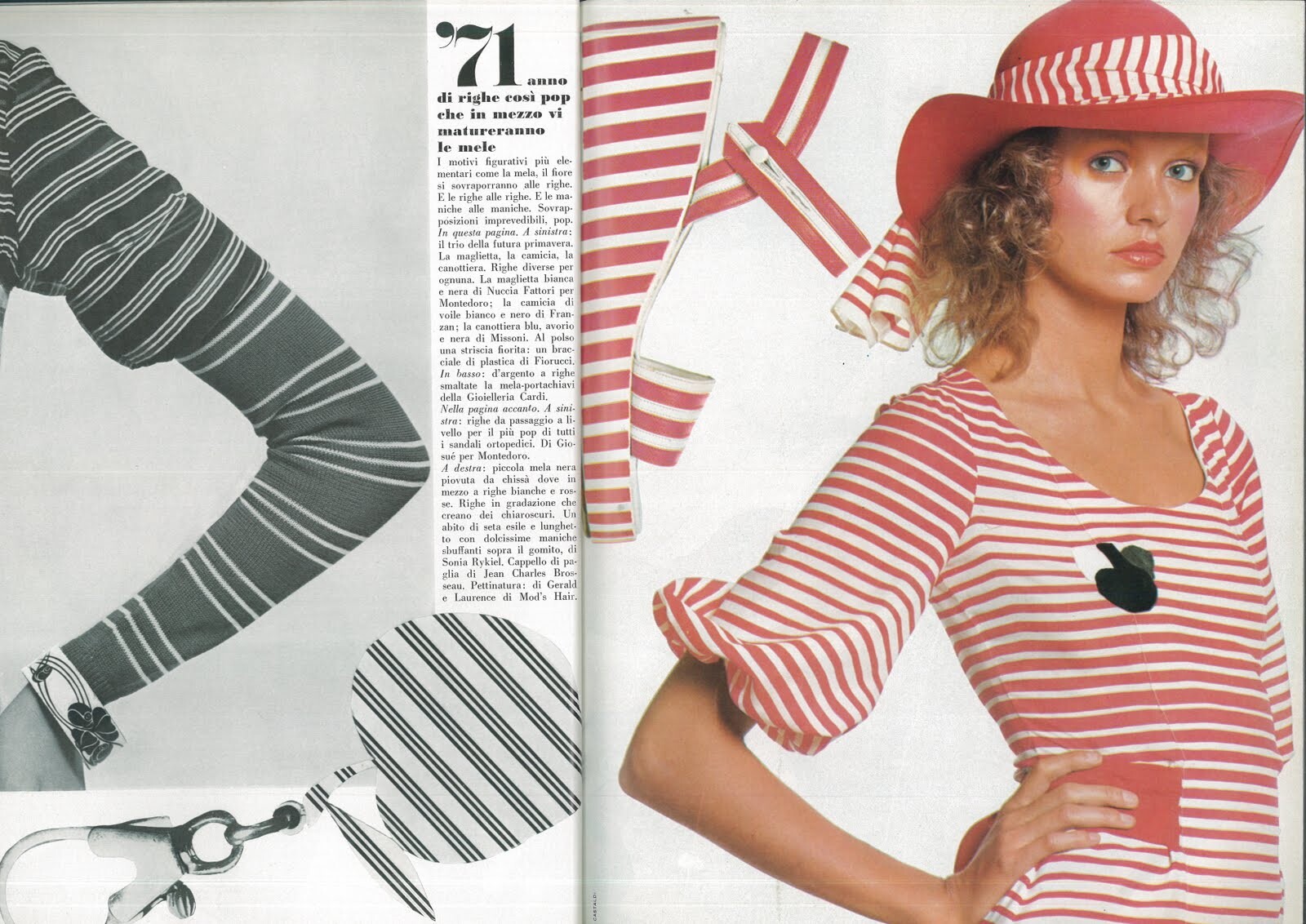
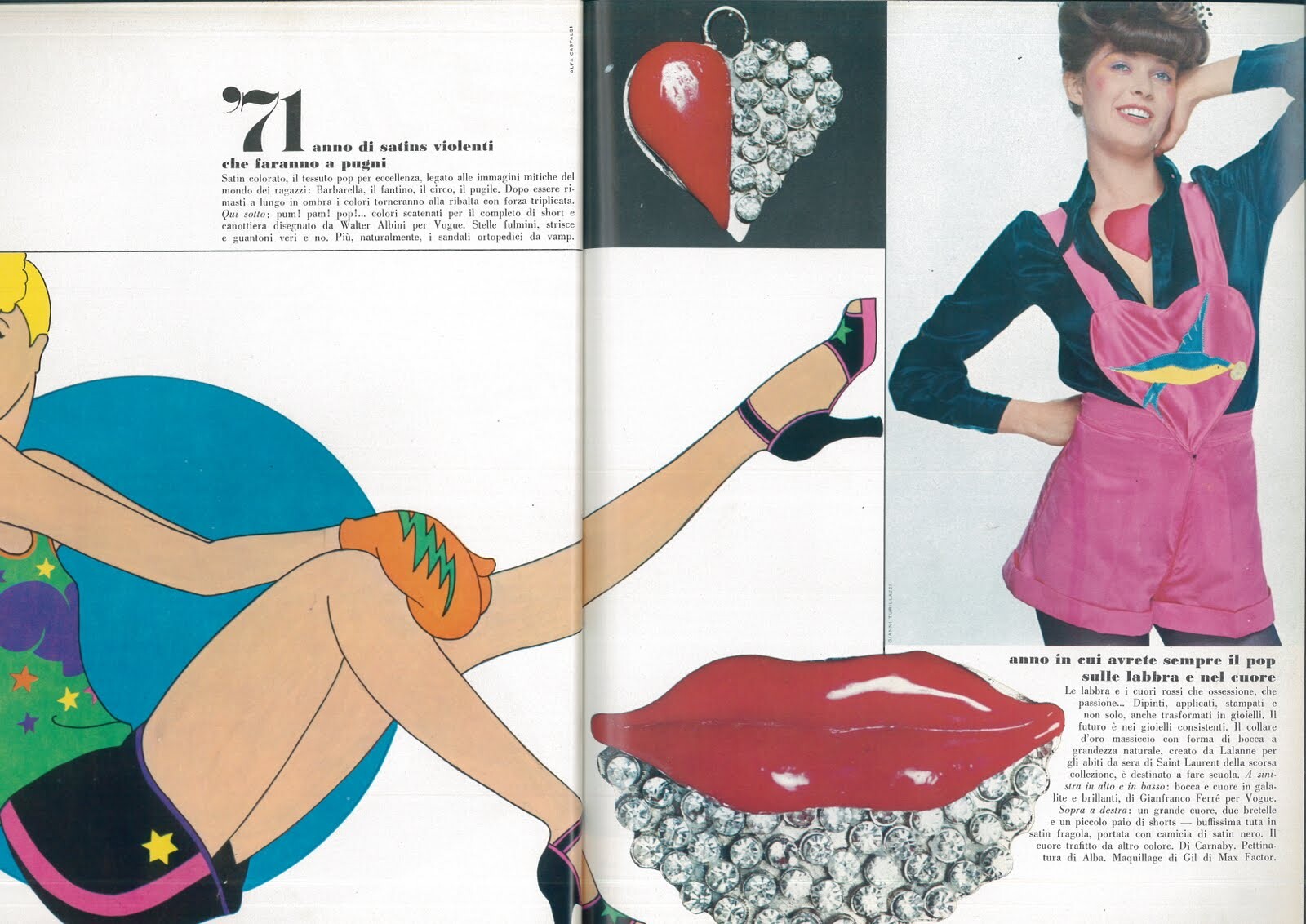
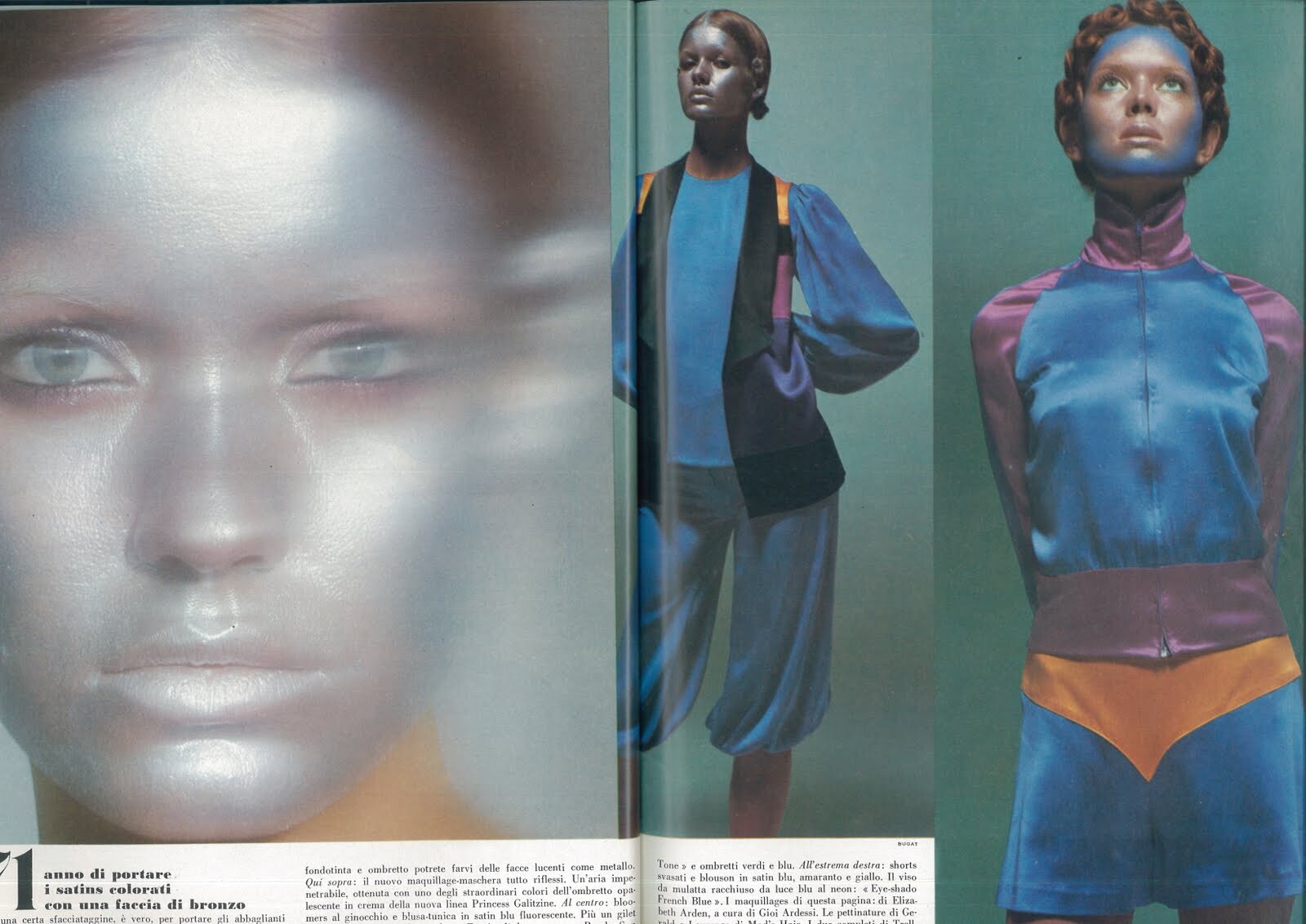
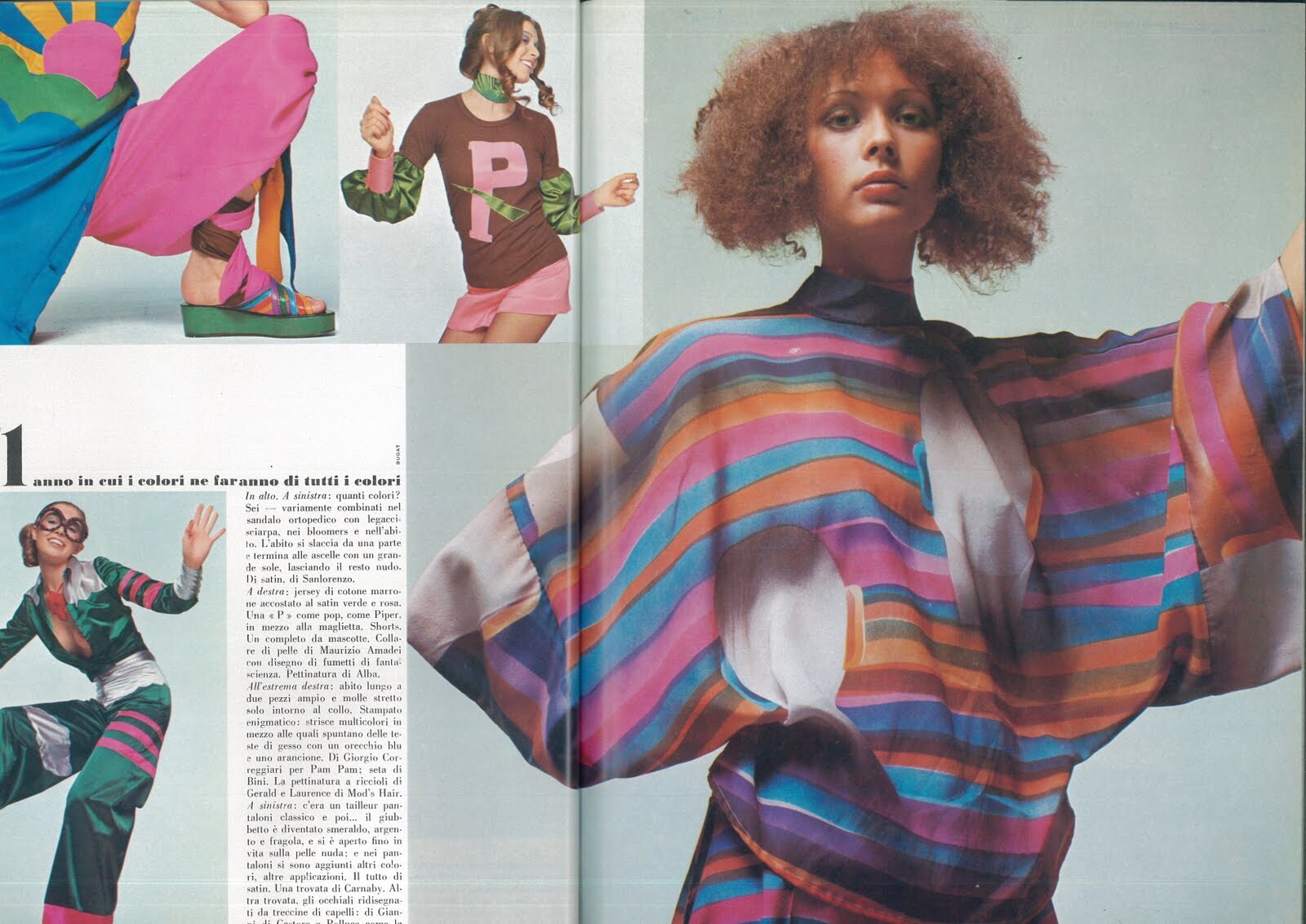
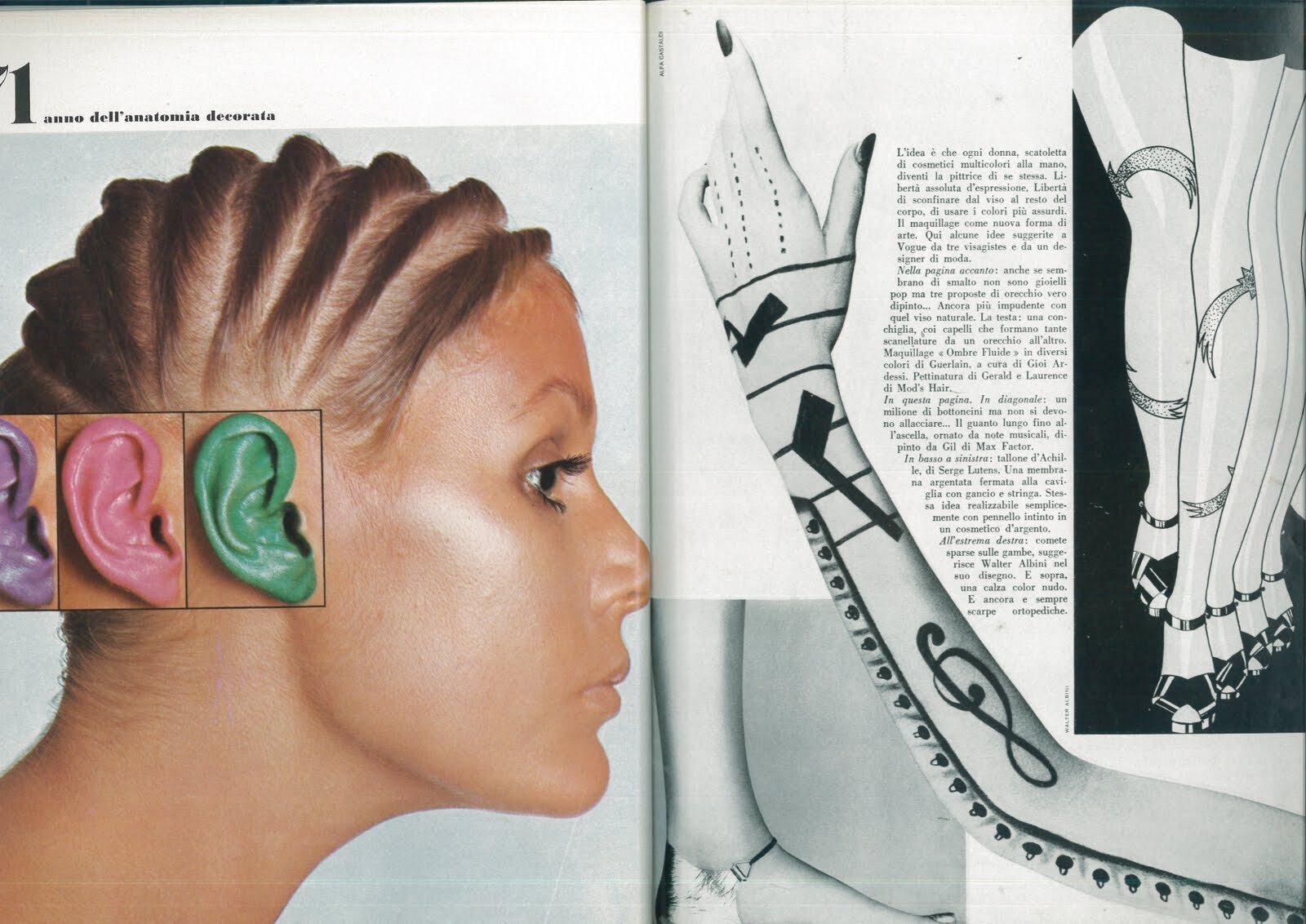
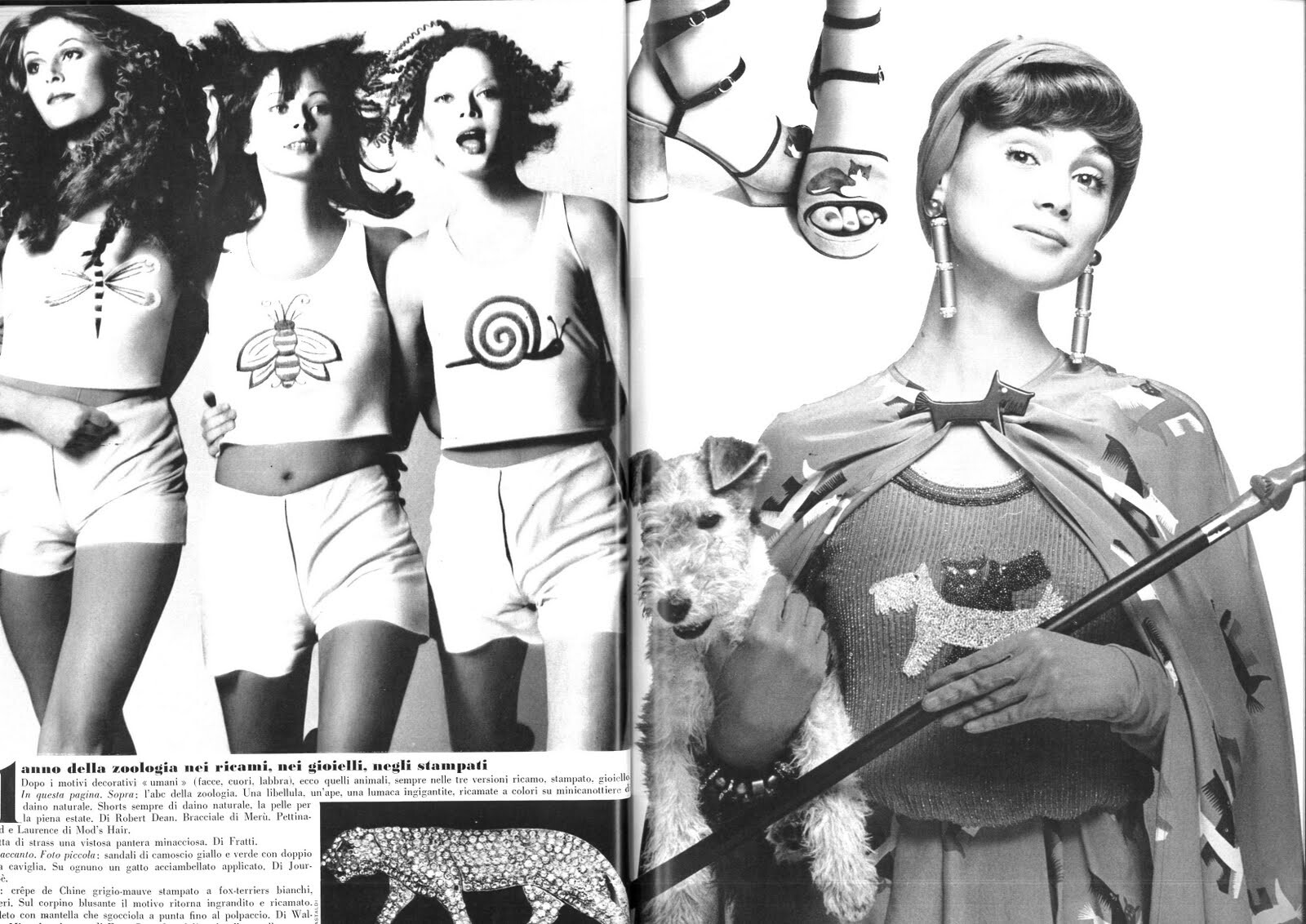
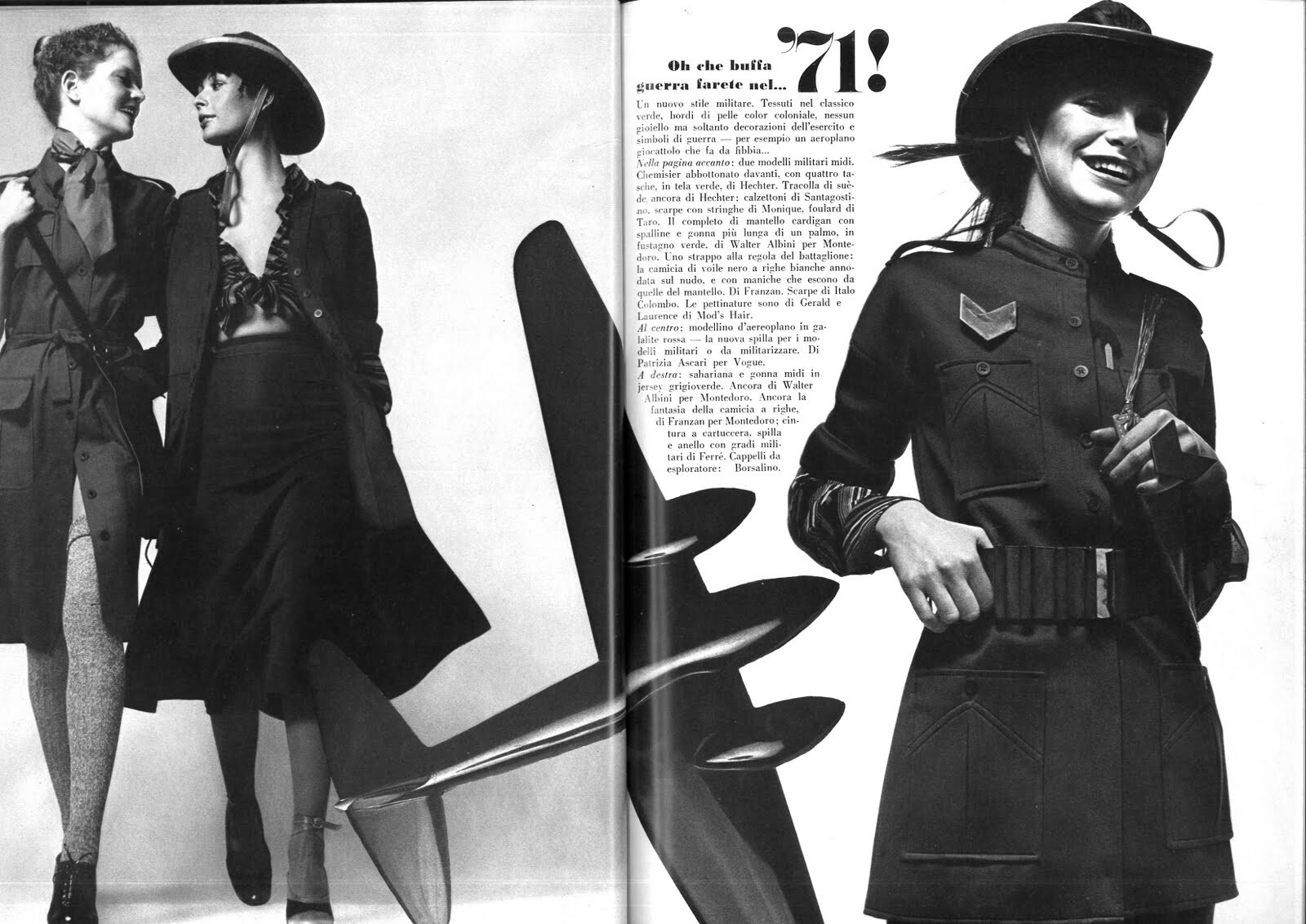
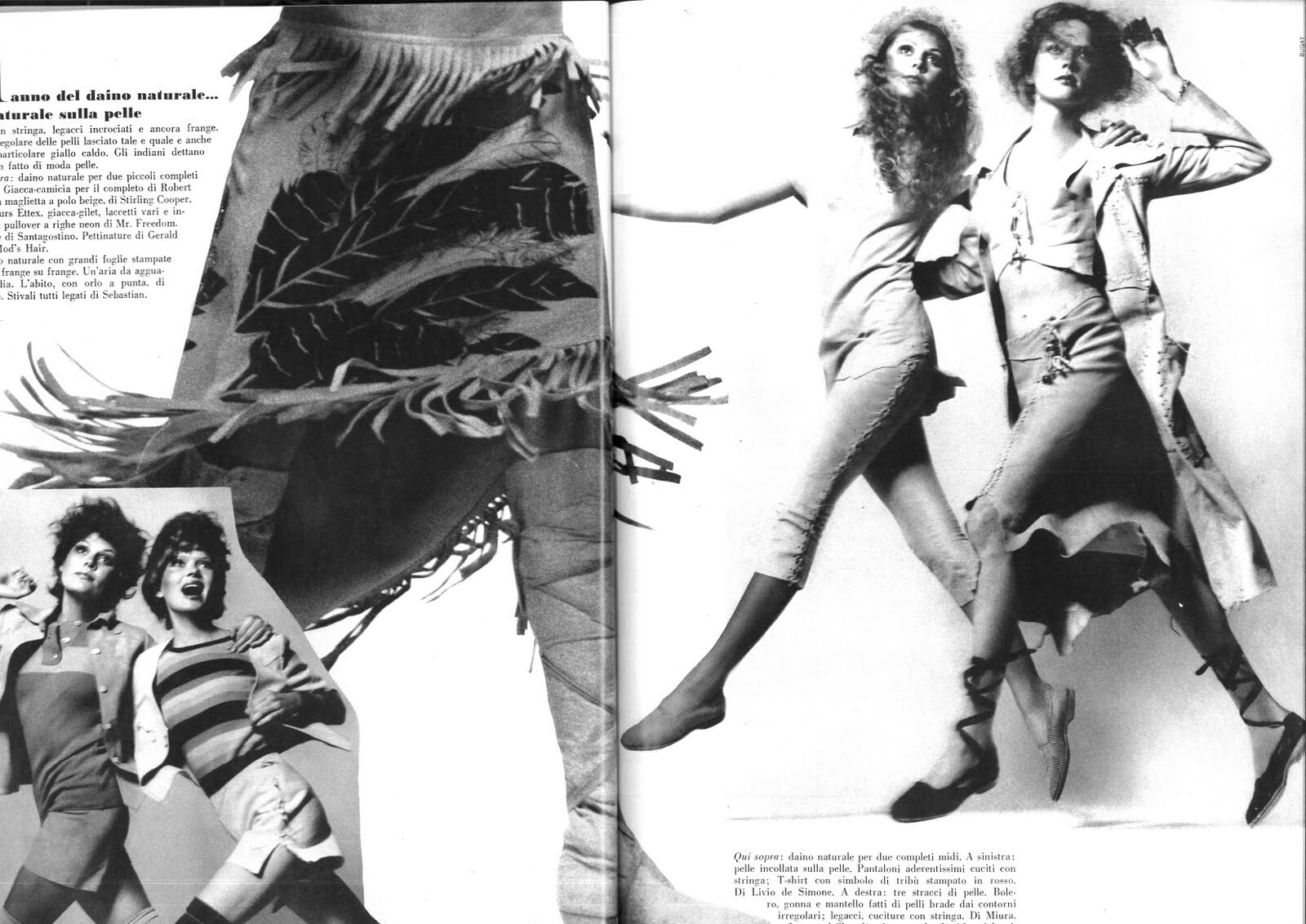
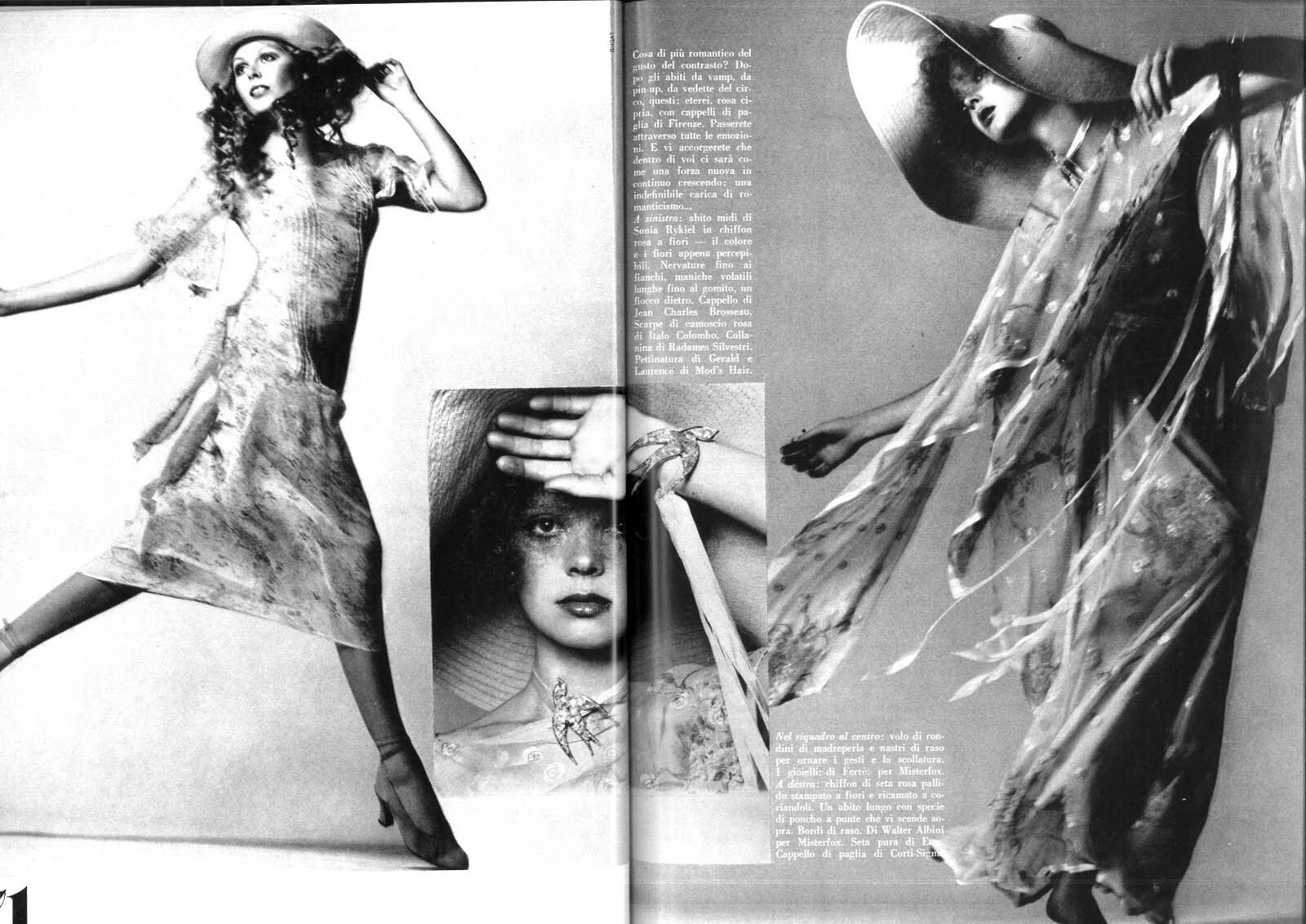
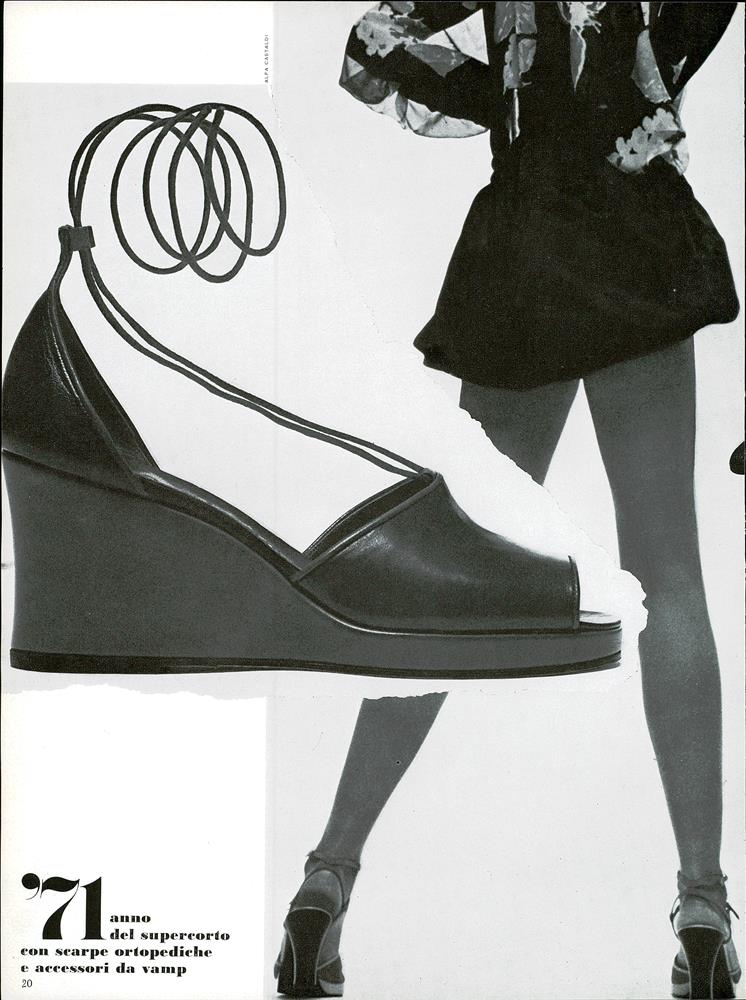
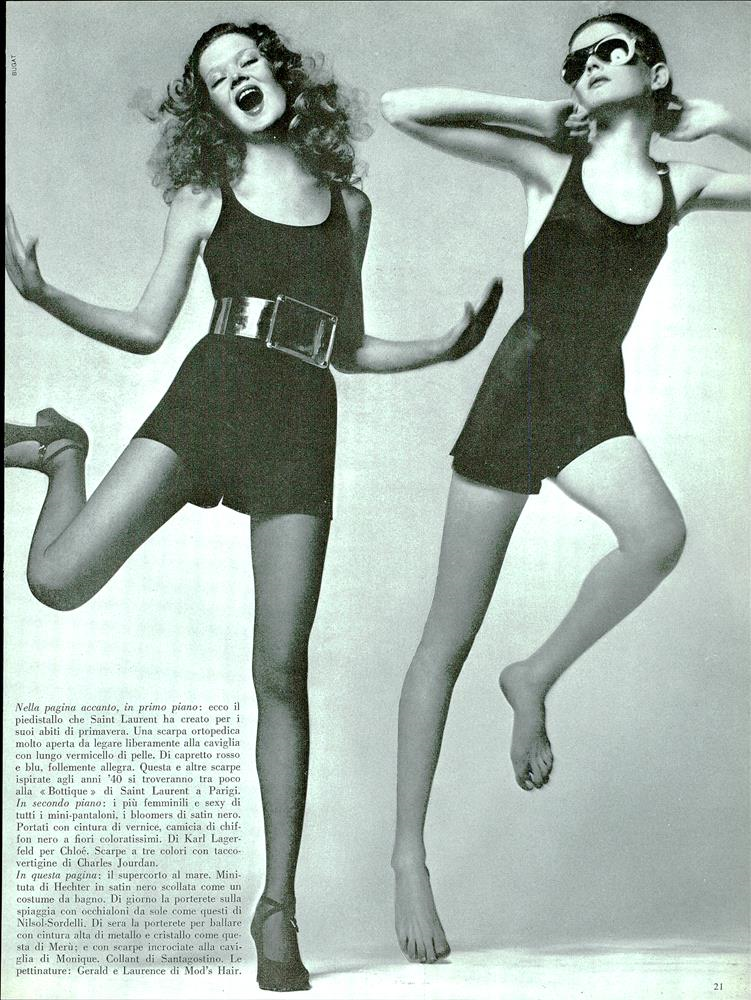
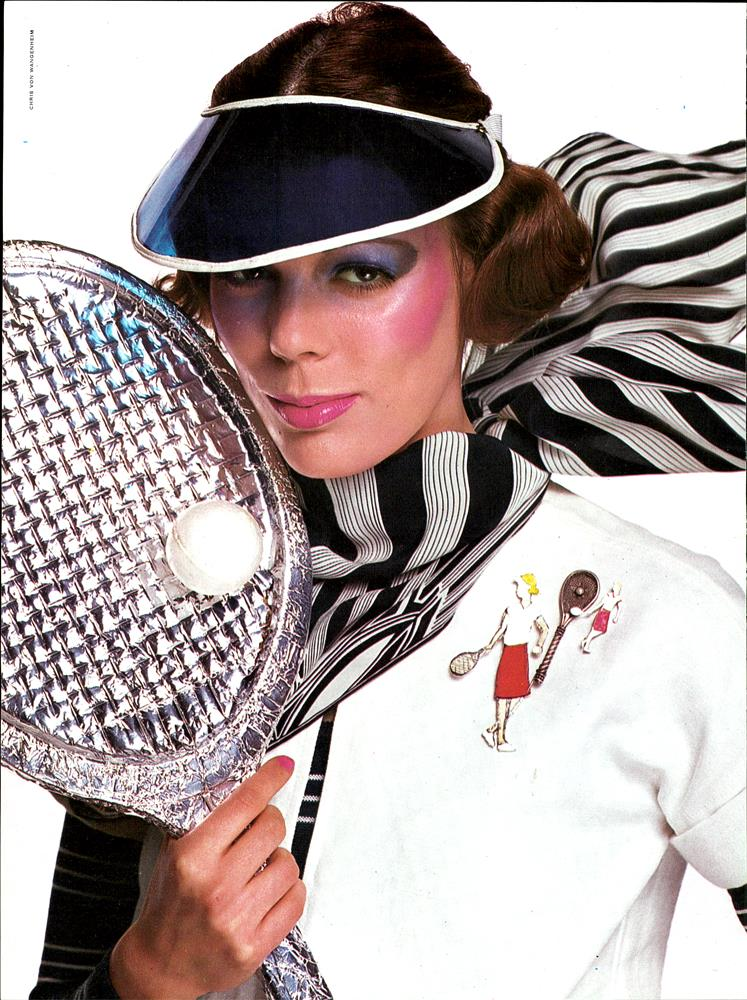
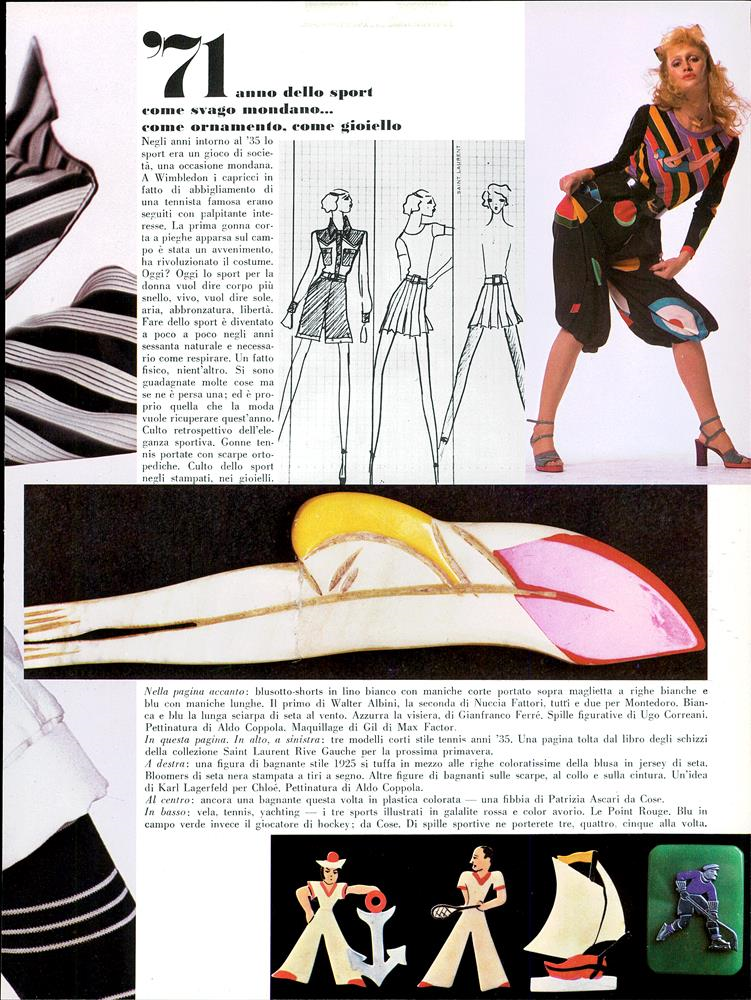
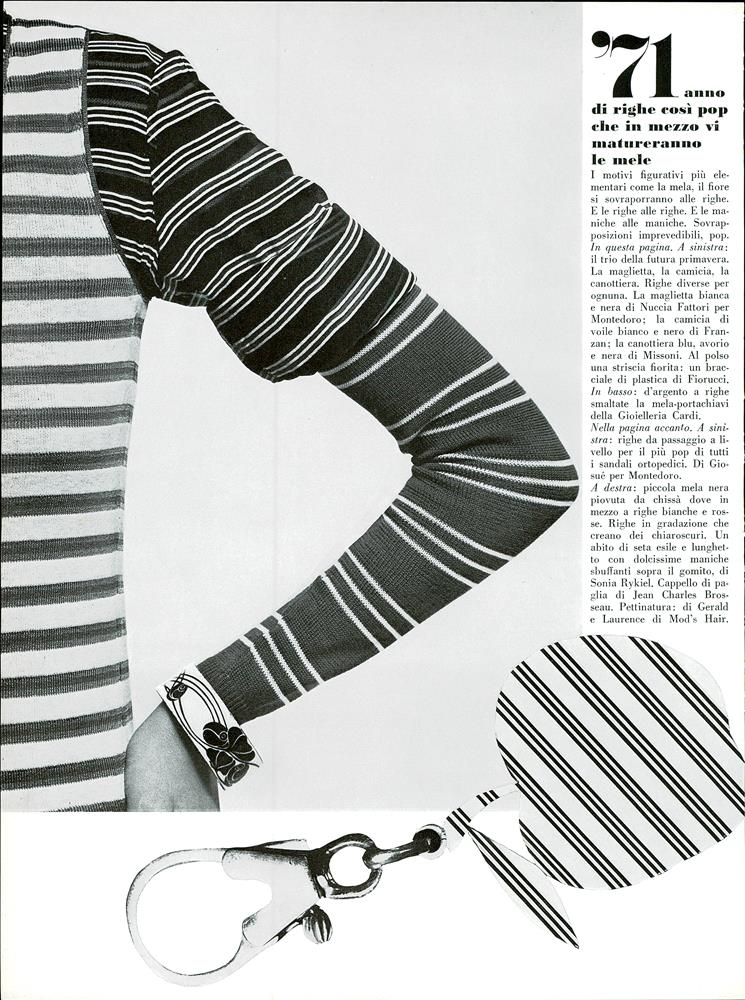
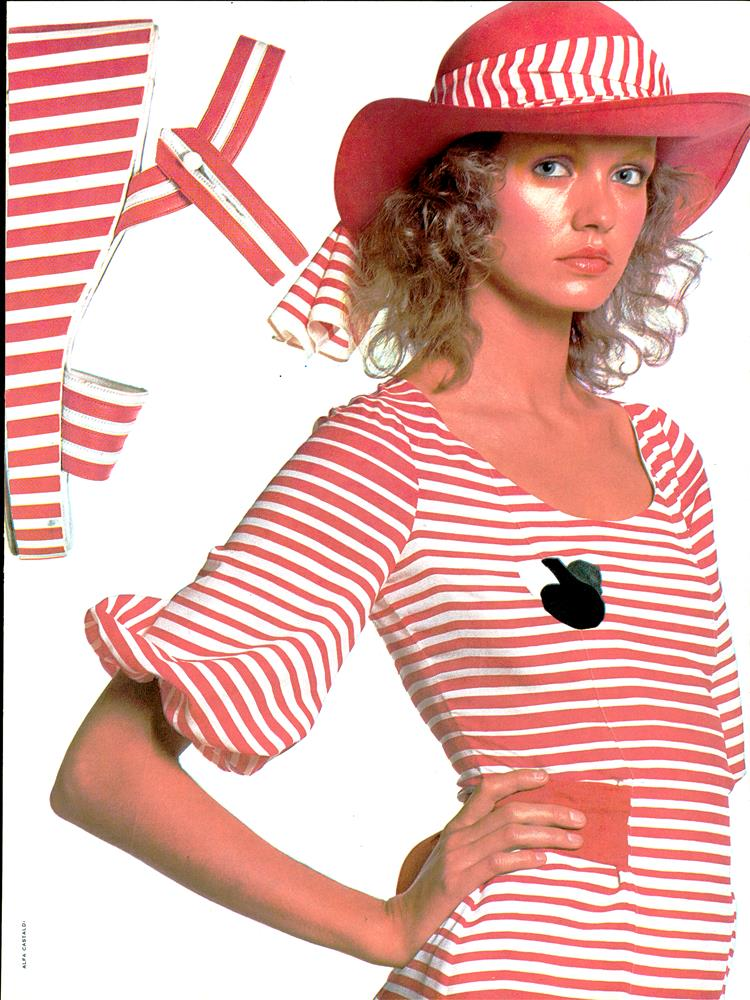
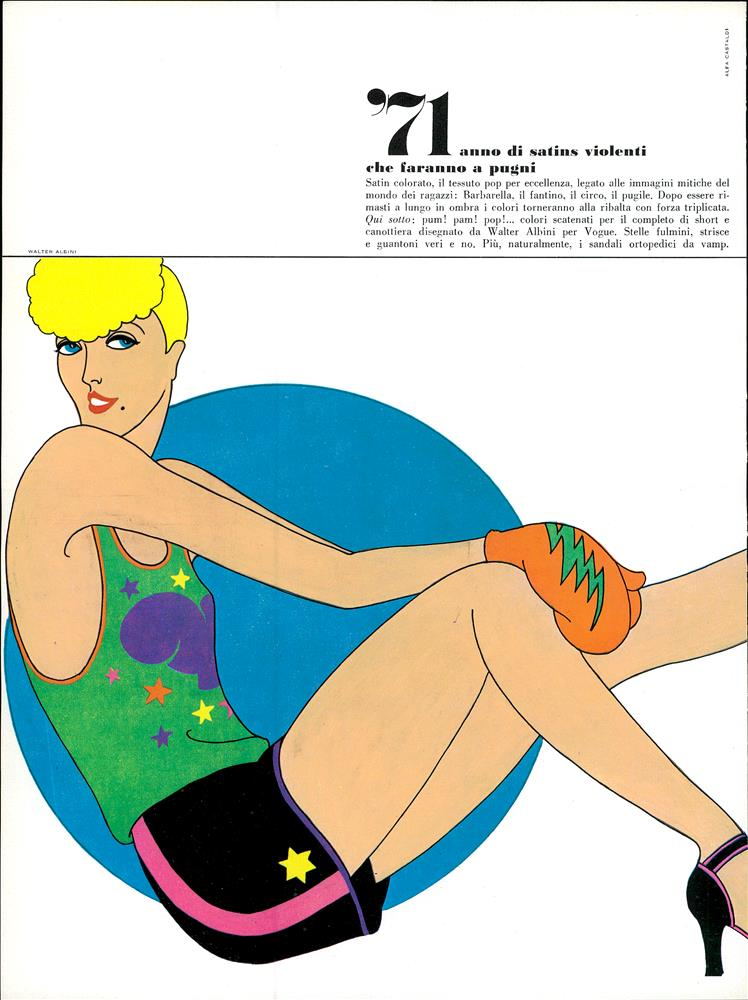
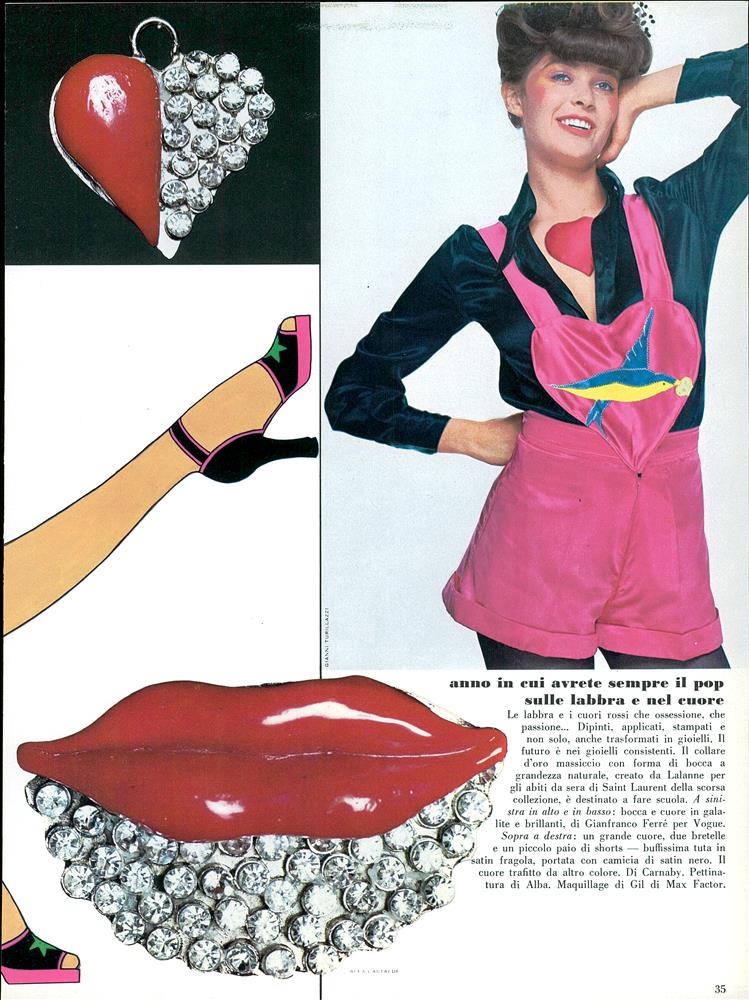
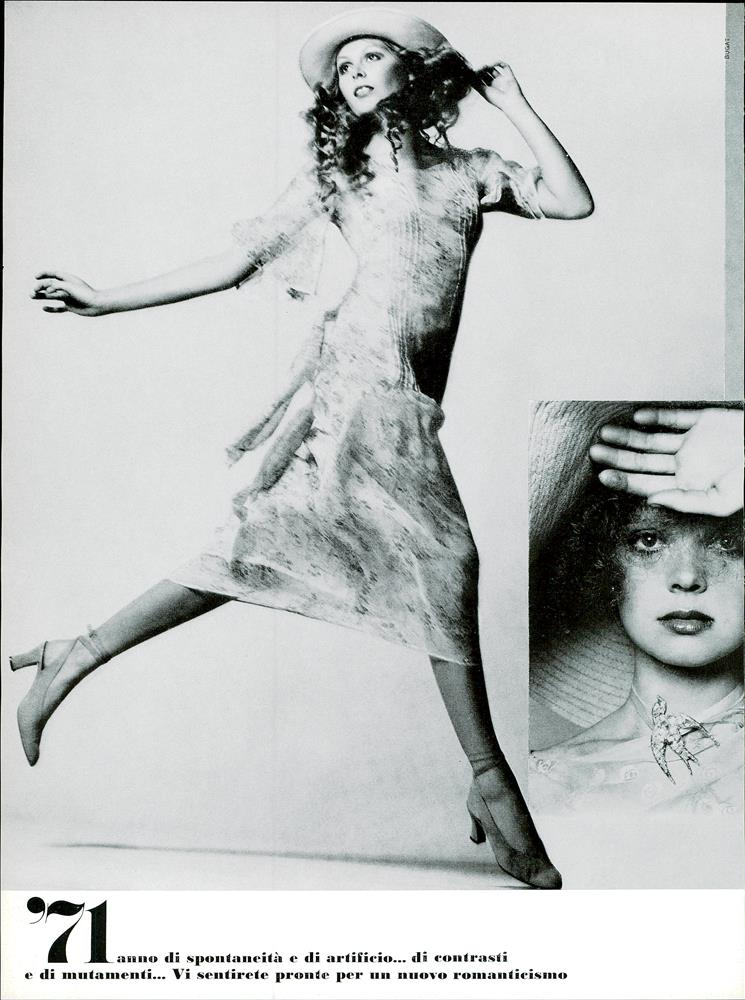
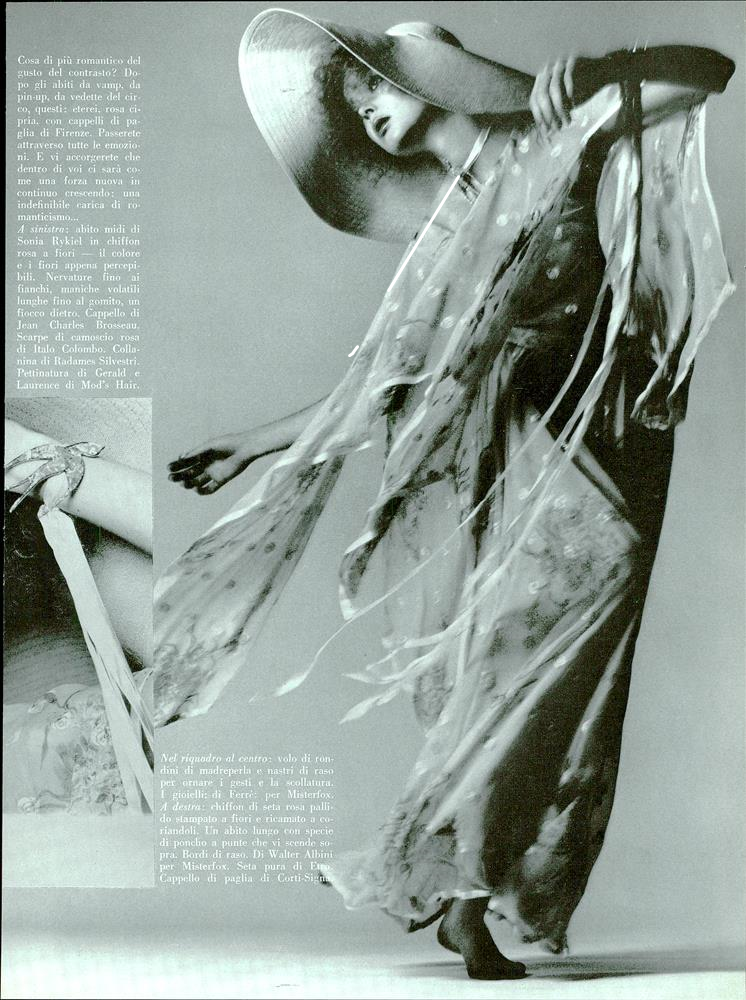
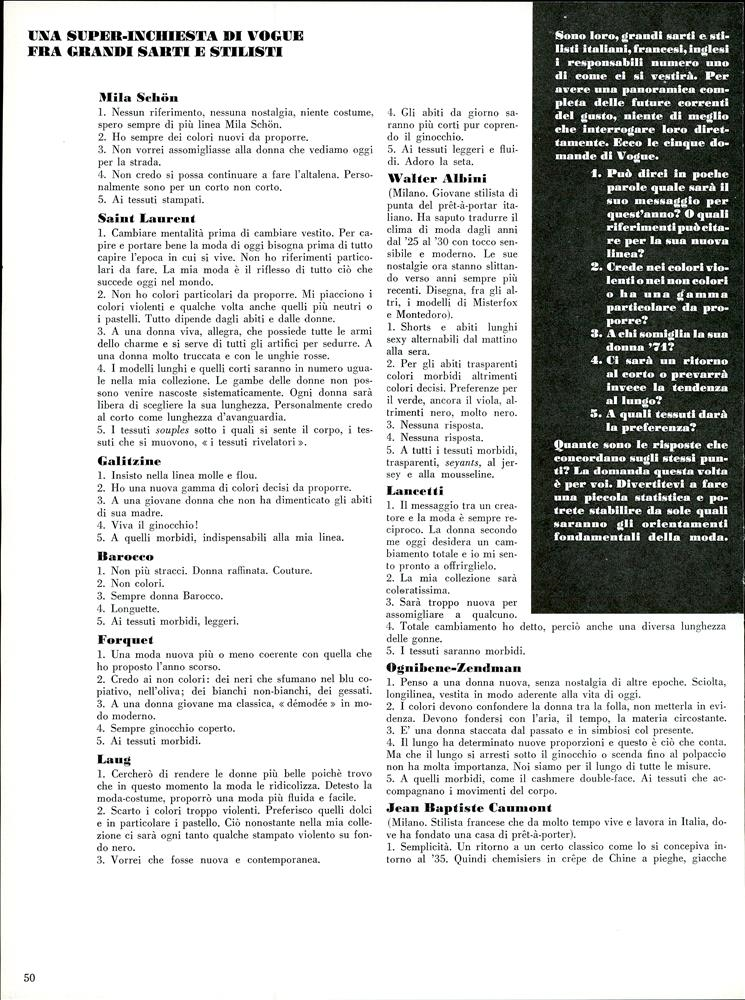
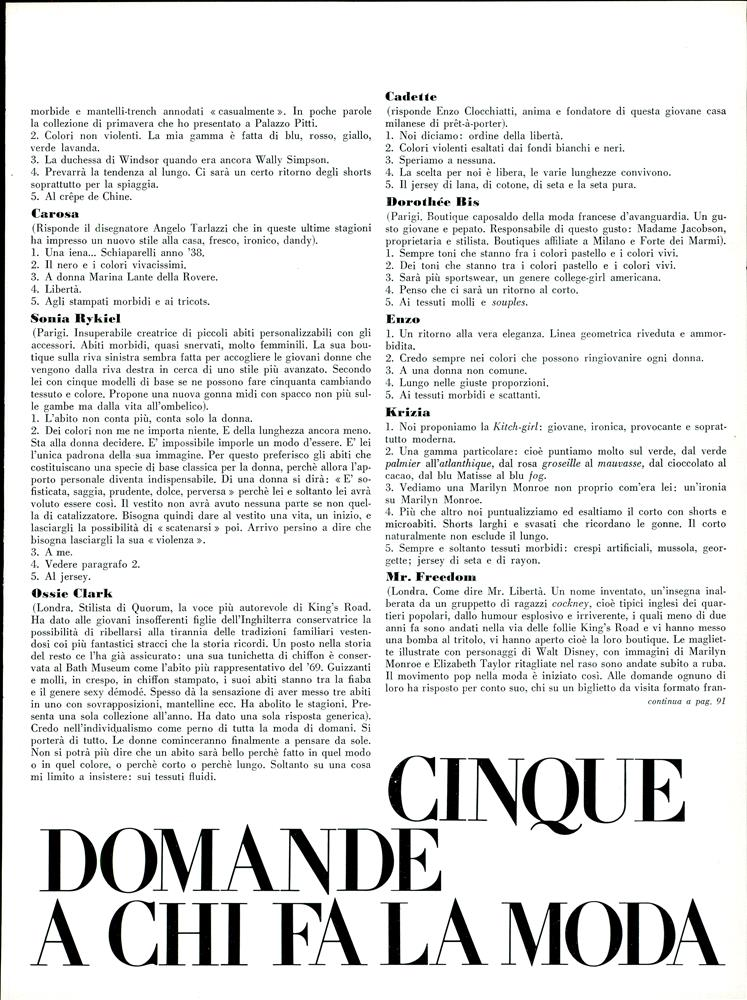
Vogue Italia January 1971
"'71 Anno di Sorprese"
Models: Willy van Rooy, Wallis Franken, Beshka Sorensen, Mouche, Jane Hitchcock, Kerry-Ann Mueller & Unknowns
Photographers: Chris von Wangenheim, Alfa Castaldi, Jean-Jacques Bugat & Gianni Turlazzi
Hair: Aldo Coppola, Alba, Gerald & Laurence
Makeup: Gil
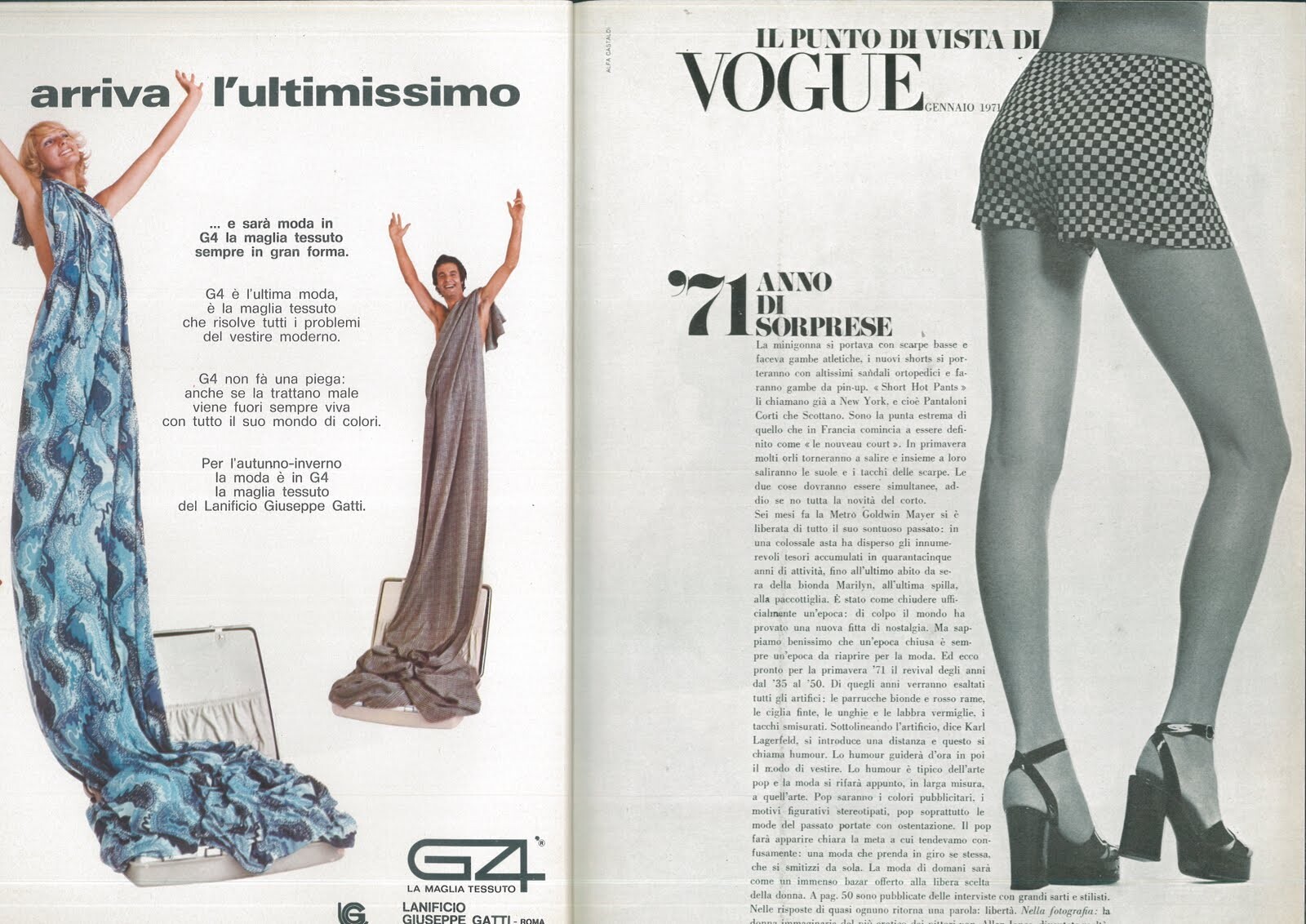
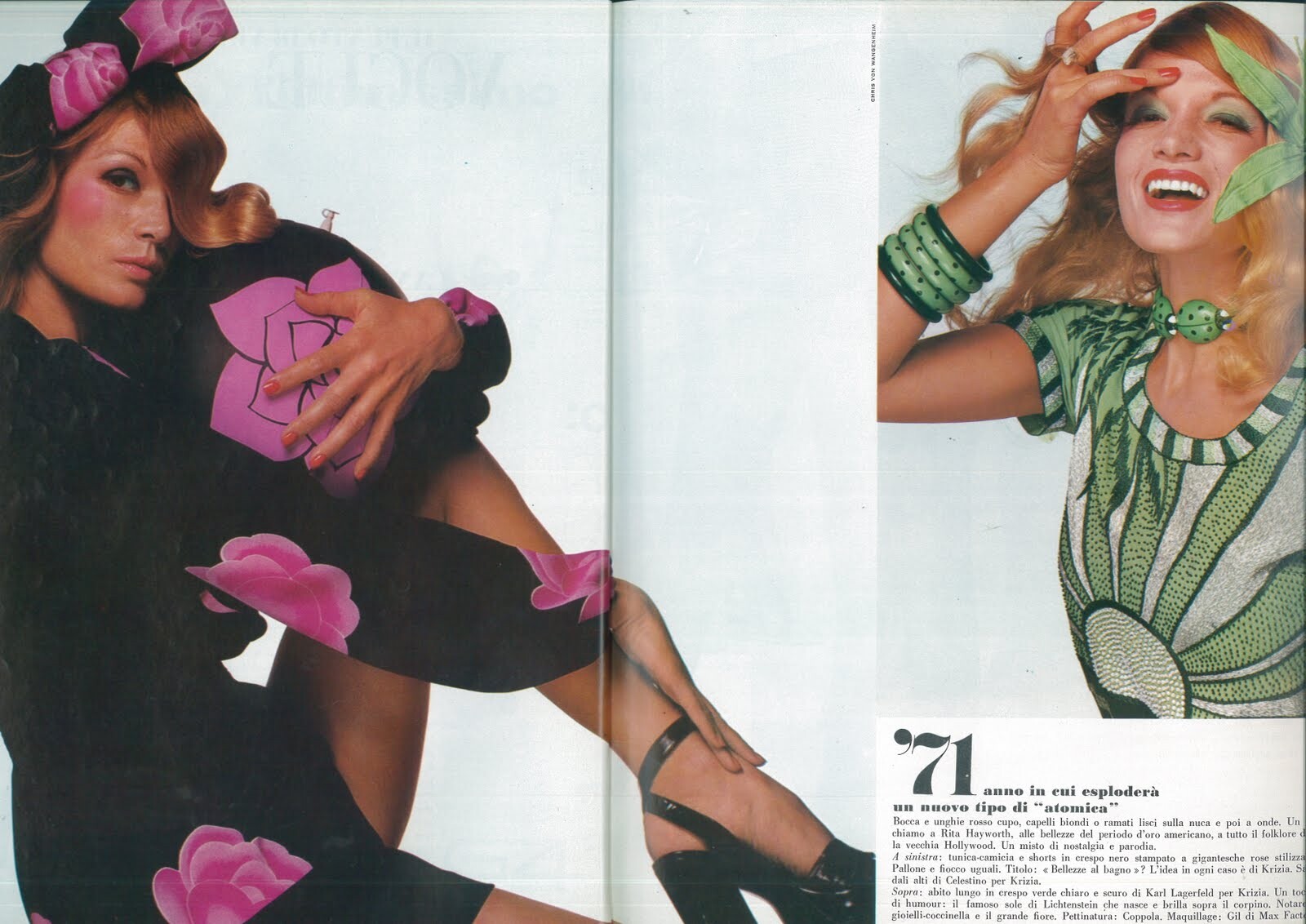
ciaovogue.blogspot.com
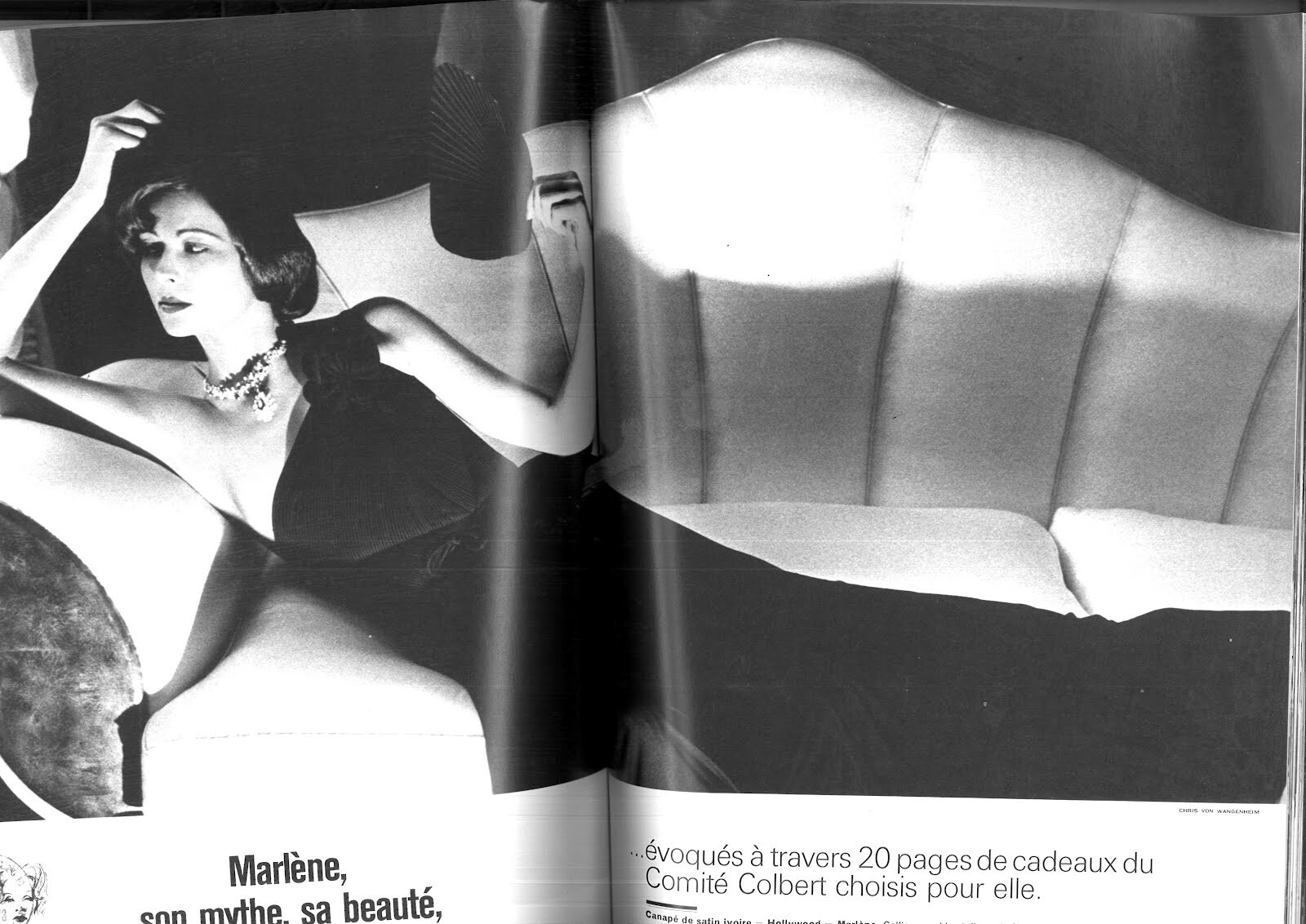
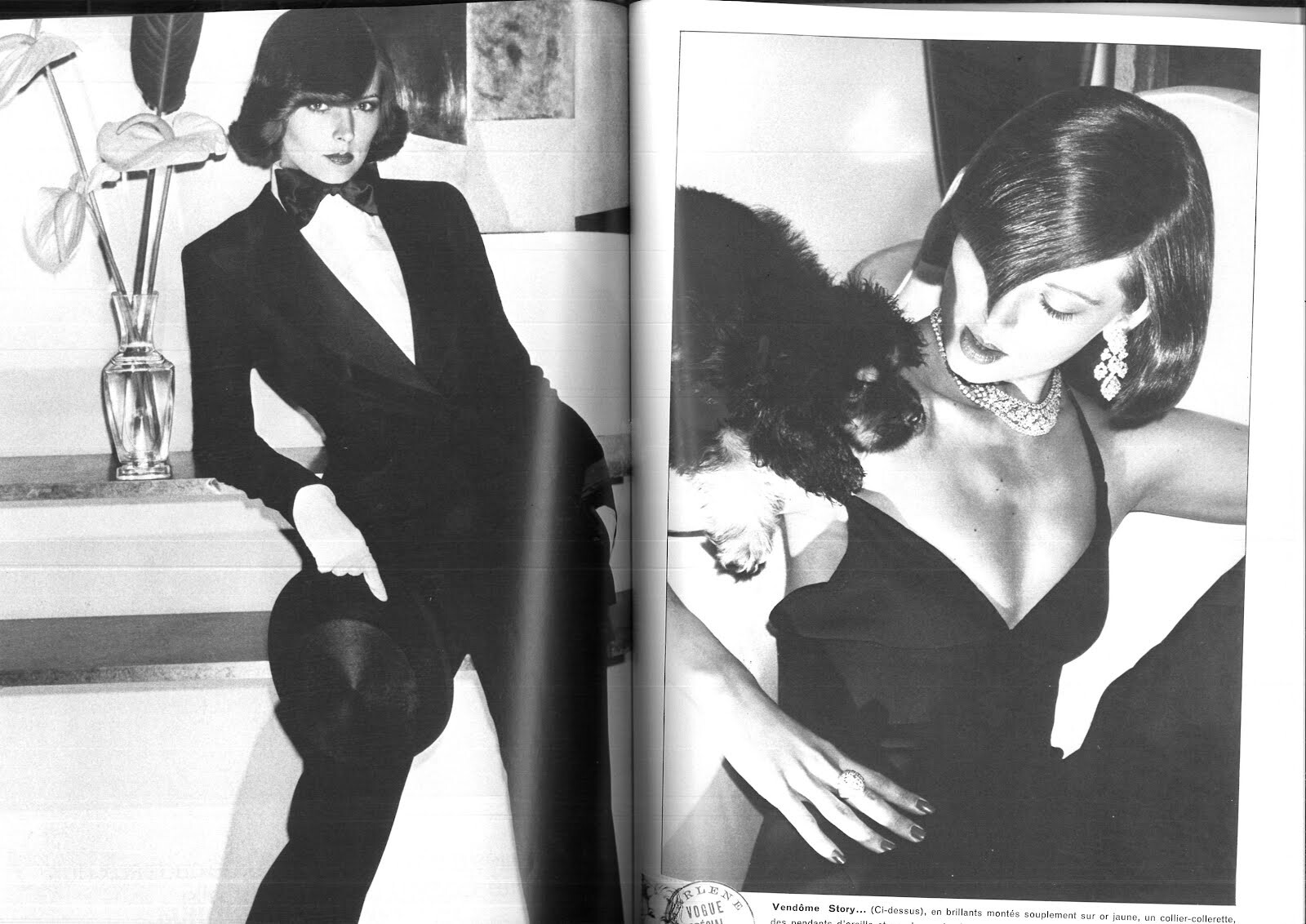
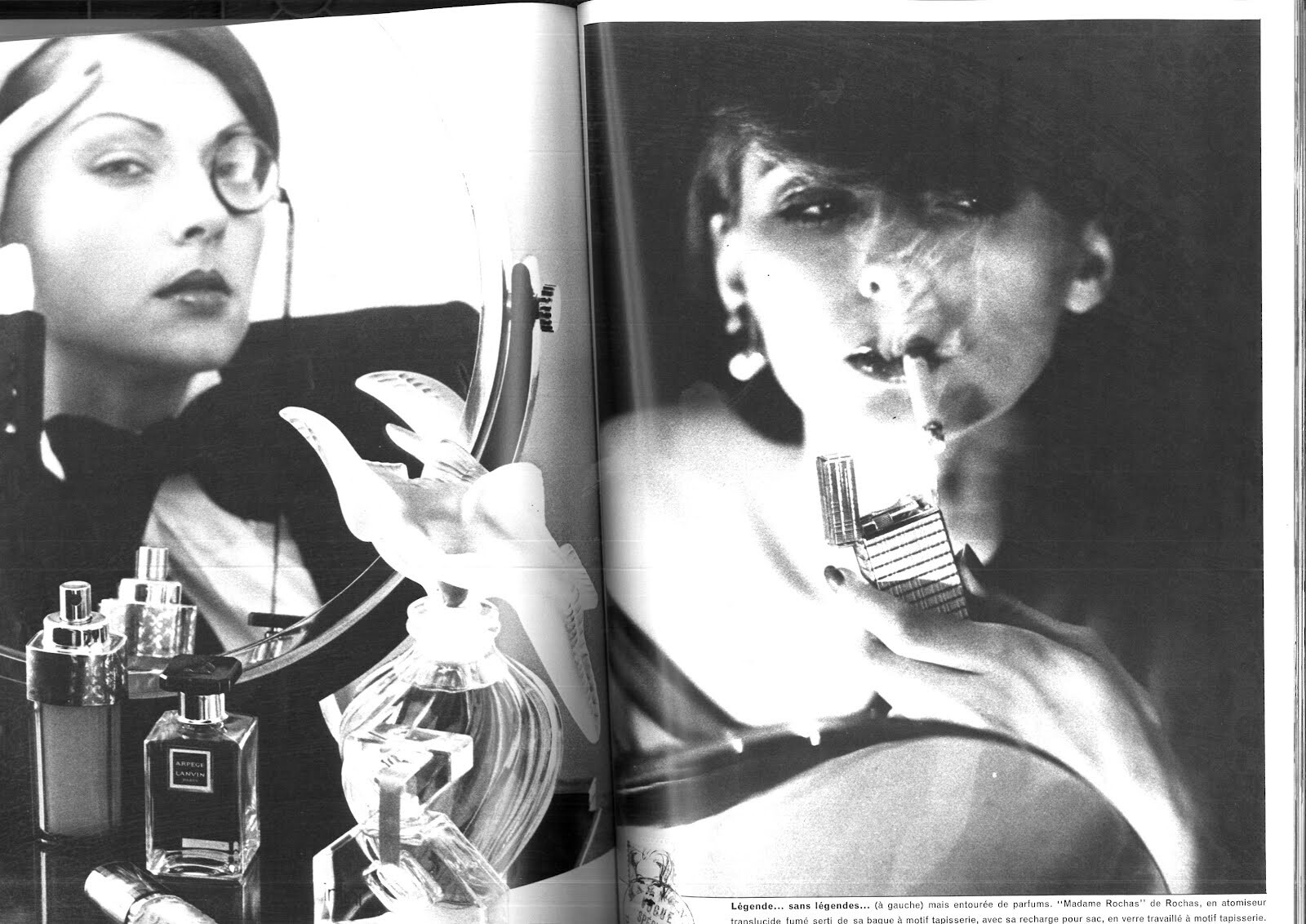
Vogue Paris December 1973/January 1974
"Marlène, Son Mythe, Sa Beauté"
Models: Regine Jaffry & Carole Singleton
Photographer: Chris von Wangenheim
WARNING: Seminudity (9th page)
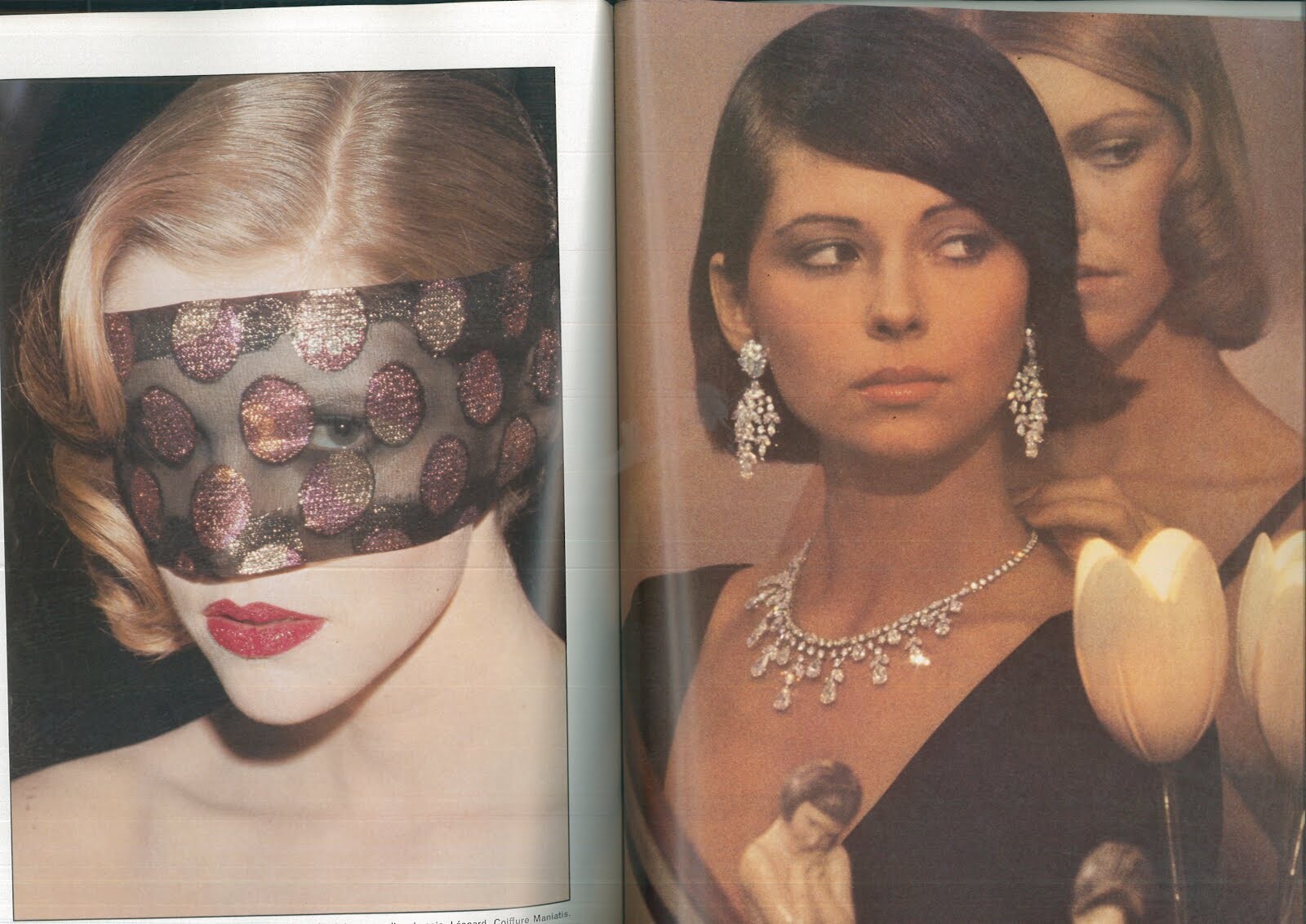
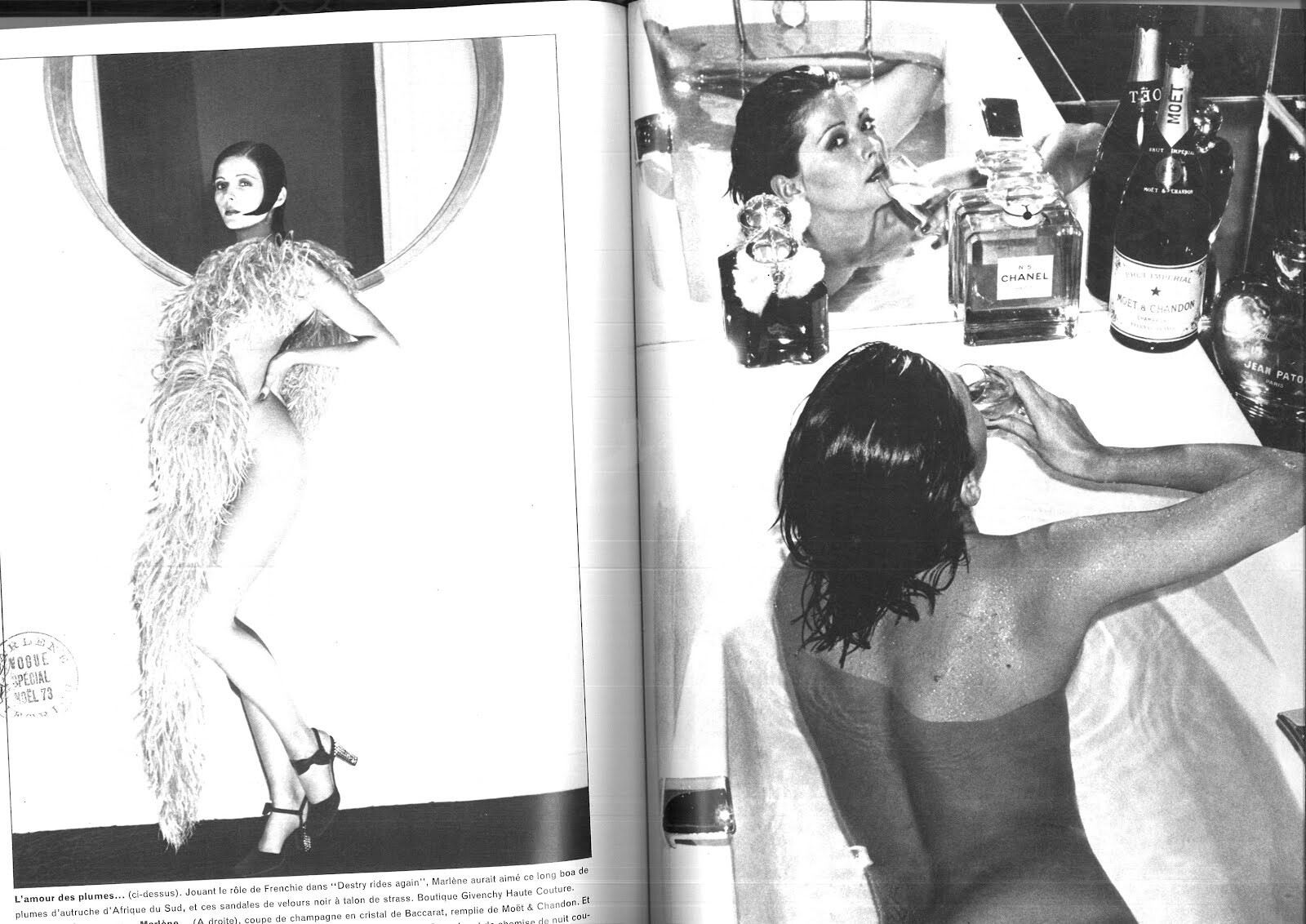
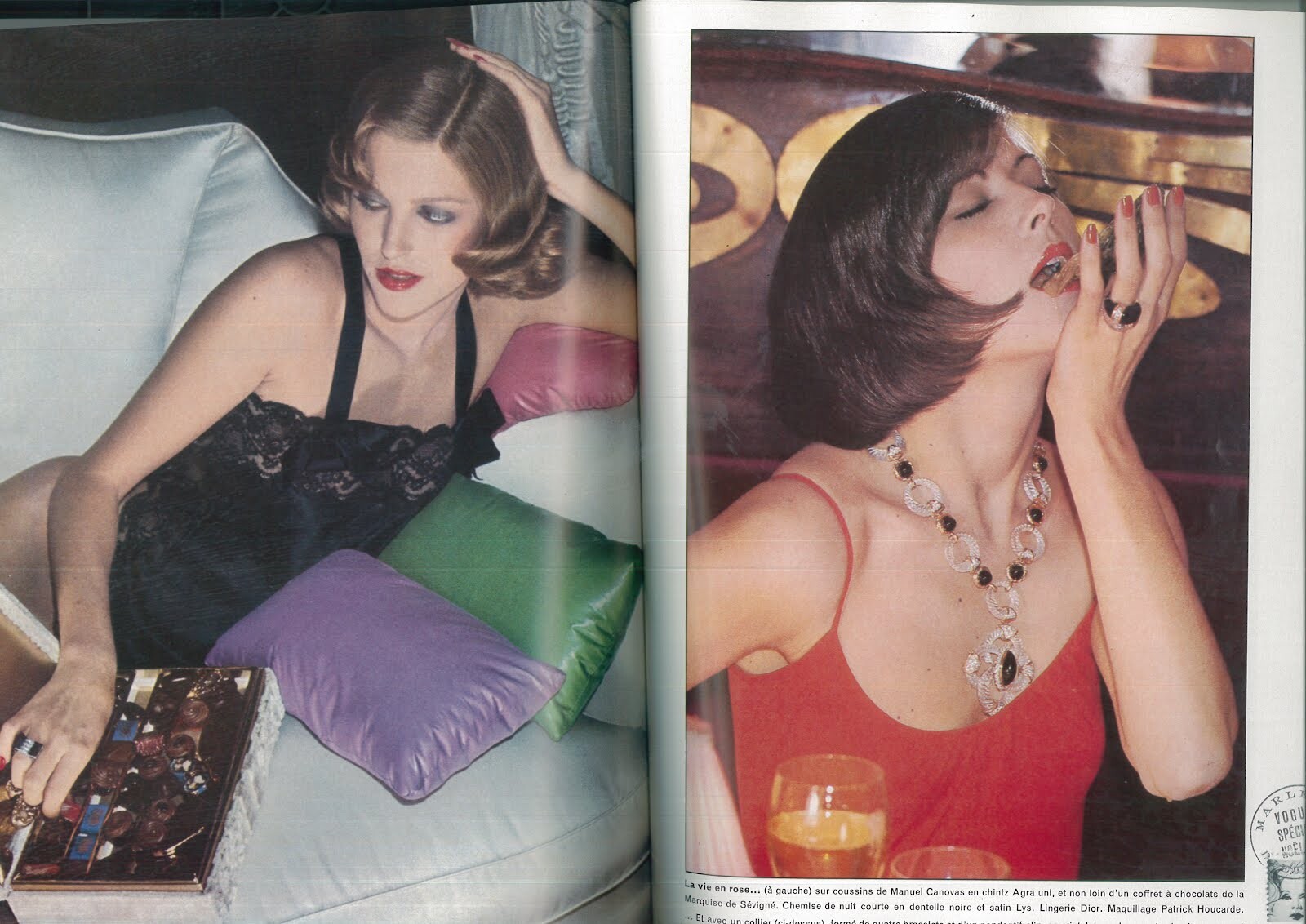
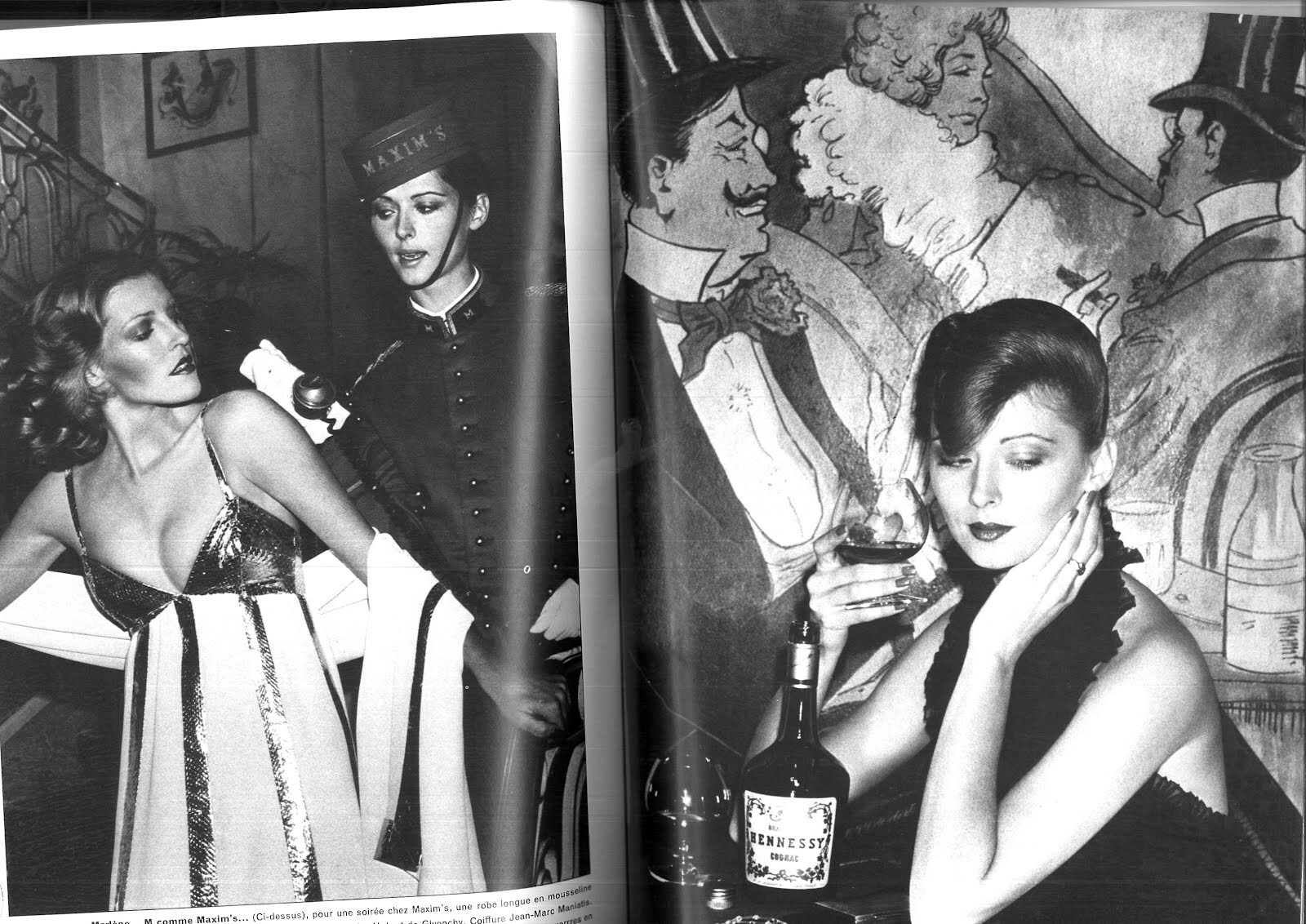
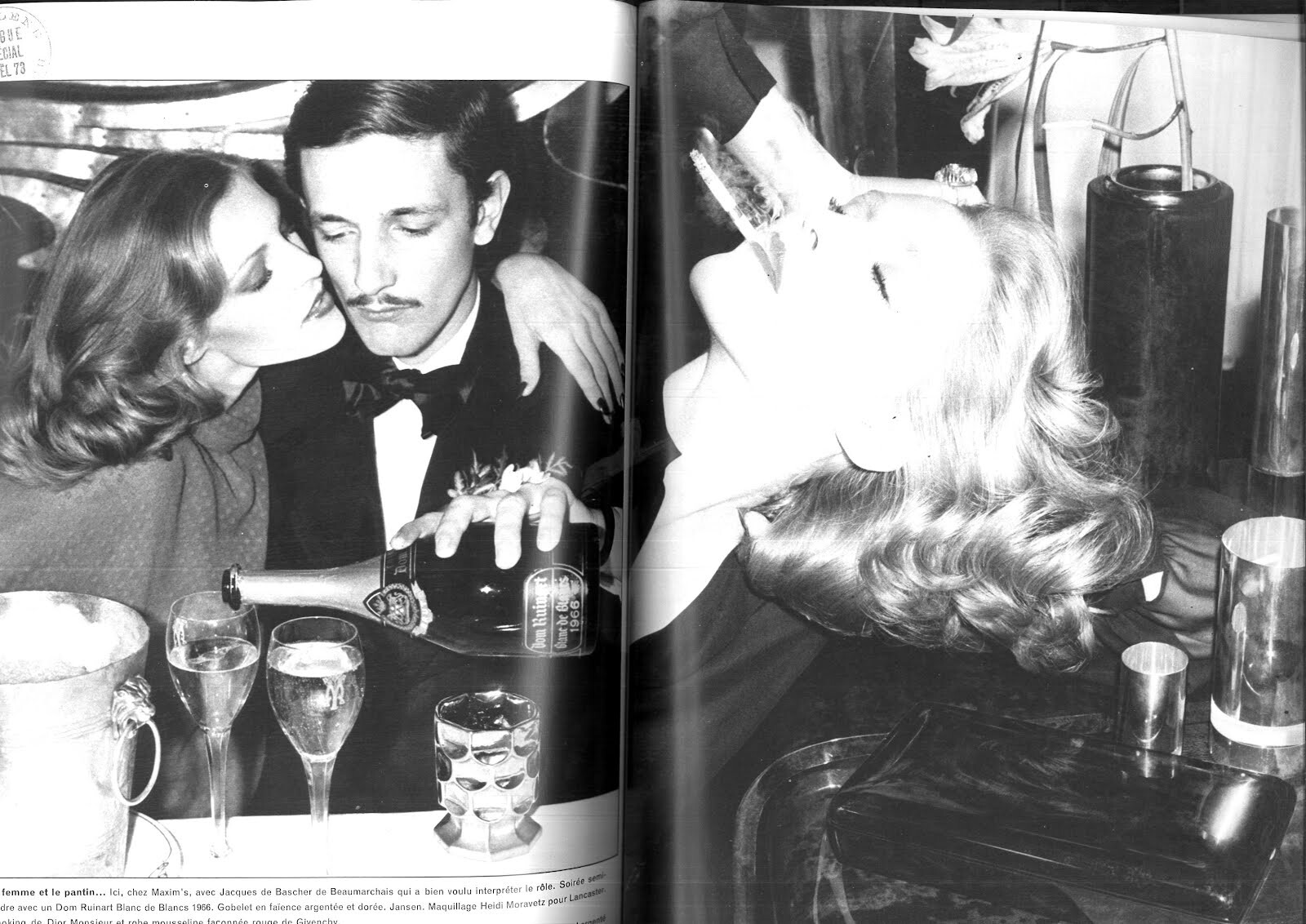
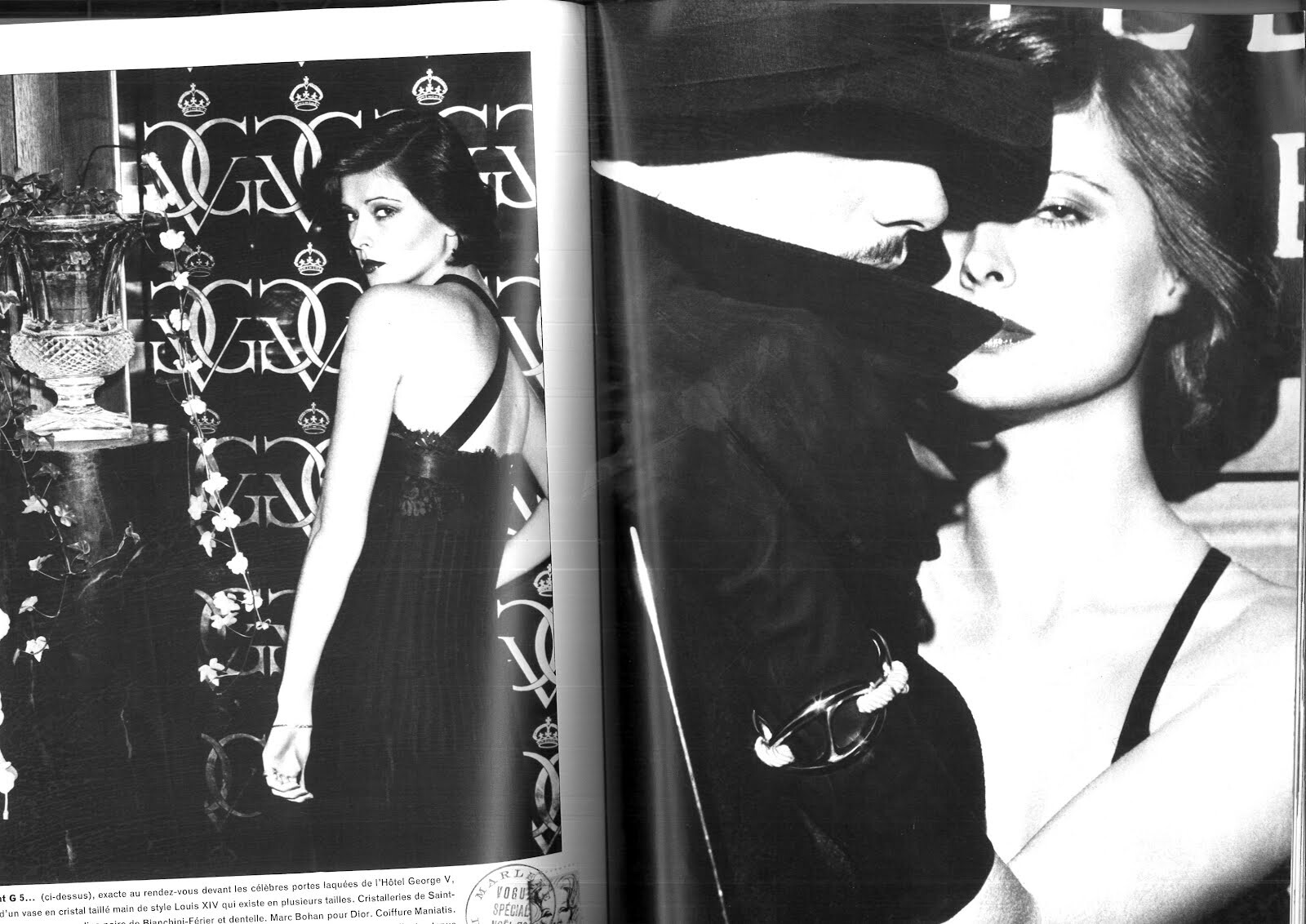
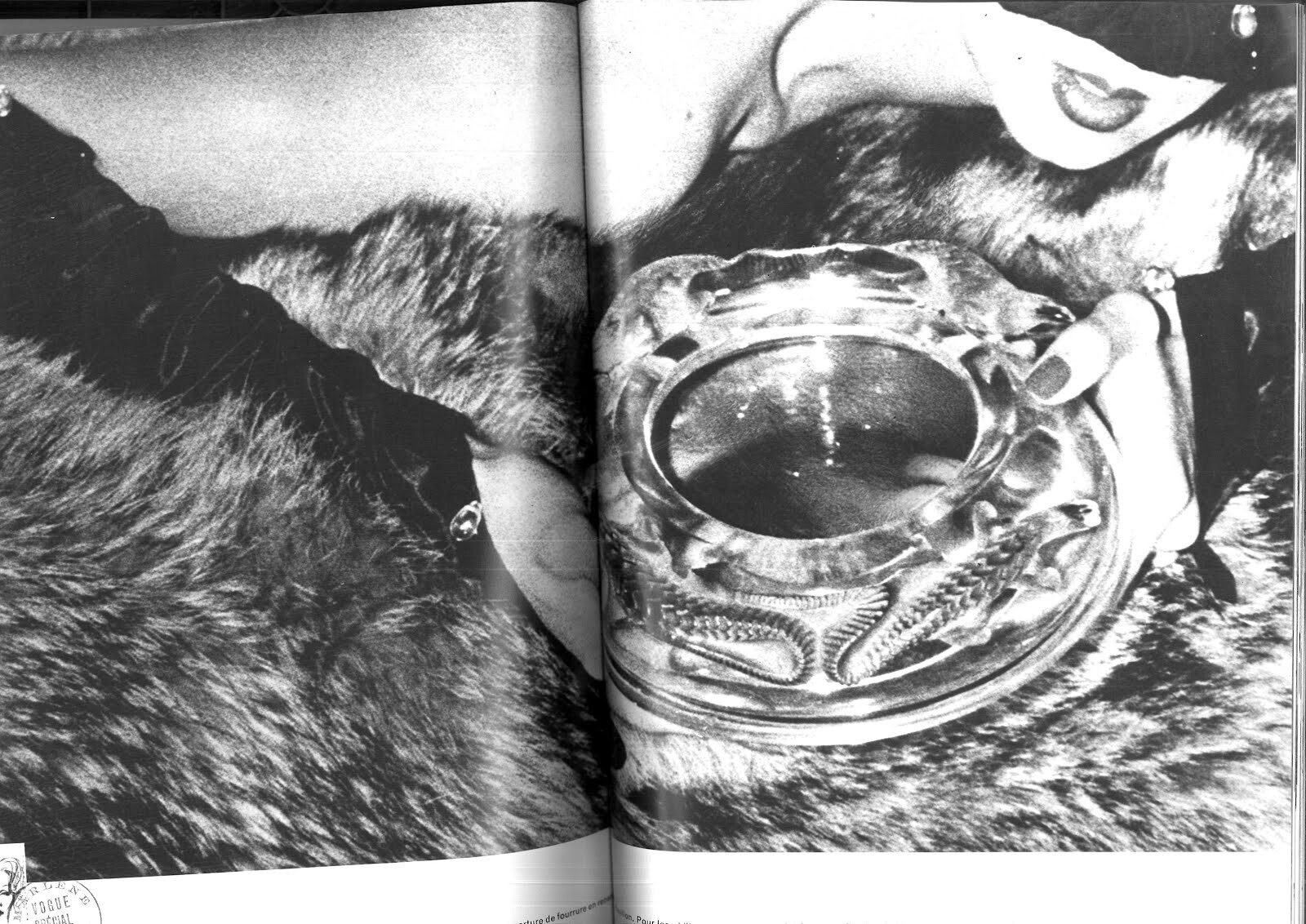
ciaovogue.blogspot.com
Vogue Italia January 1971
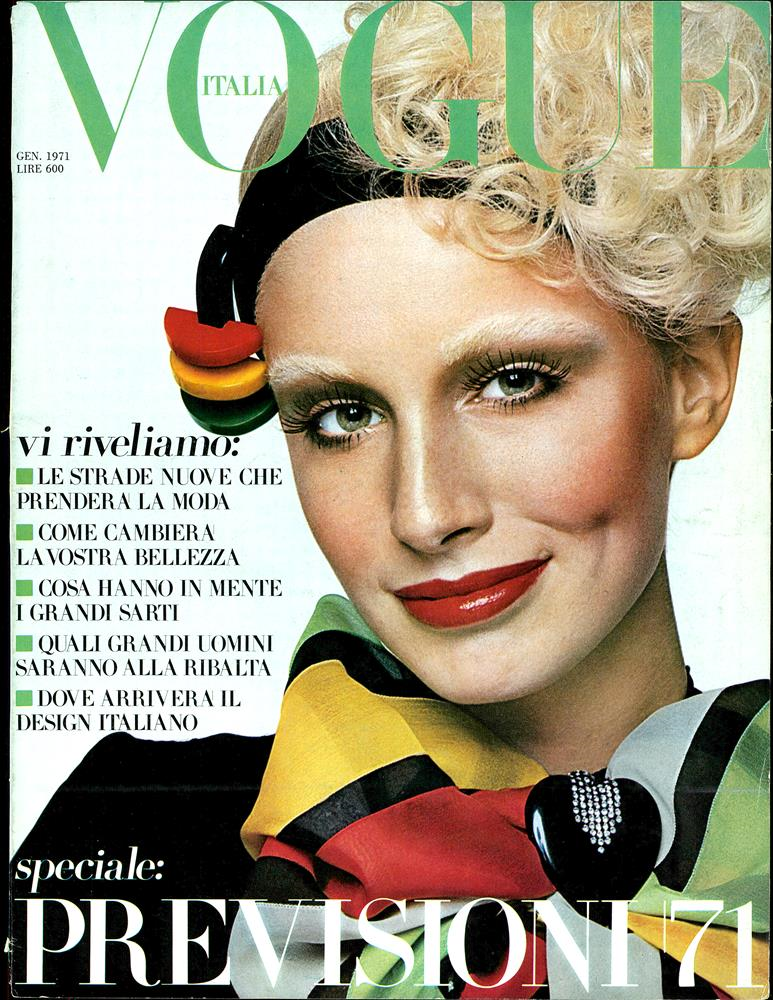
Model: Donna Jordan
Photographer: Chris von Wangenheim
Hair: Jean-Marc Maniatis
Makeup: Corey Tippin
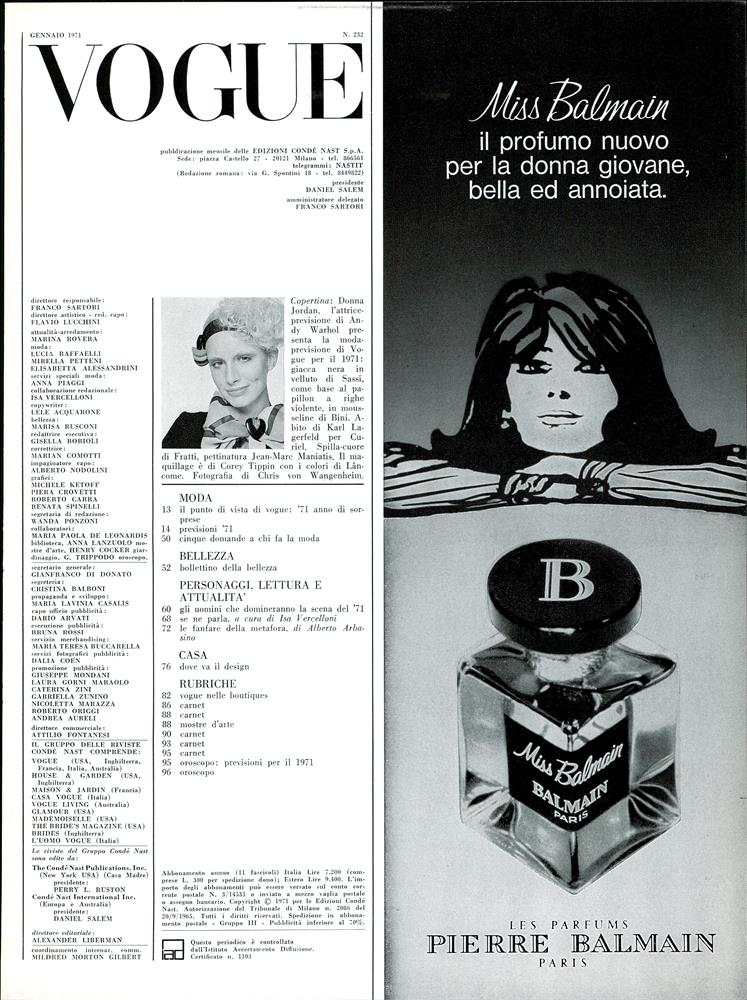
Vogue Italia Archivio
On 7/31/2020 at 6:49 PM, Vogue Girl said:Vogue Italia January 1971
"'71 Anno di Sorprese"
Models: Willy van Rooy, Wallis Franken, Beshka Sorensen, Agneta "Mouche" Bylander, Jane Hitchcock, Kerry-Ann Mueller & Unknowns
Photographers: Chris von Wangenheim, Alfa Castaldi, Jean-Jacques Bugat & Gianni Turillazzi
Hair: Aldo Coppola, Alba, Gerald & Laurence
Makeup: Gil
Digital Version
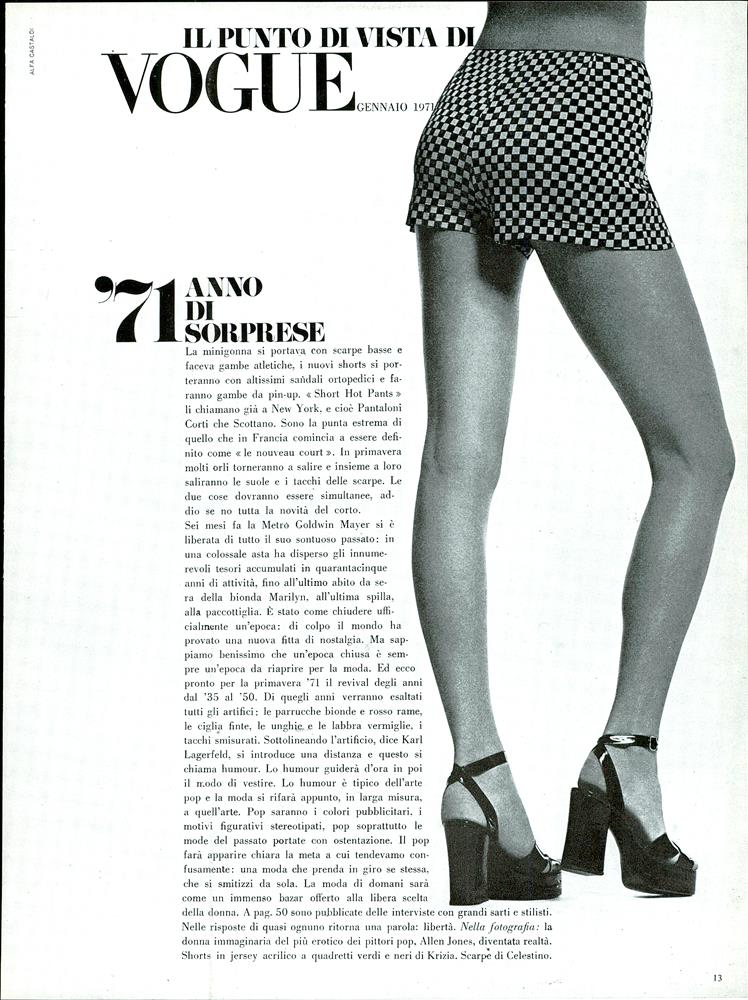
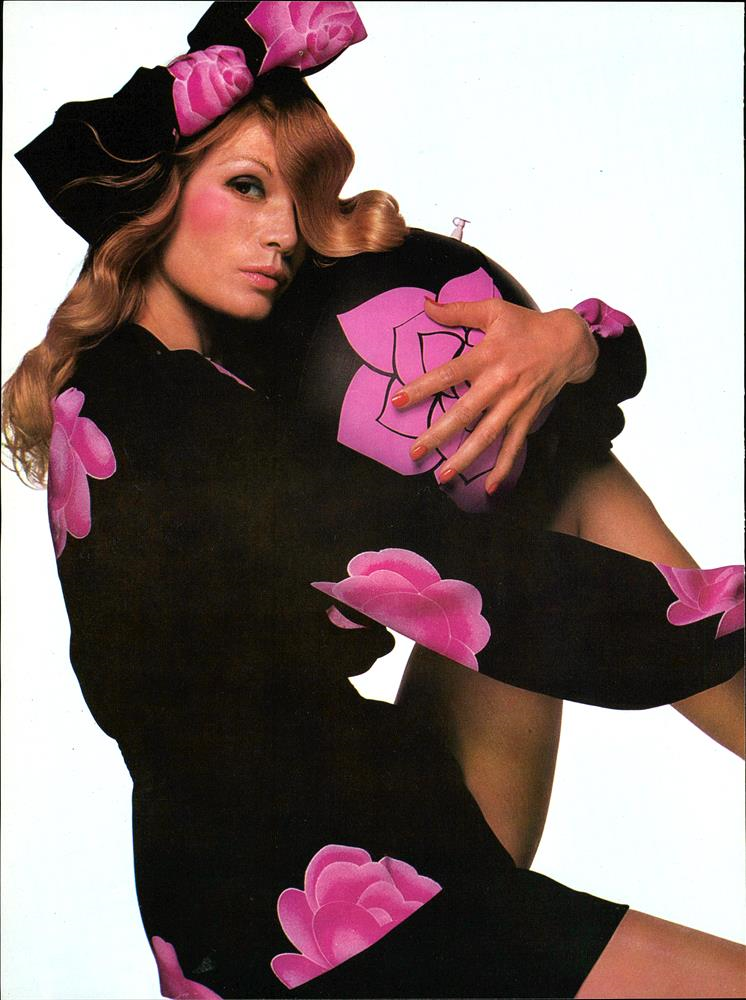
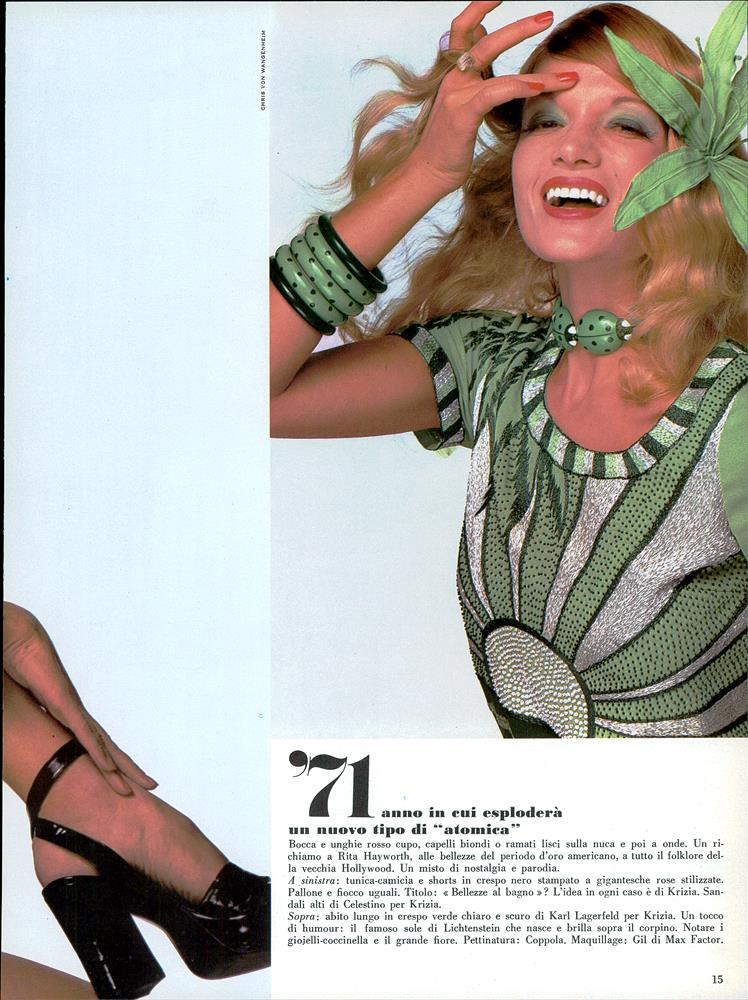
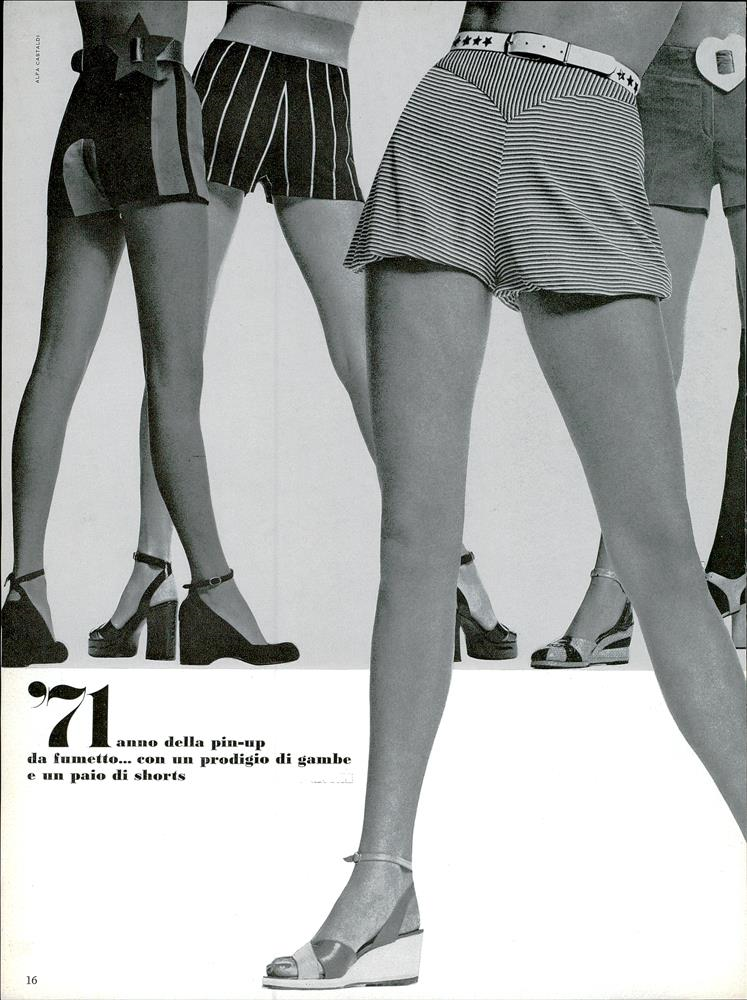
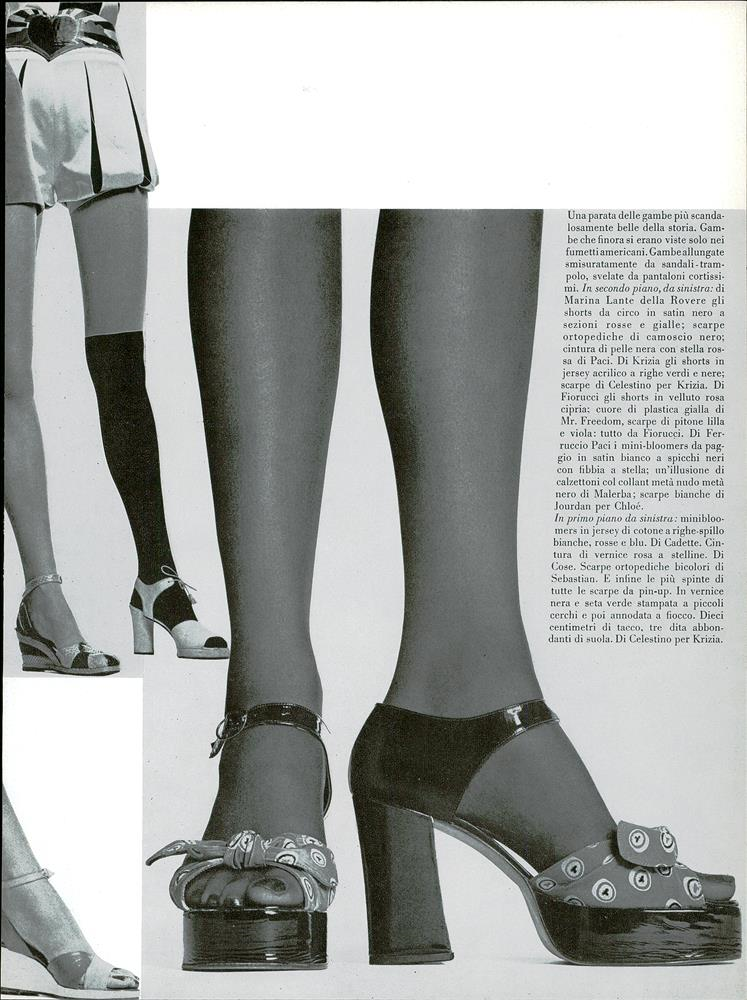
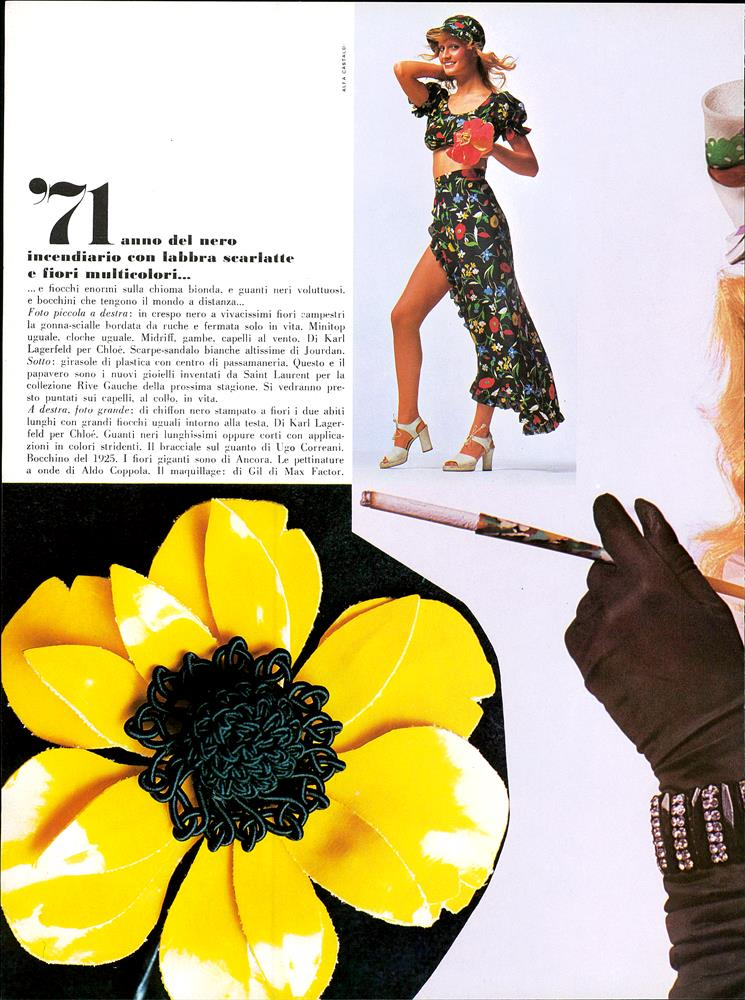
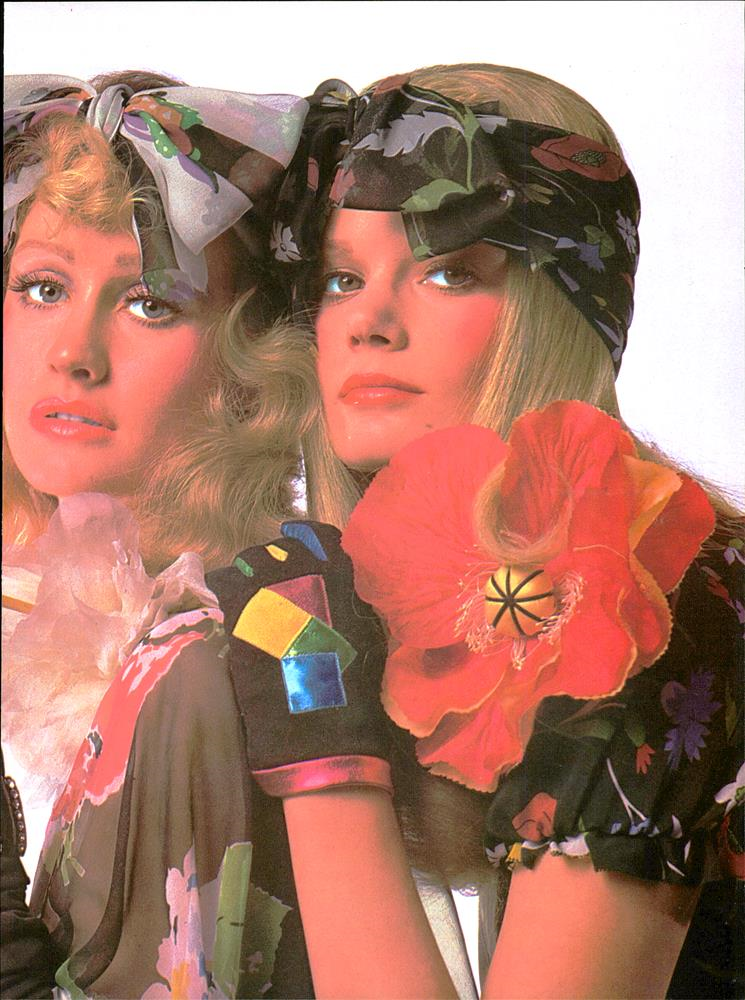
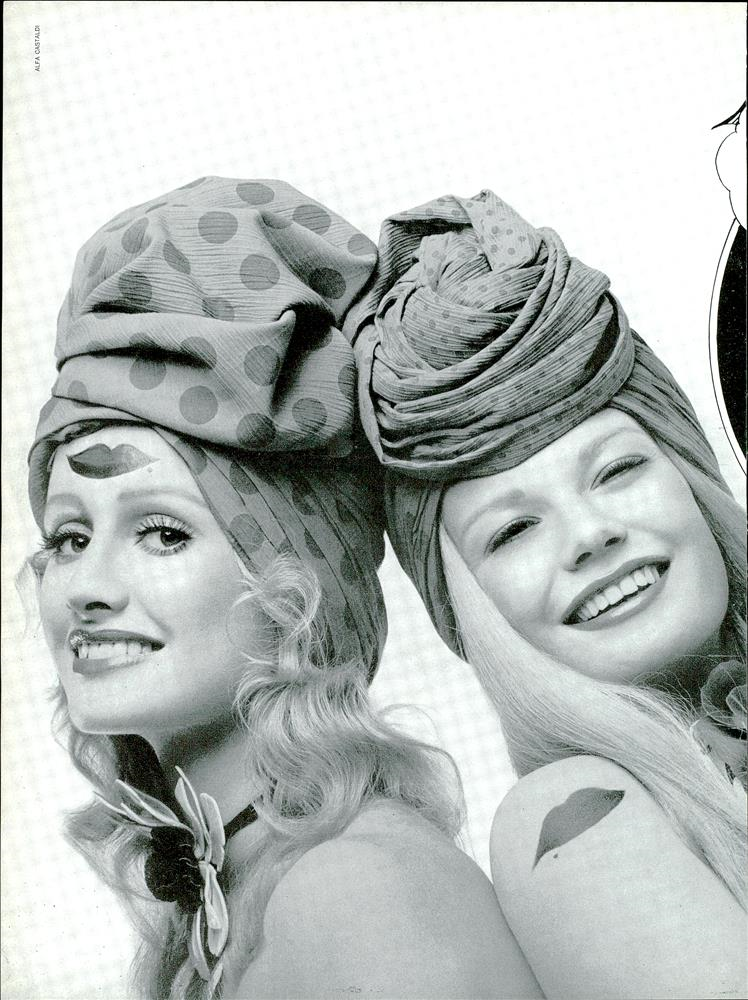
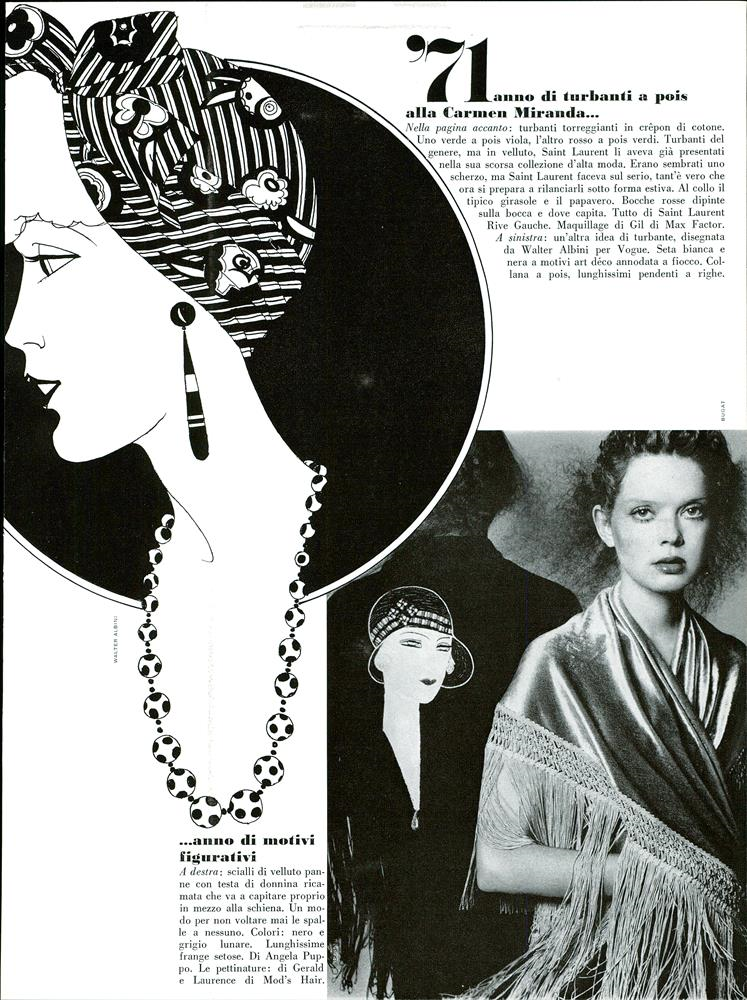
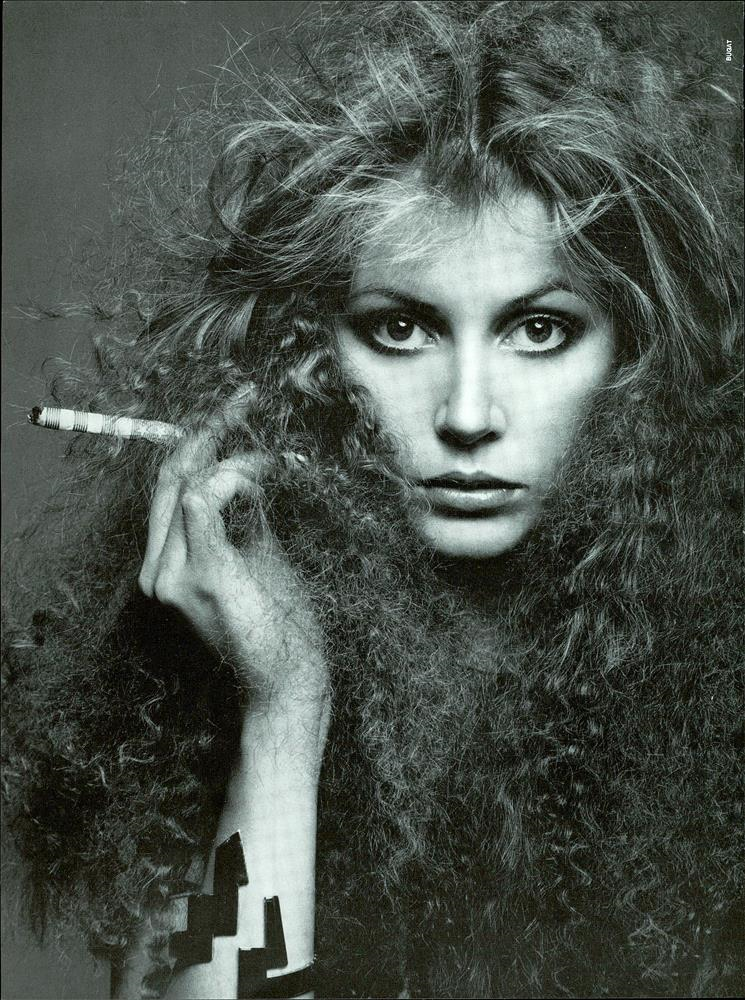
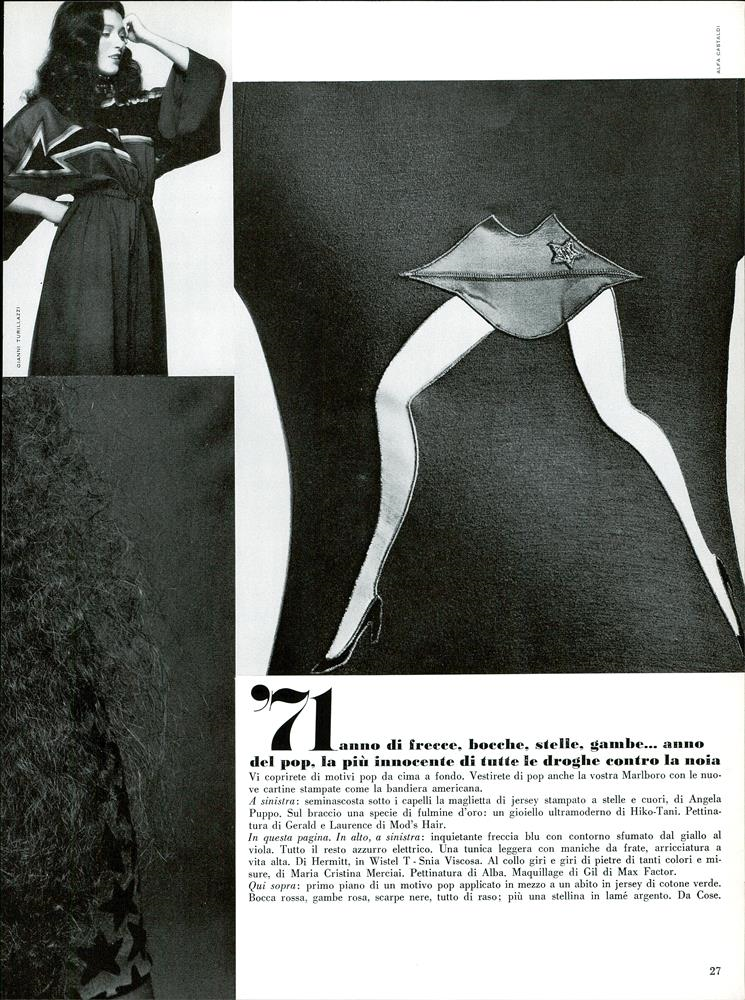
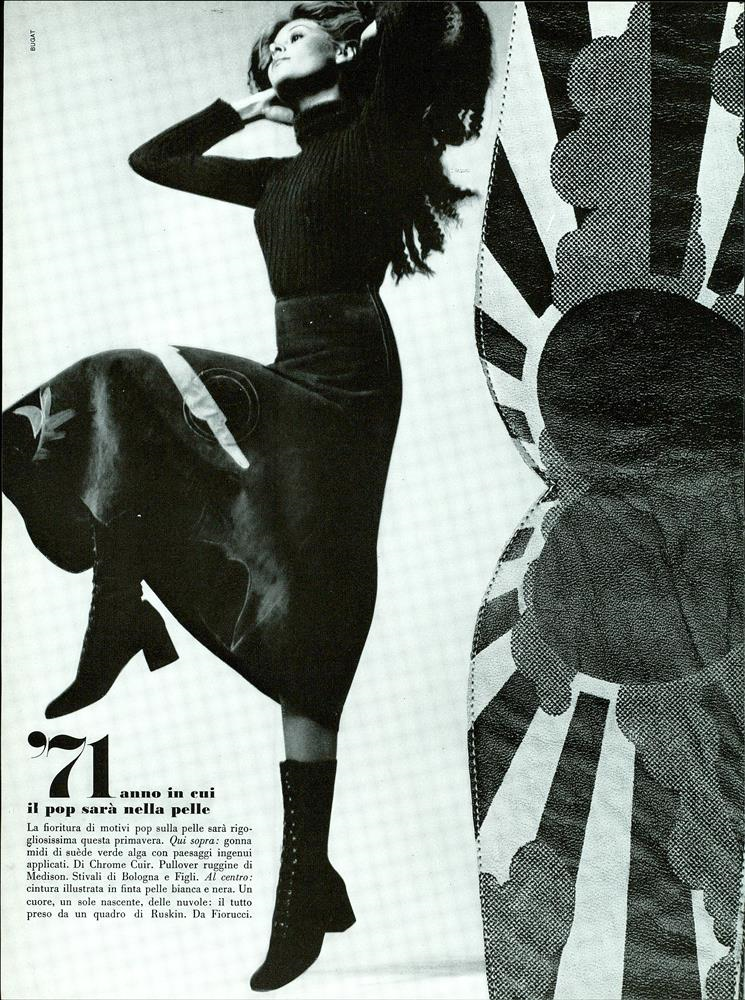
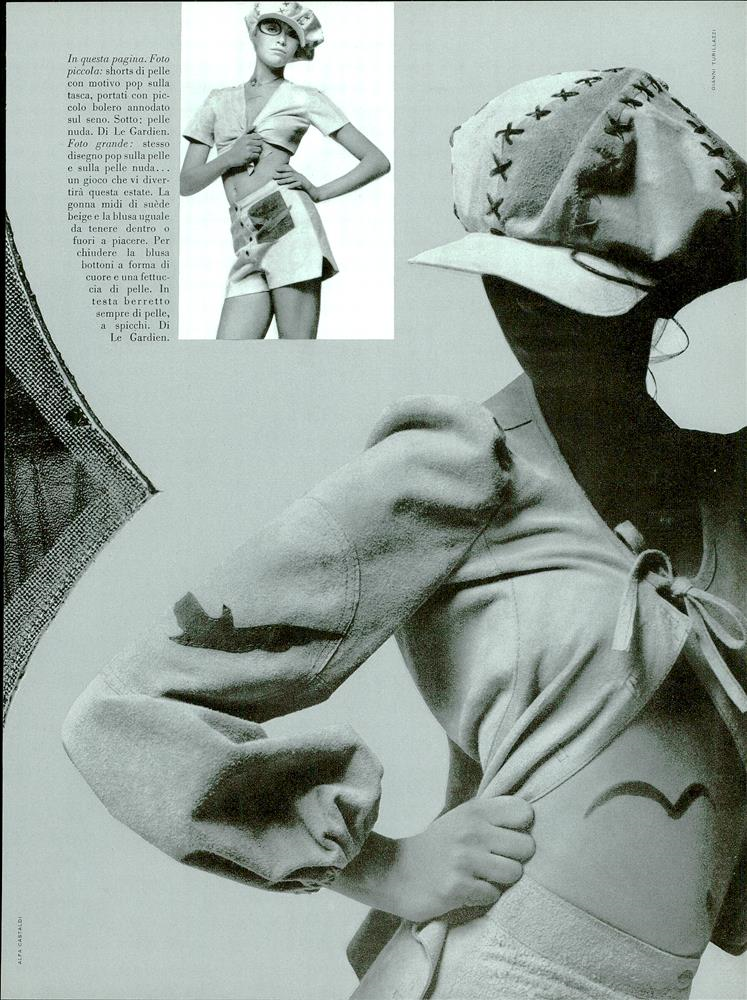
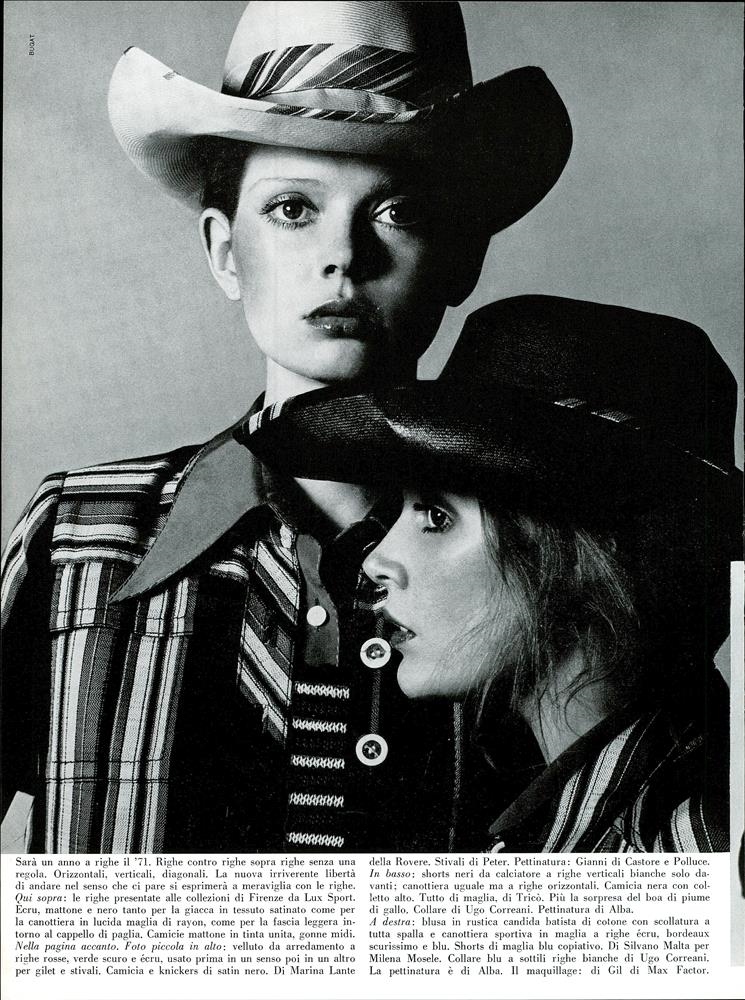
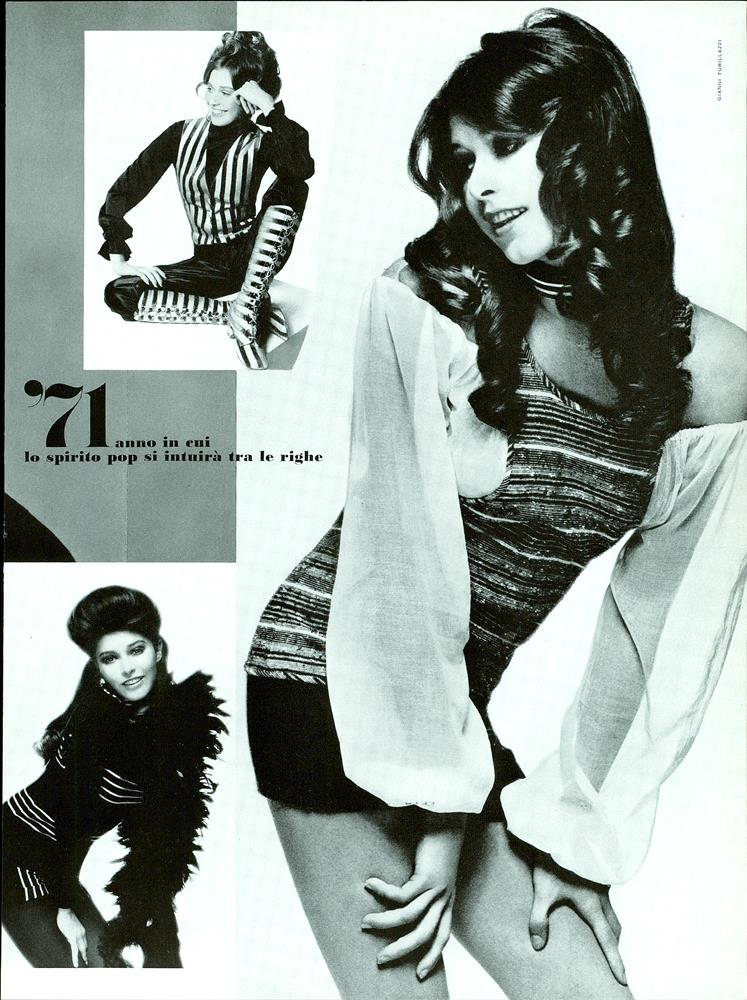
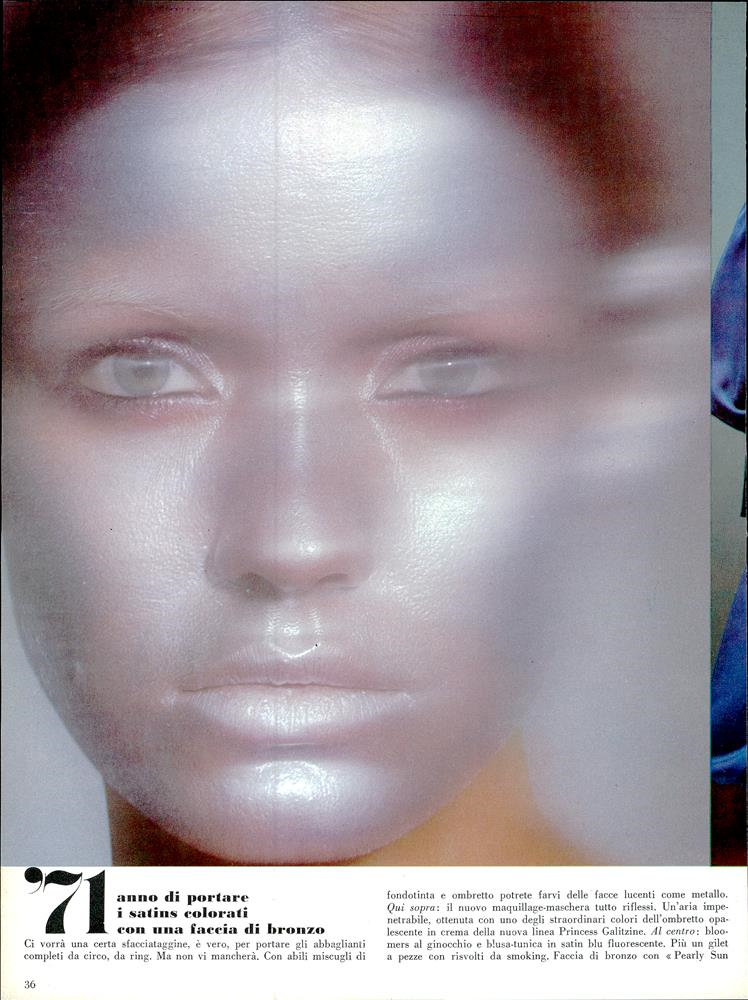
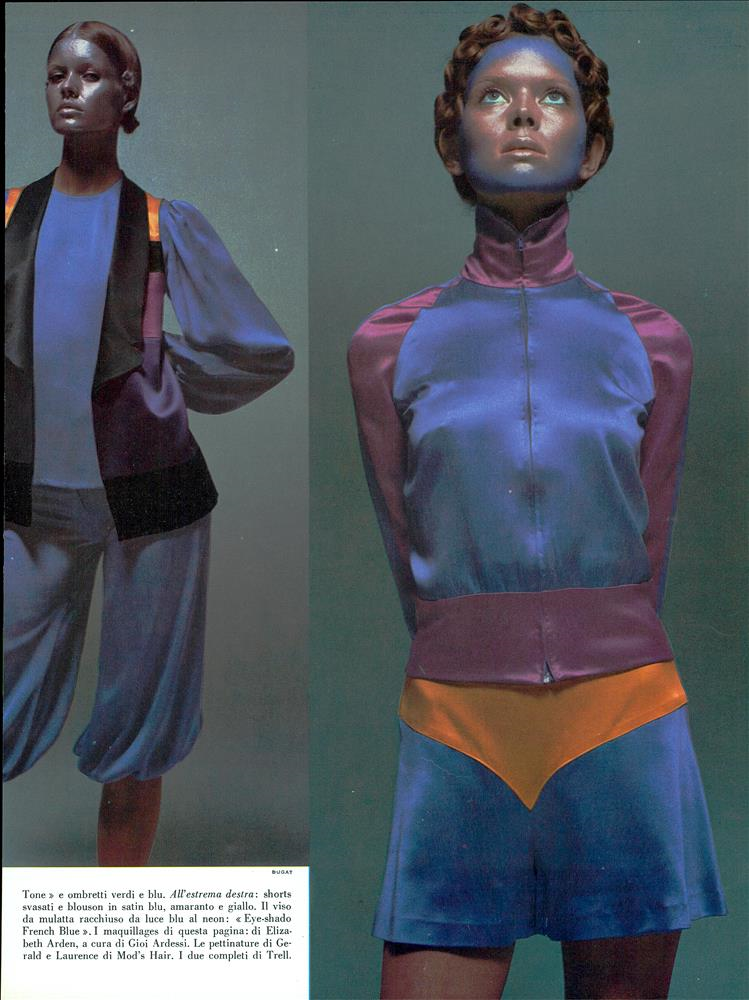
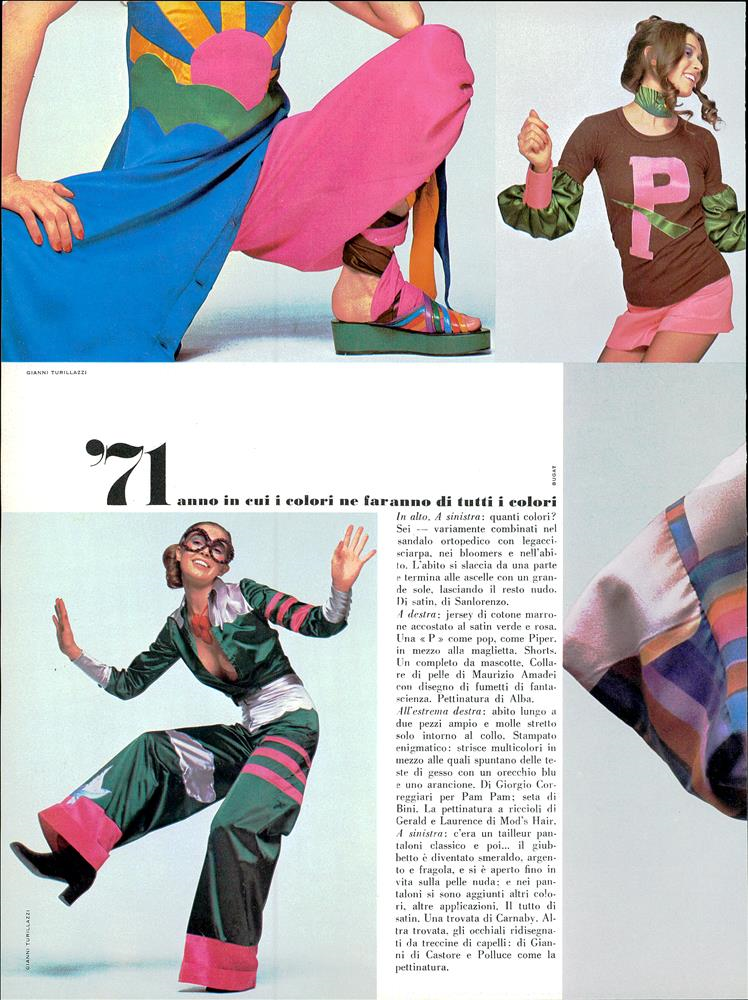
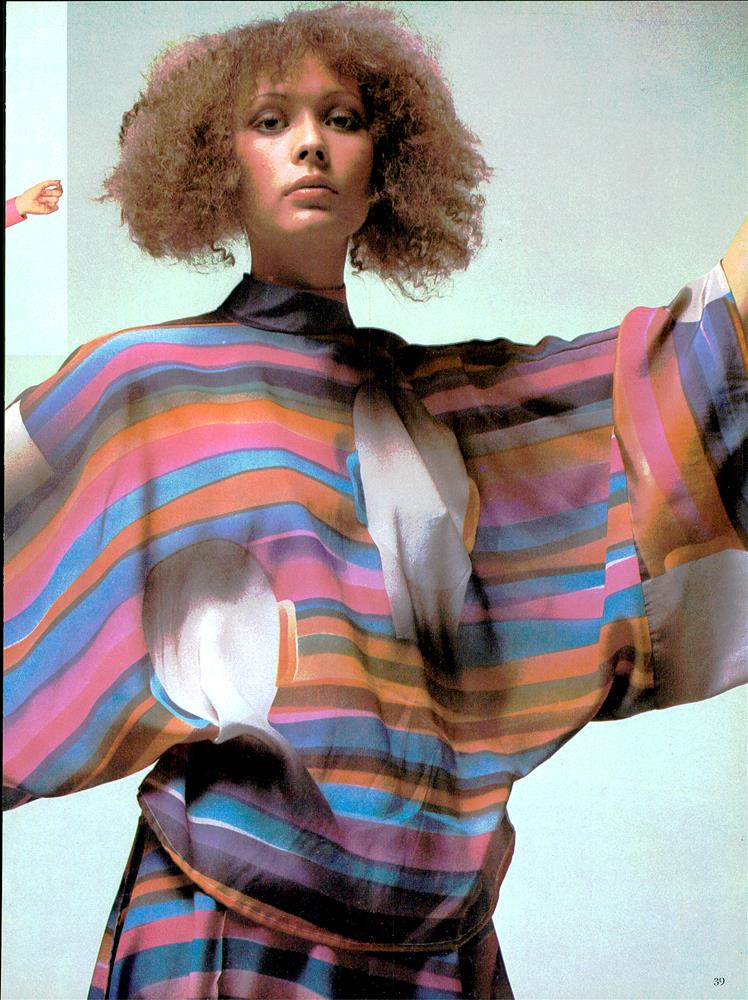
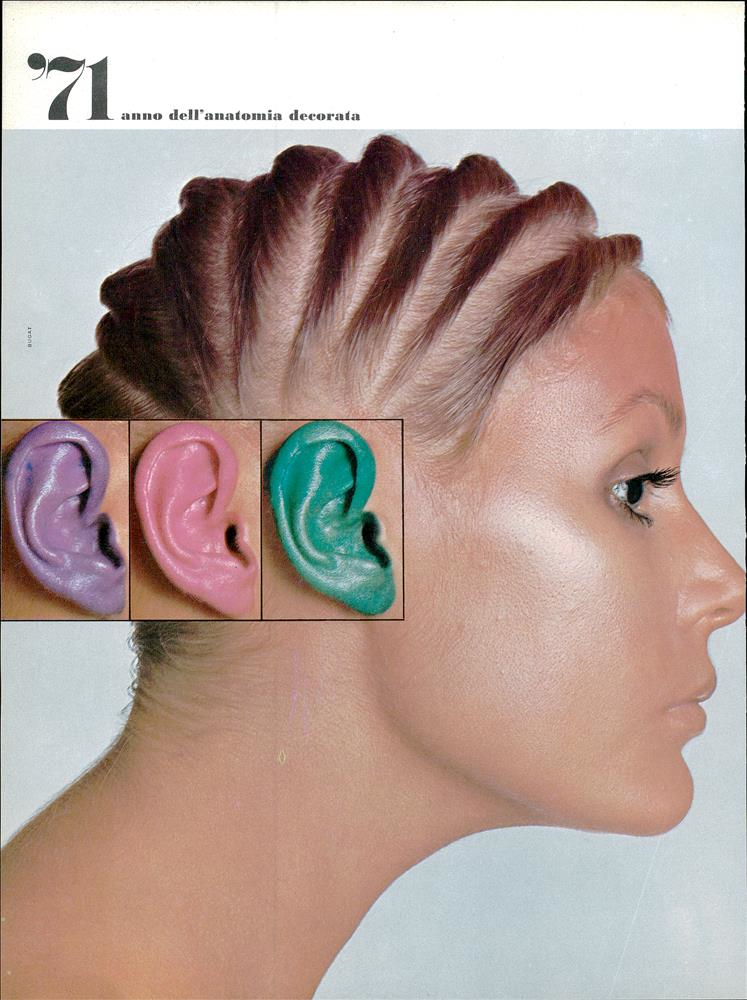
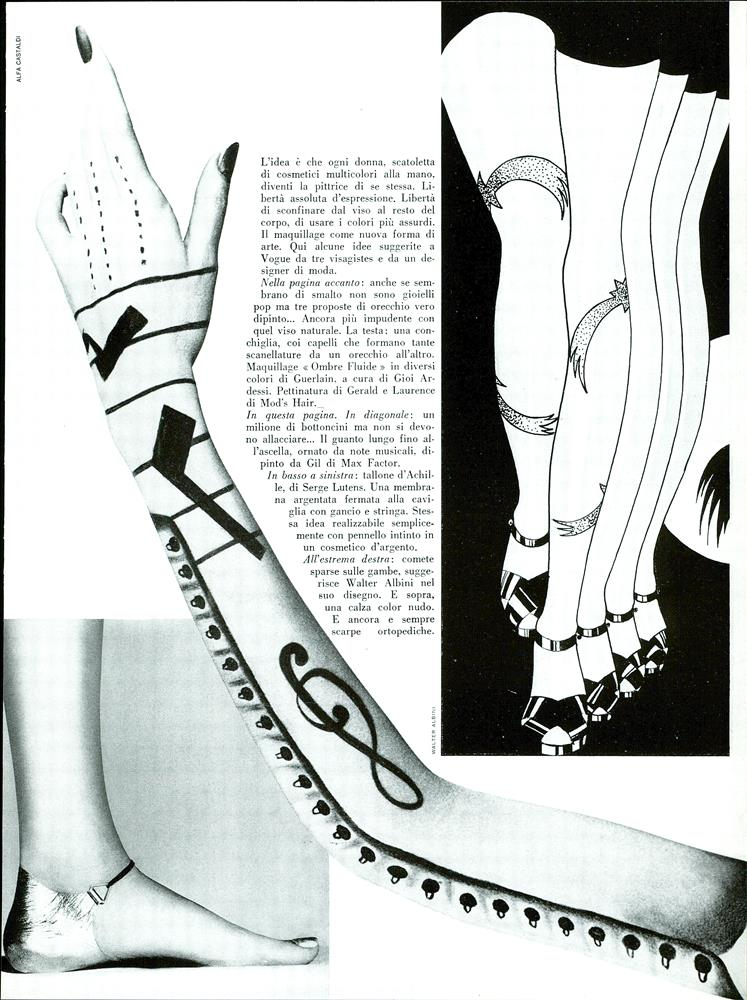
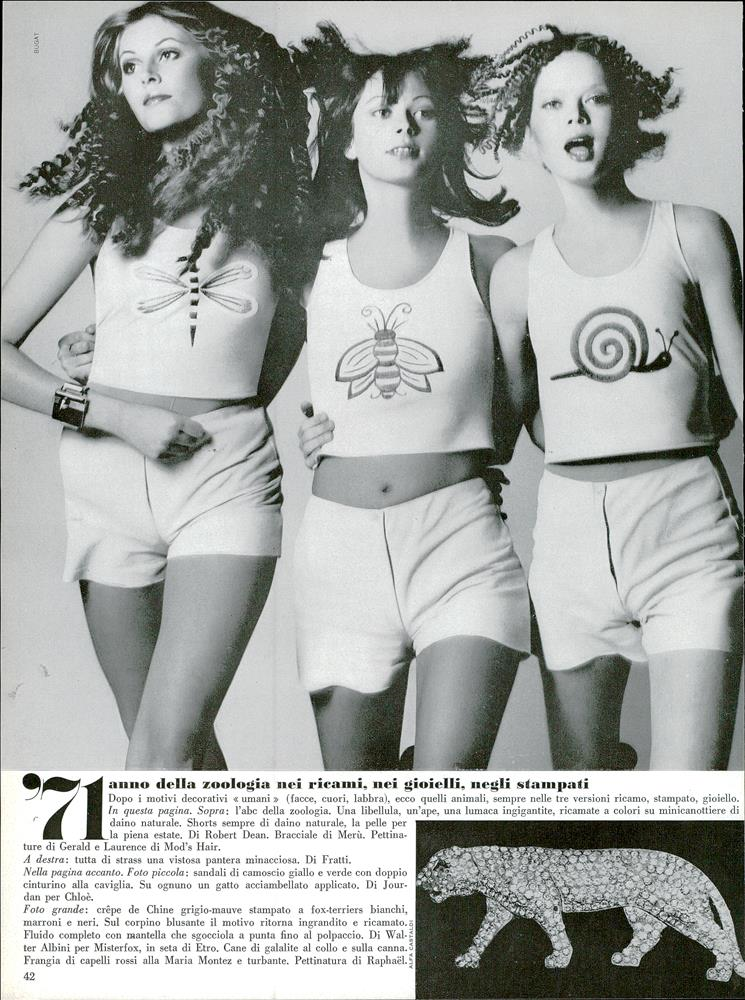
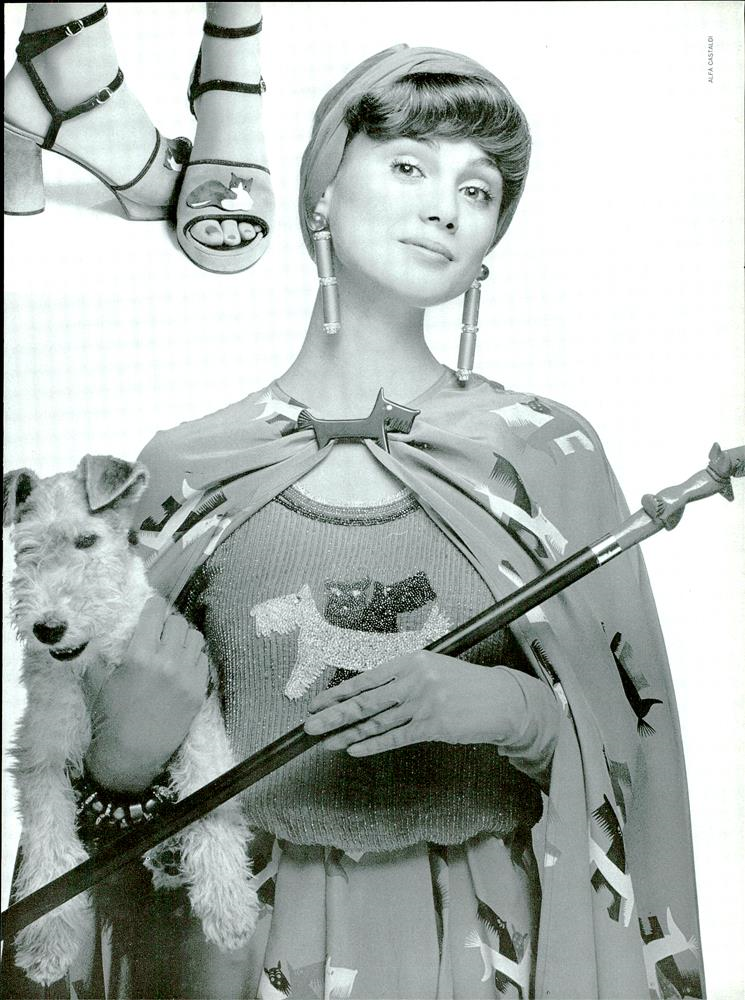
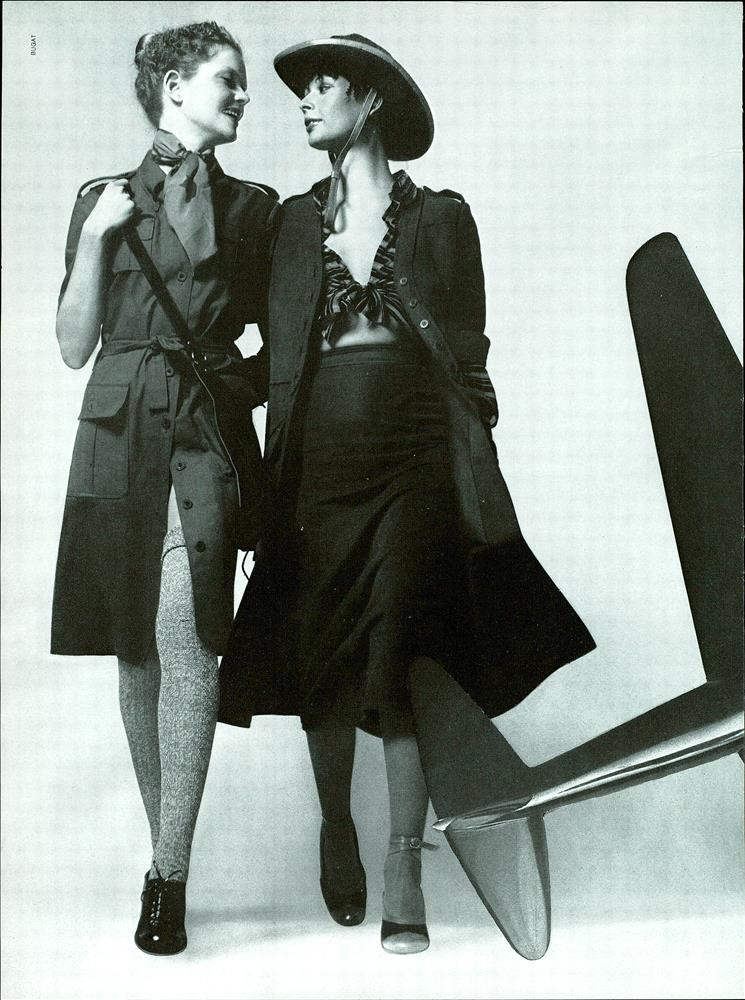
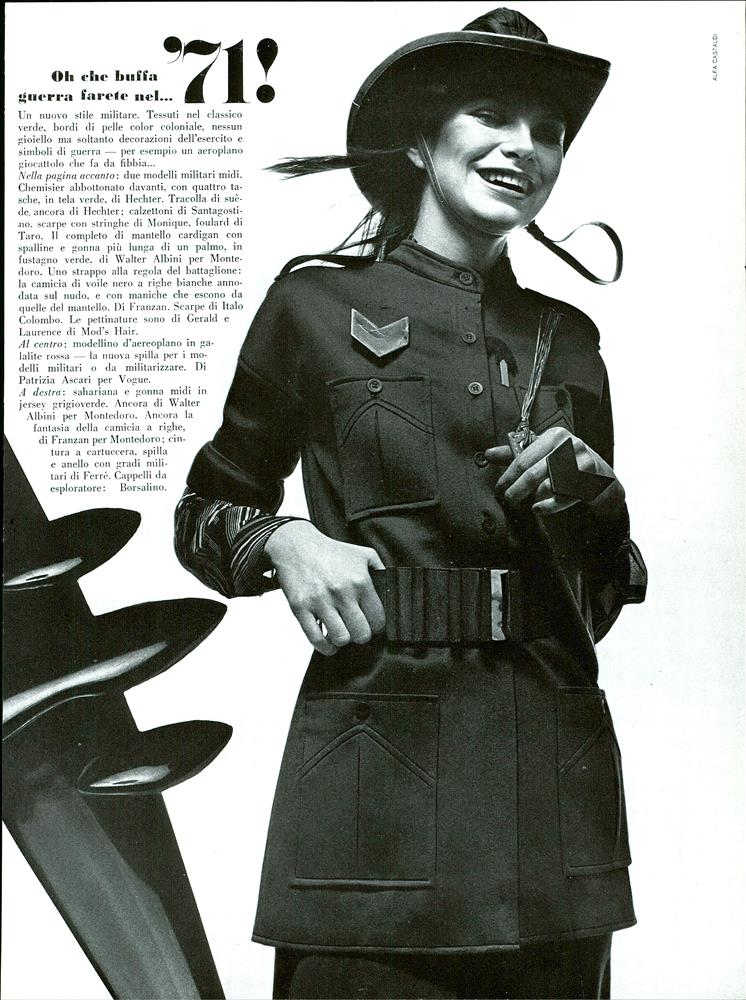
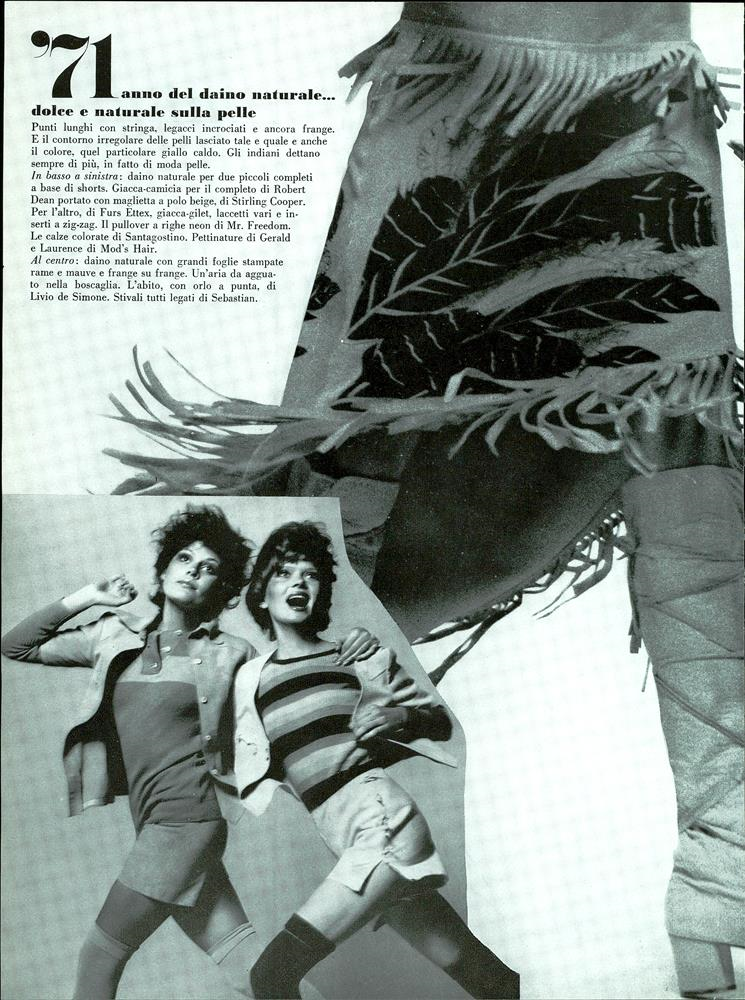
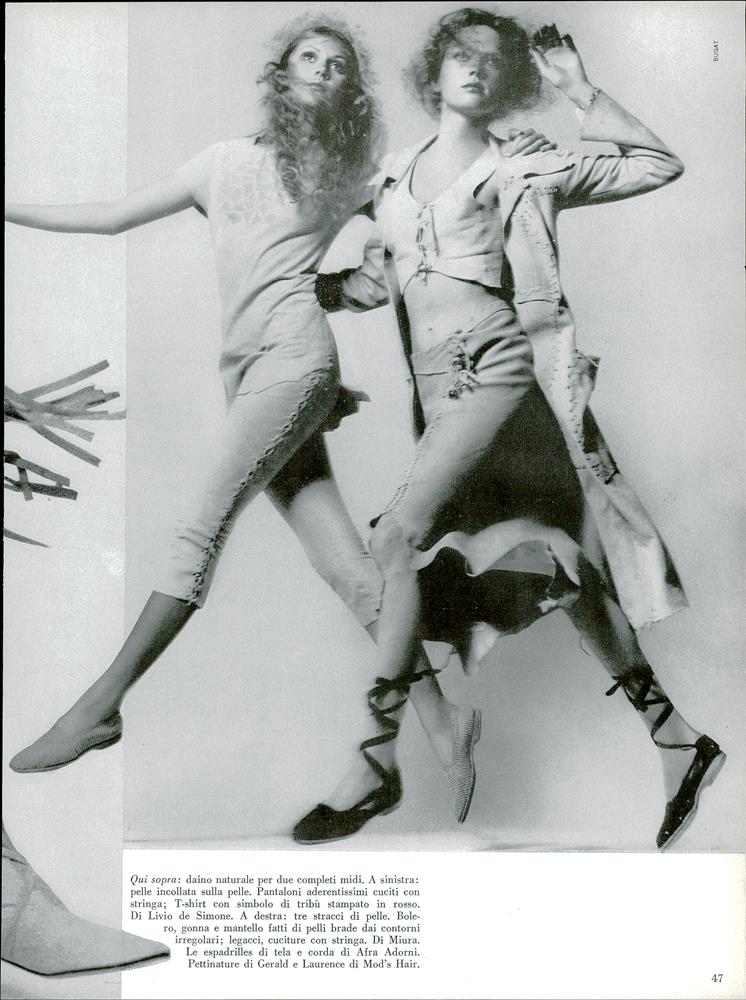
Vogue Italia Archivio
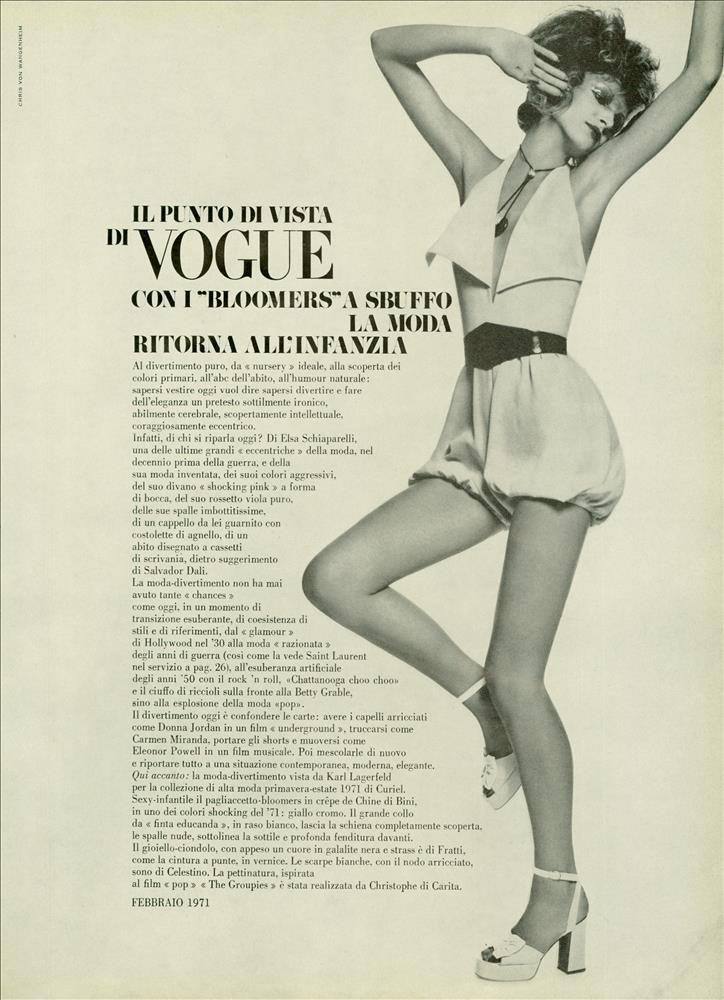
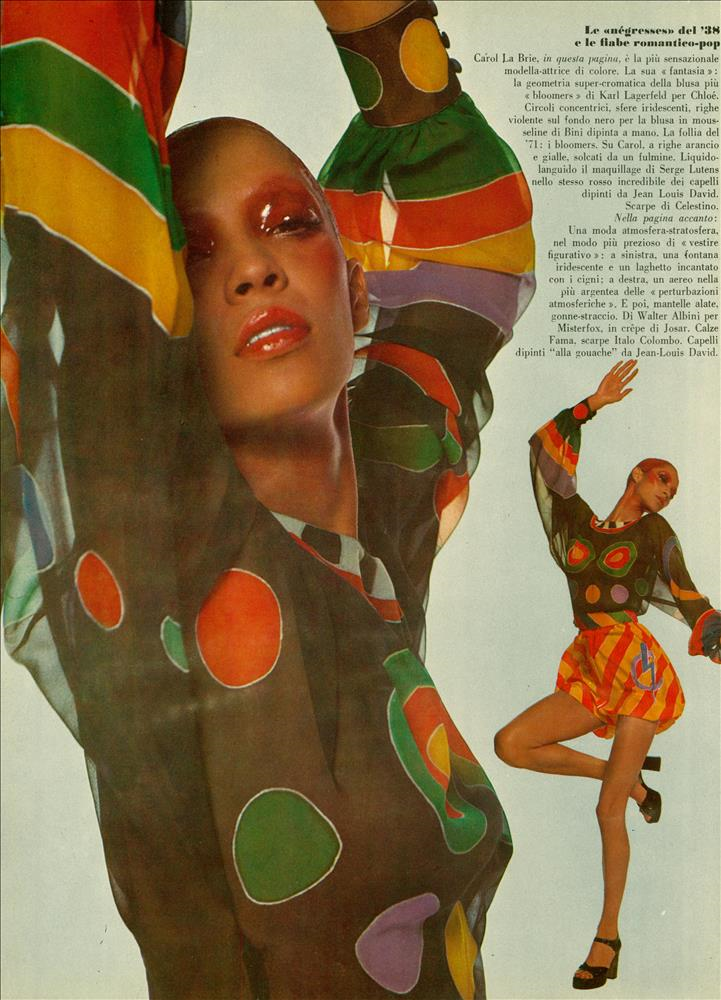
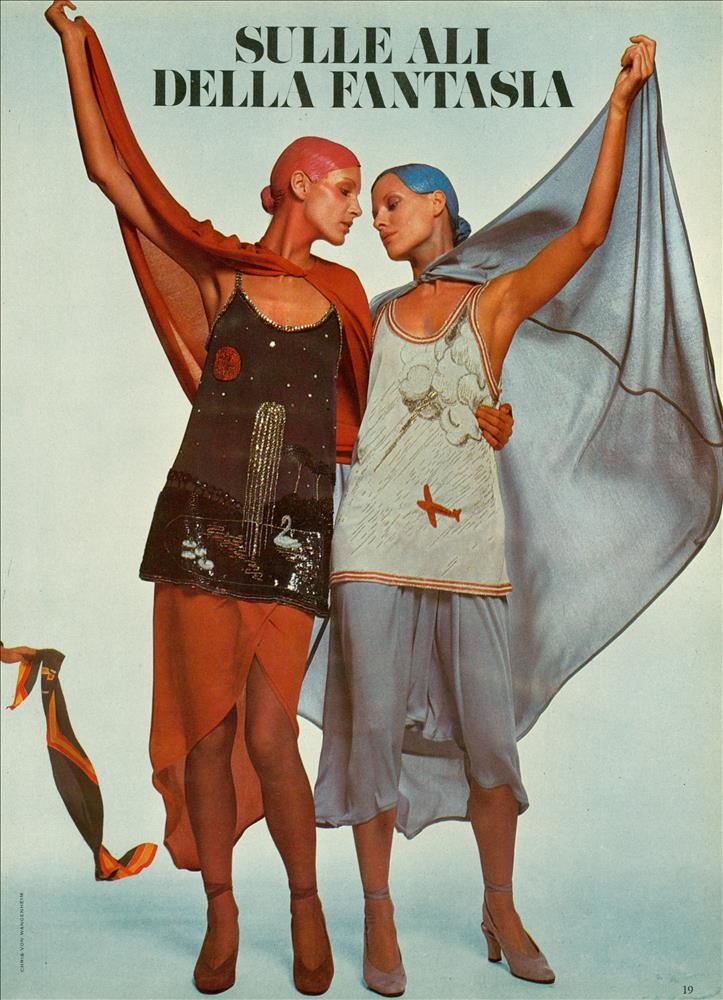
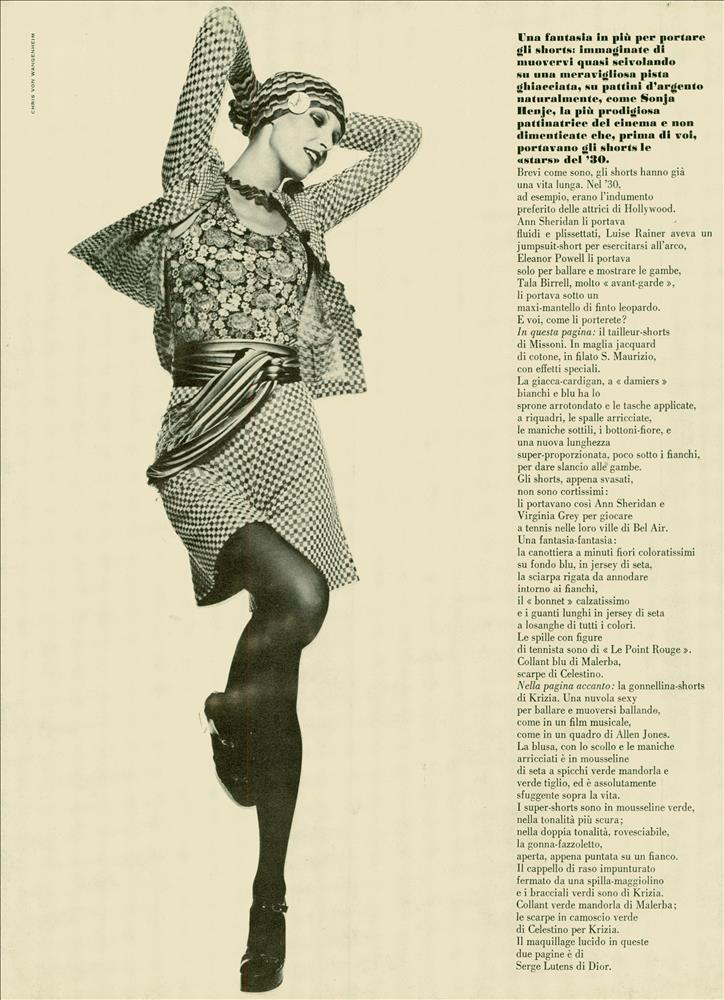
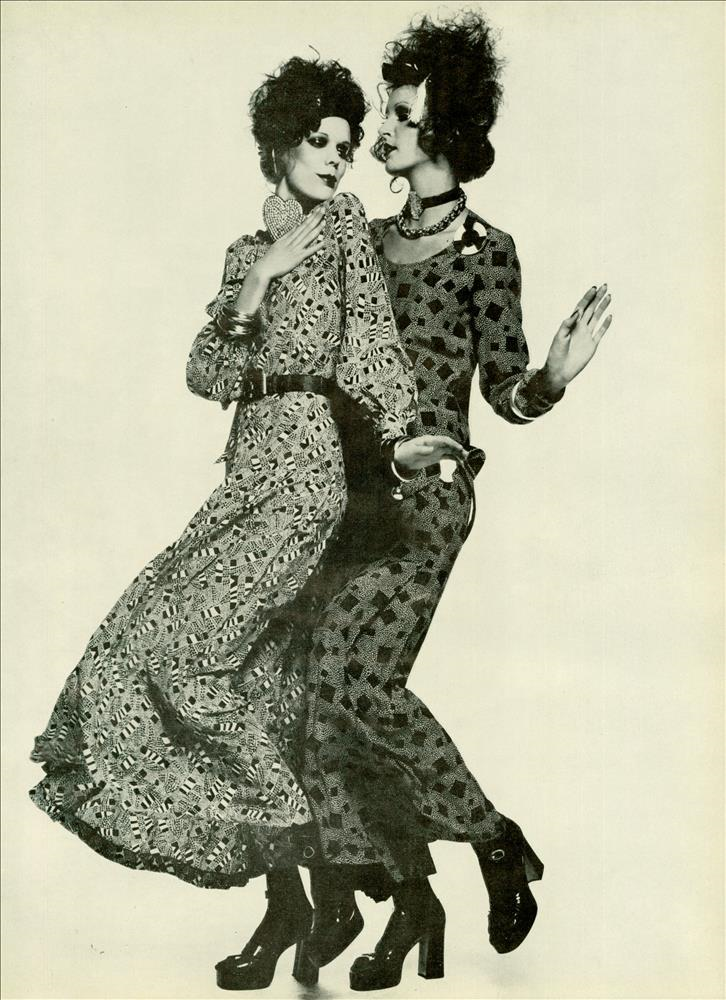
Vogue Italia February 1971
"Il Punto di Vista di Vogue - Con I 'Bloomers' a Sbuffo la Moda Rittorna All'Infanzia" & "Sulle Alli della Fantasia"
Models: Naomi Sims?, Wallis Franken & Unknowns
Photogapher: Chris von Wangenheim
Hair: Christophe & Jean-Louis David
Makeup: Serge Lutens
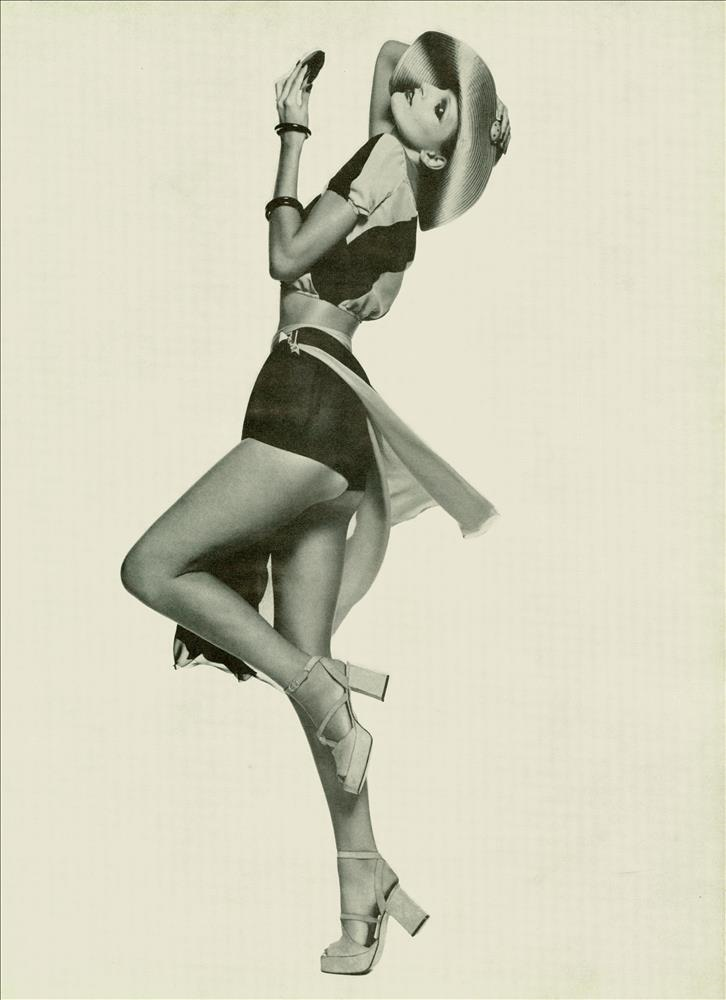
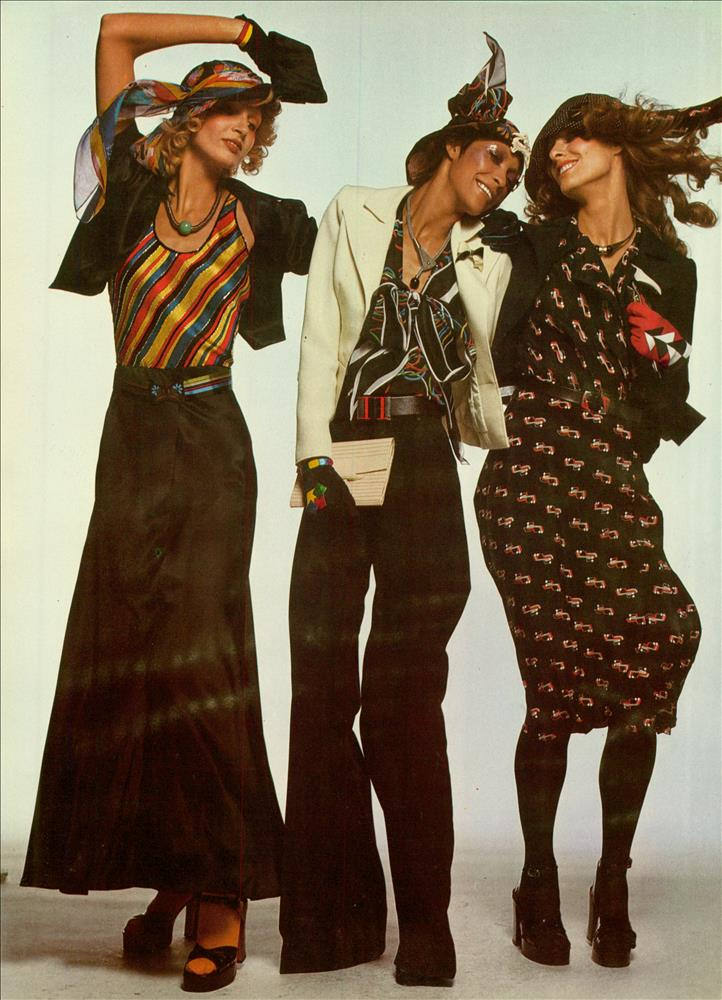
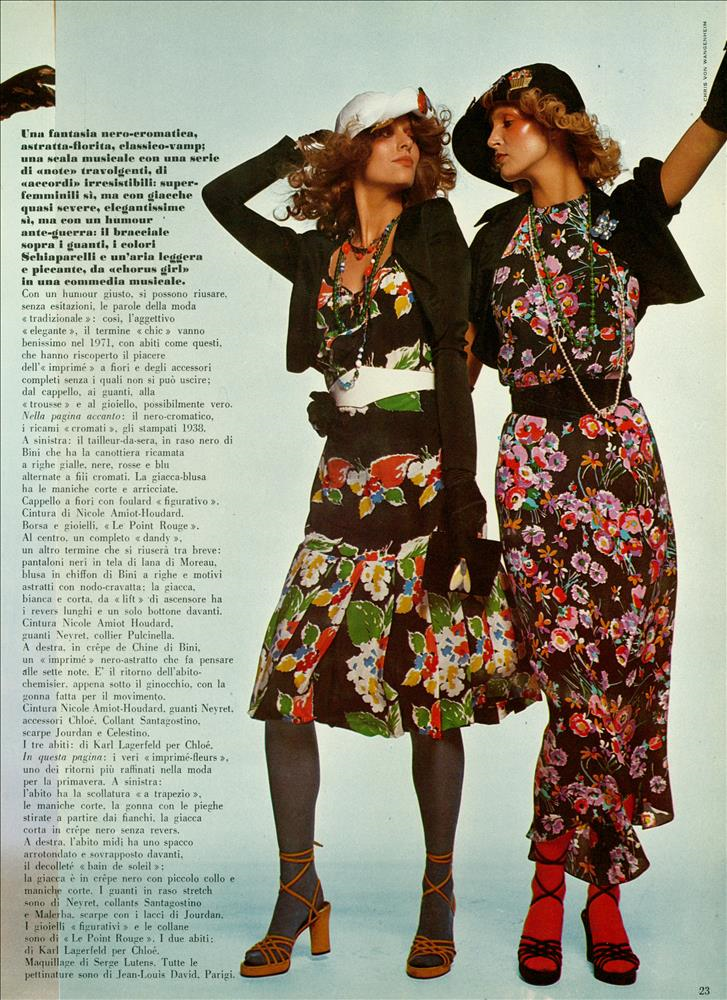
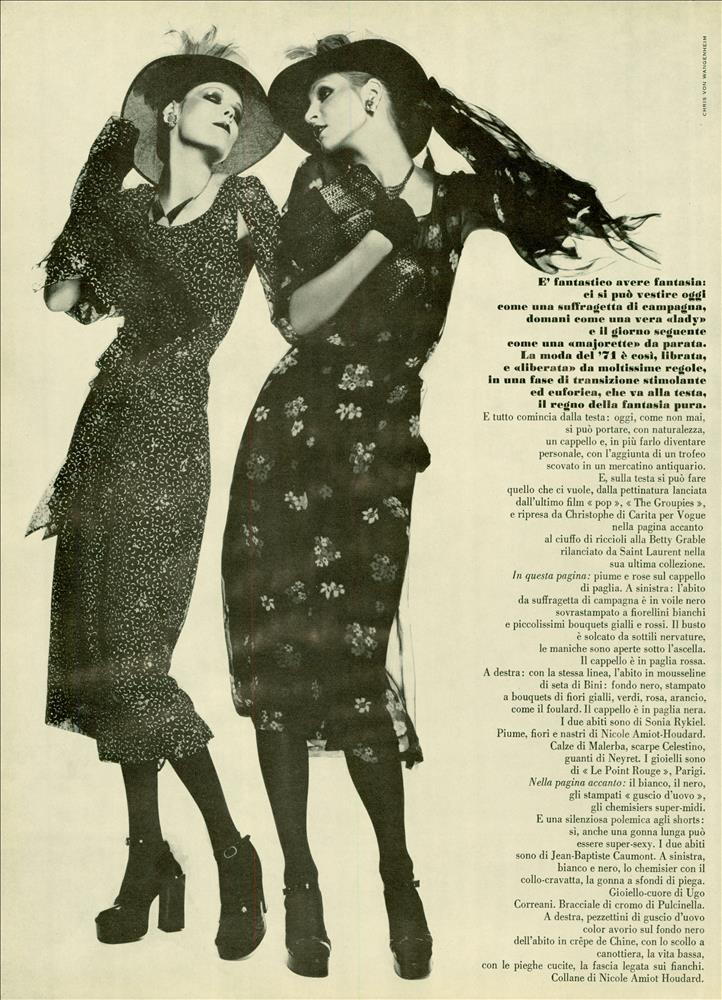
Vogue Italia Archivio
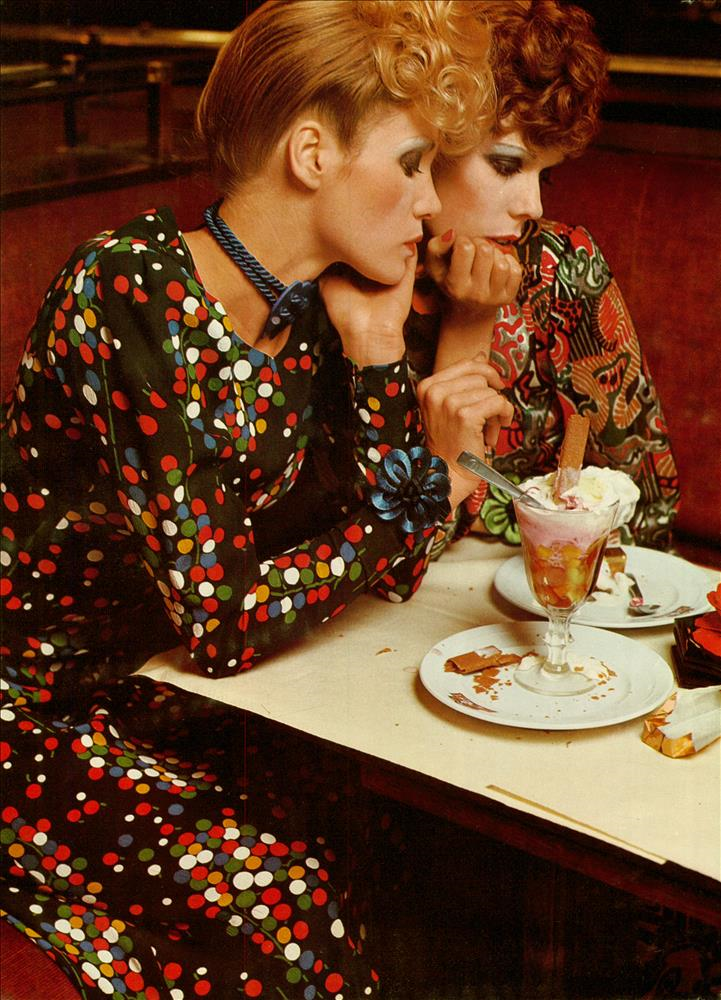
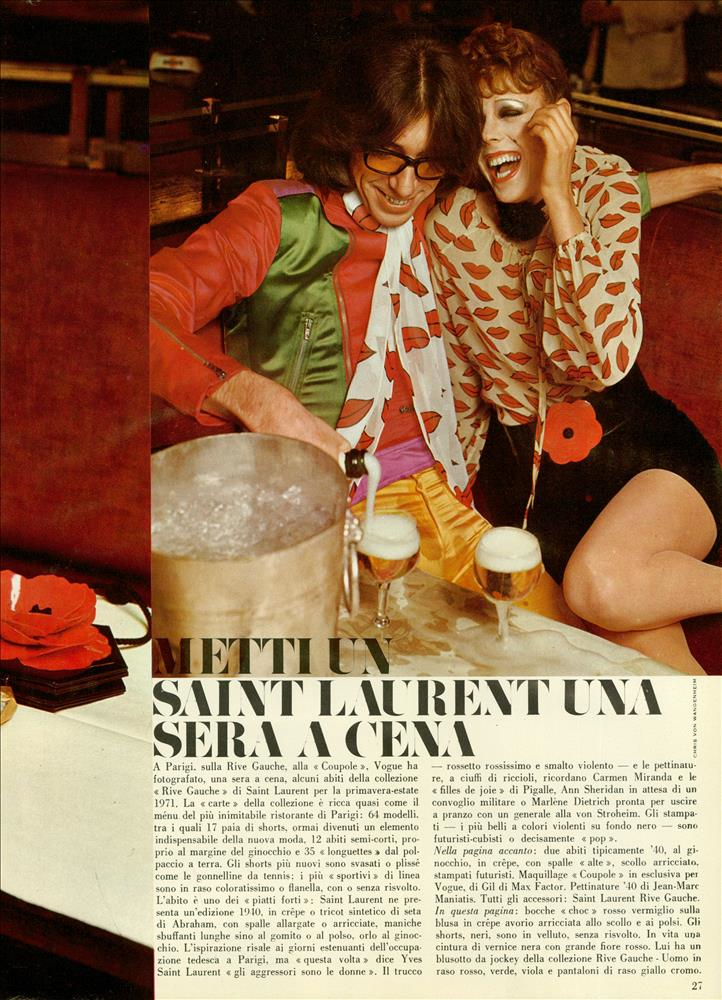
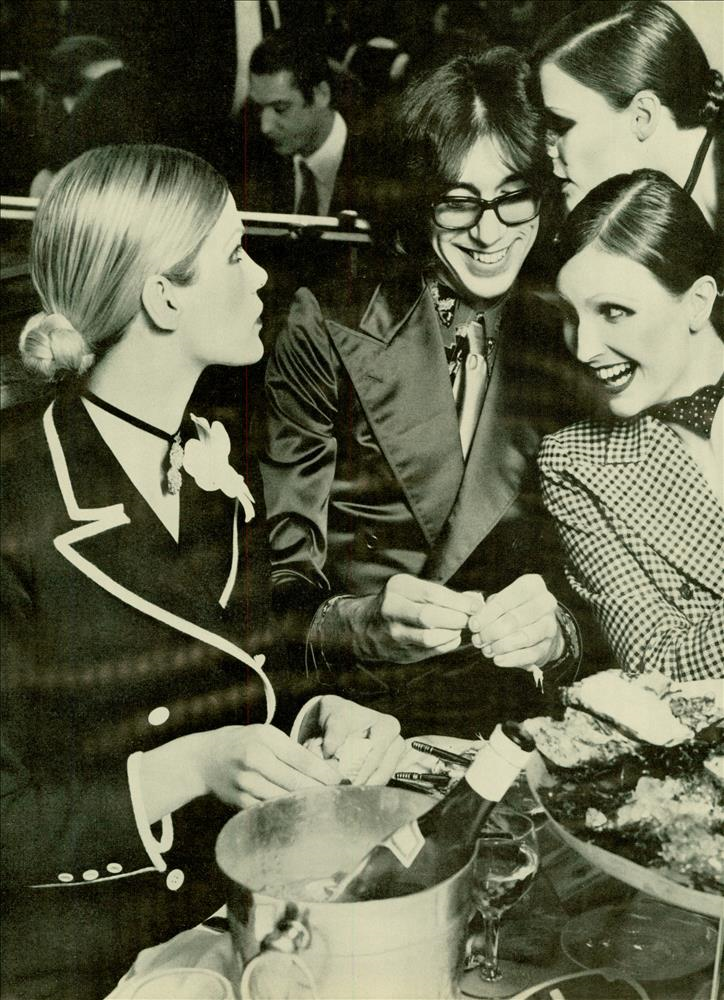
Vogue Italia February 1971
"Metti un Saint Laurent una Sera a Cena"
Models: Wallis Franken & Unknowns
Photographer: Chris von Wangenheim
Hair: Jean-Marc Maniatis
Makeup: Gil
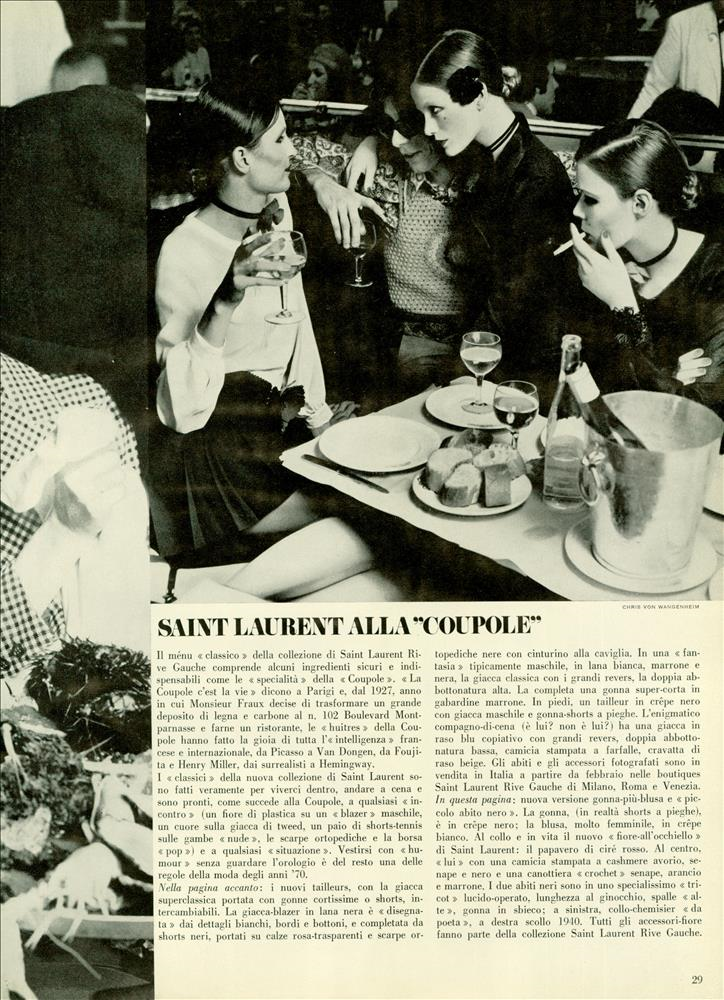
Vogue Italia Archivio
Vogue Italia February 1971
"Che Cosa C 'E' Sotto Gil Shorts?"
Models: Donna Jordan & Jane Forth
Photographer: Chris von Wangenheim
Hair: Claude
Makeup: Corey Tippin
WARNING: Topless (1st, 2nd, 3rd & 5th photos)
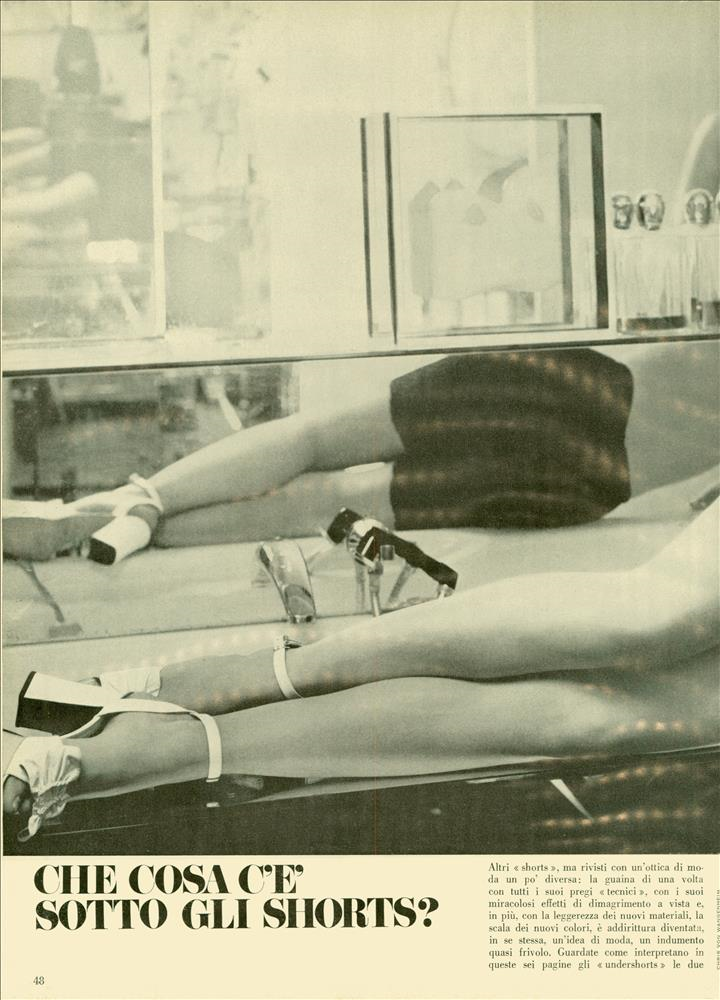
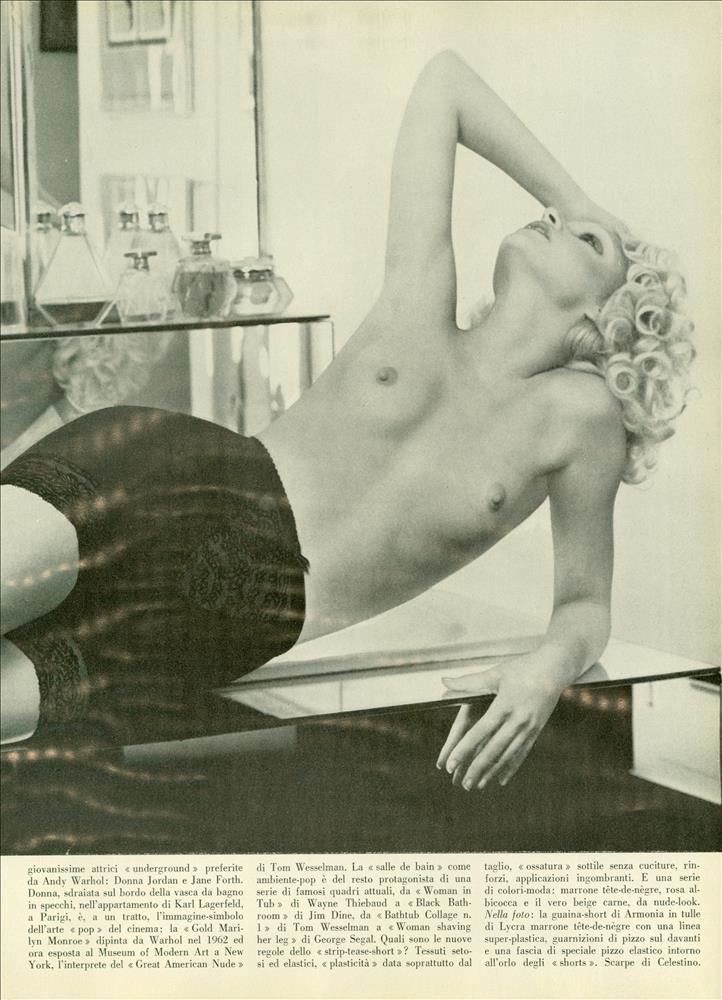
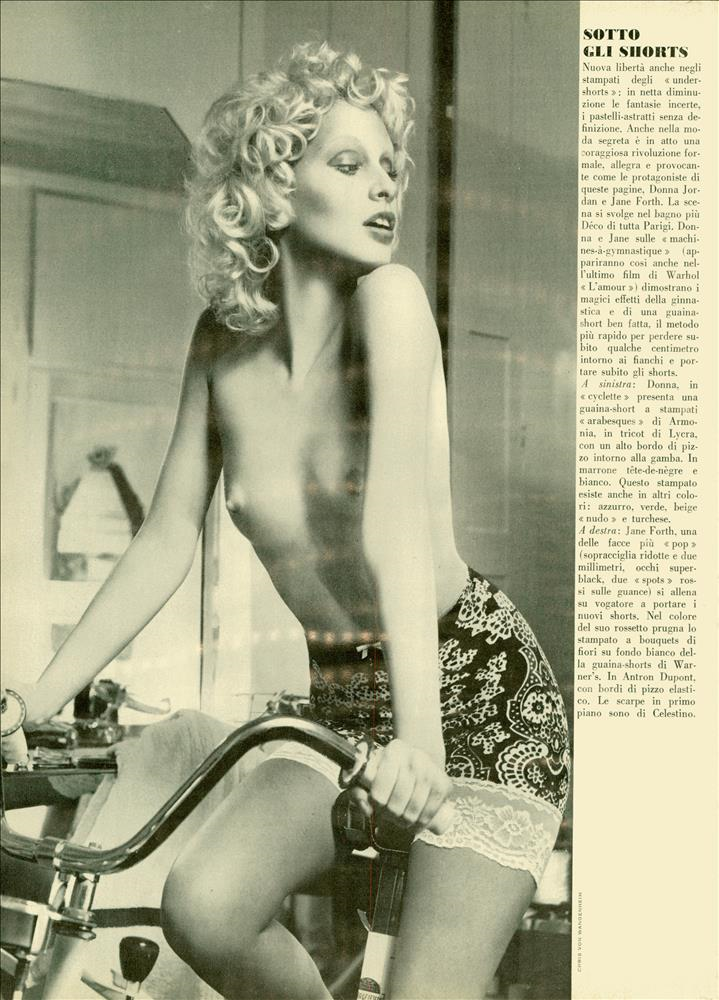
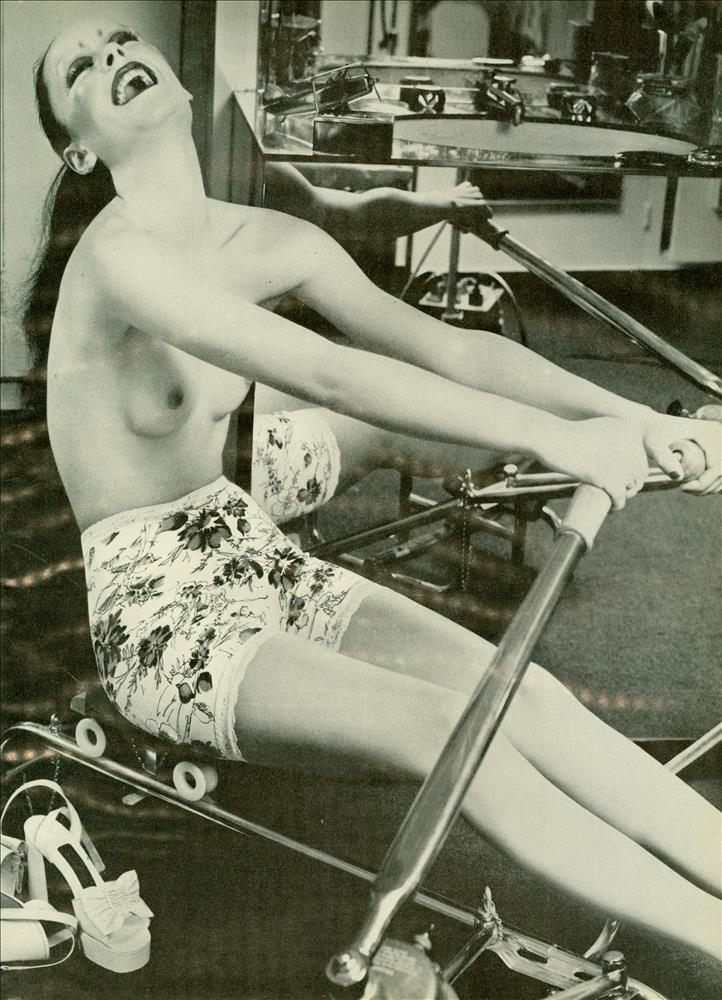
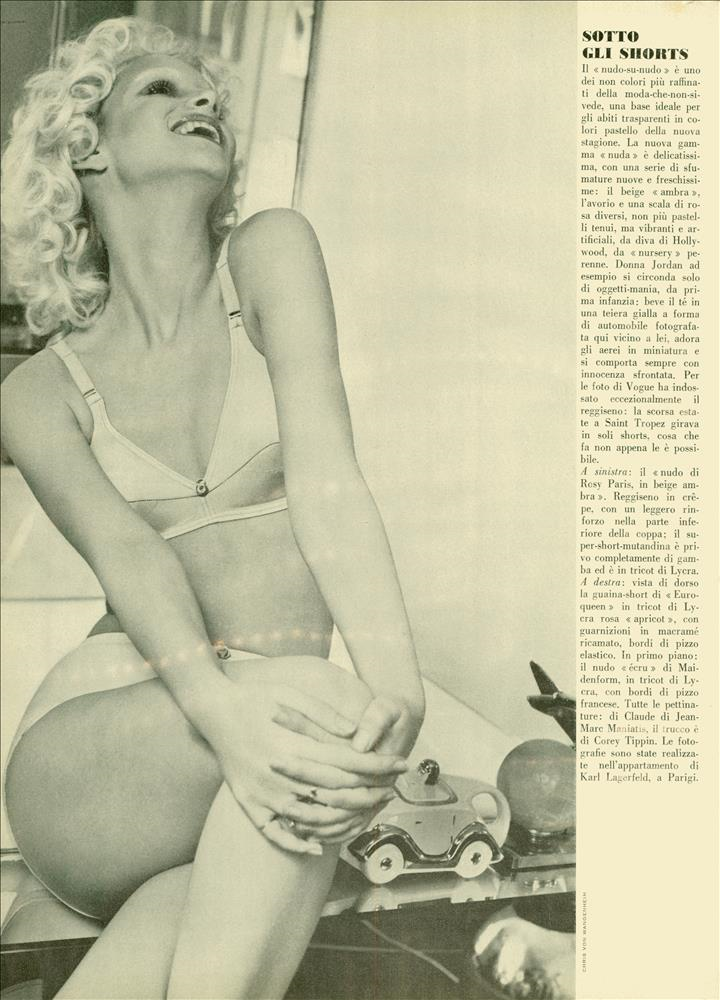
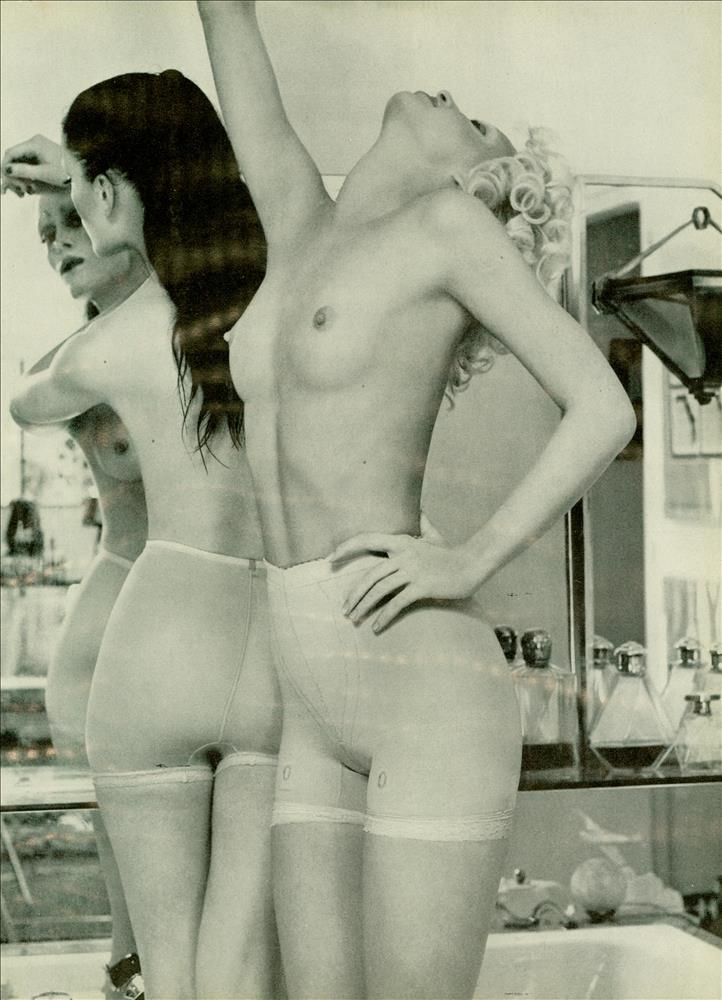
Vogue Italia Archivio
US Vogue May 1974
Model/Subject: Cher
Photographer: Chris von Wangenheim
Hair & Makeup: François
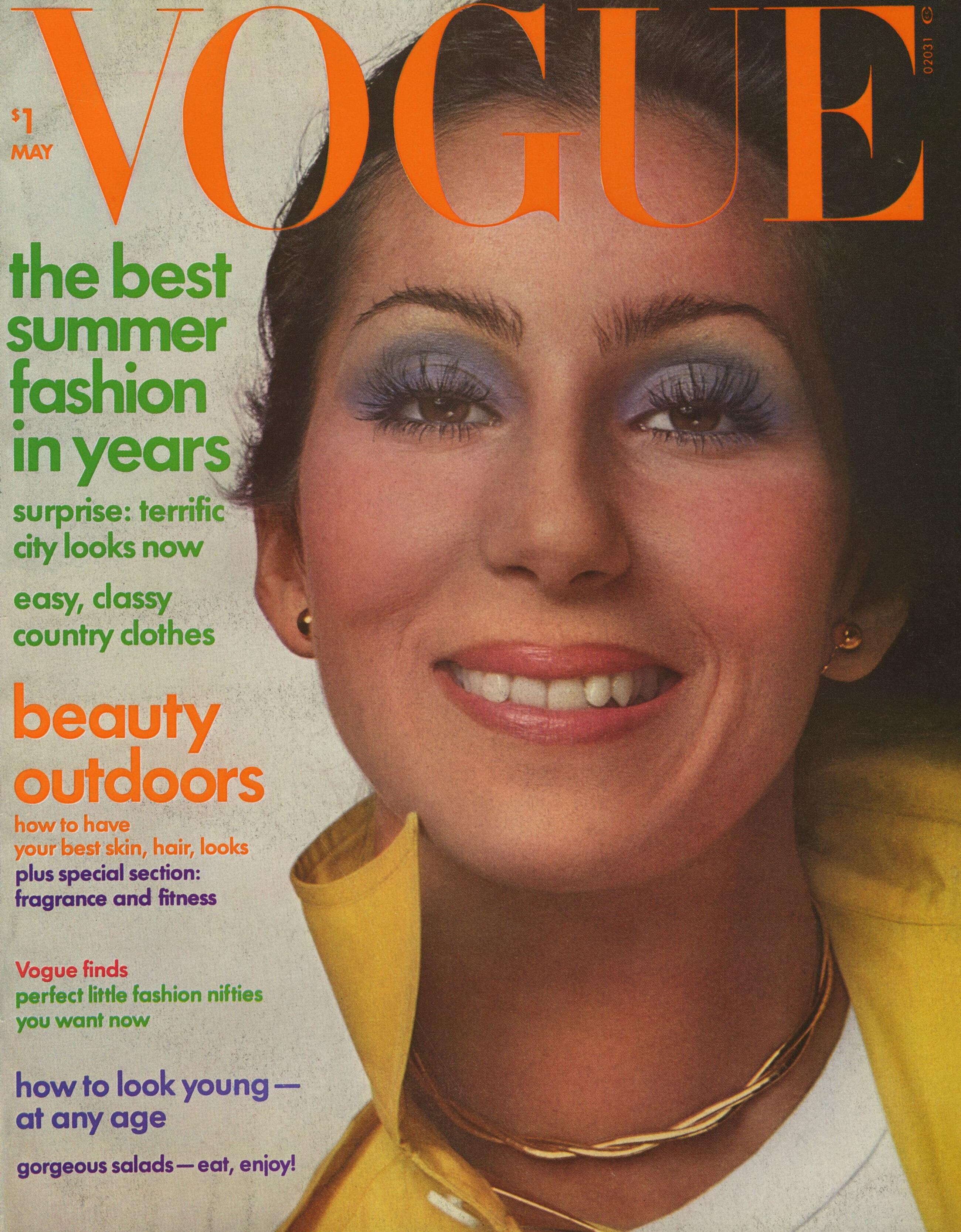
Vogue Archive
US Vogue October 1976
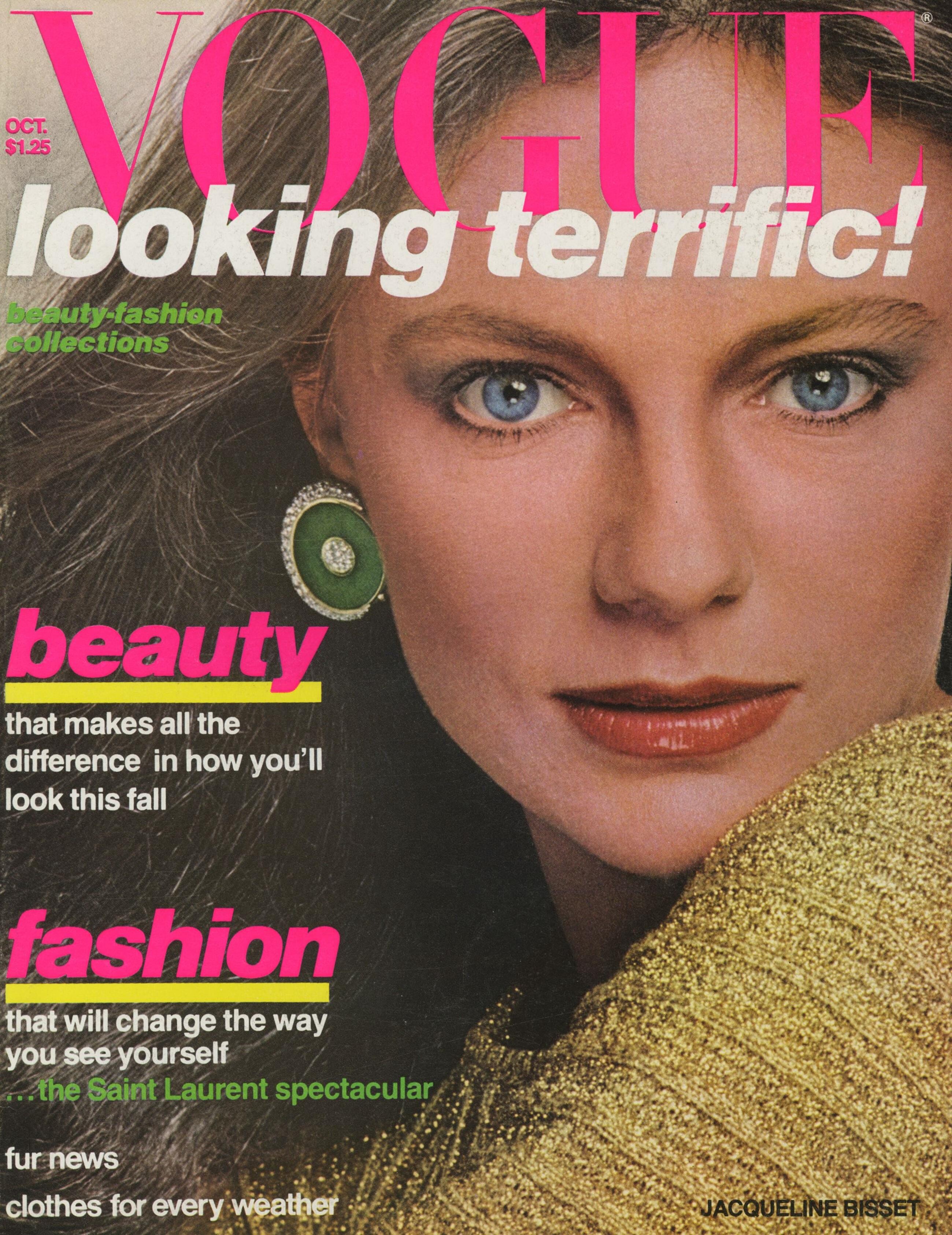
Model/Subject: Jacqueline Bisset
Photographer: Chris von Wangenheim
Hair: Maurice Azoulay
Makeup: Ariella
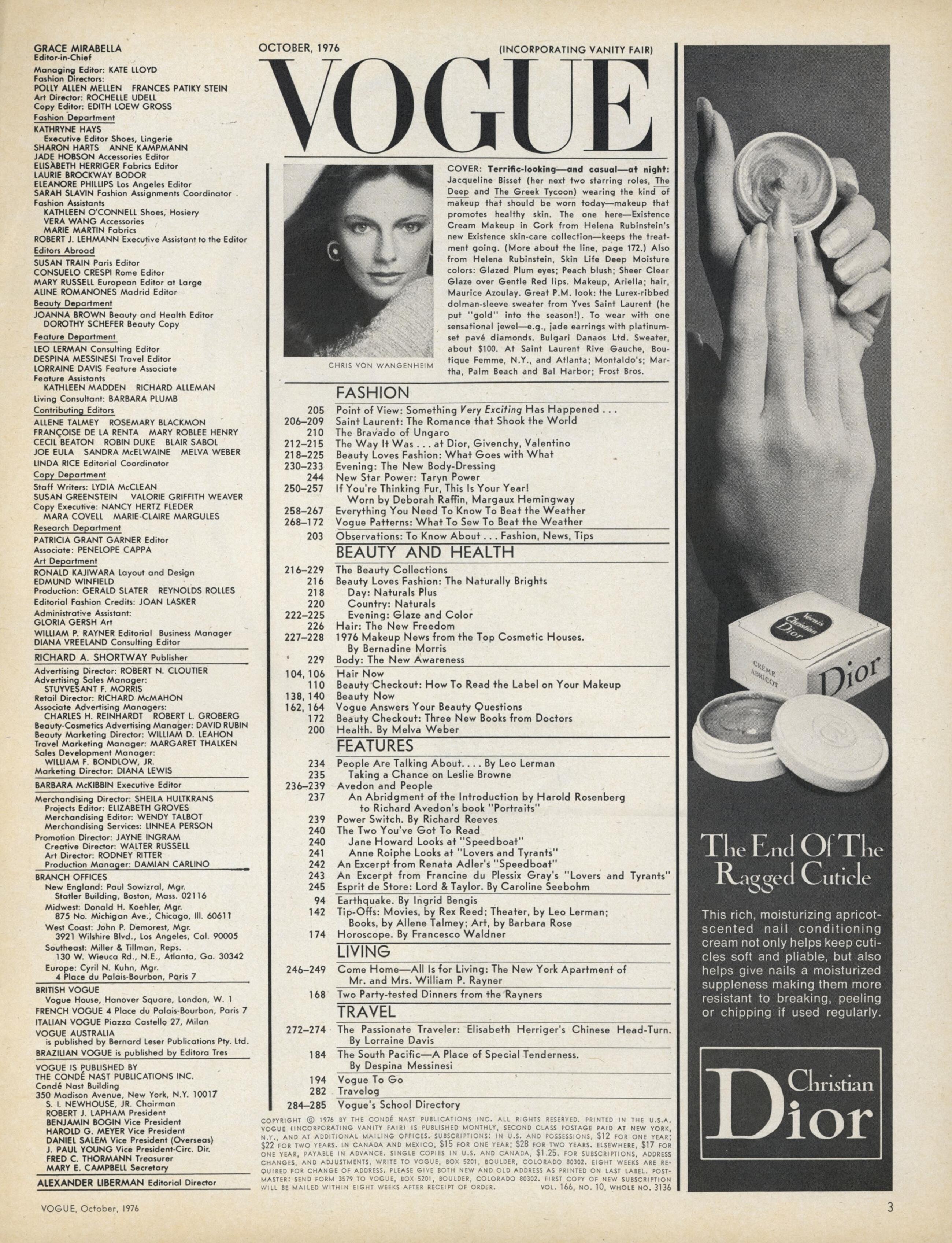
Vogue Archive
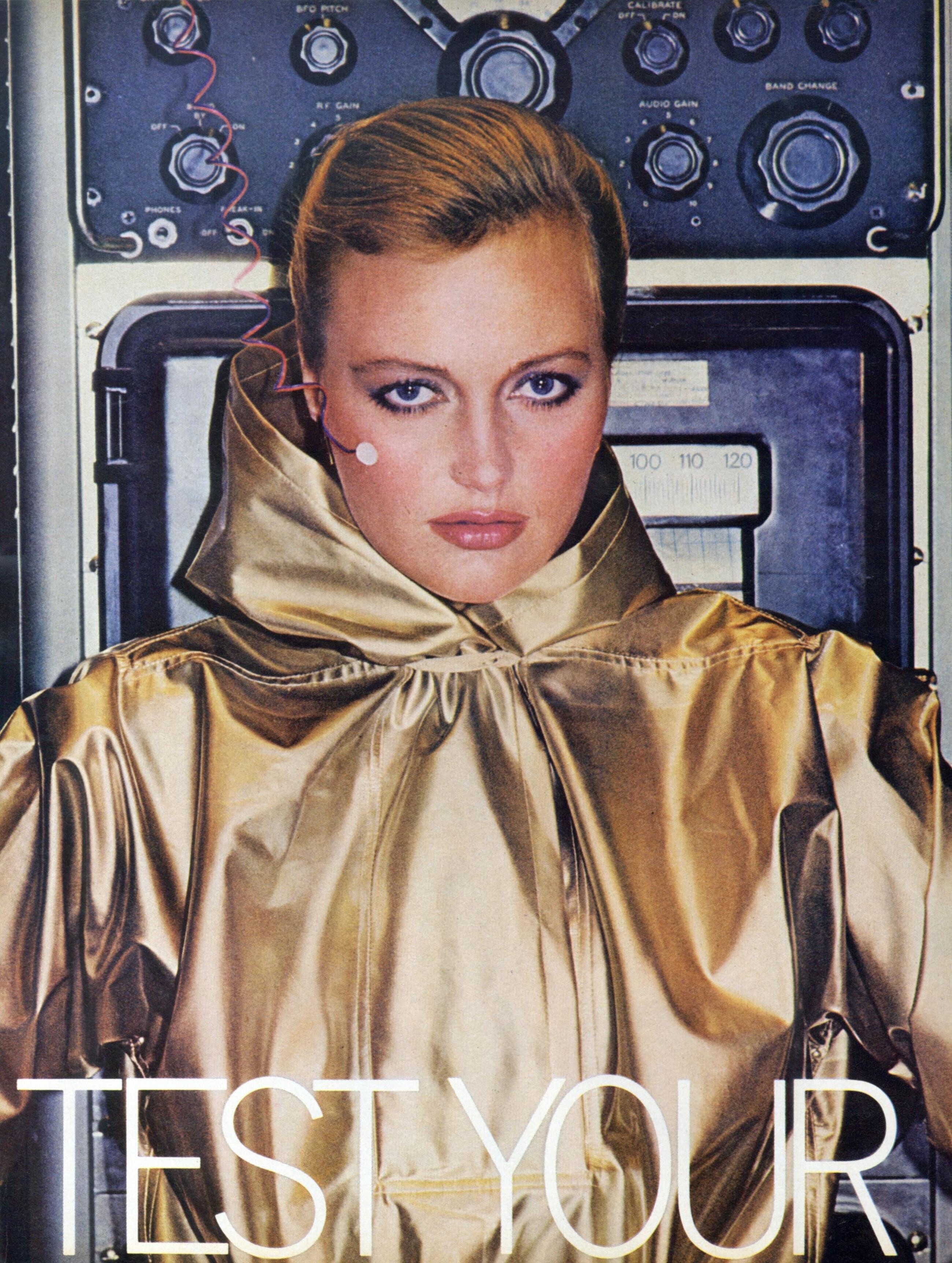
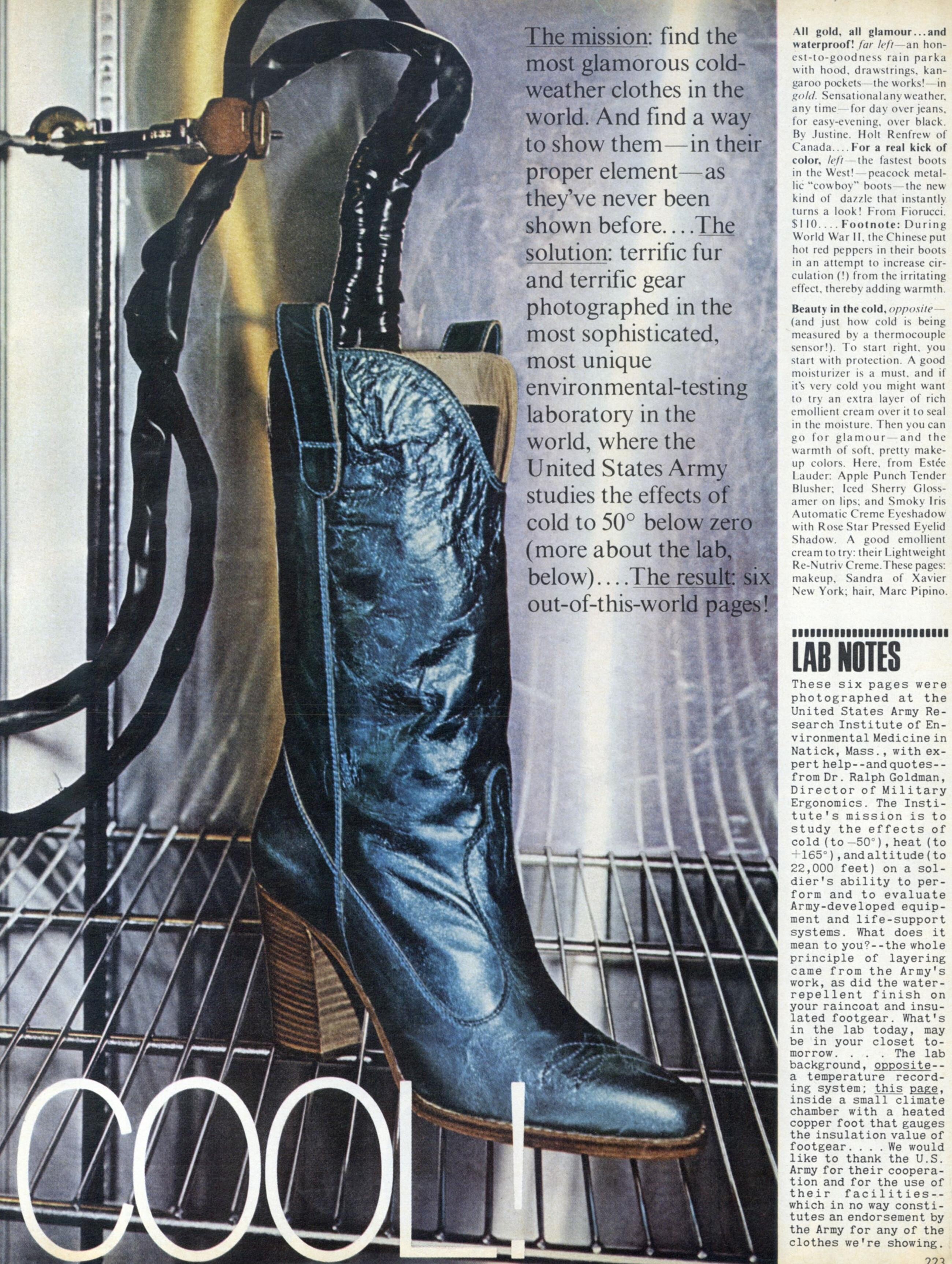
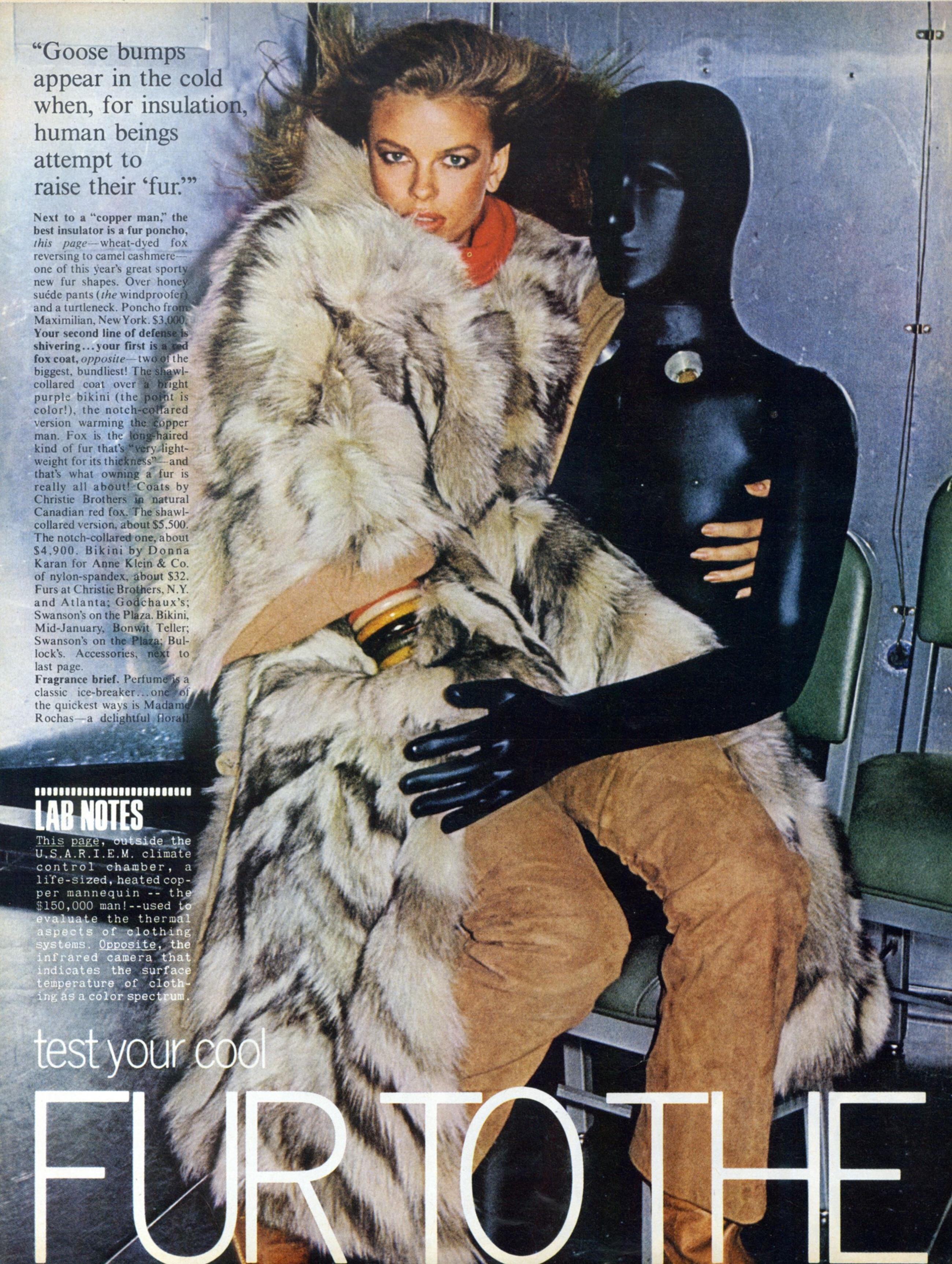
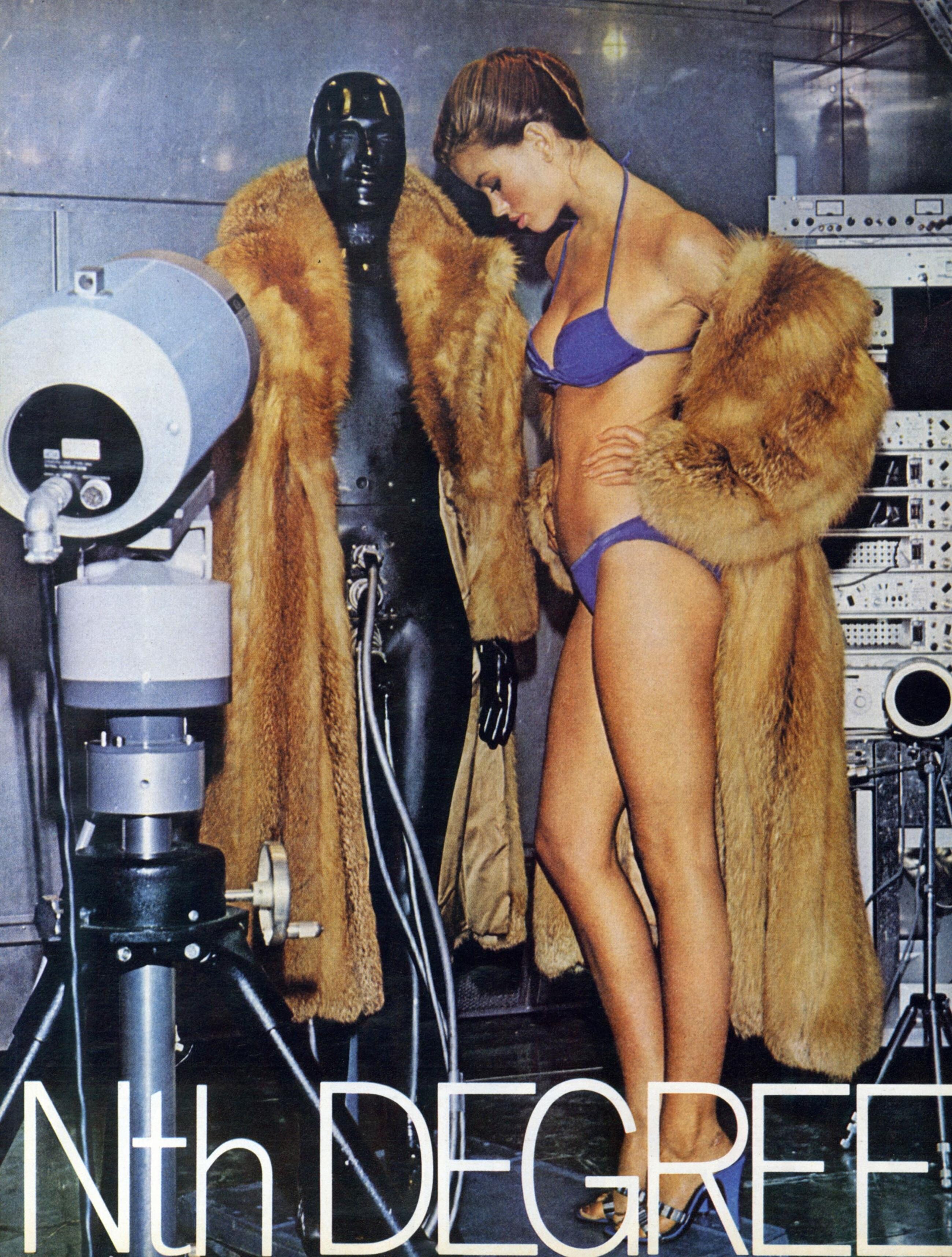
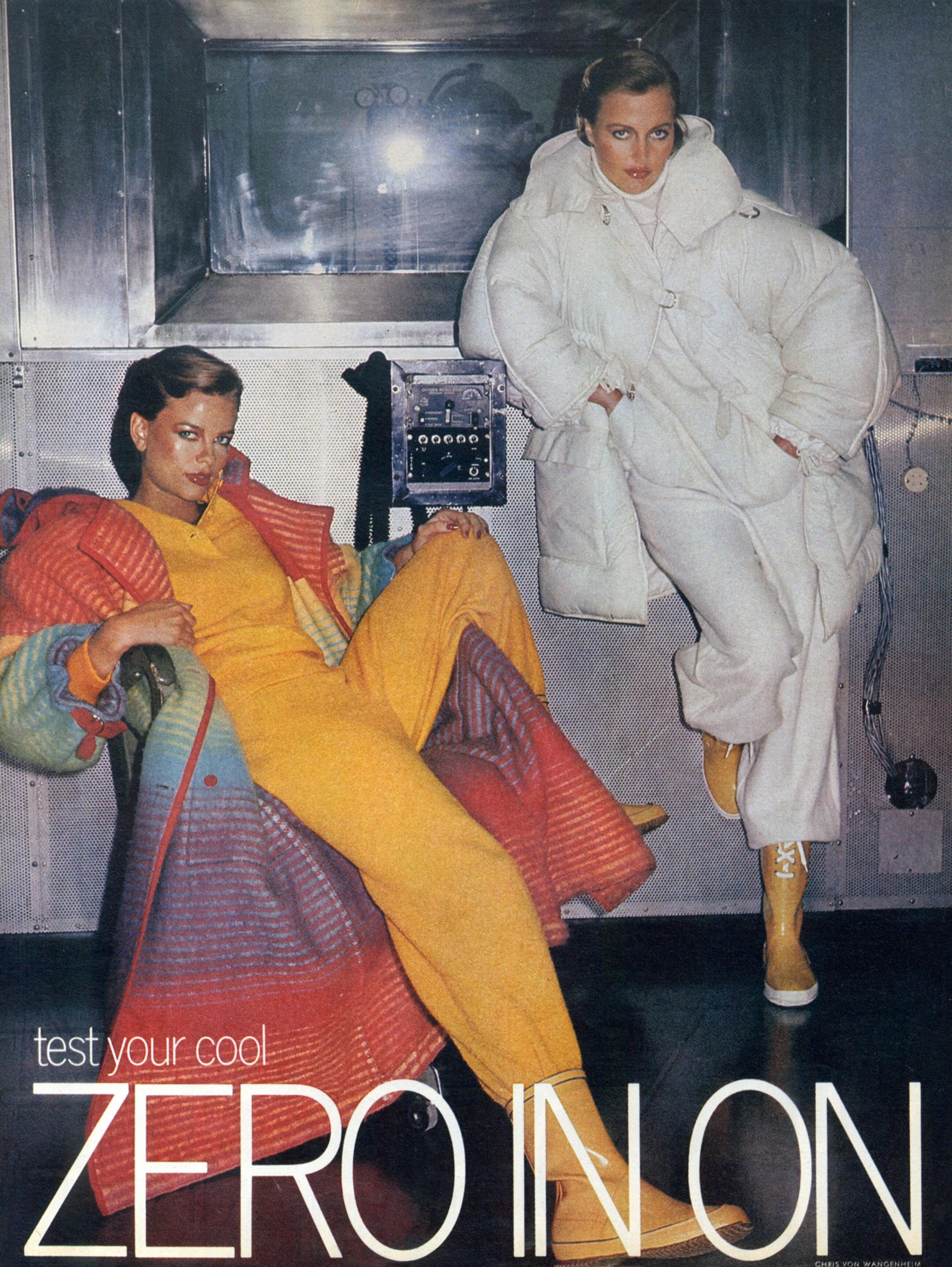
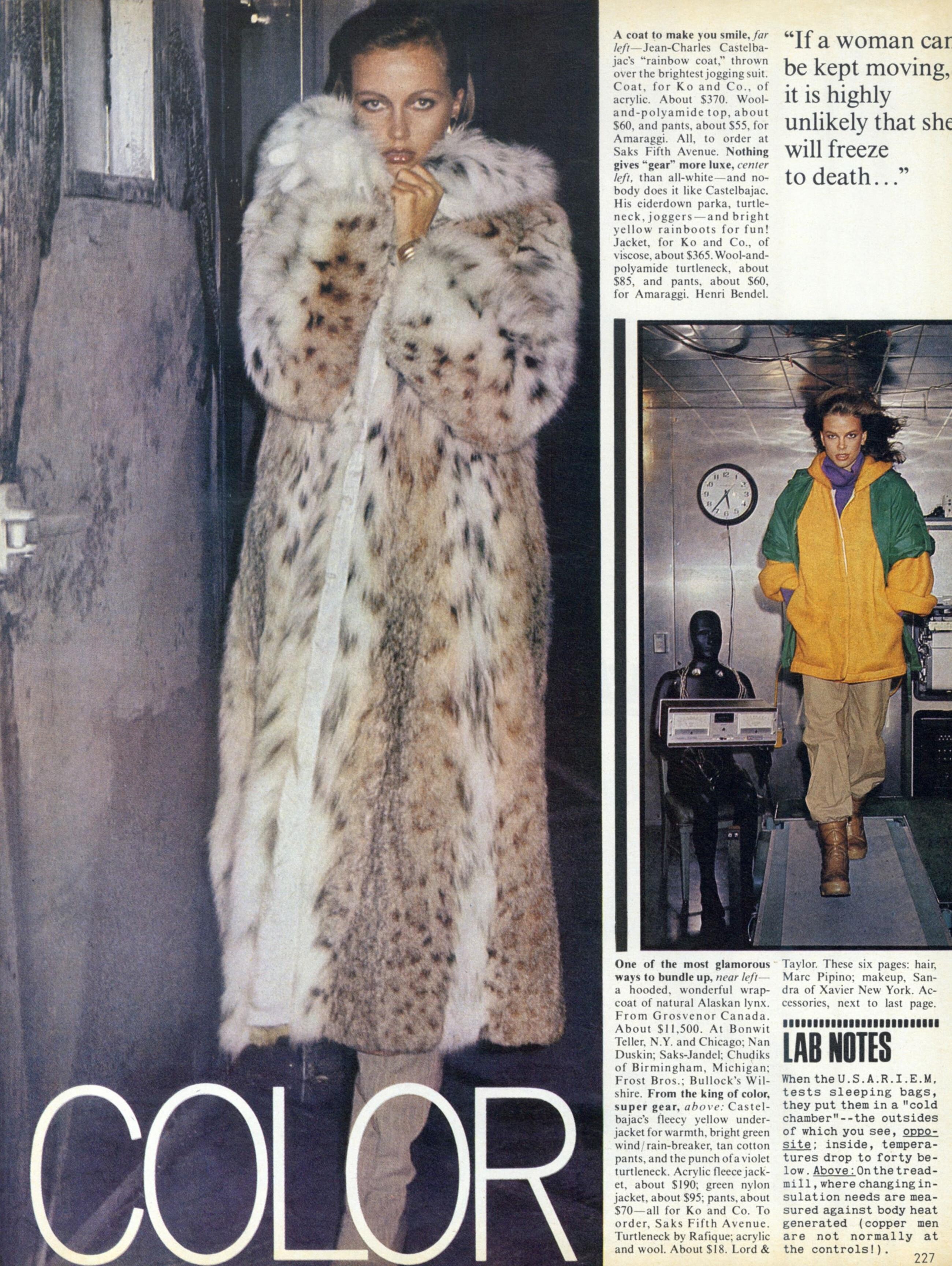
US Vogue December 1976
"Test Your Cool!"
Models: Eva Wallen & Lisa Taylor
Photographer: Chris von Wangenheim
Hair: Marc Pipino
Makeup: Sandy Linter
Vogue Archive
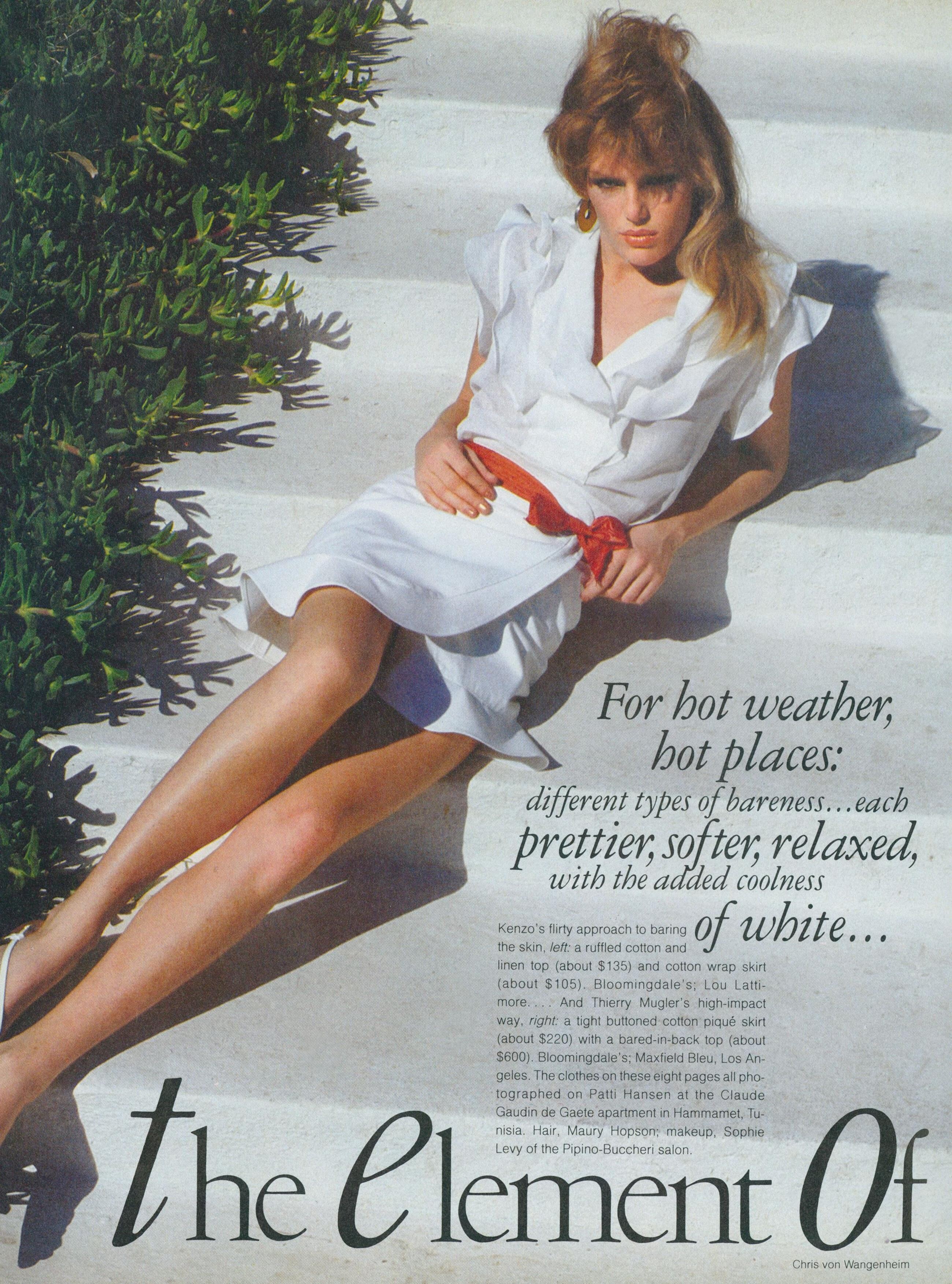
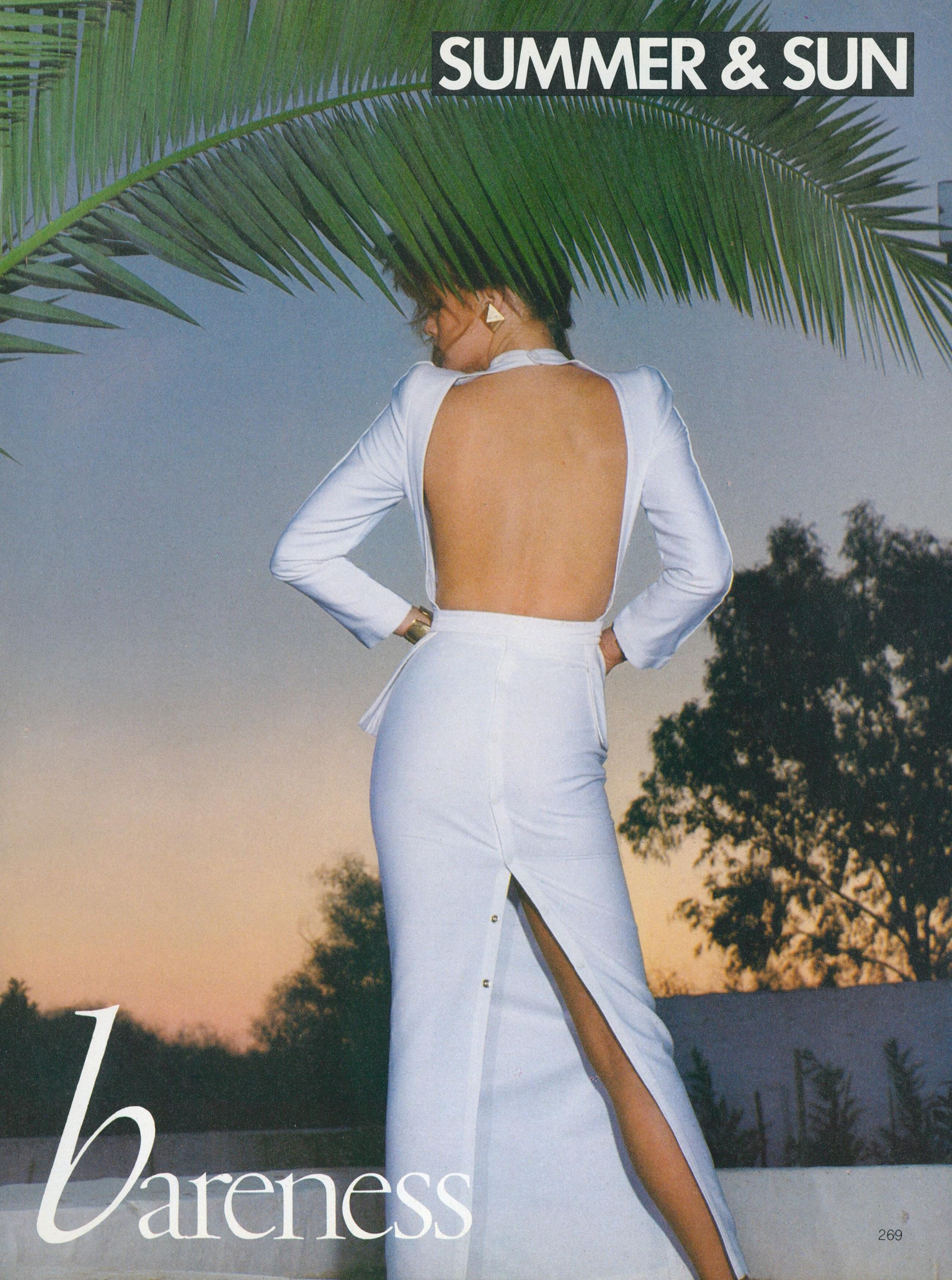
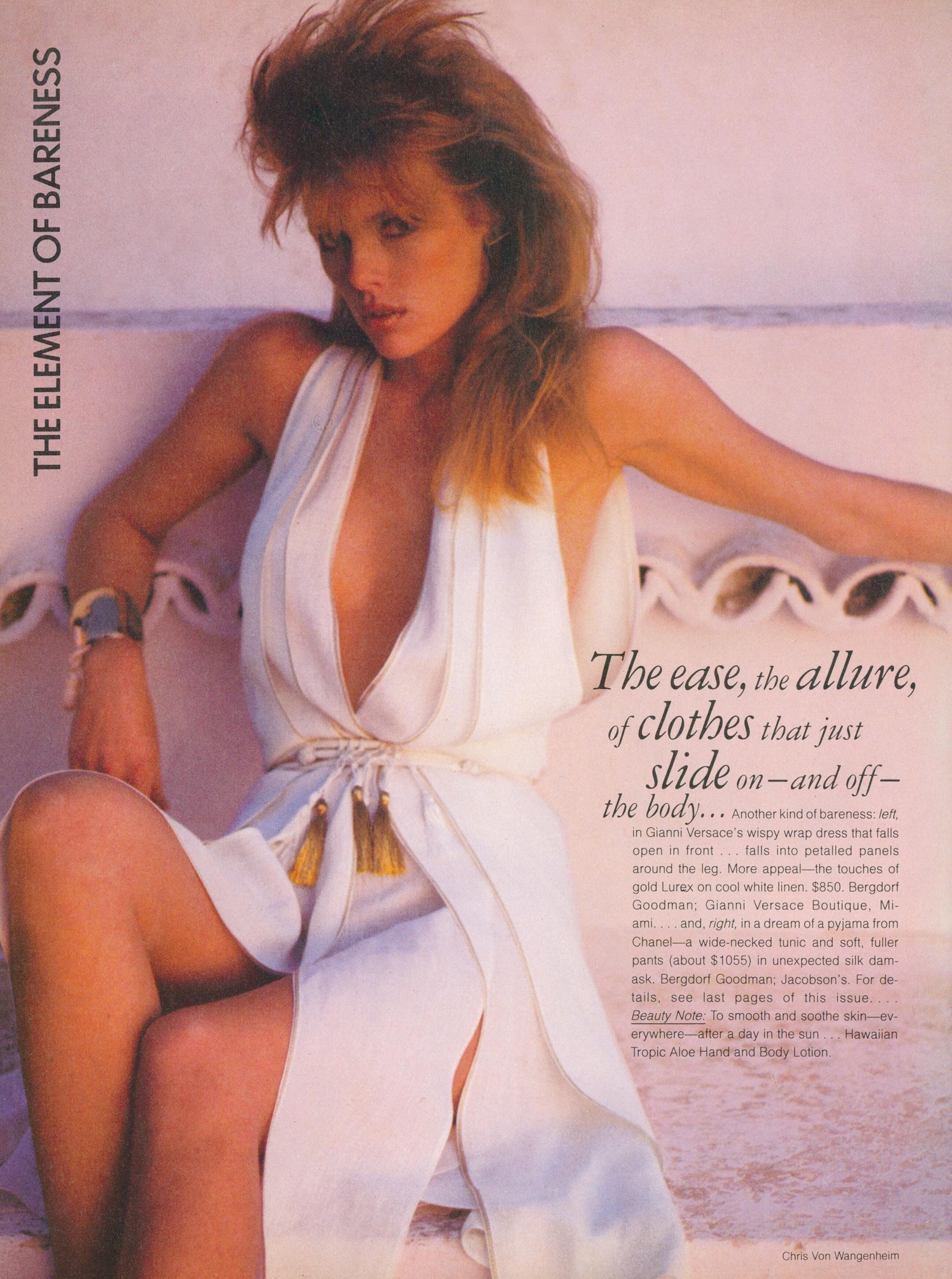
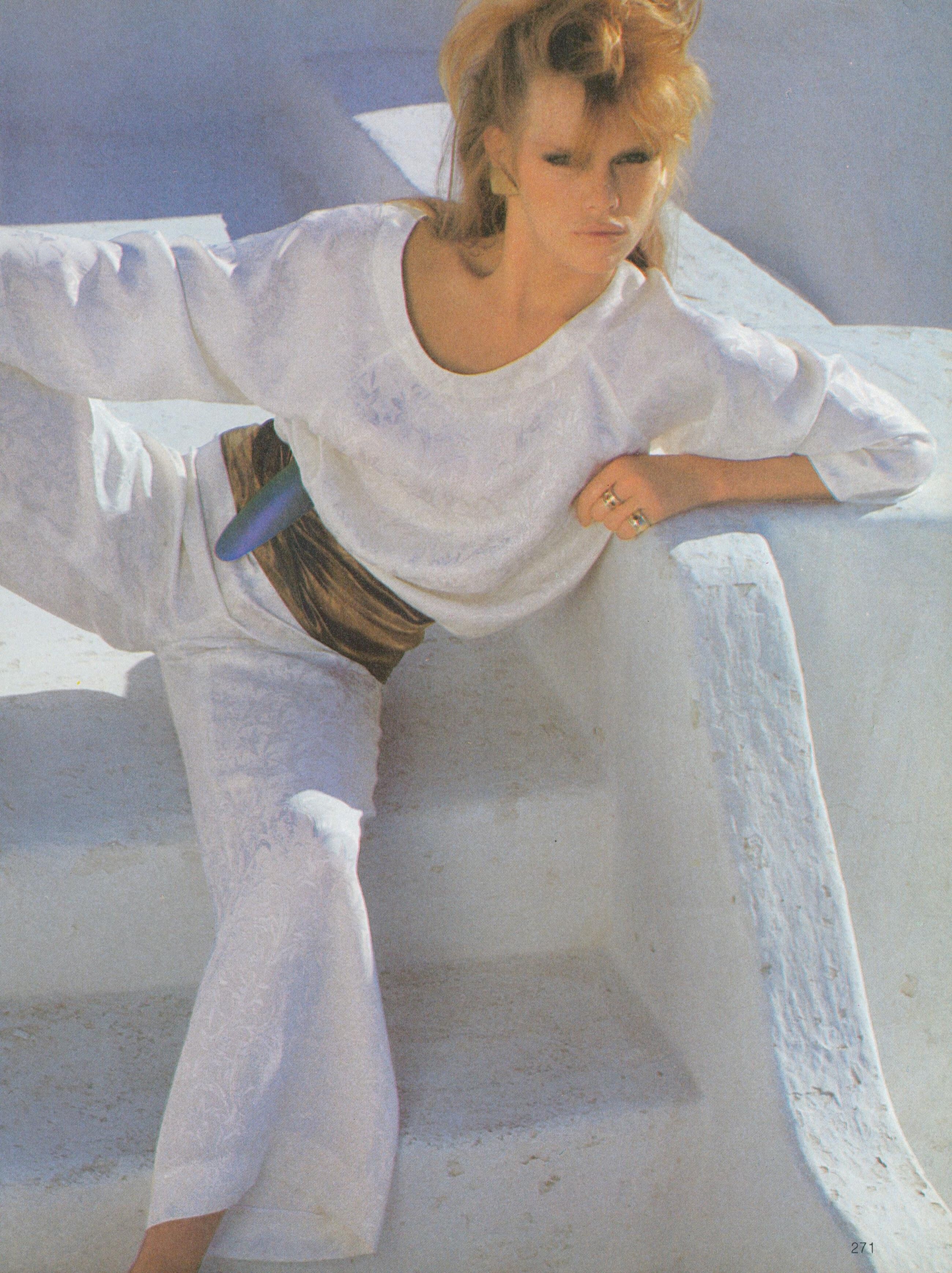
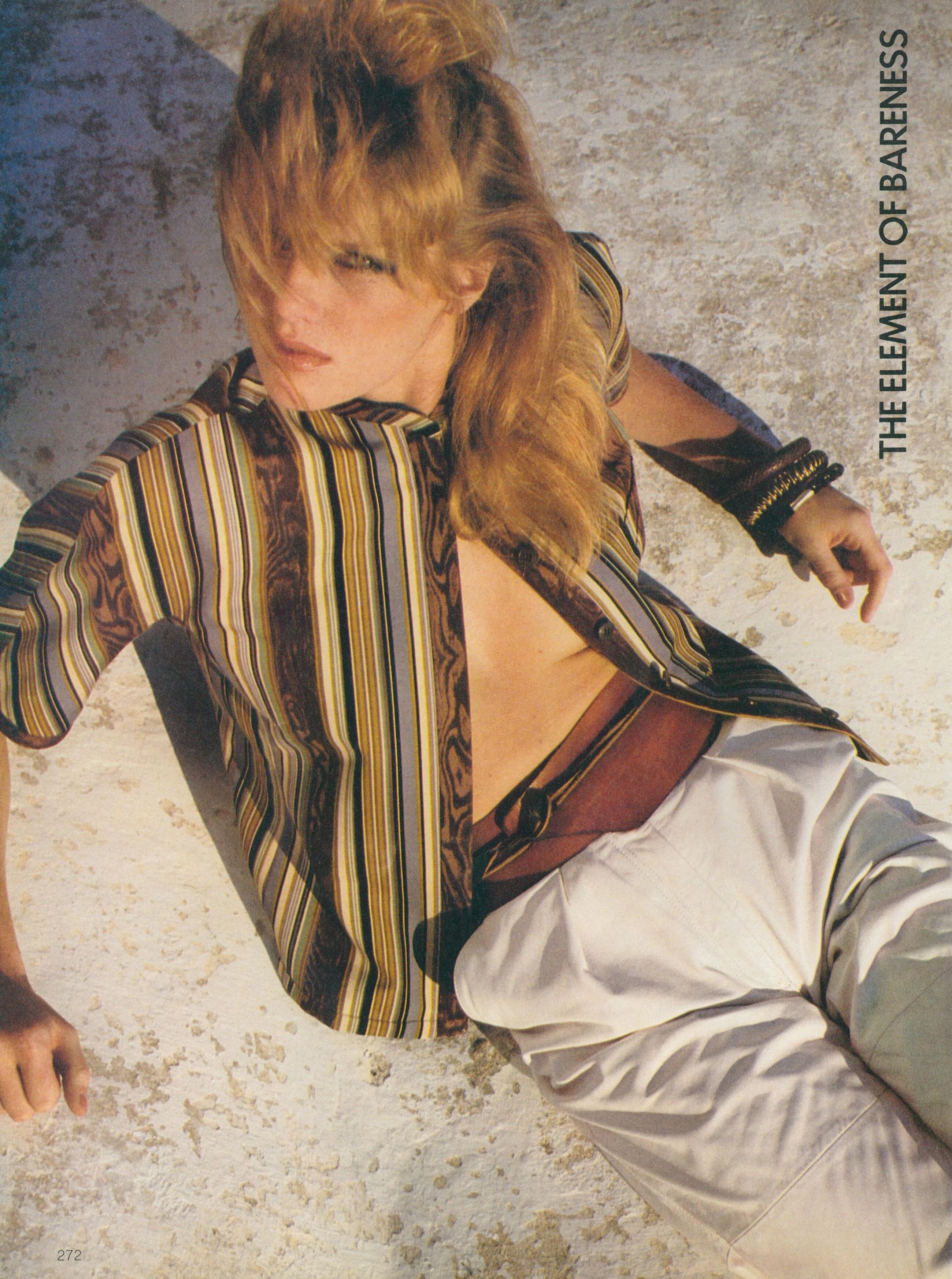
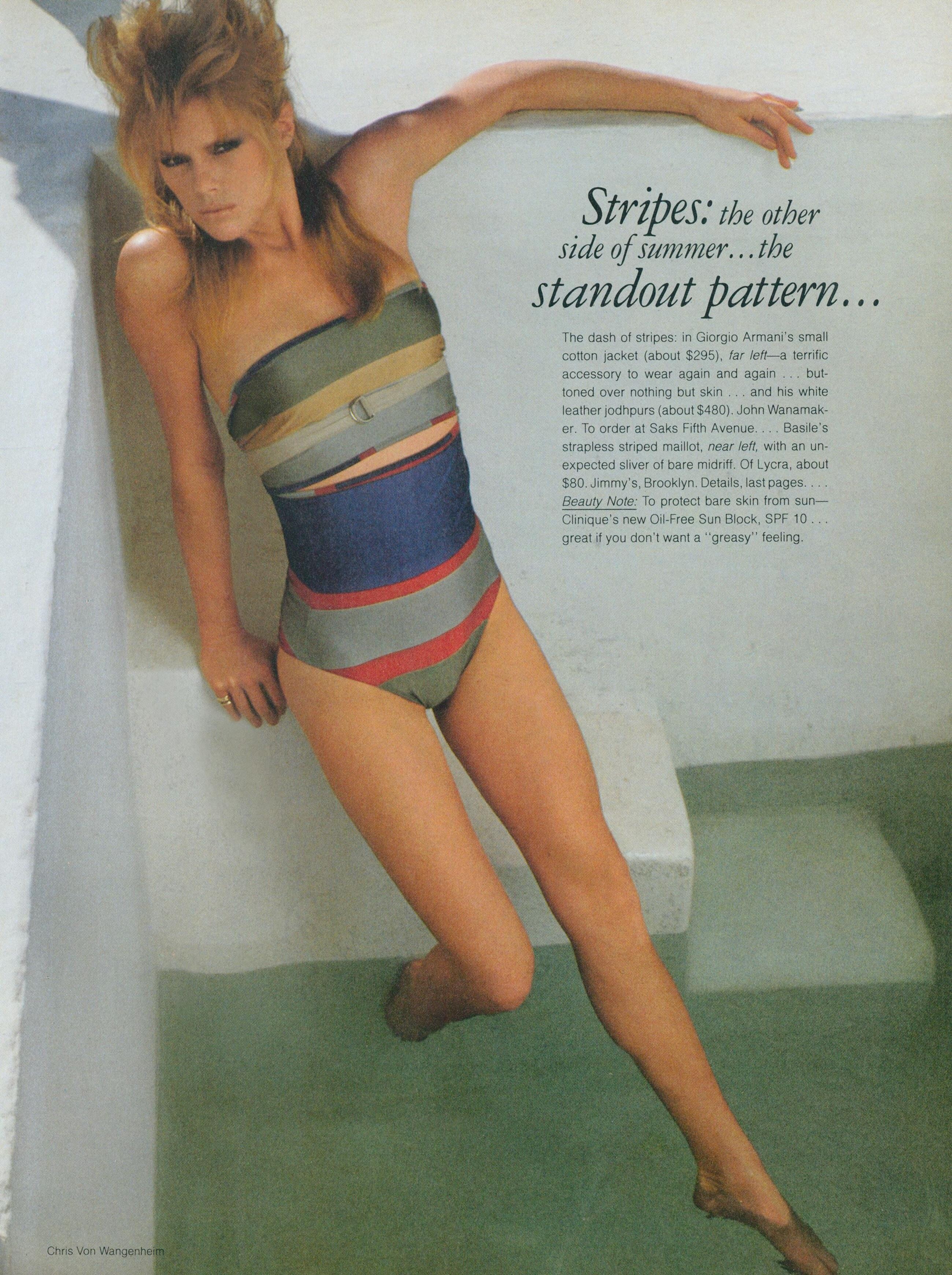
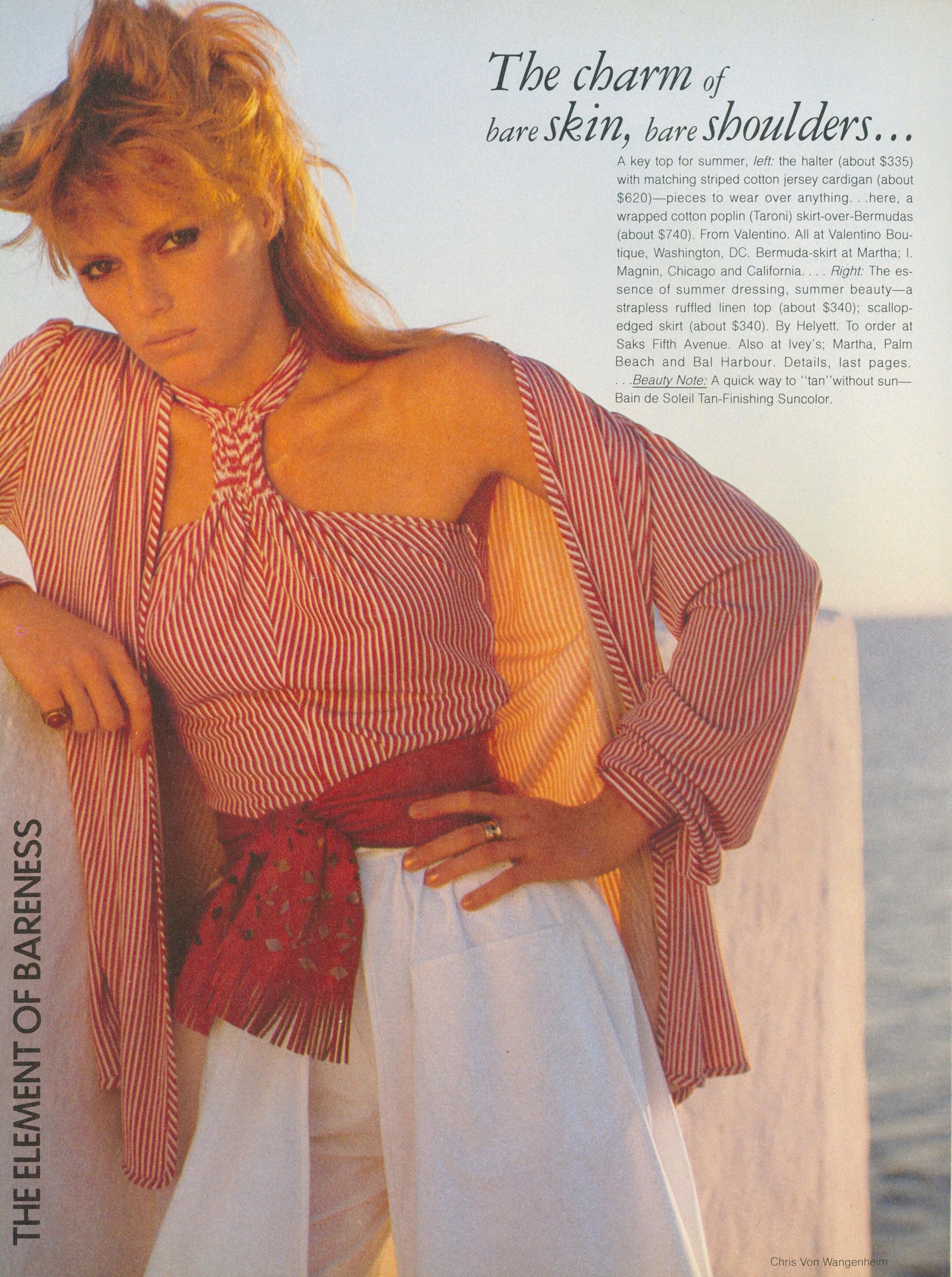
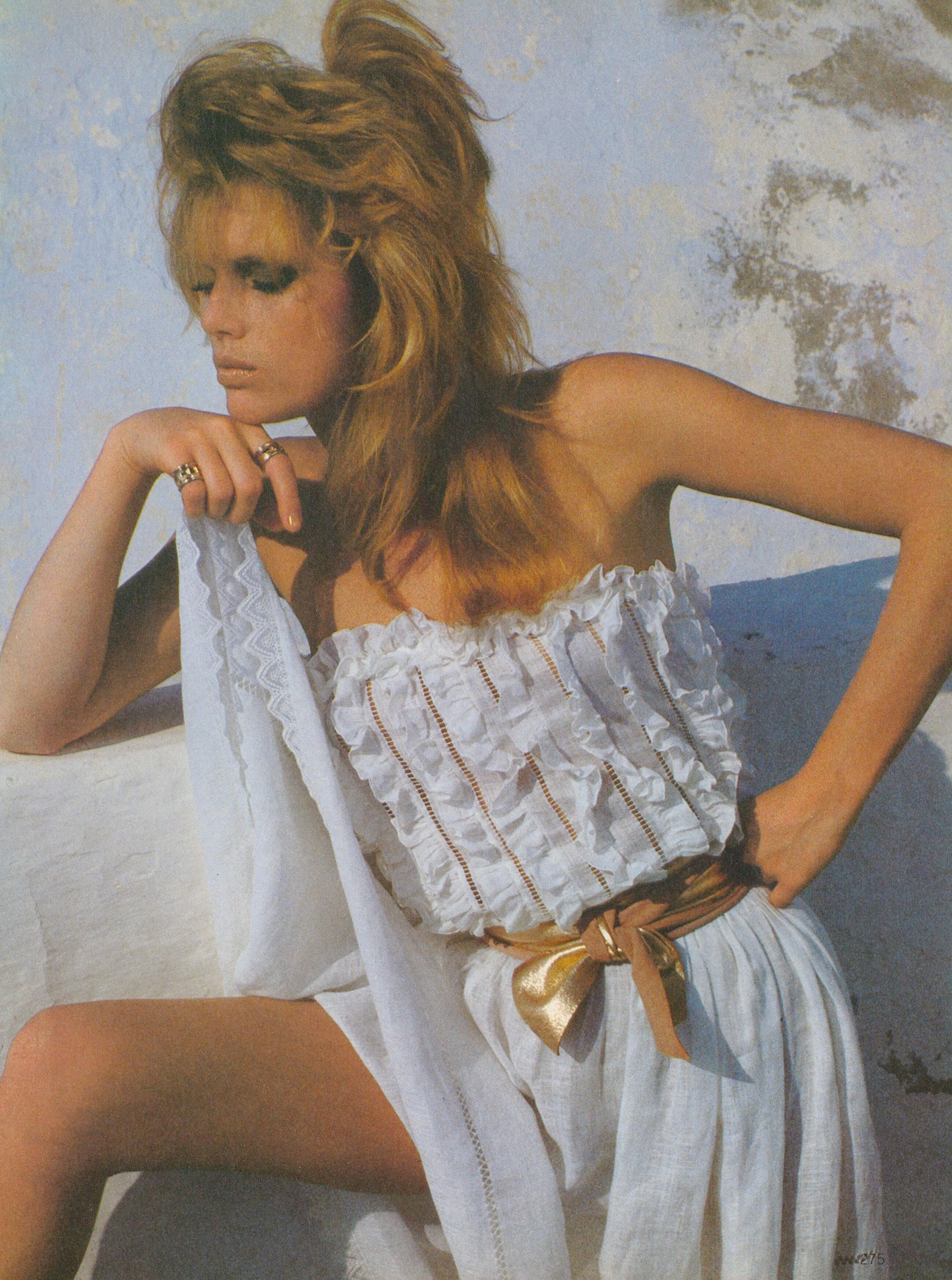
US Vogue April 1981
"Summer & Sun: The Element of Bareness"
Model: Patti Hansen
Photographer: Chris von Wangenheim
Hair: Maury Hopson
Makeup: Sophie Levy
Vogue Archive
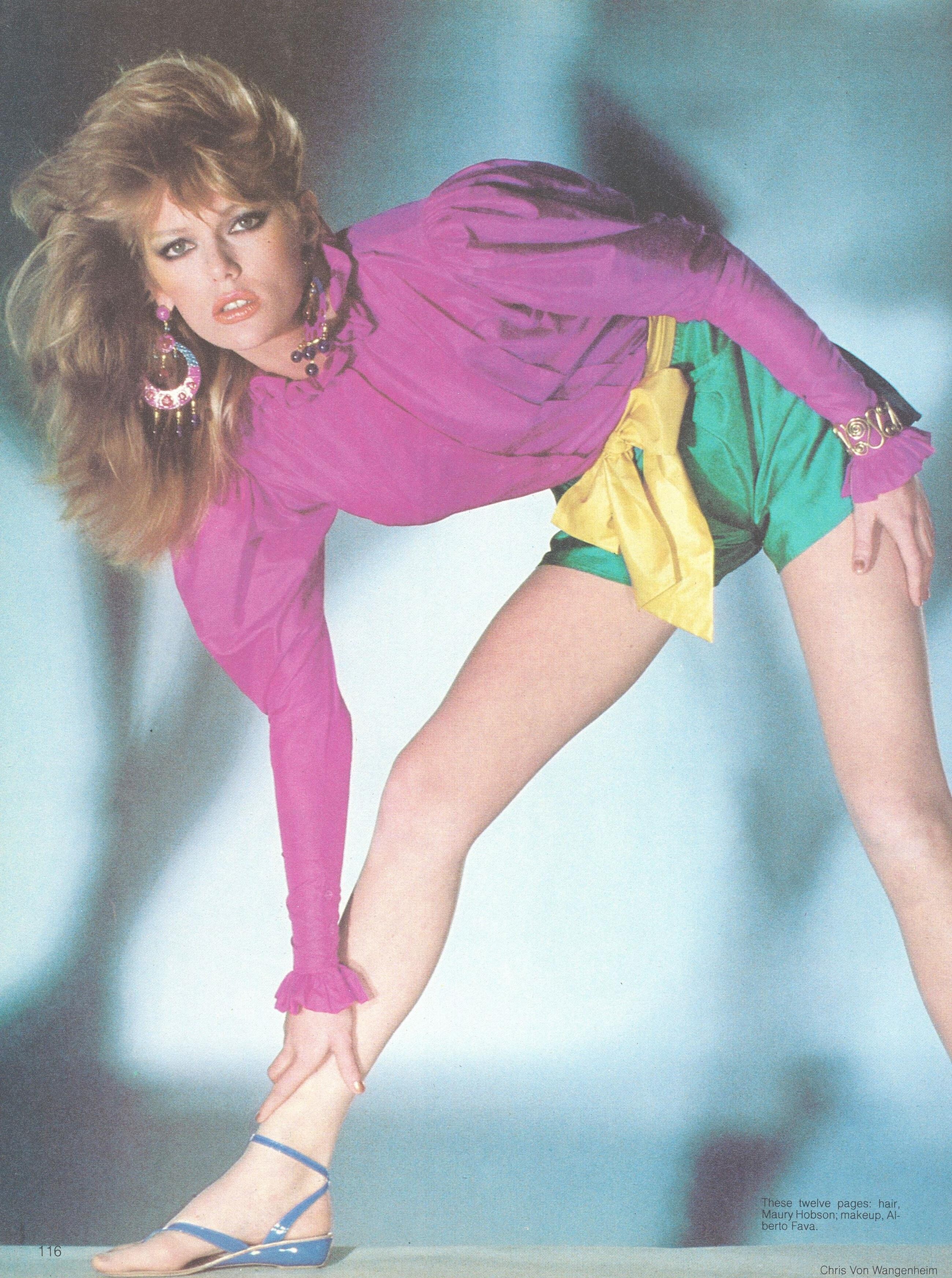
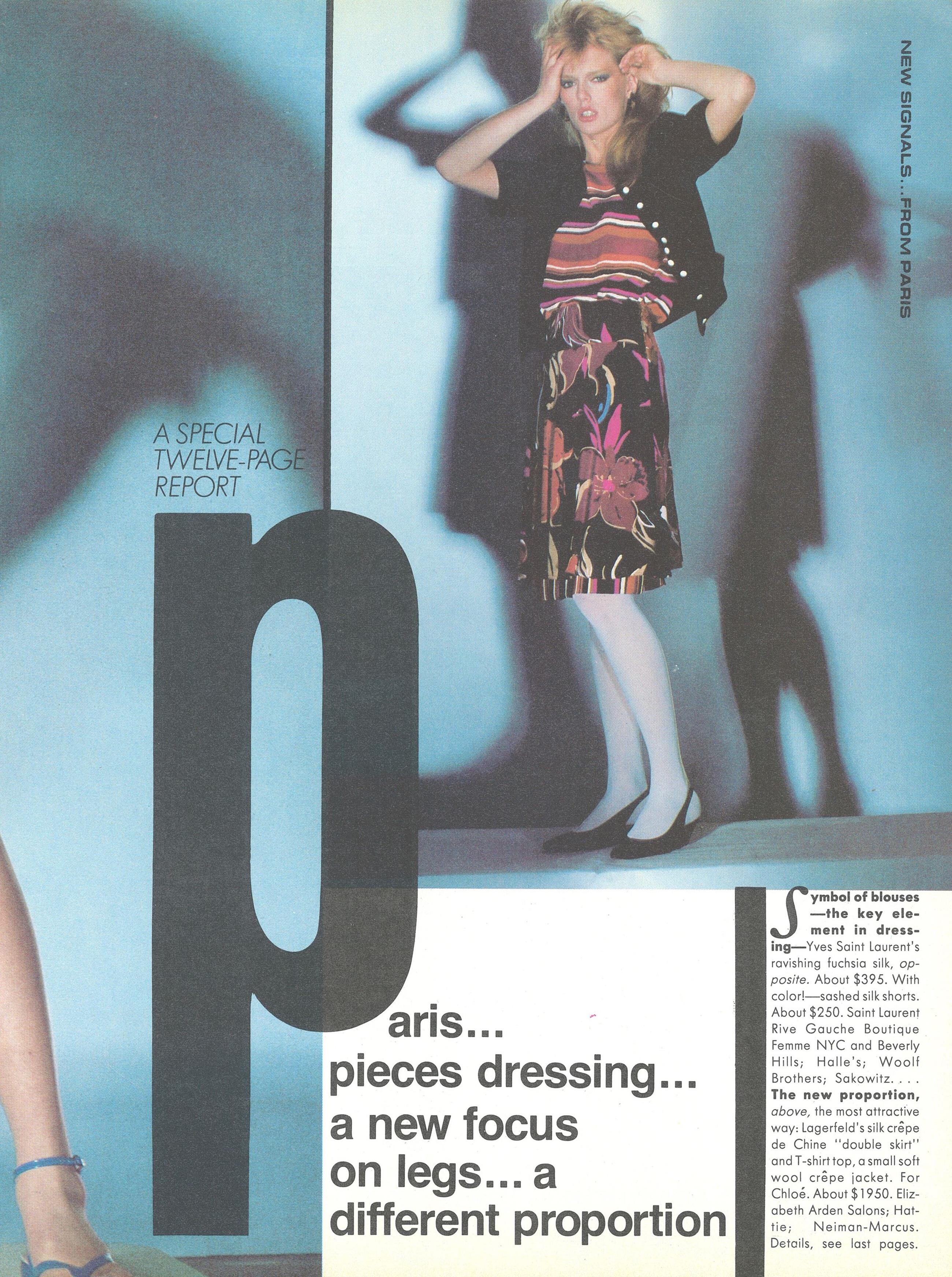
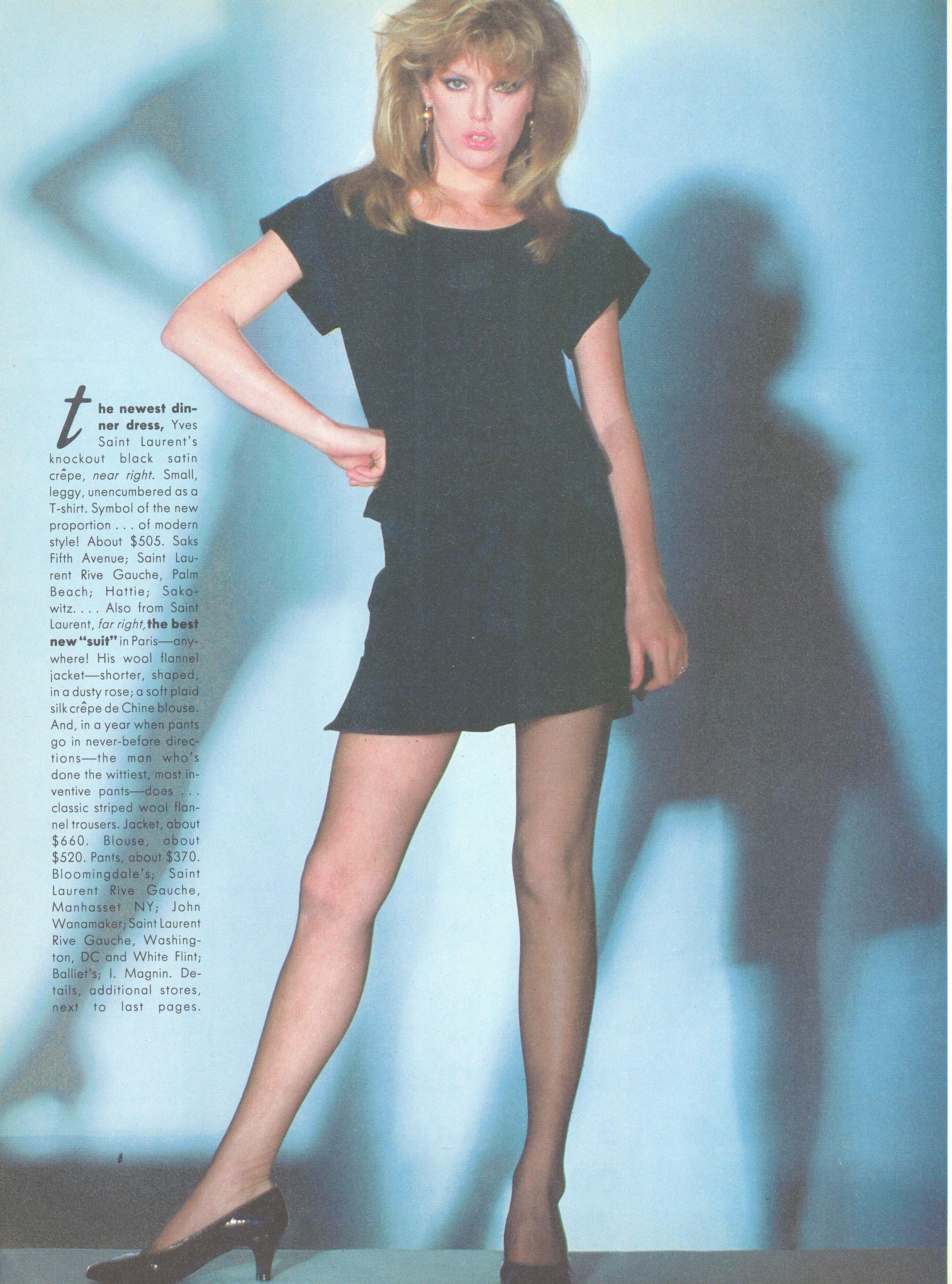
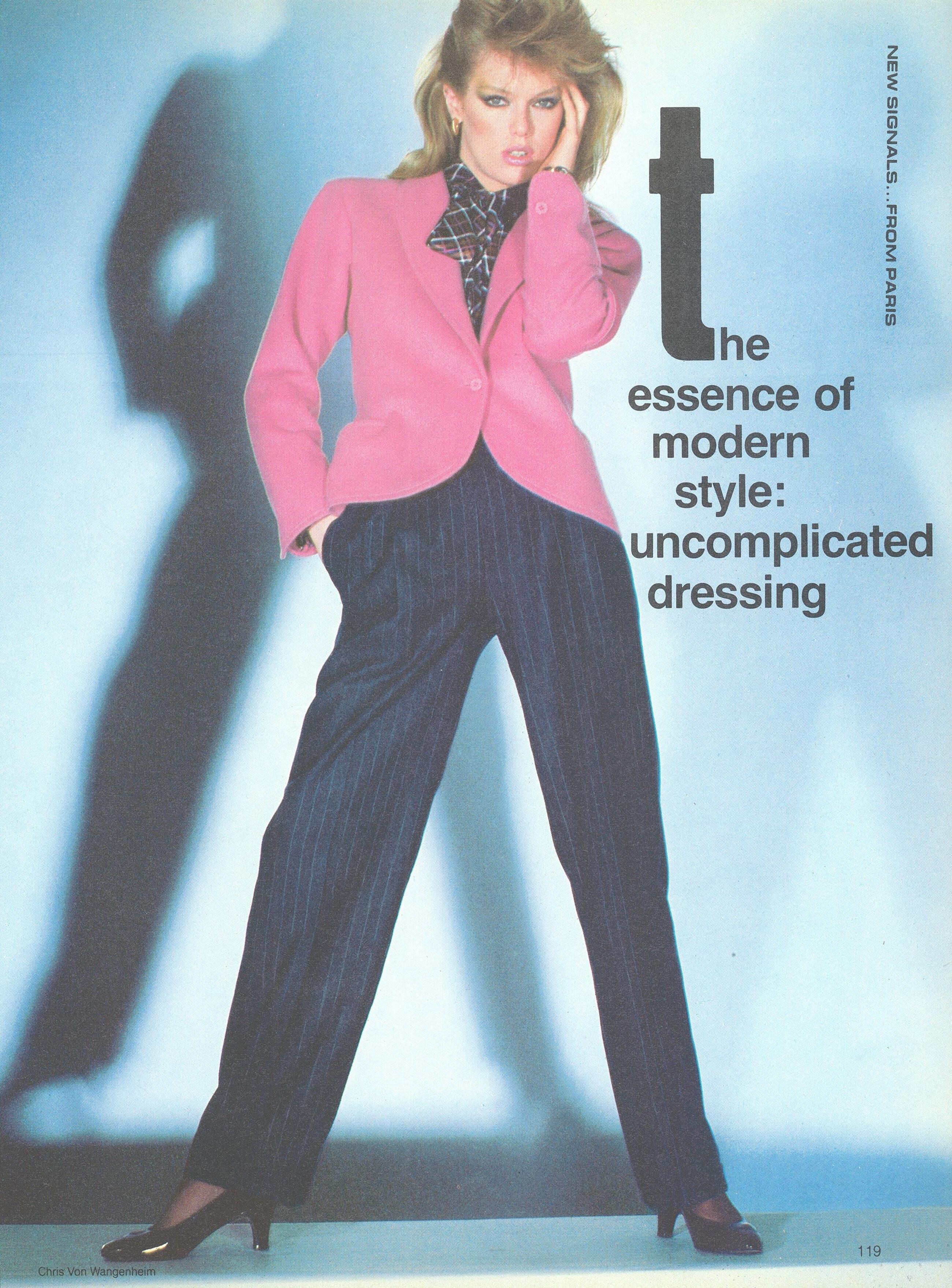
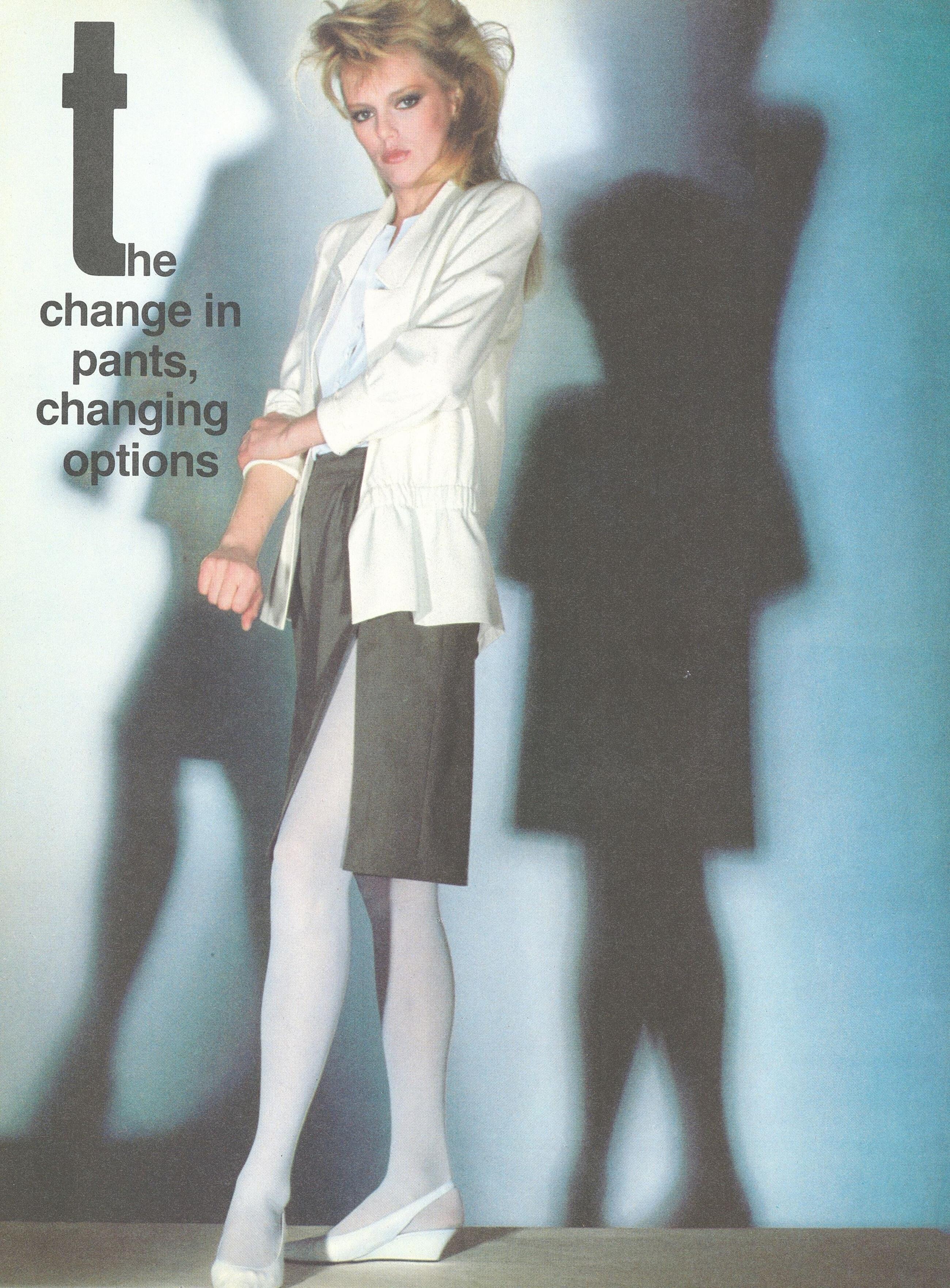
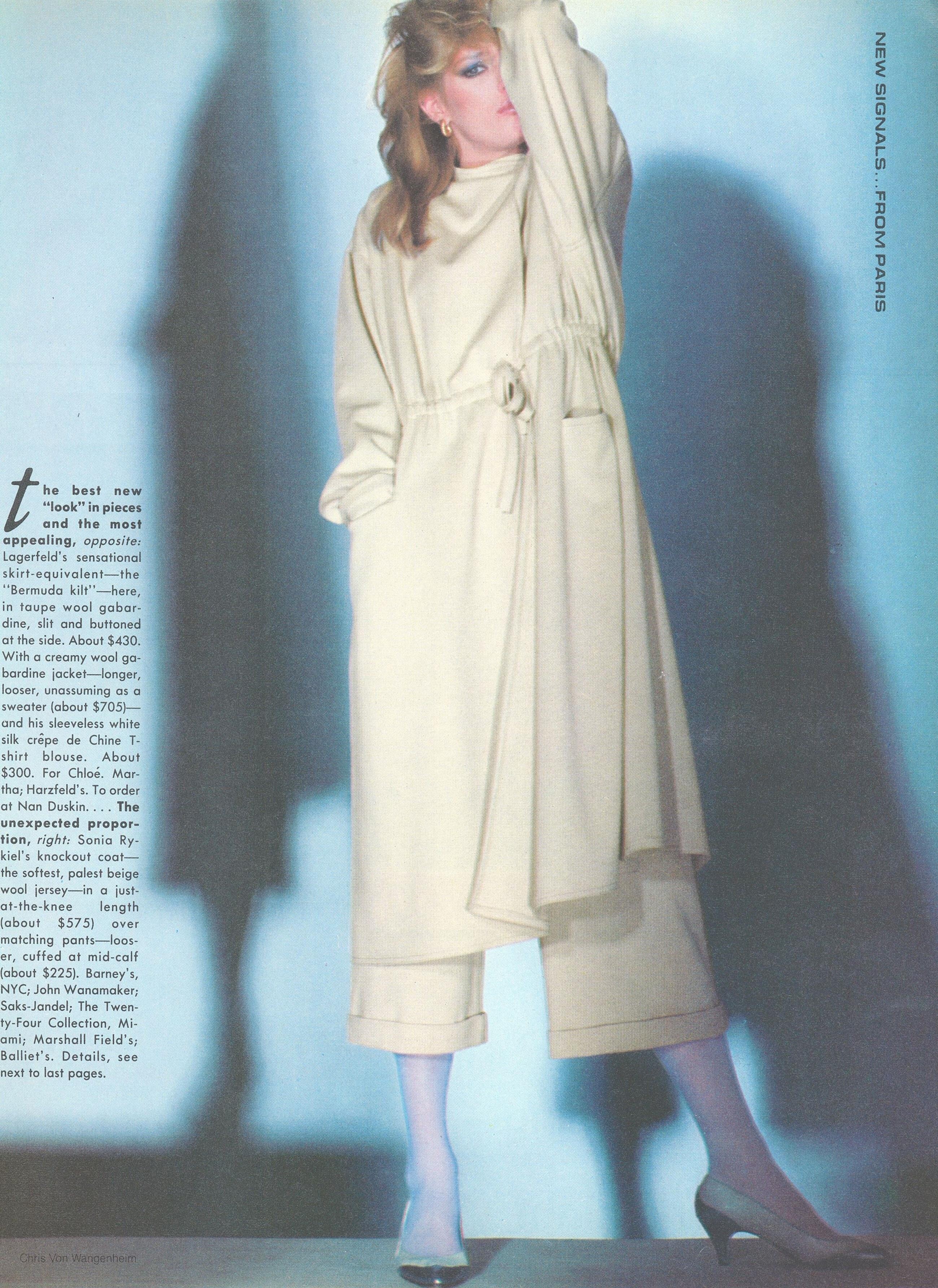
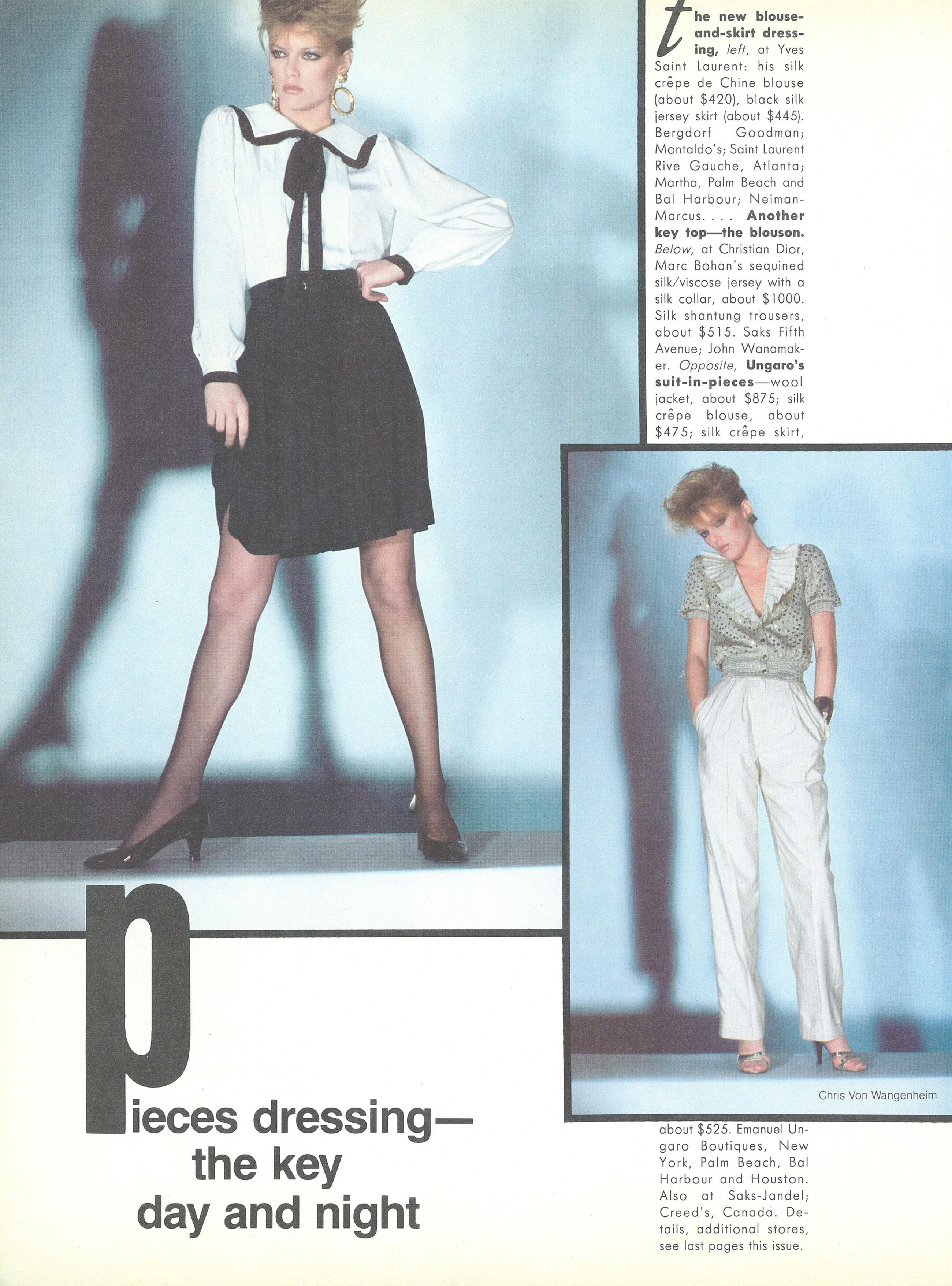
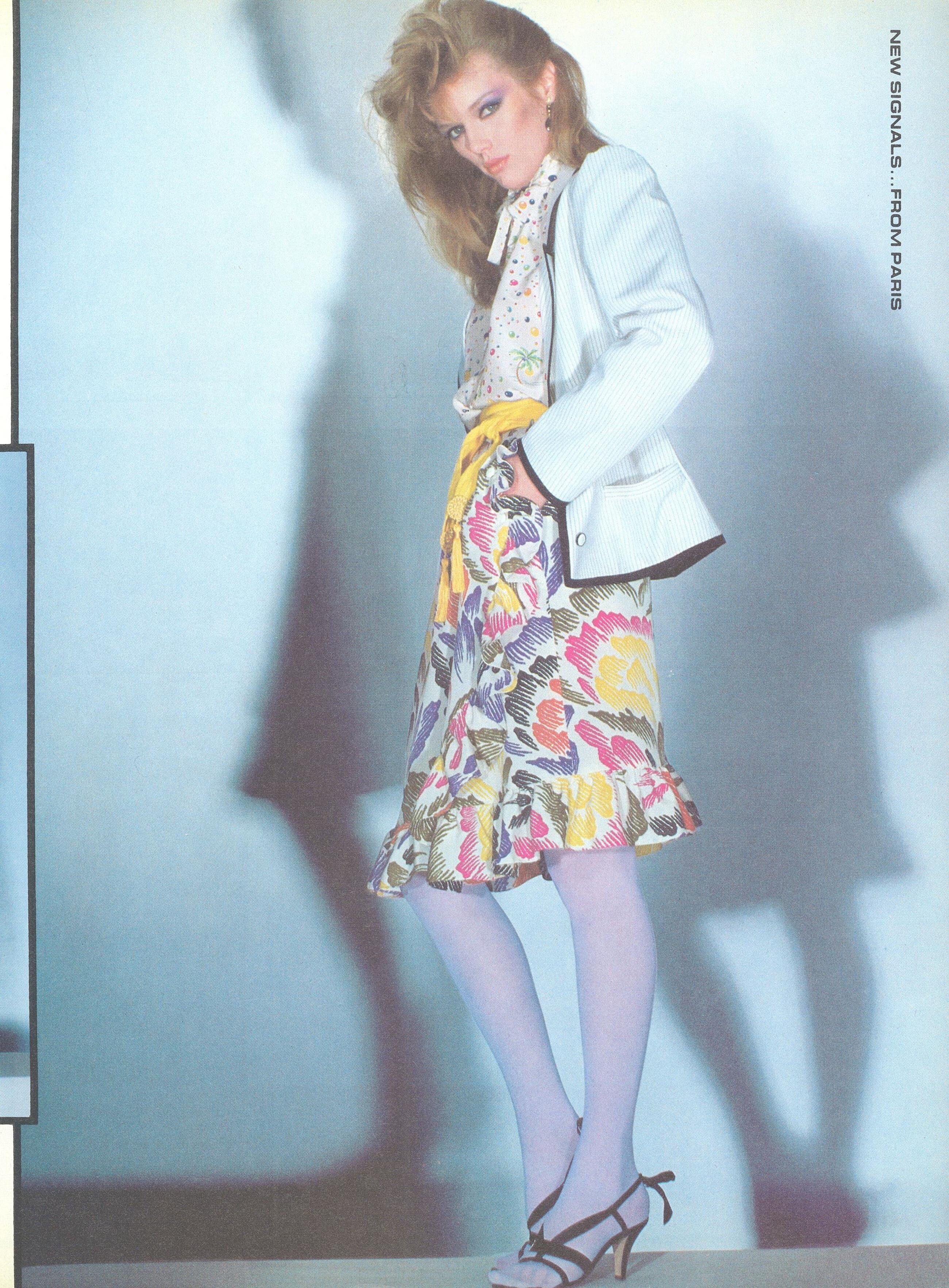
US Vogue January 1981
"New Signals... from Paris"
Model: Patti Hansen
Photographer: Chris von Wangenheim
Hair: Maury Hopson
Makeup: Alberto Fava
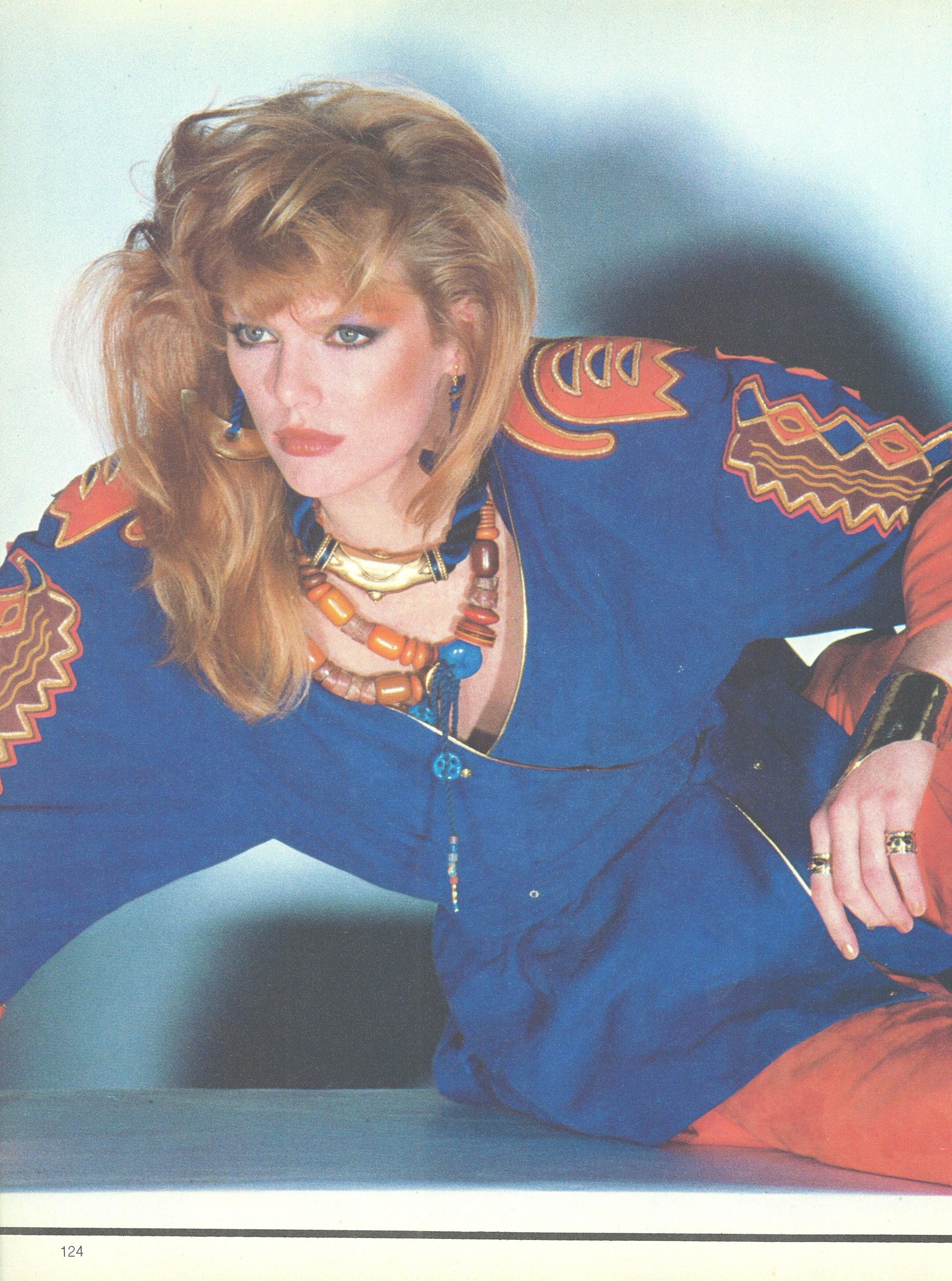
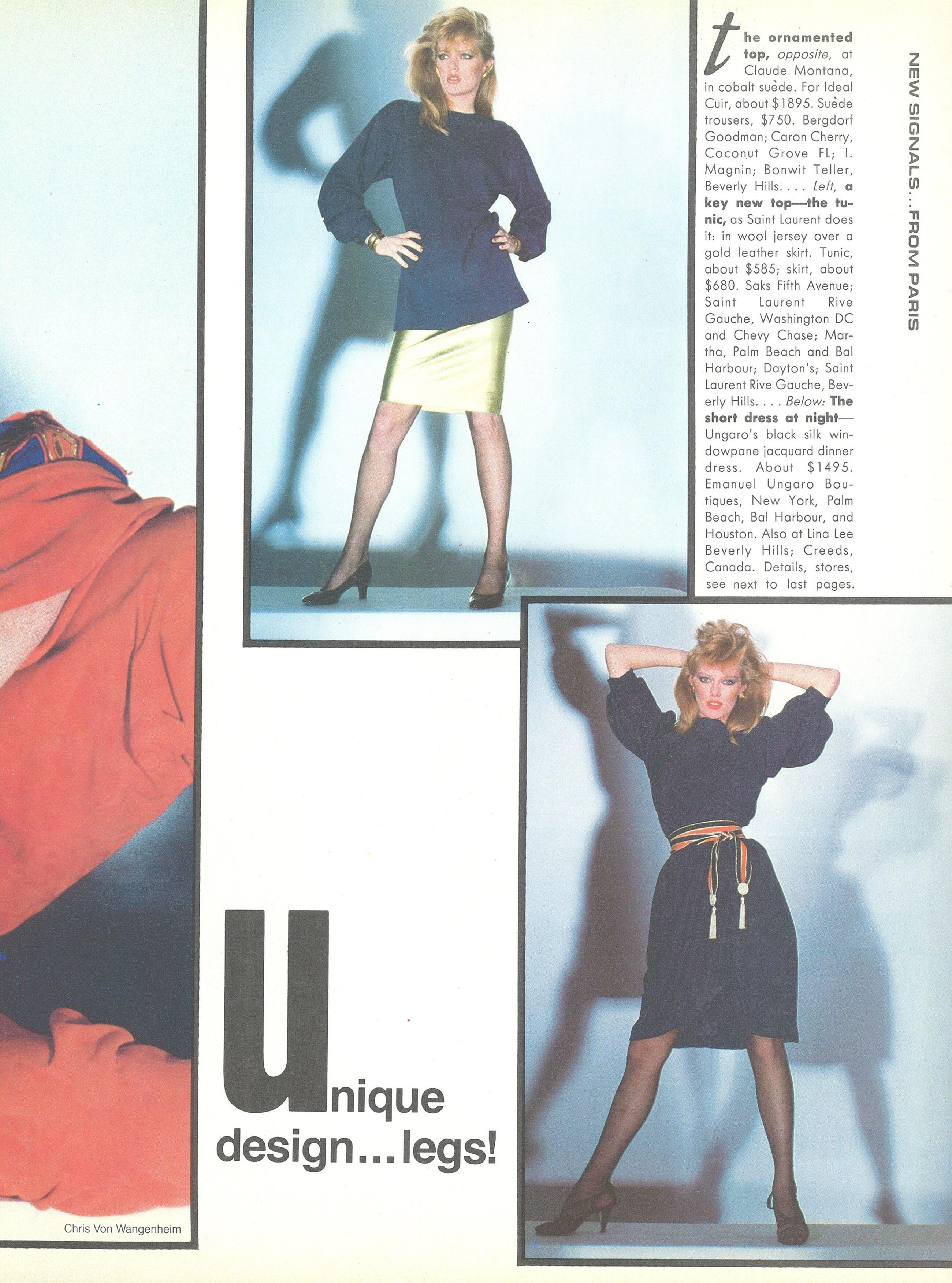
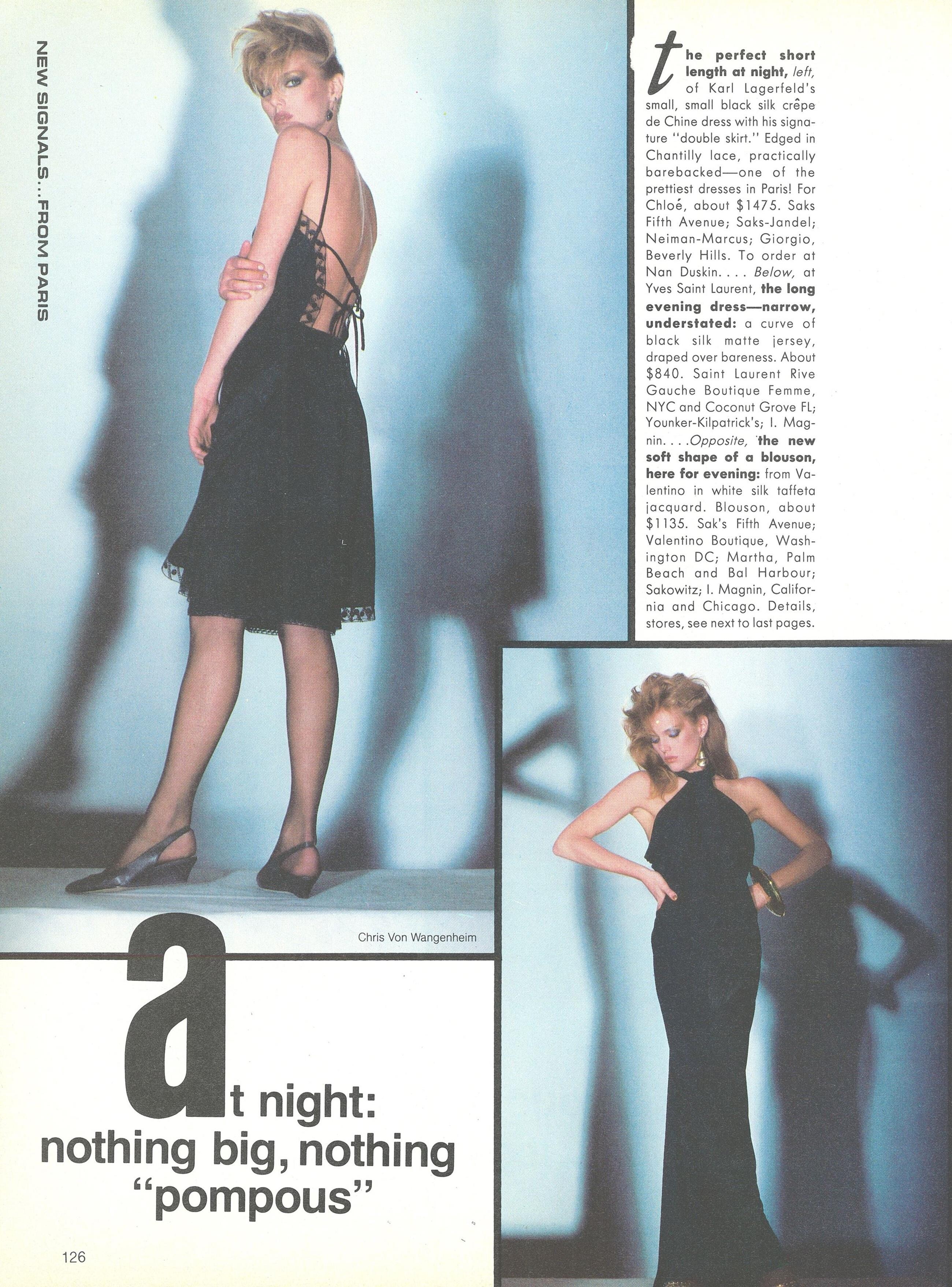
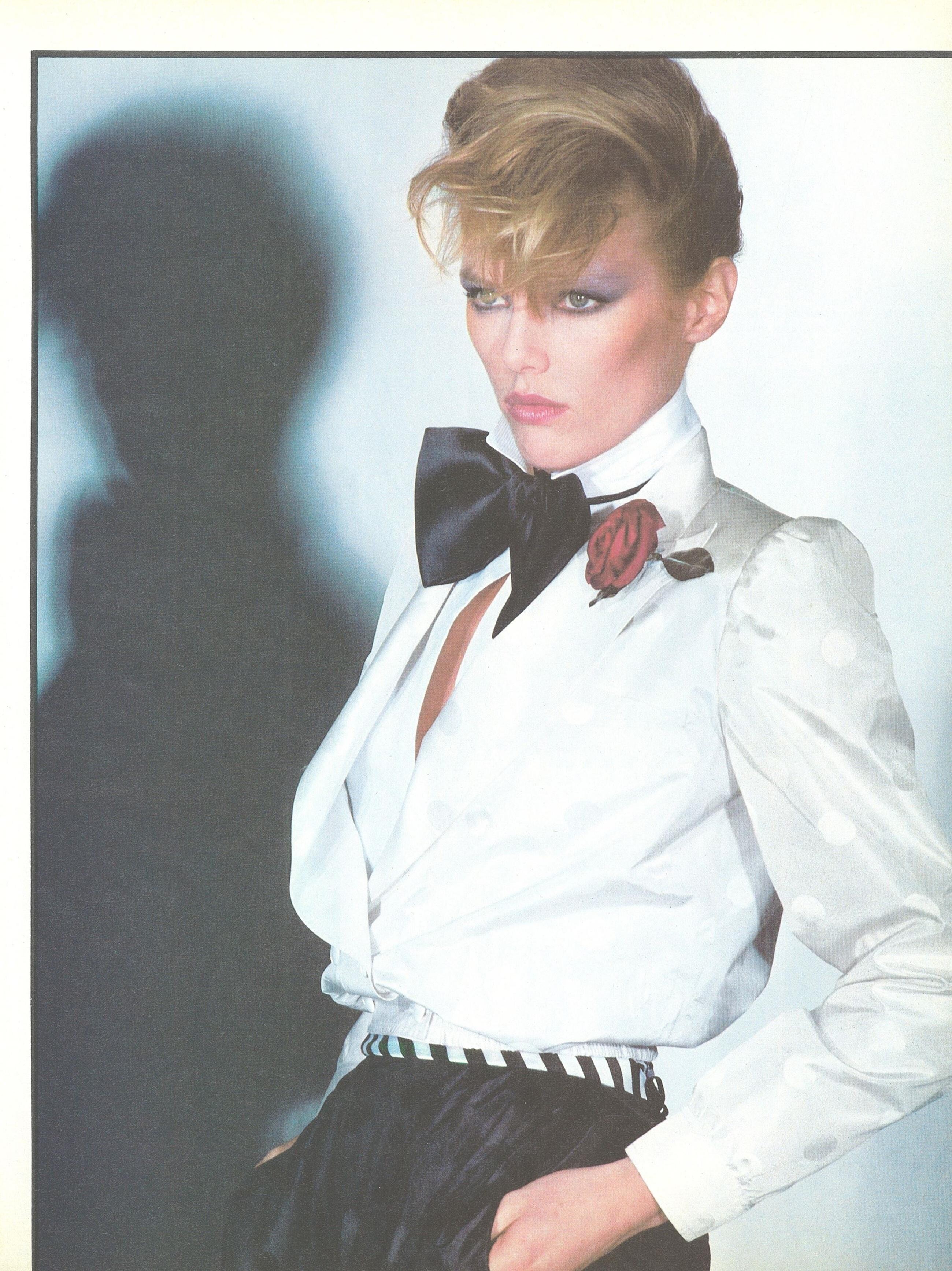
Vogue Archive
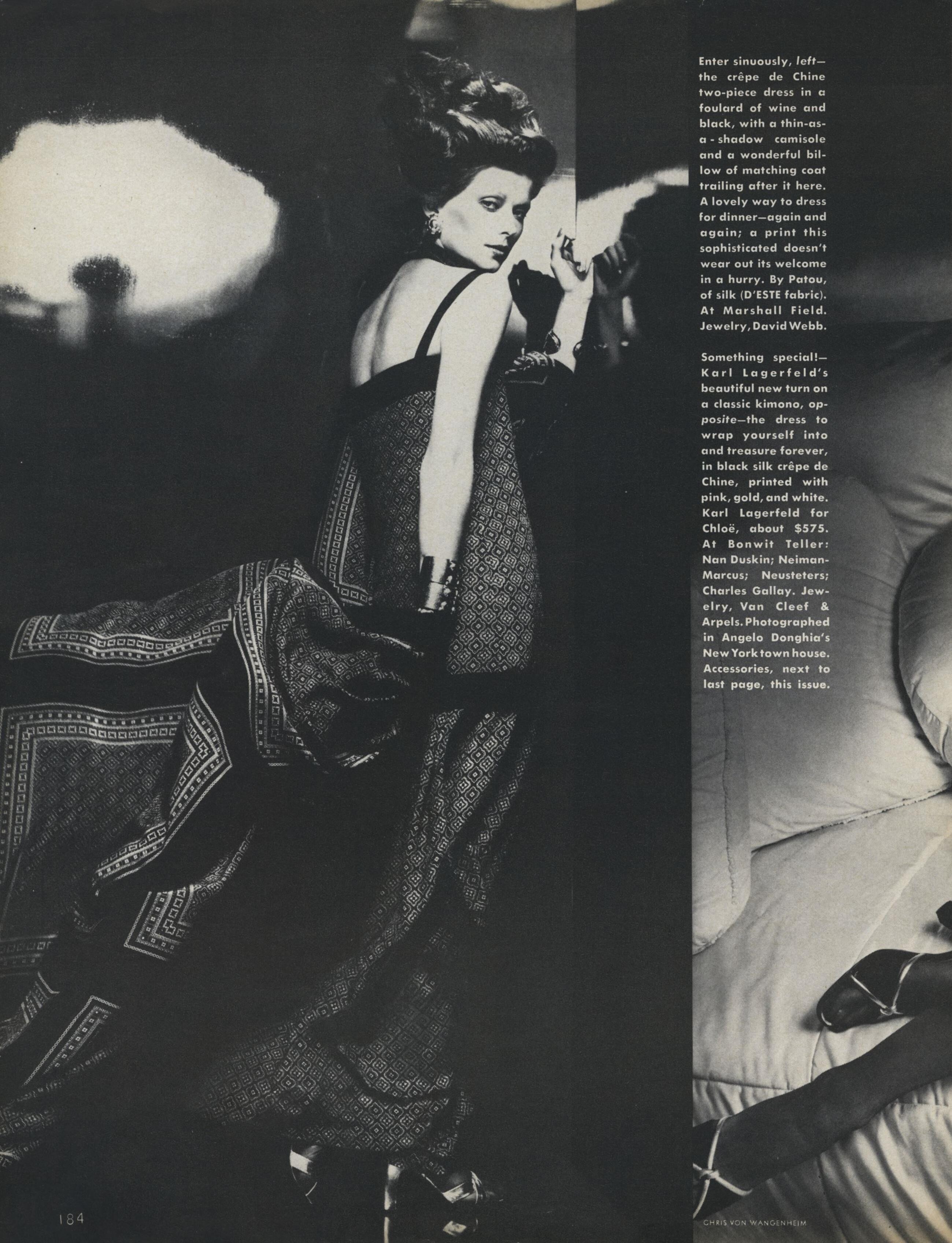
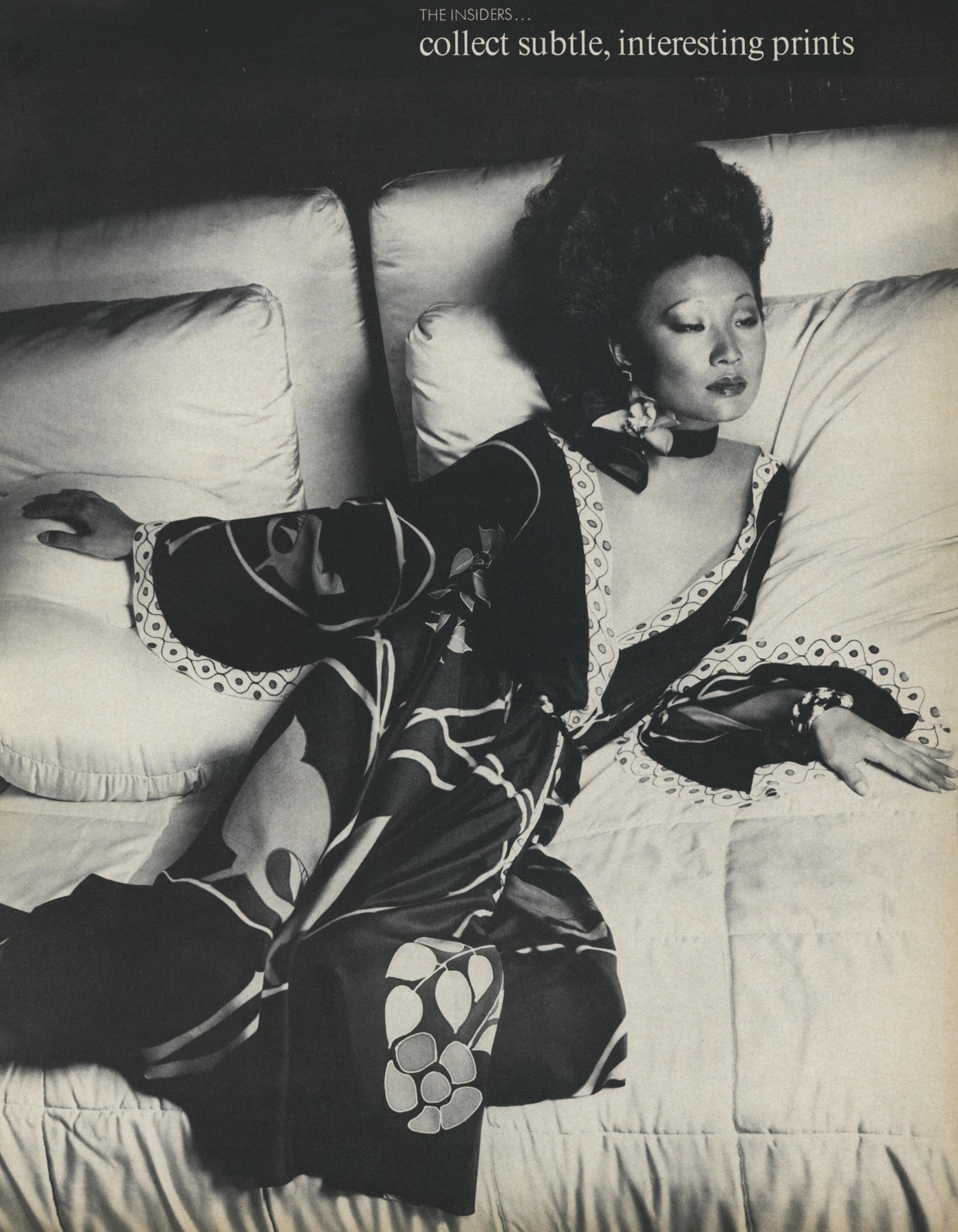
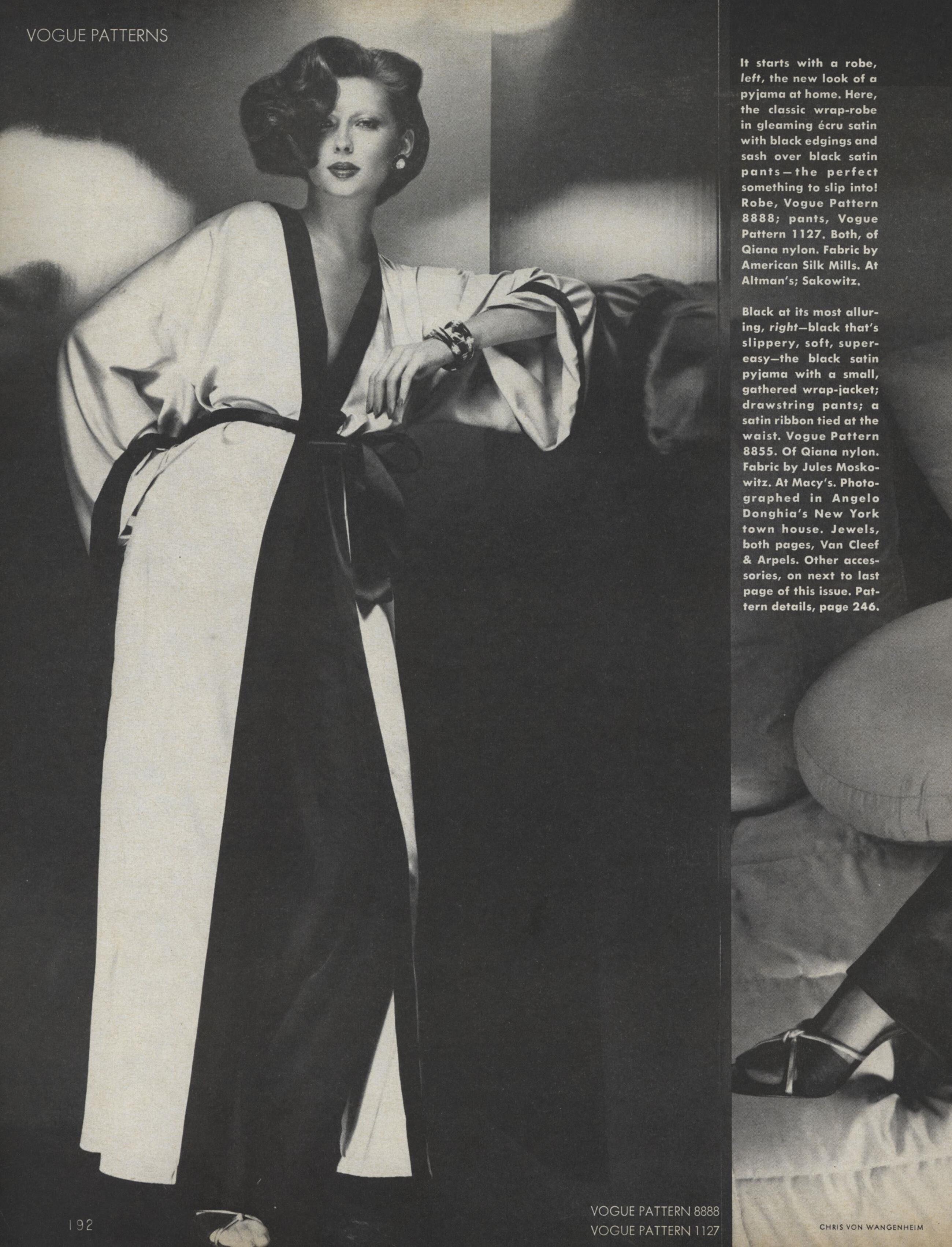
US Vogue November 1974
"The Insiders"
Models: Lisa Taylor, Regine Rafferty & Kim Im
Photographer: Chris von Wangenheim
Fashion Editor: Frances Stein
Hair: Maury Hopson
Makeup: John Richardson
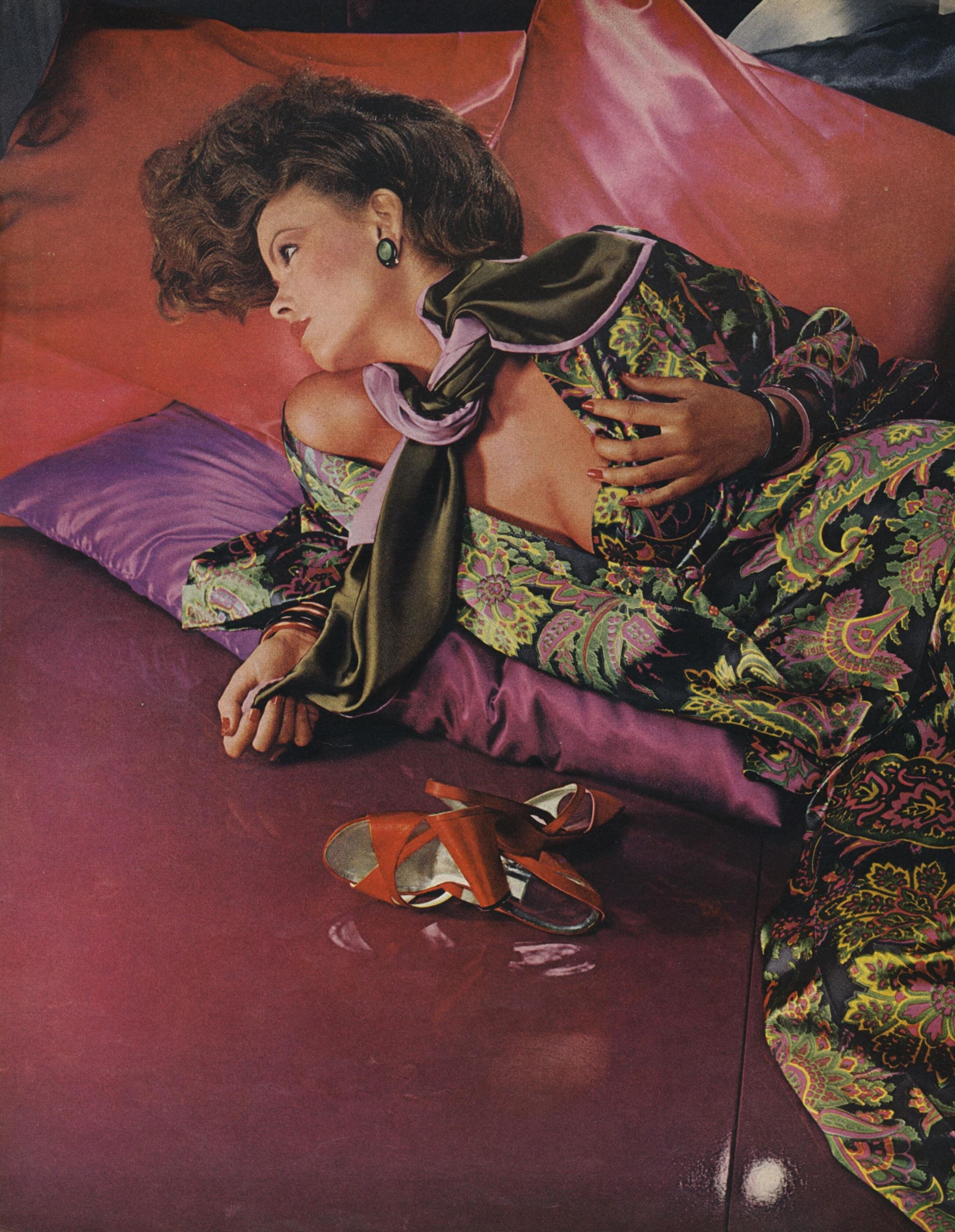
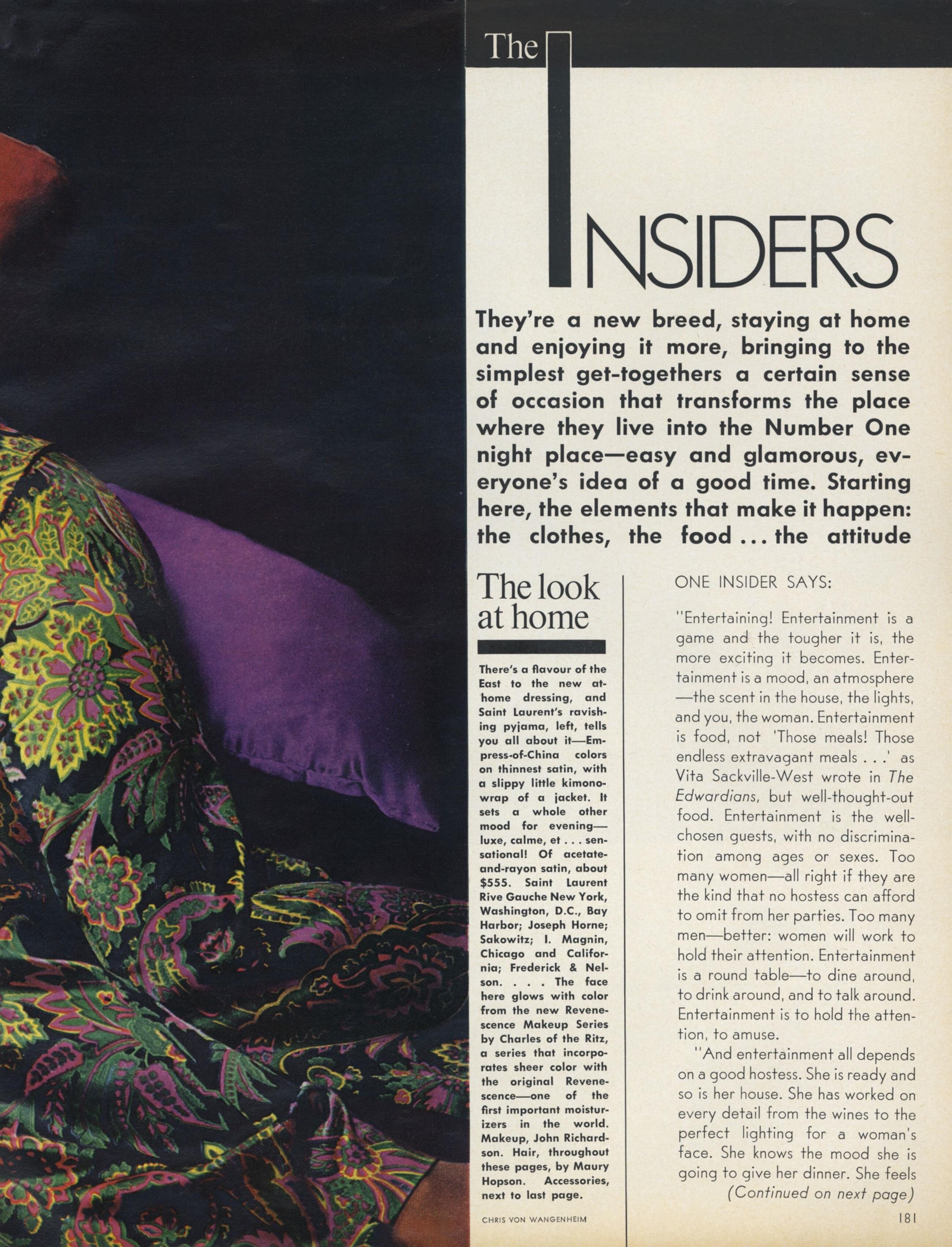
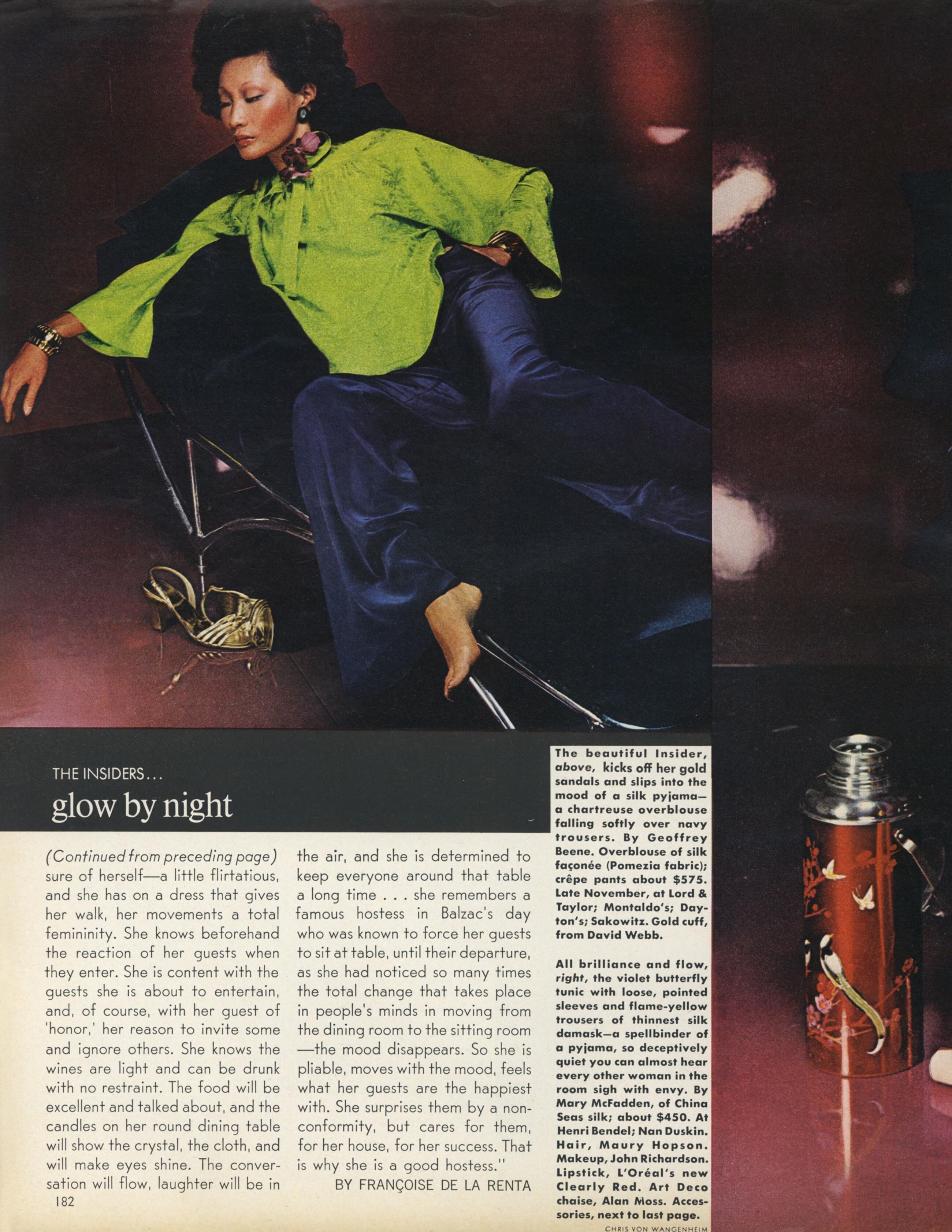
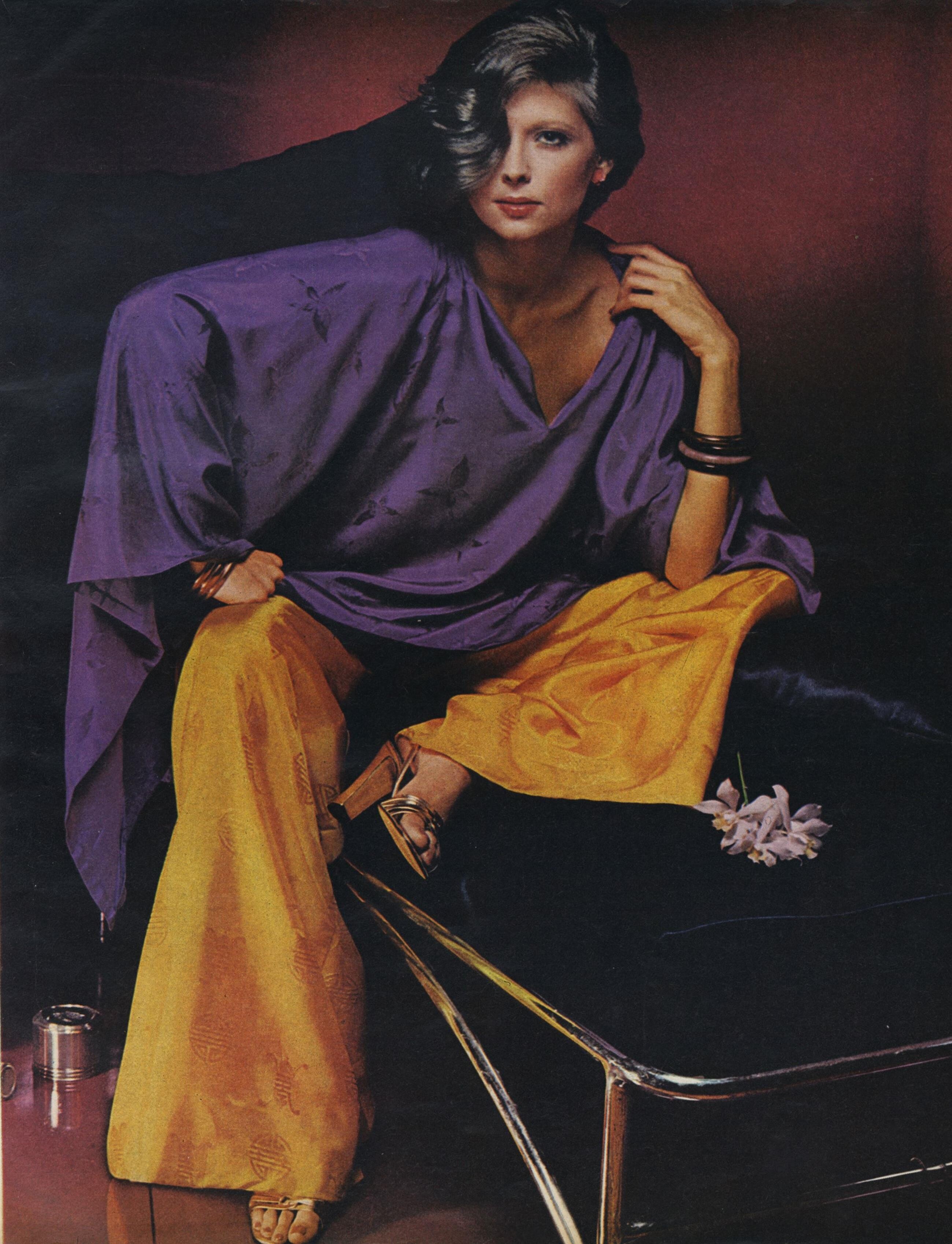
Vogue Archive
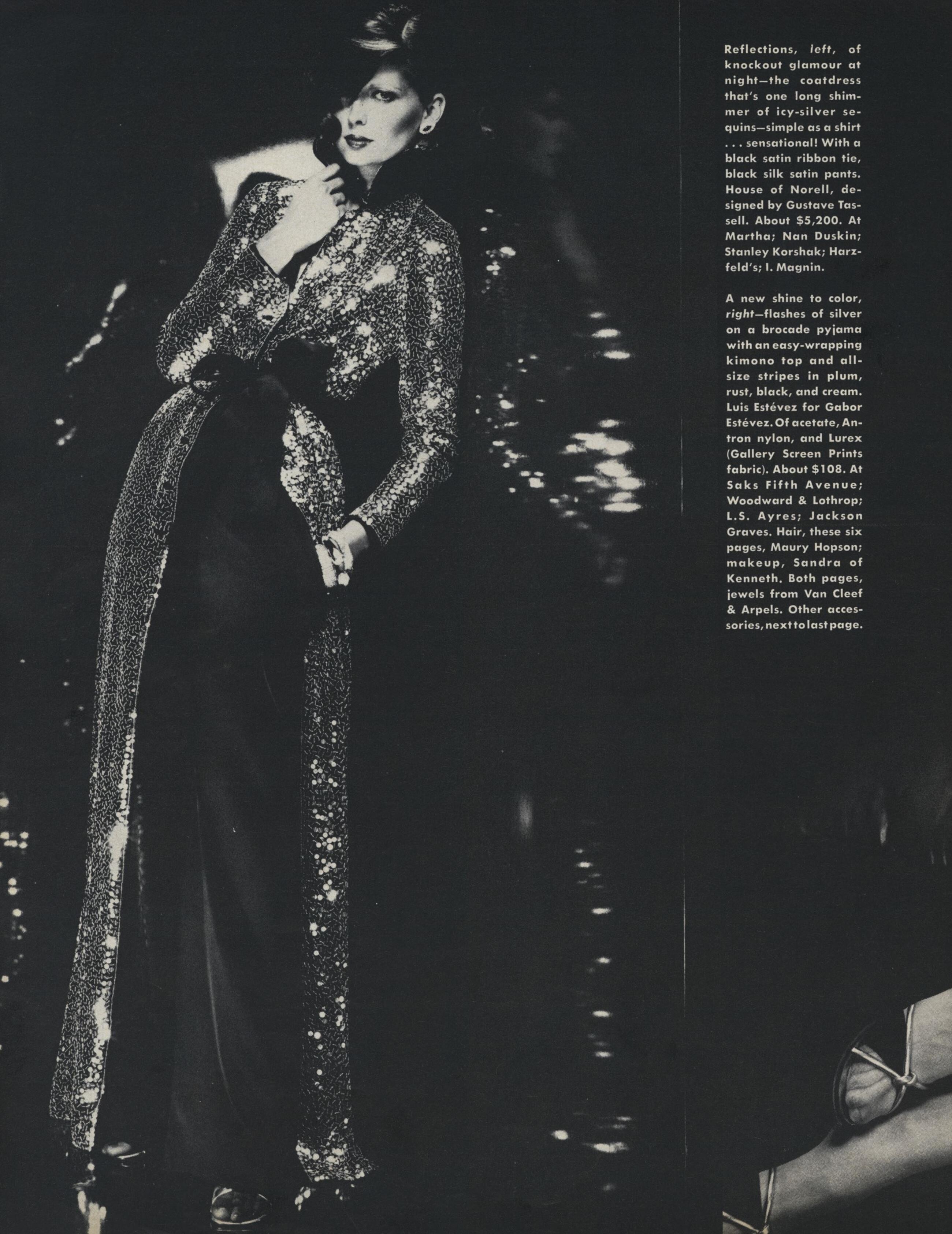
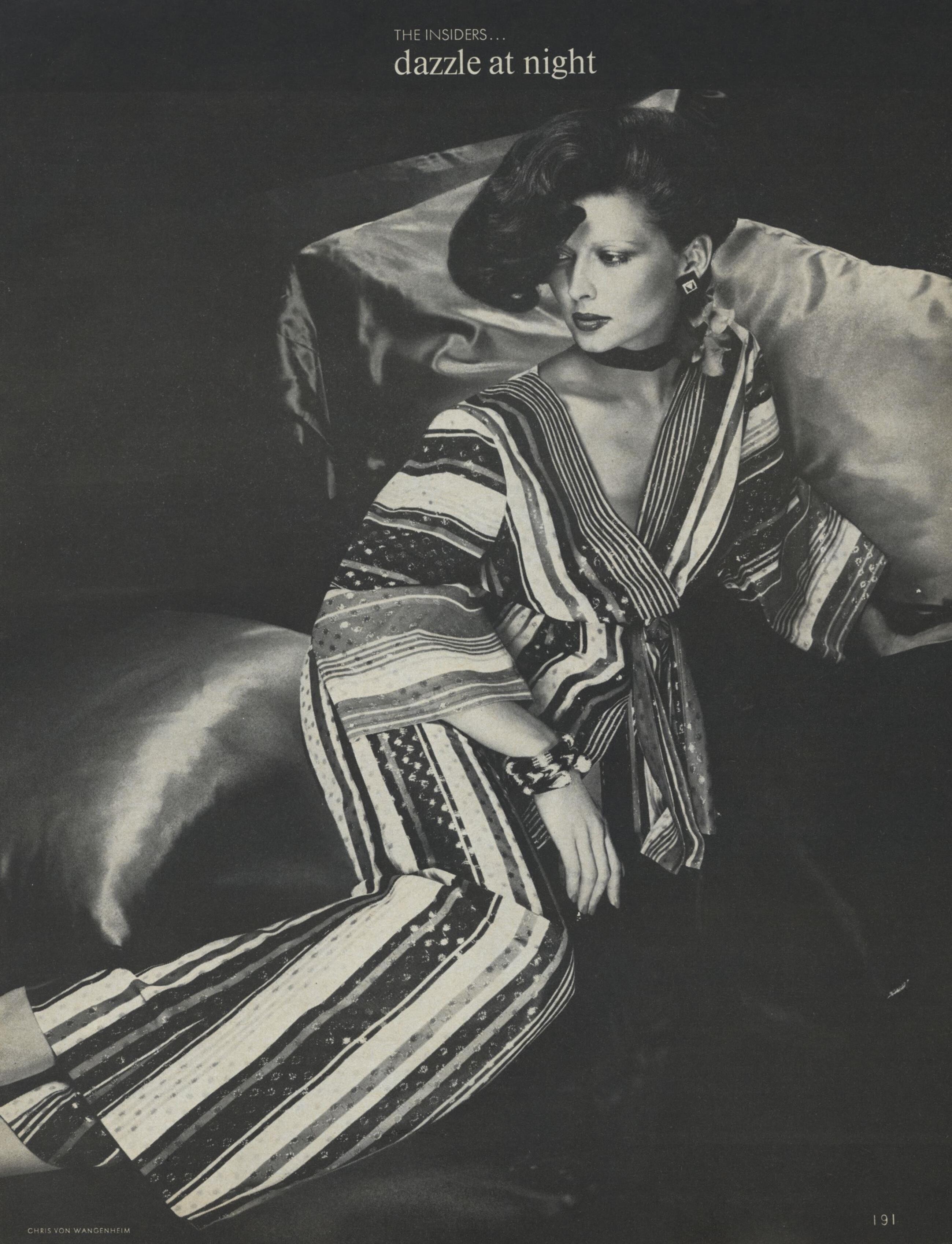
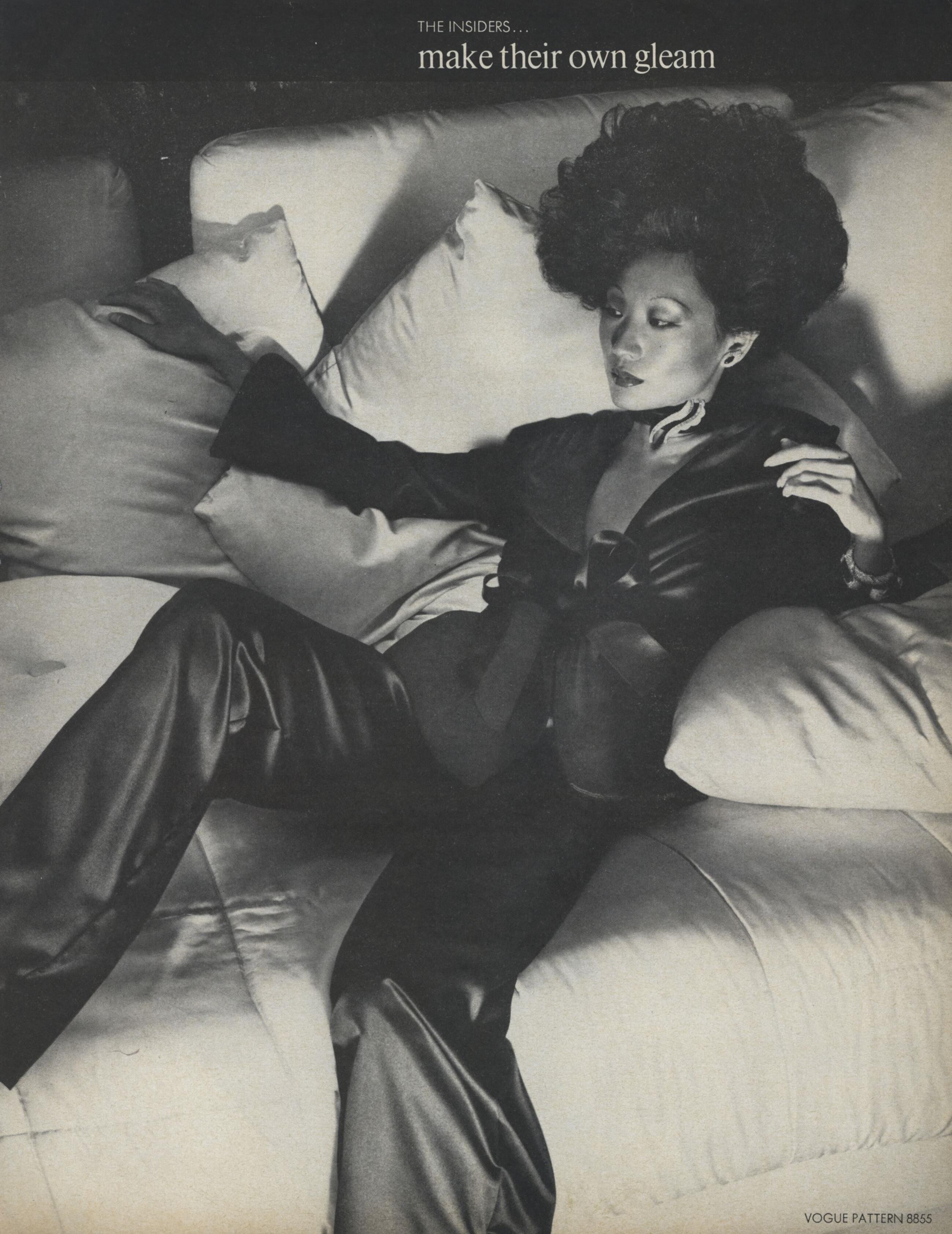
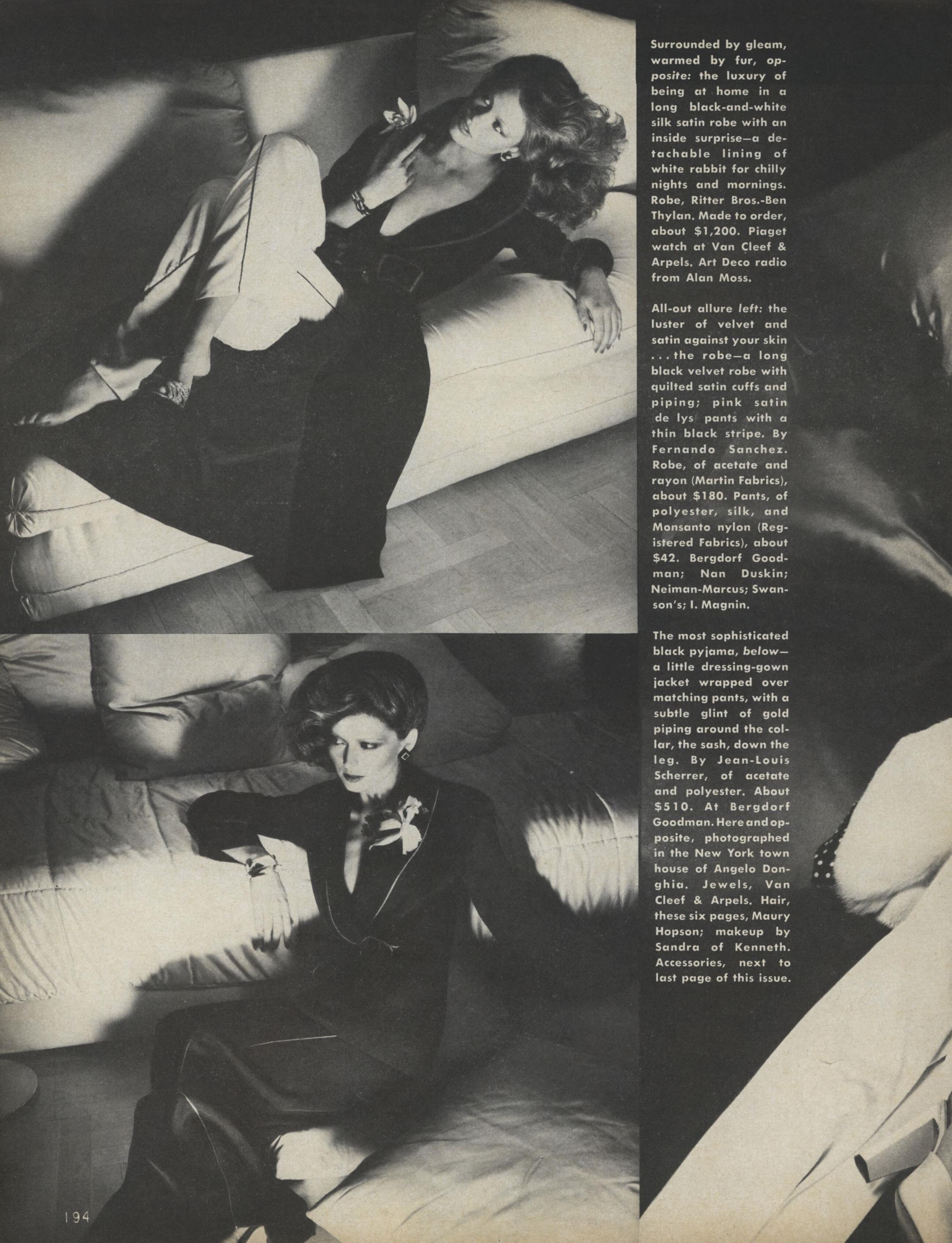
US Vogue November 1974
"The Insiders: Dazzle at Night"
Models: Lisa Taylor, Regine Rafferty & Kim Im
Photographer: Chris von Wangenheim
Fashion Editor: Frances Stein
Hair: Maury Hopson
Makeup: Sandy Linter

Vogue Archive
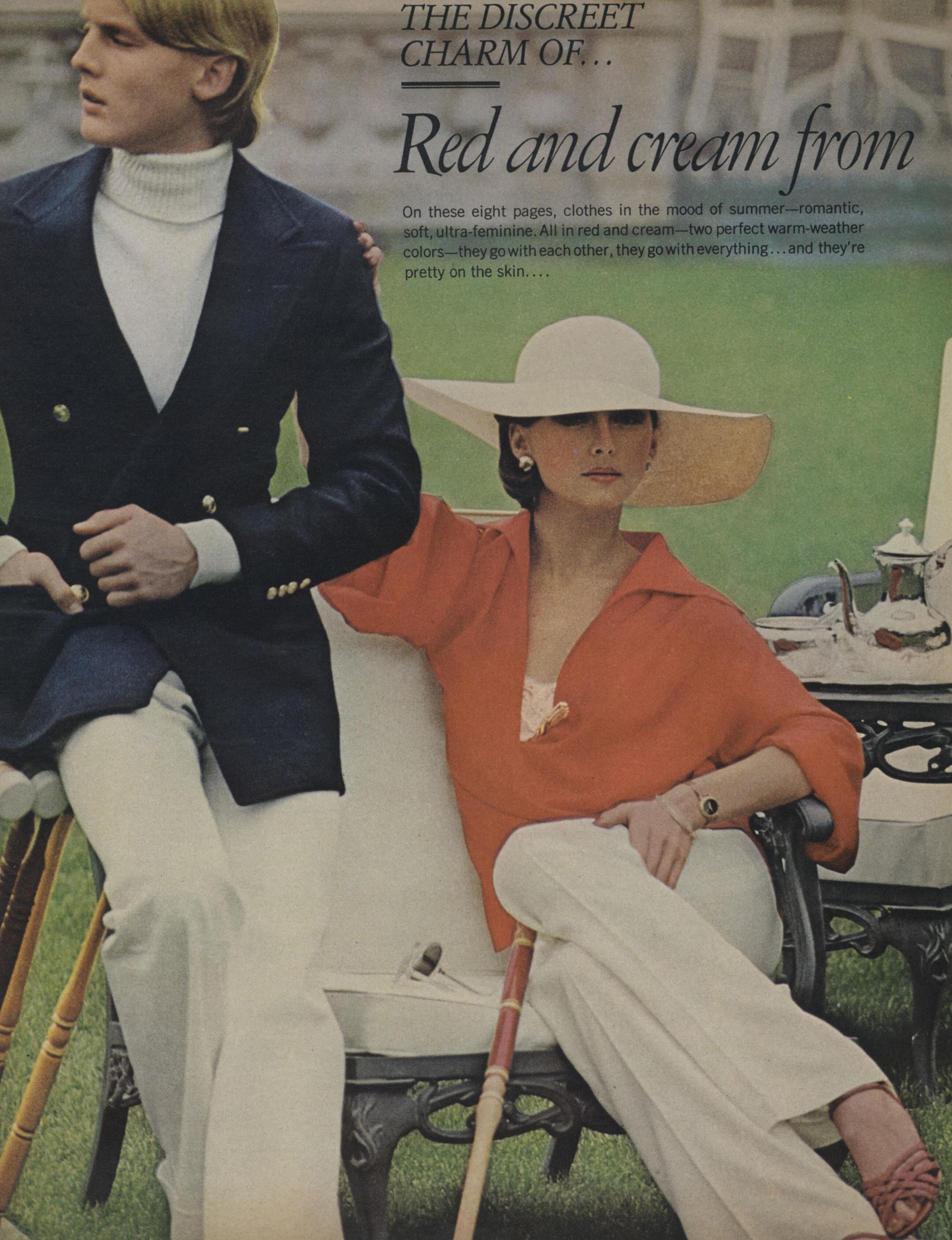
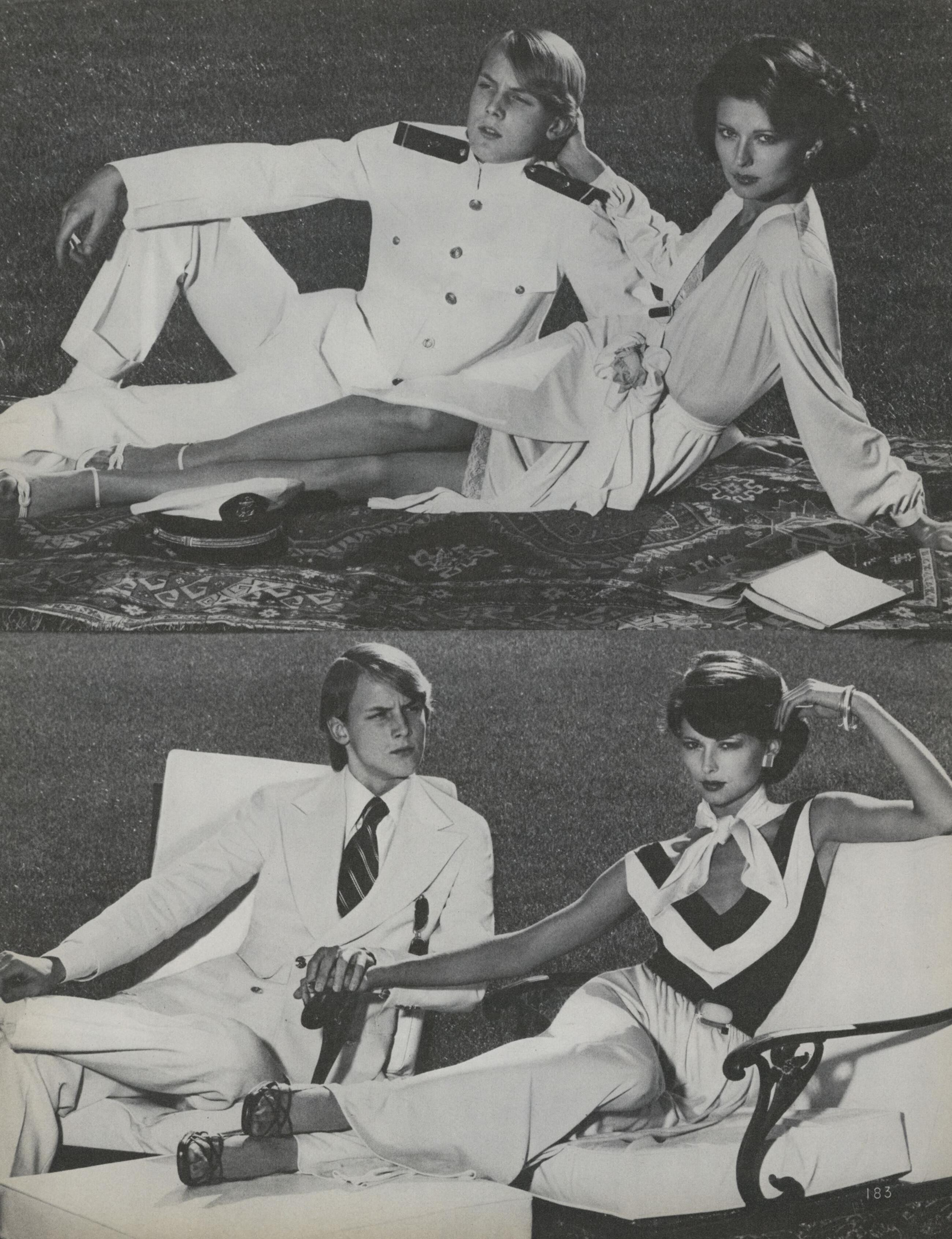
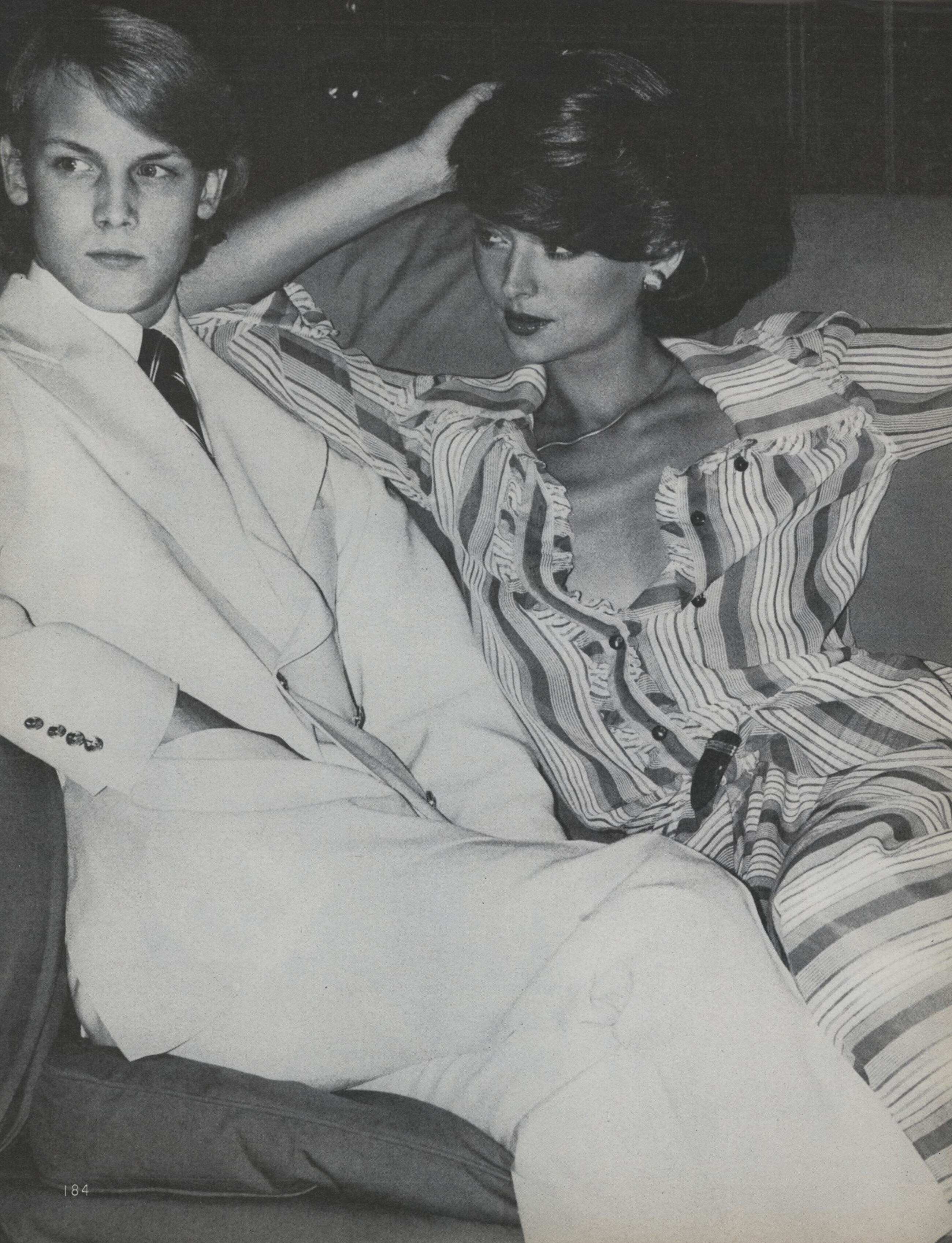
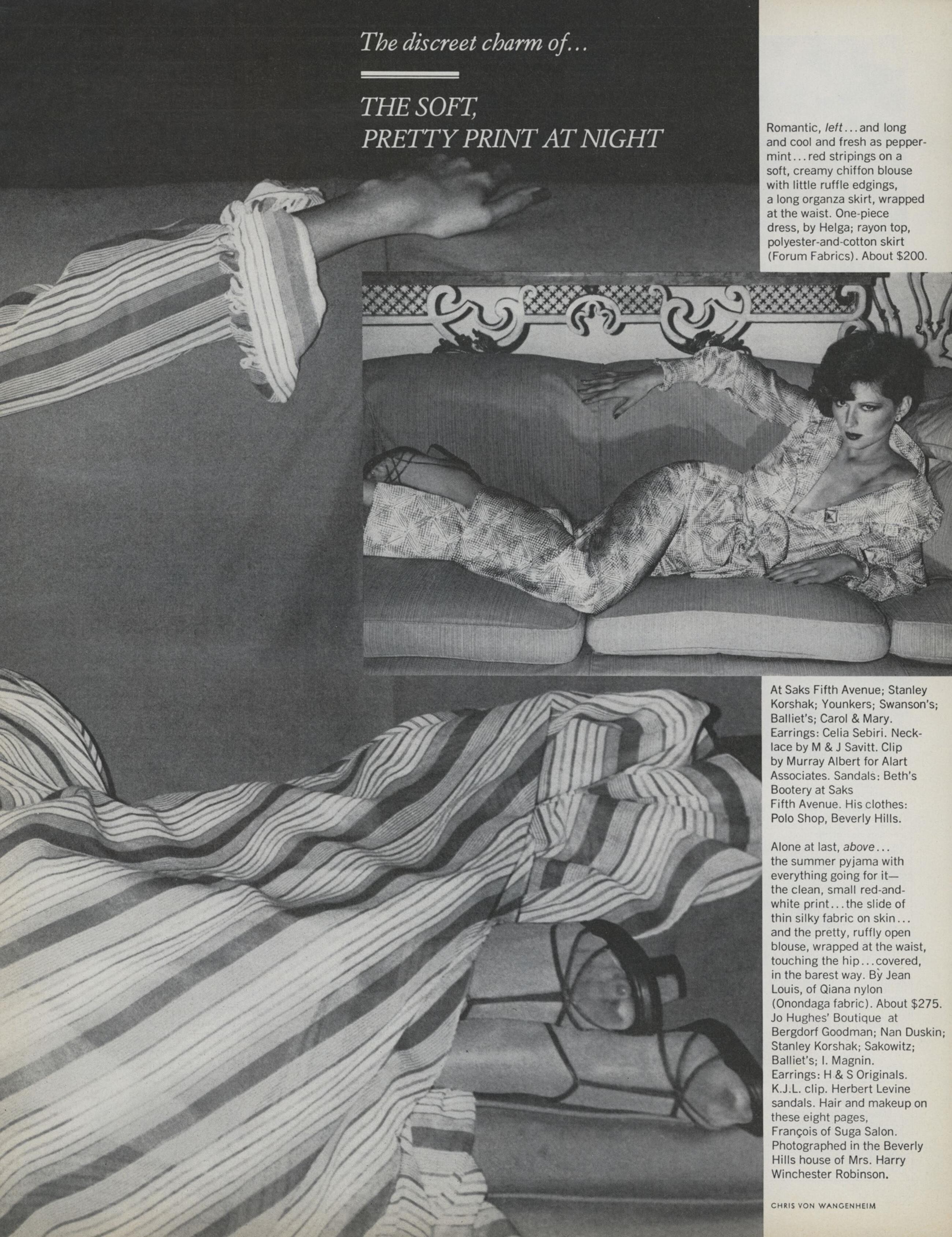
US Vogue April 1974
"The Discreet Charm of... Red and Cream from California for Anywhere"
Models: Regine Jaffrey & Unknown
Photographer: Chris von Wangenheim
Hair: François
Makeup: Salvatore
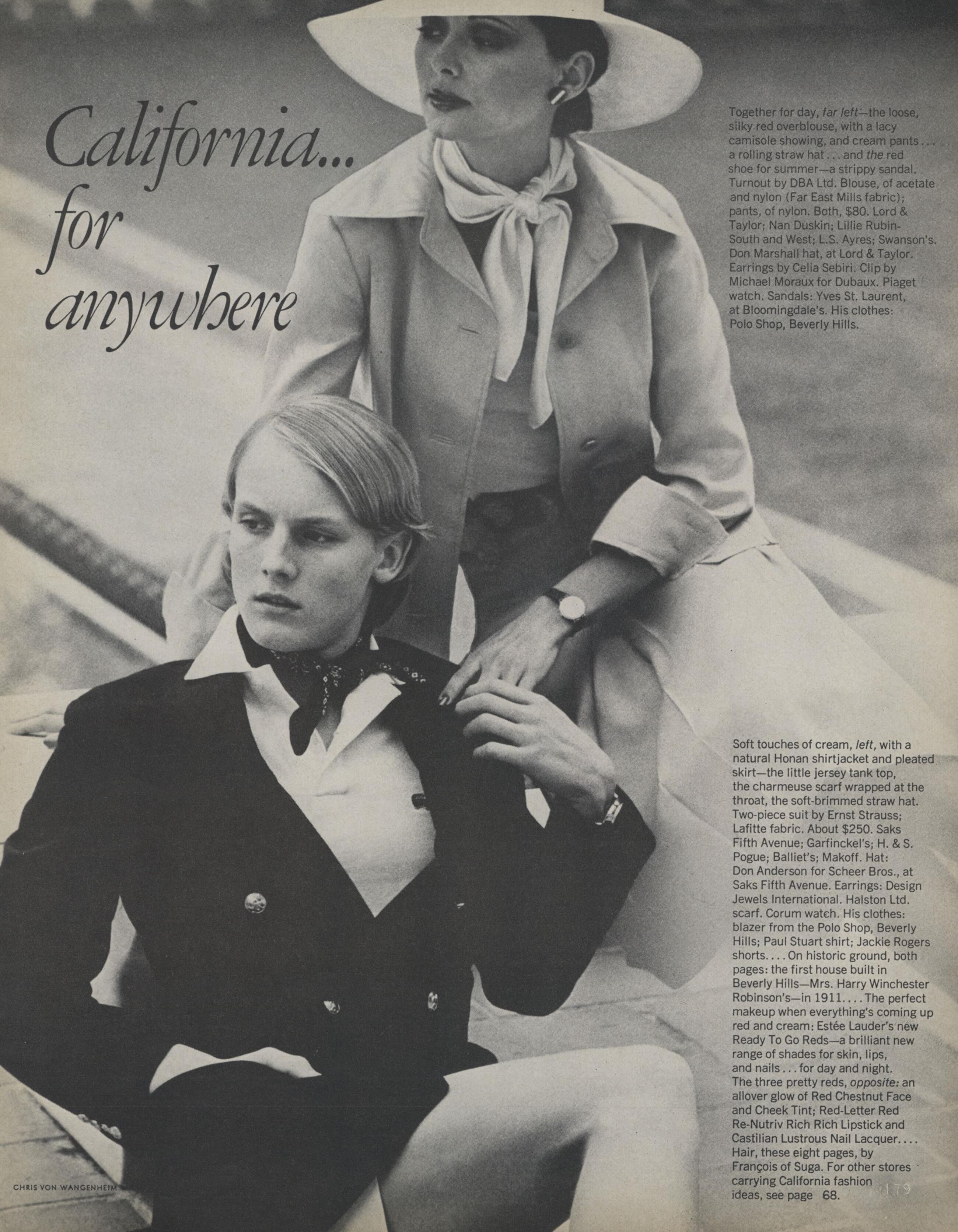
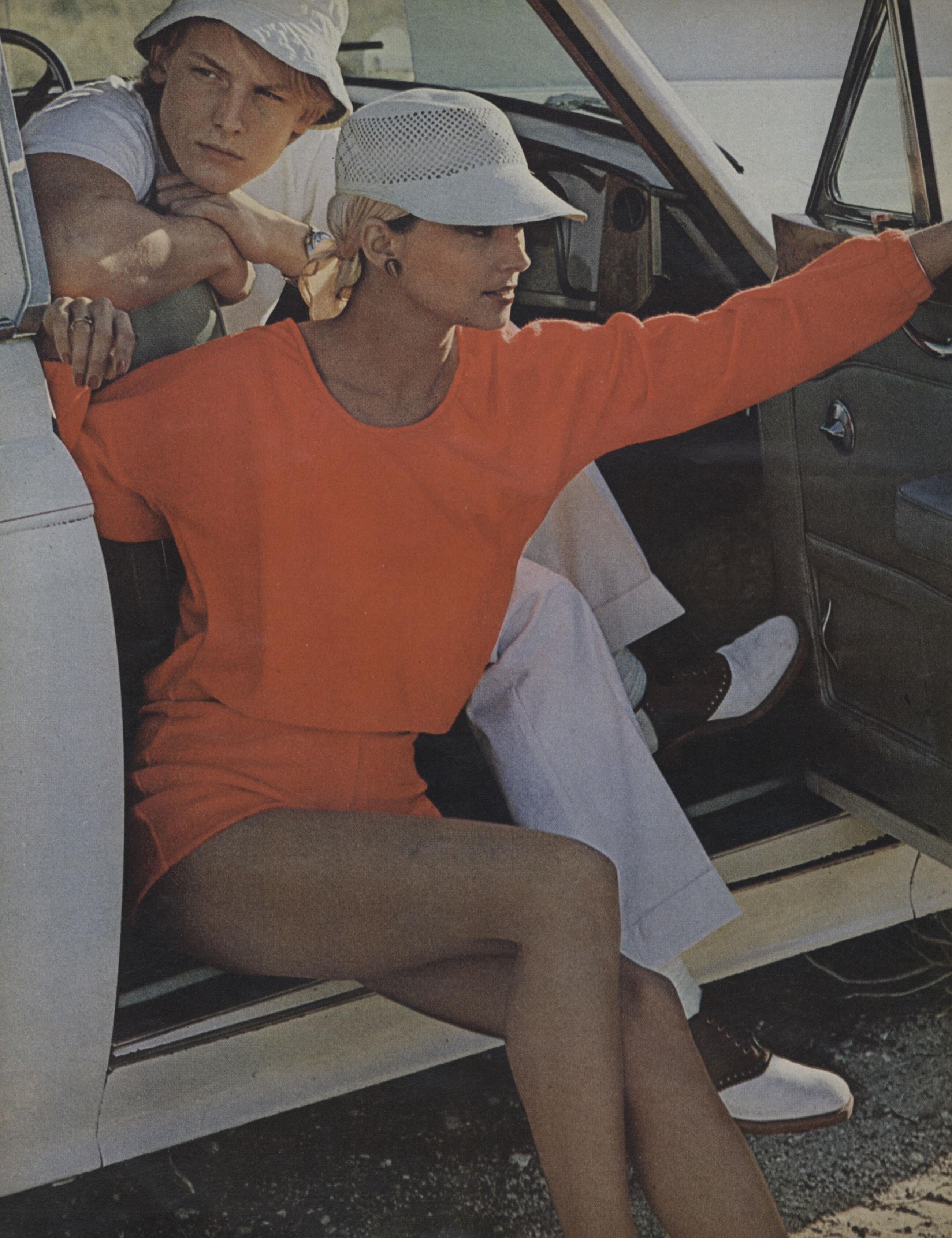
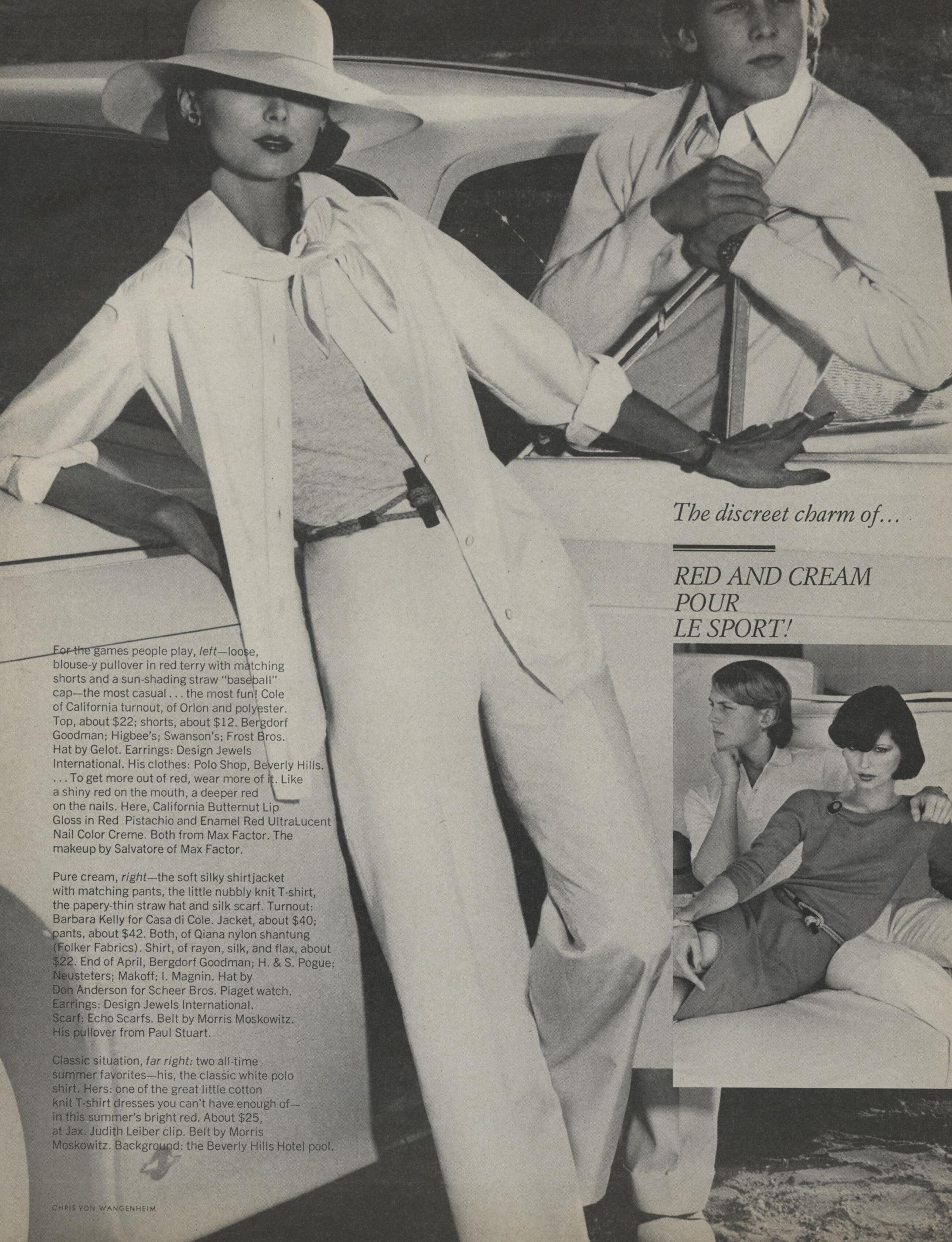
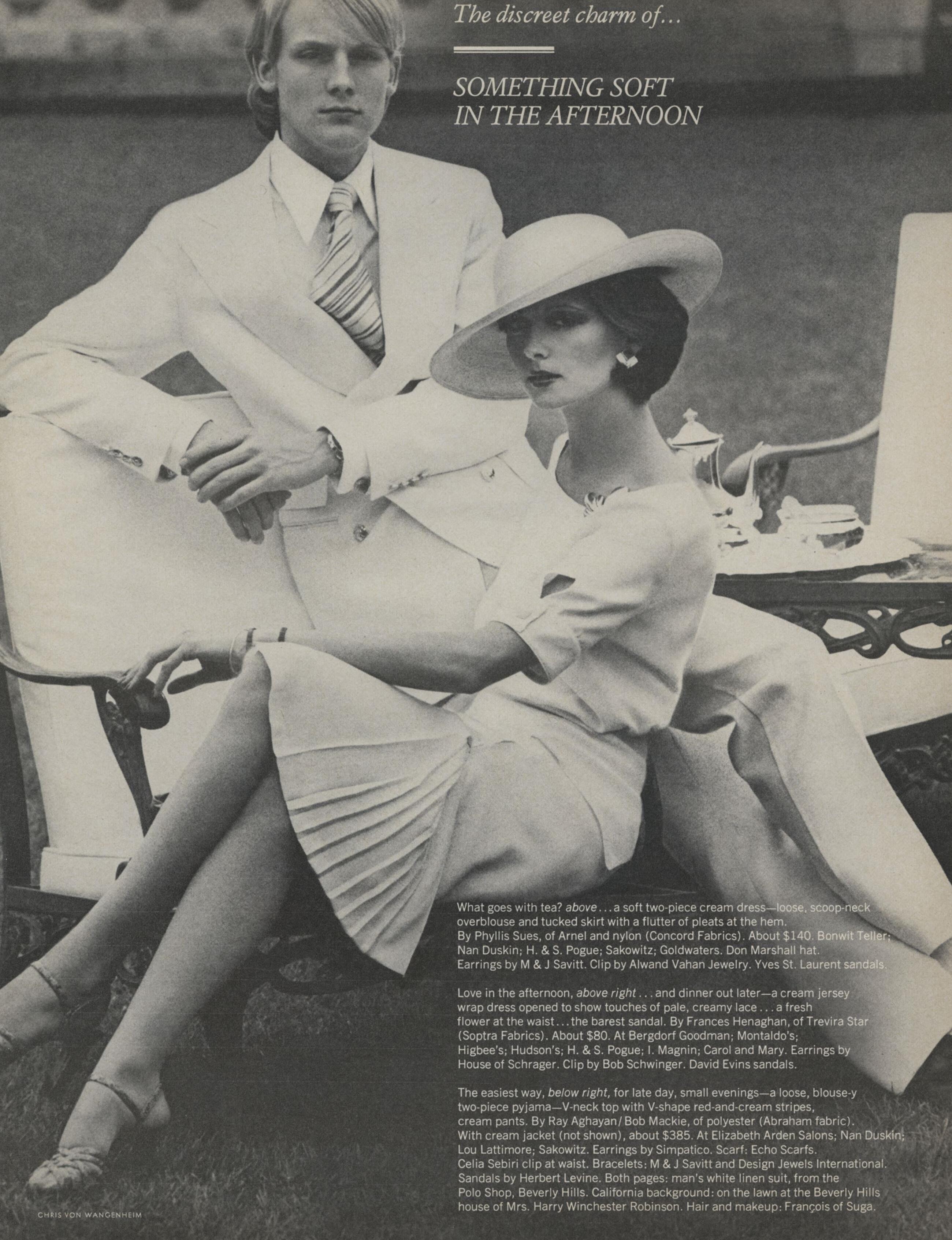
Vogue Archive
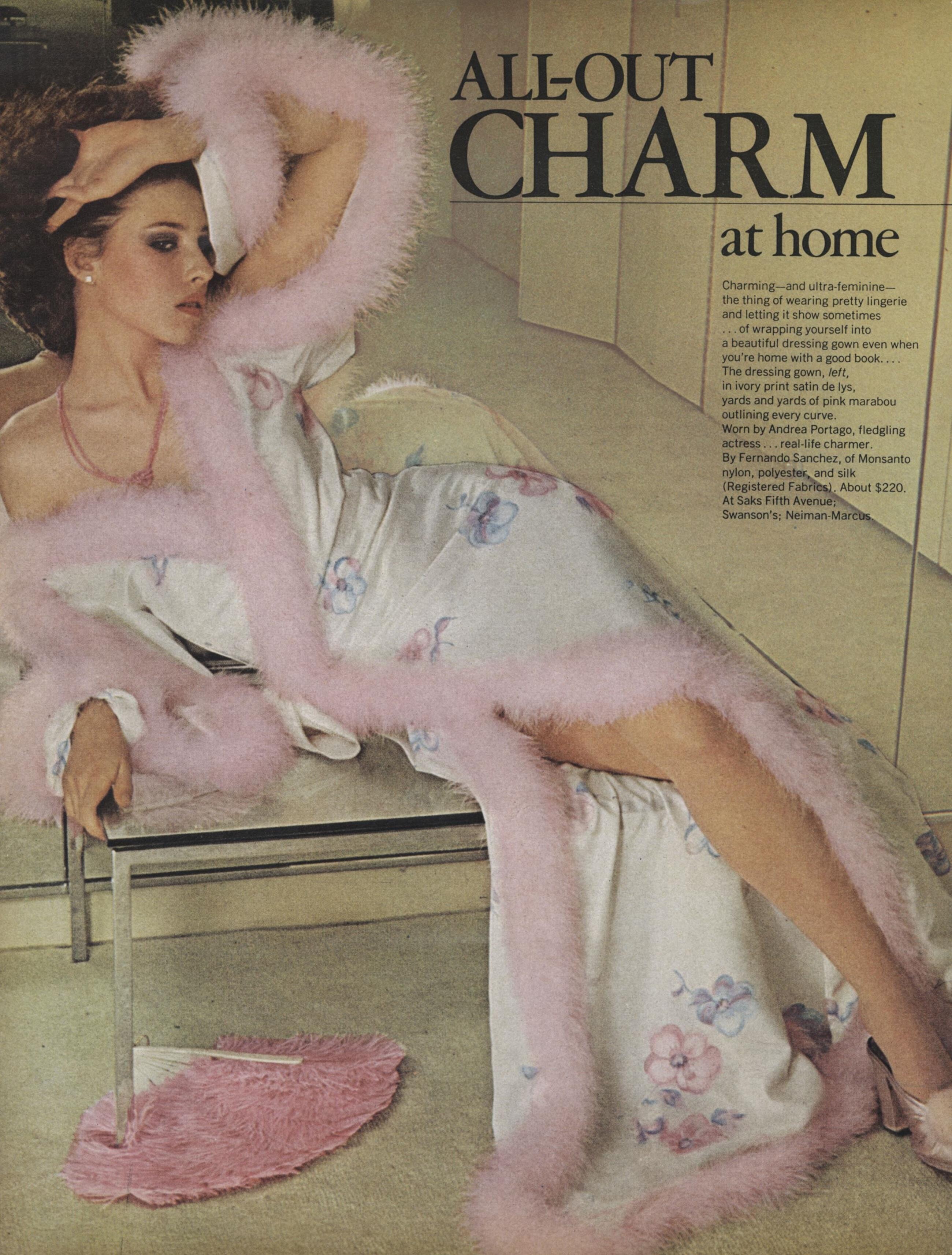
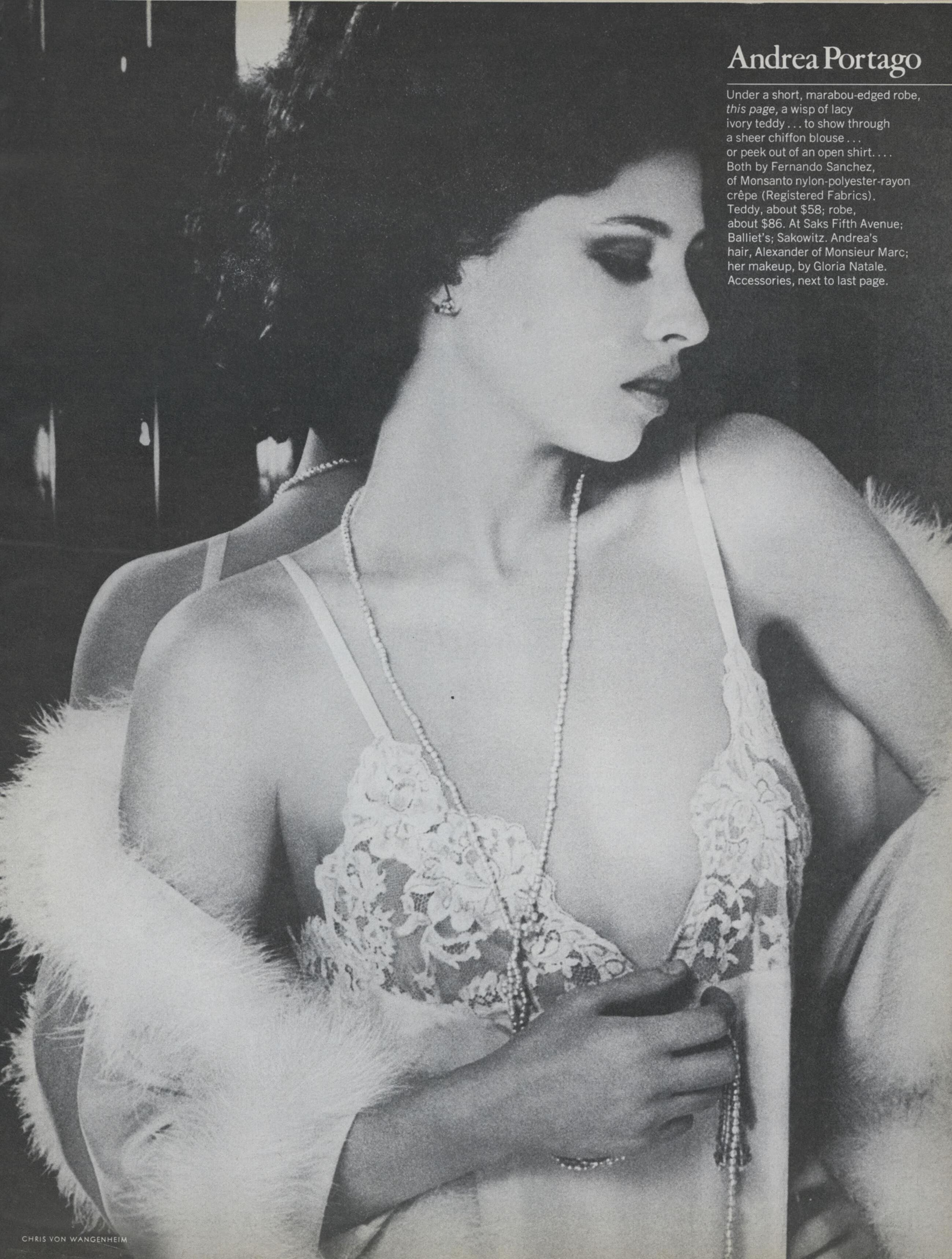
US Vogue March 1974
"All-Out Charm At Home"
Model/Subject: Andrea Portago
Photographer: Chris von Wangenheim
Hair: Alexander
Makeup: Gloria Natale
Vogue Archive
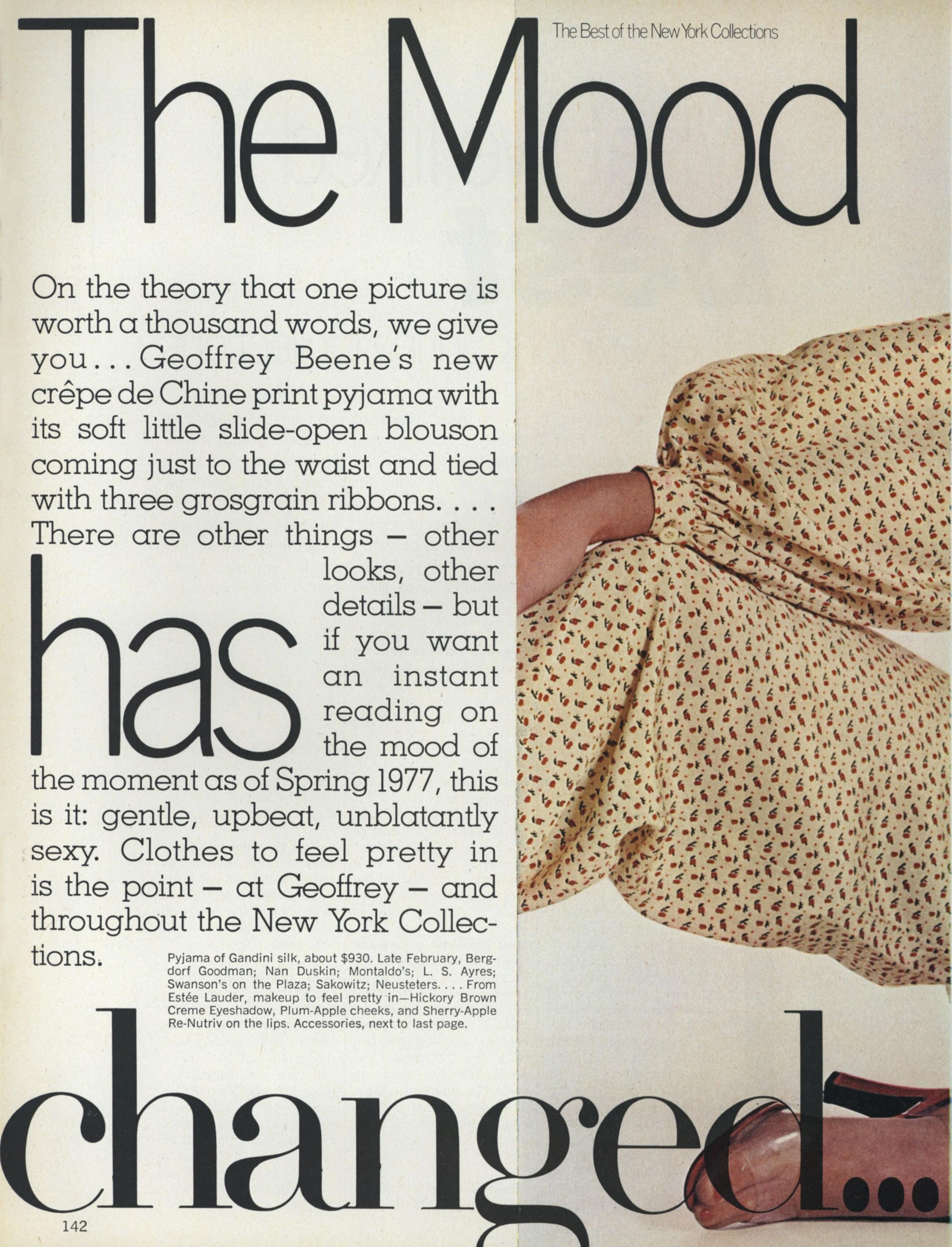
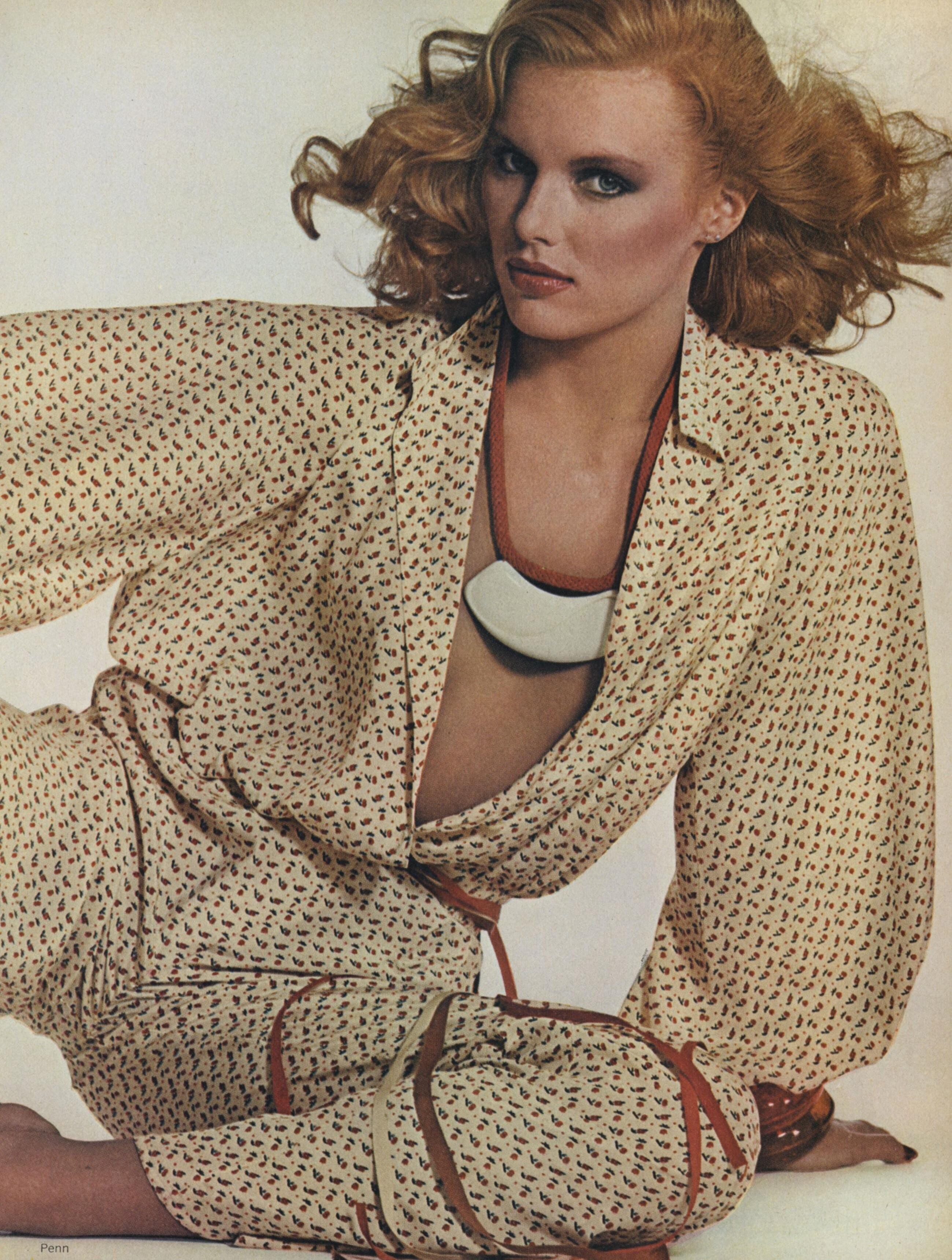
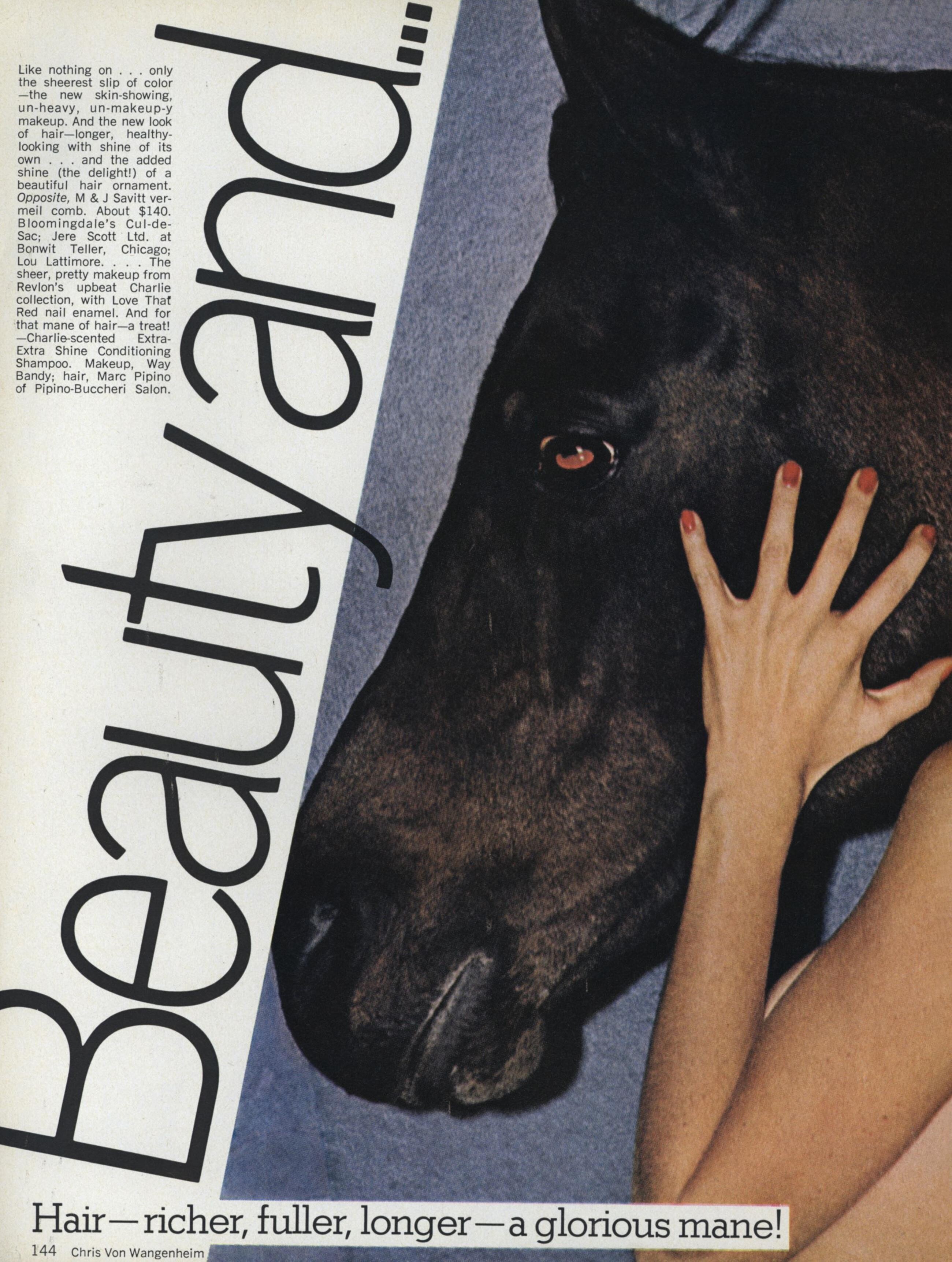
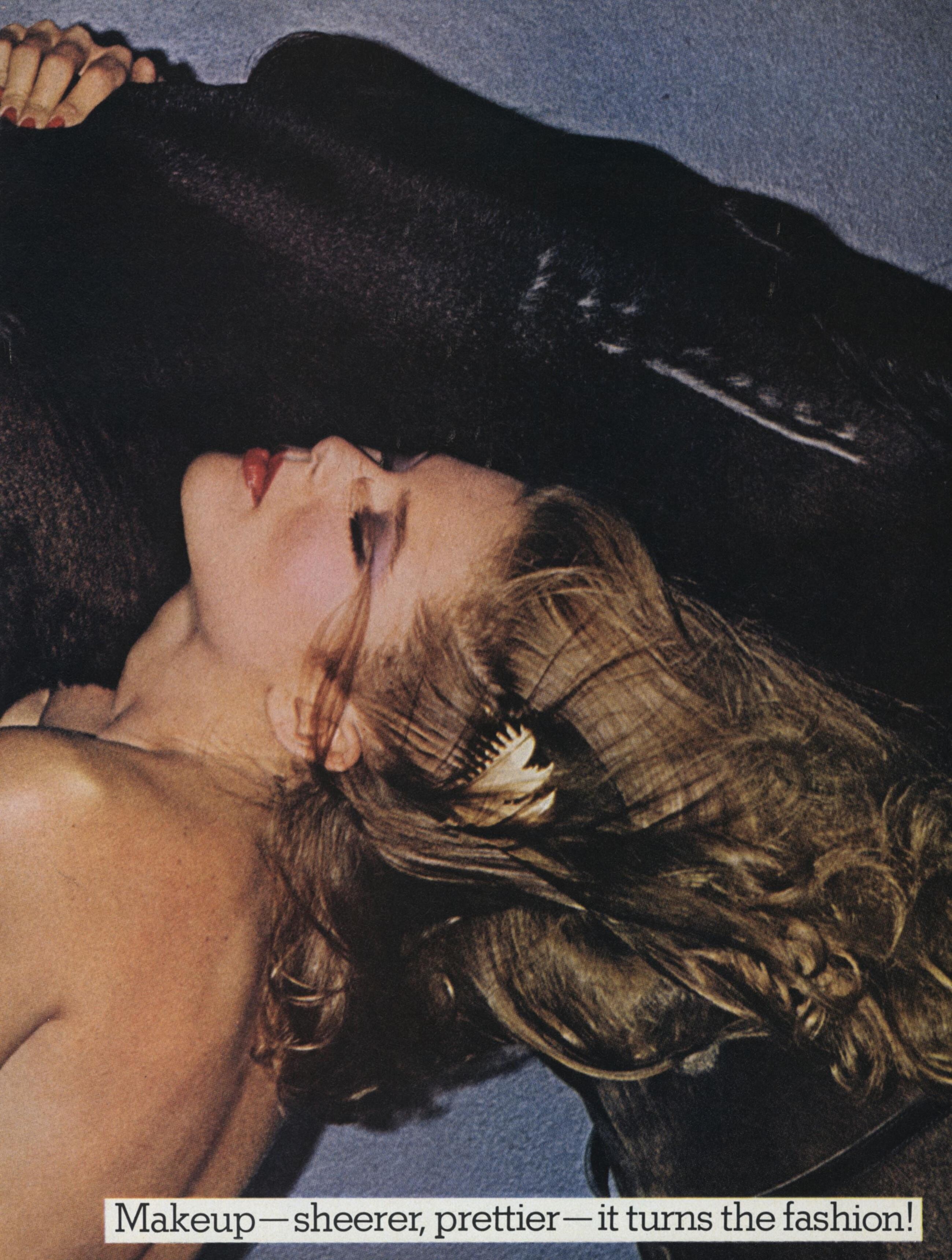
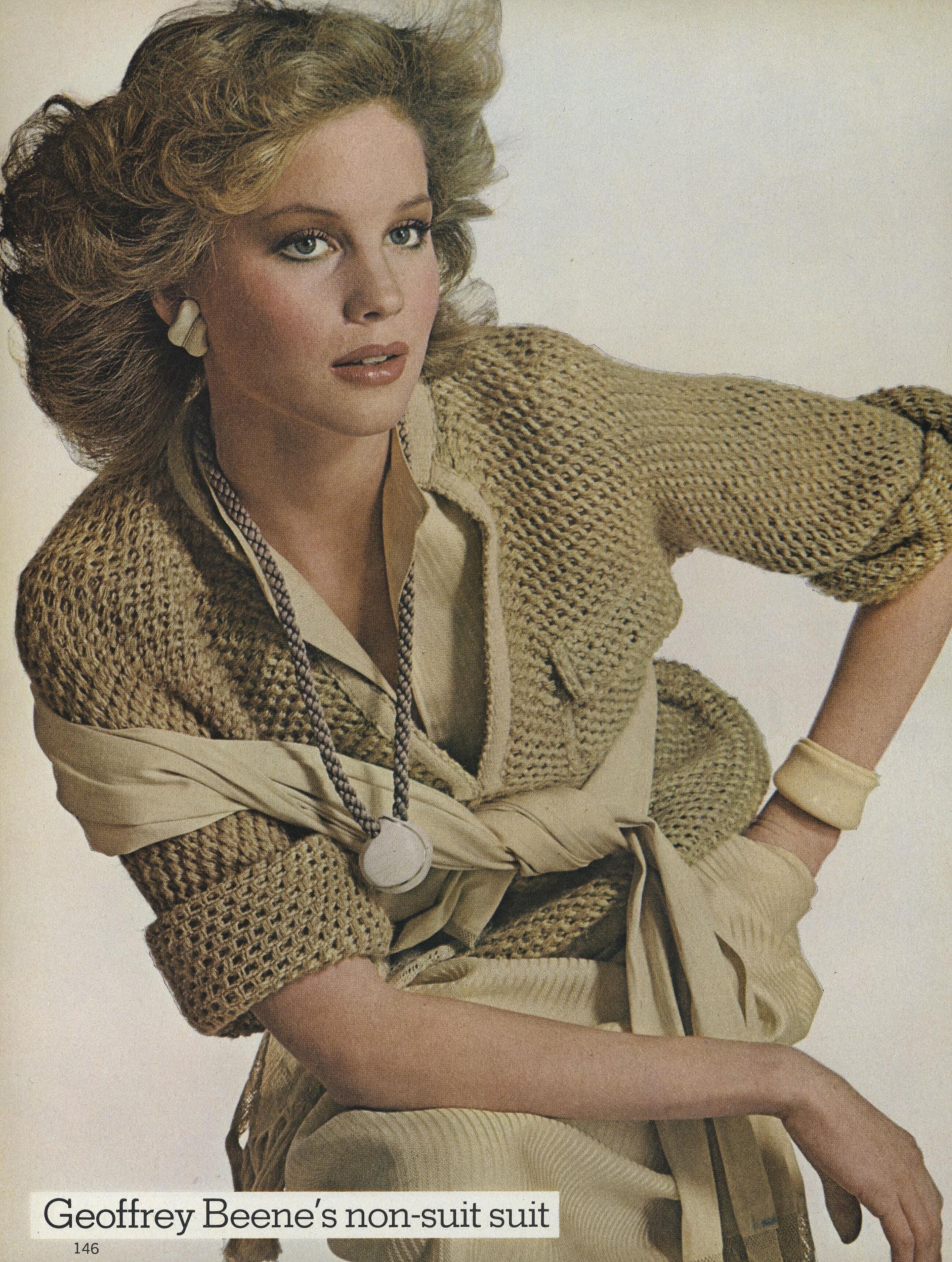
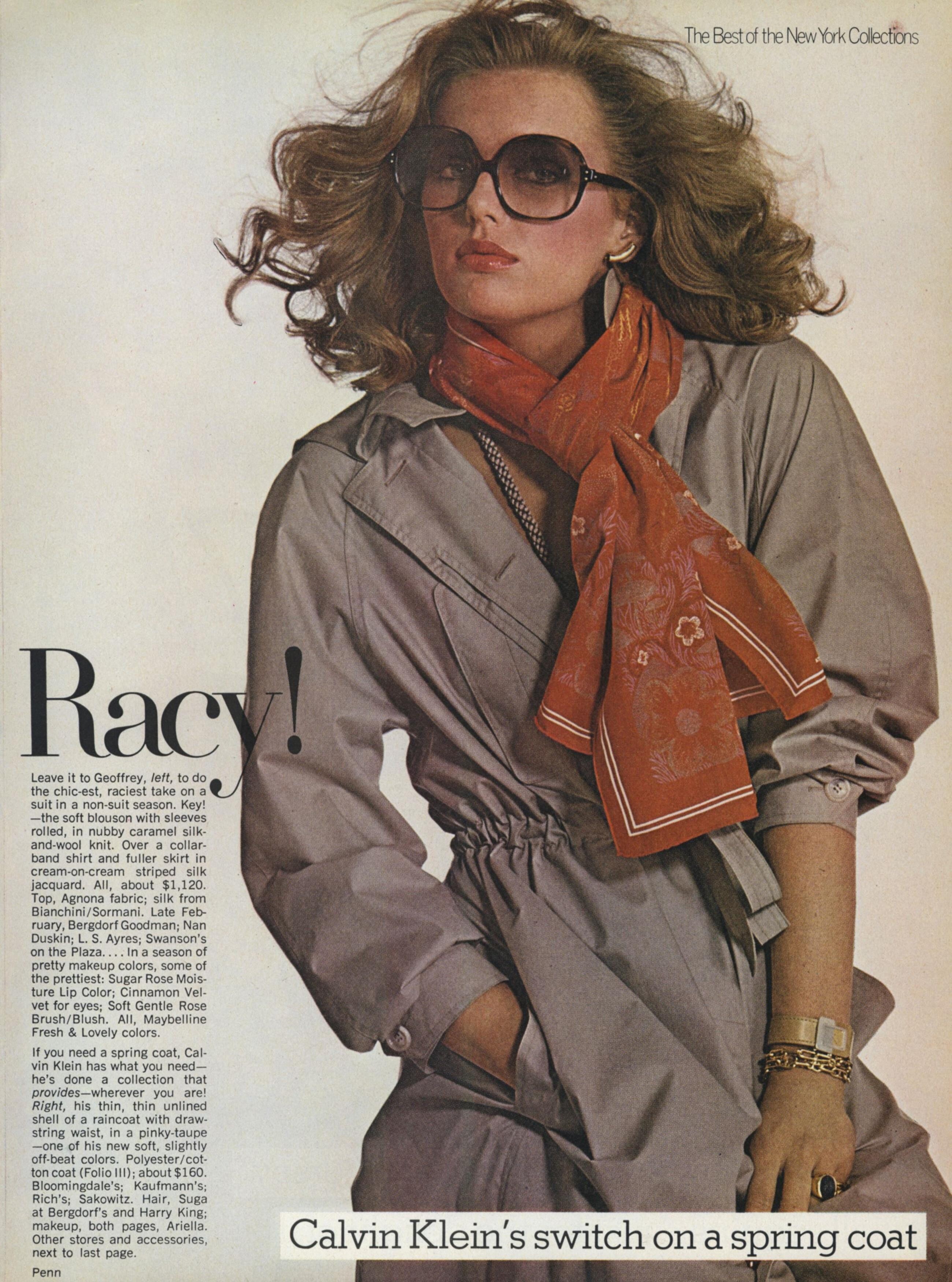
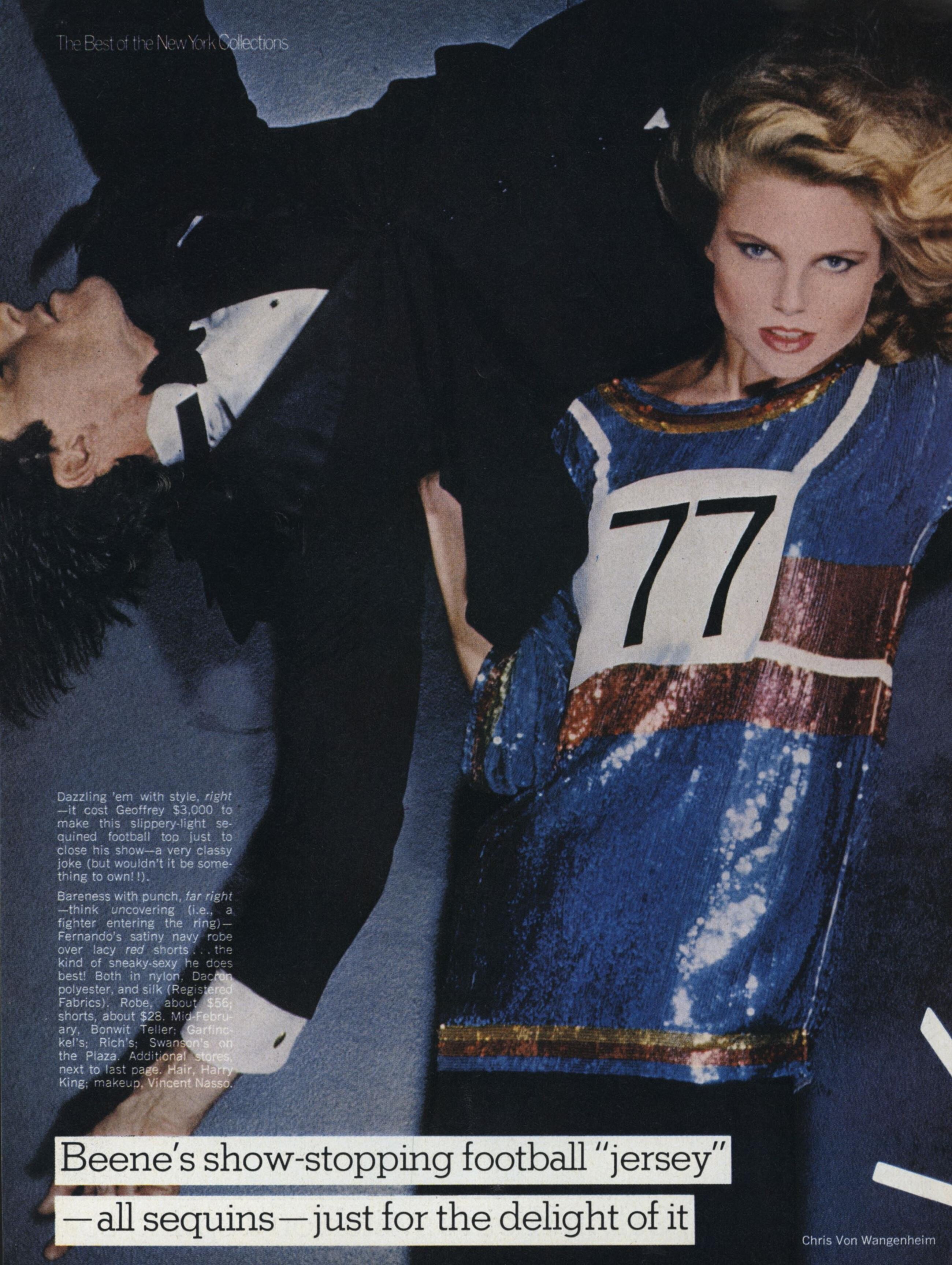
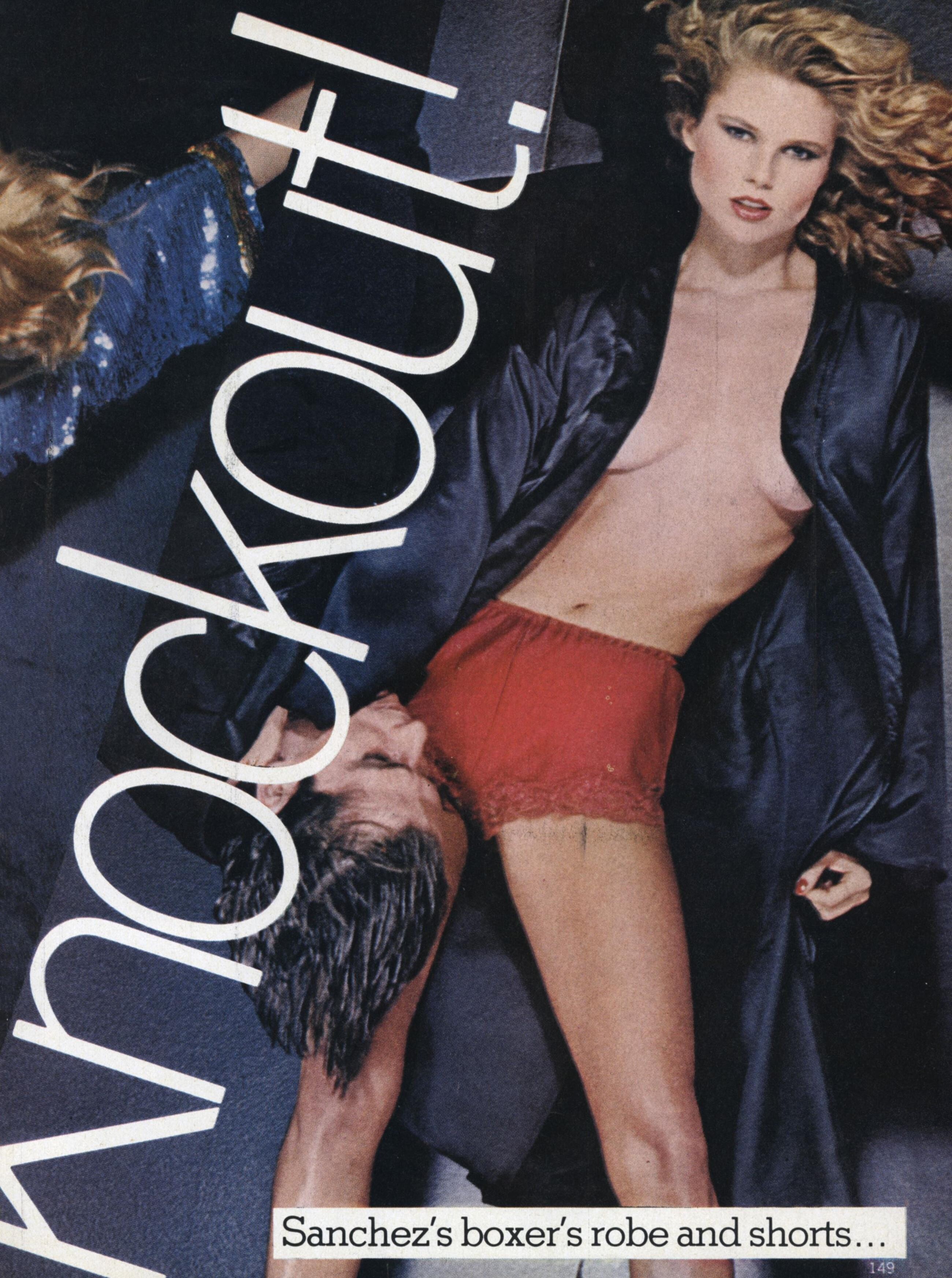
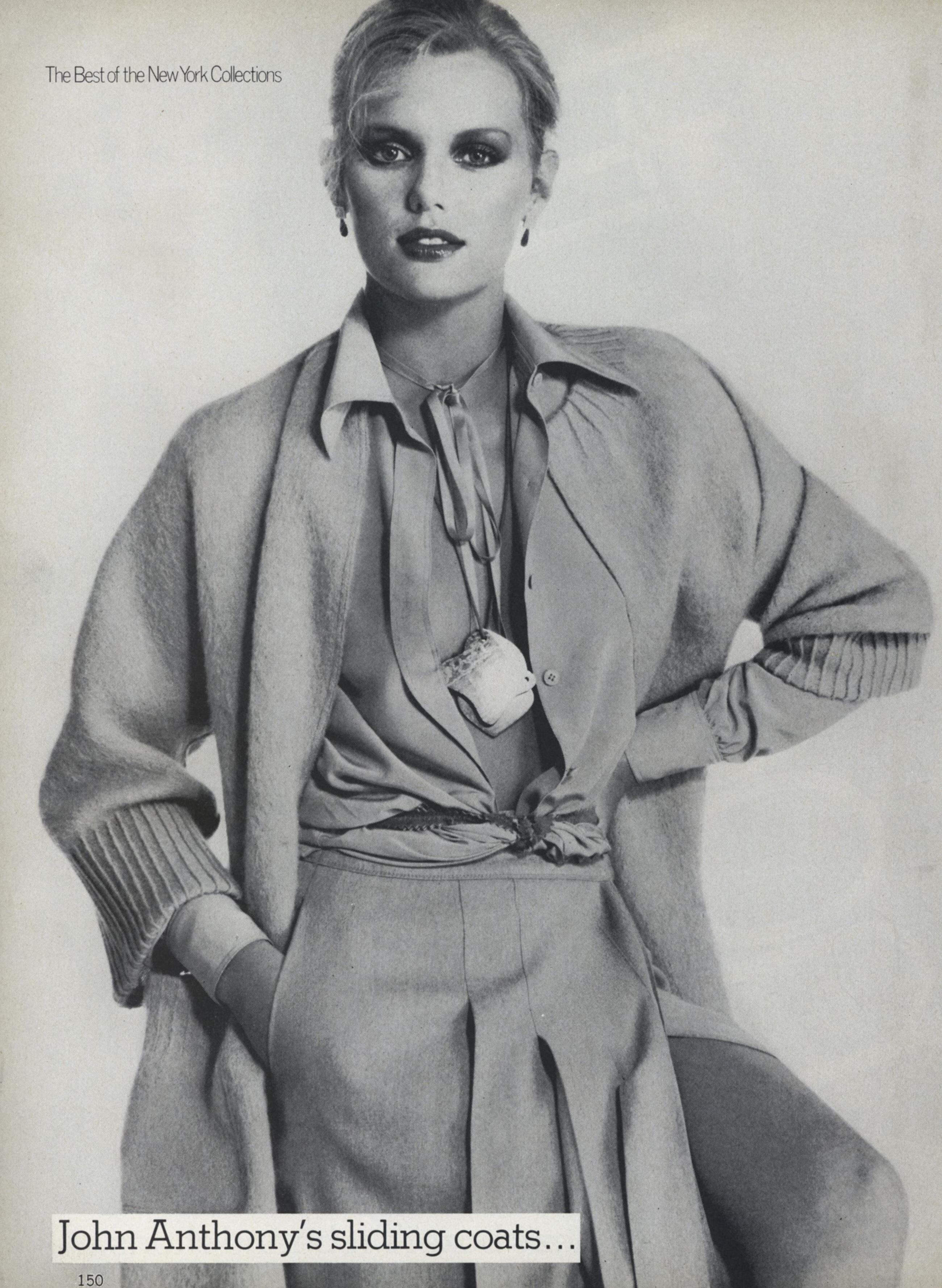
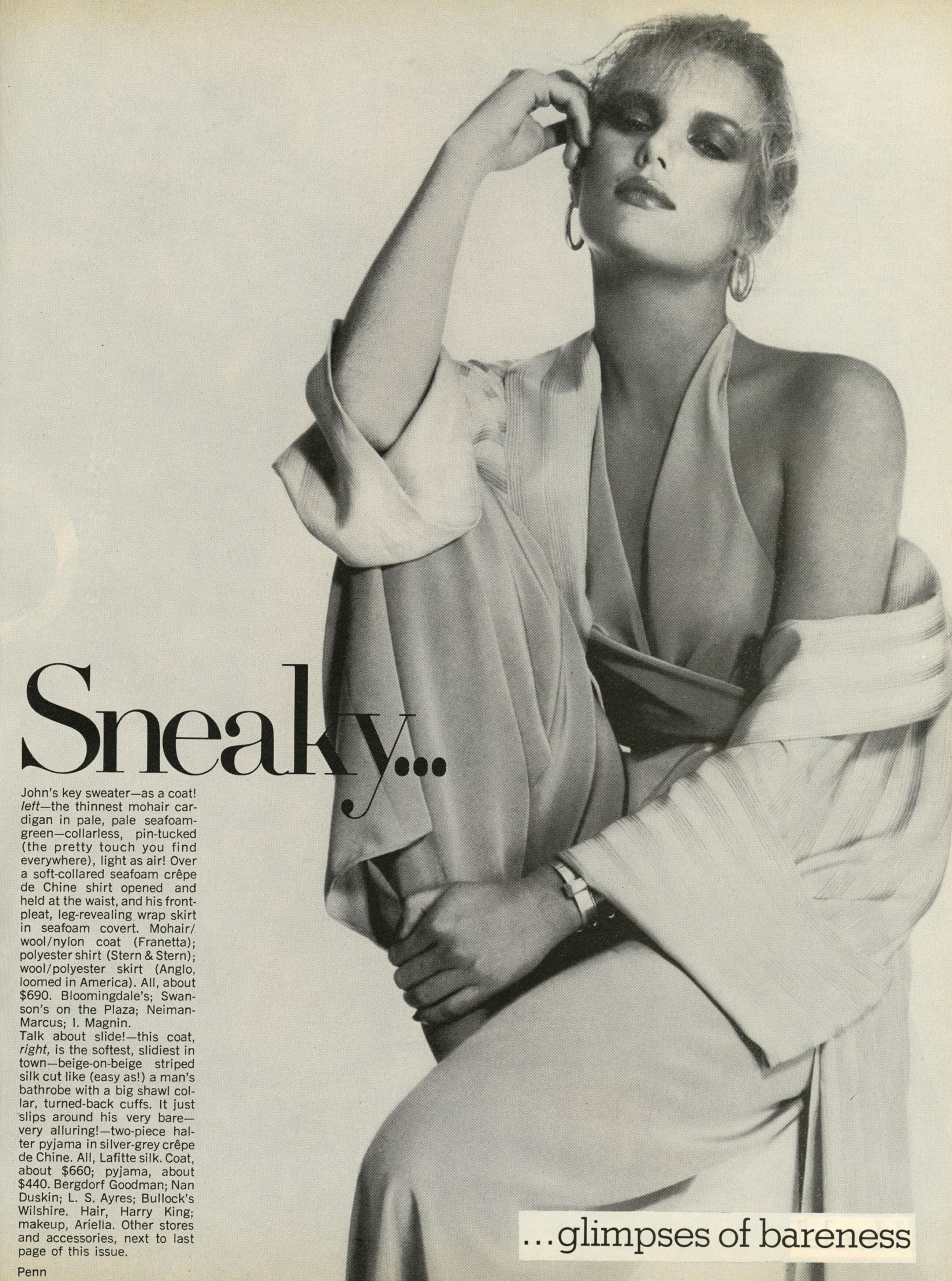
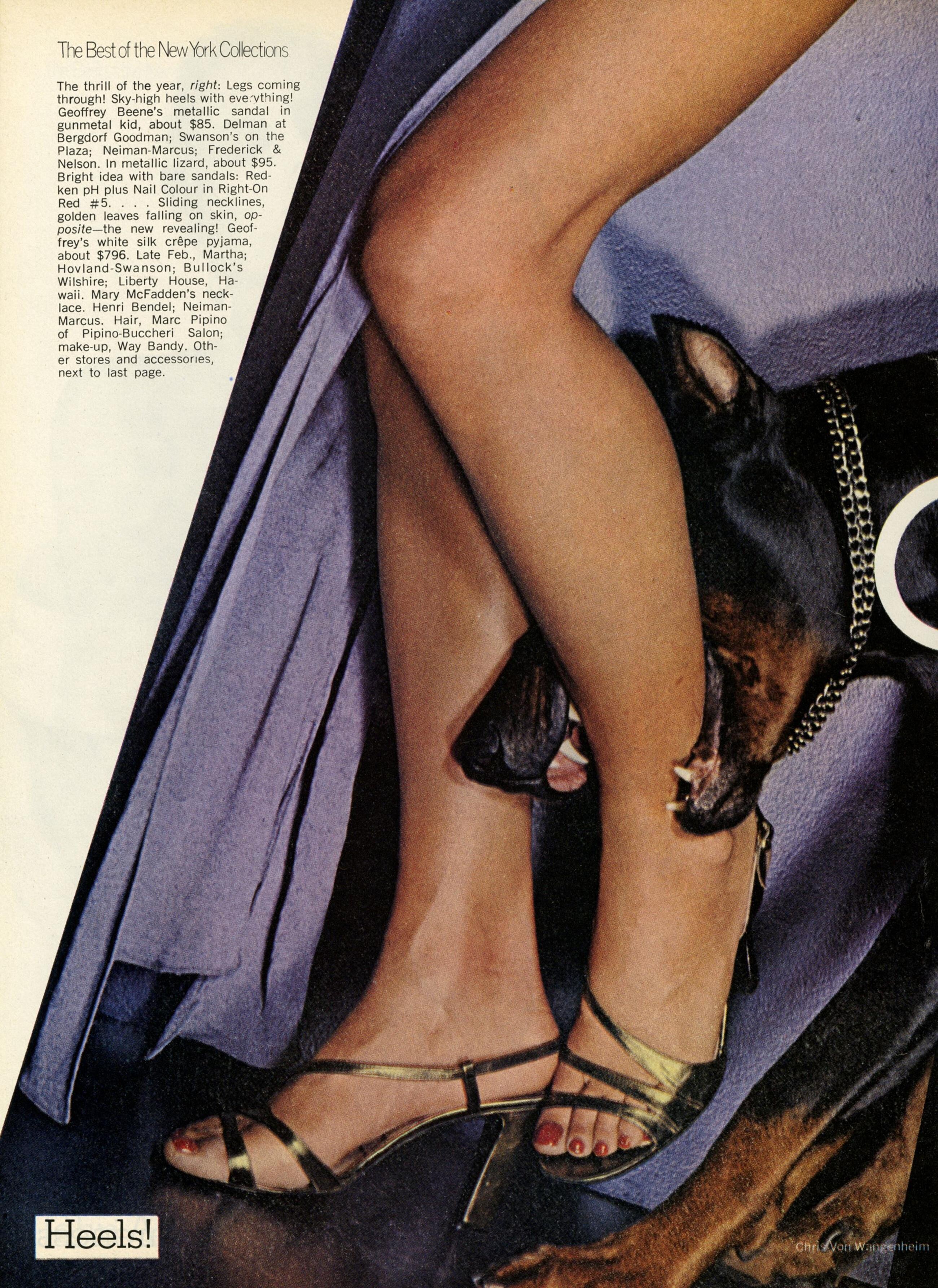
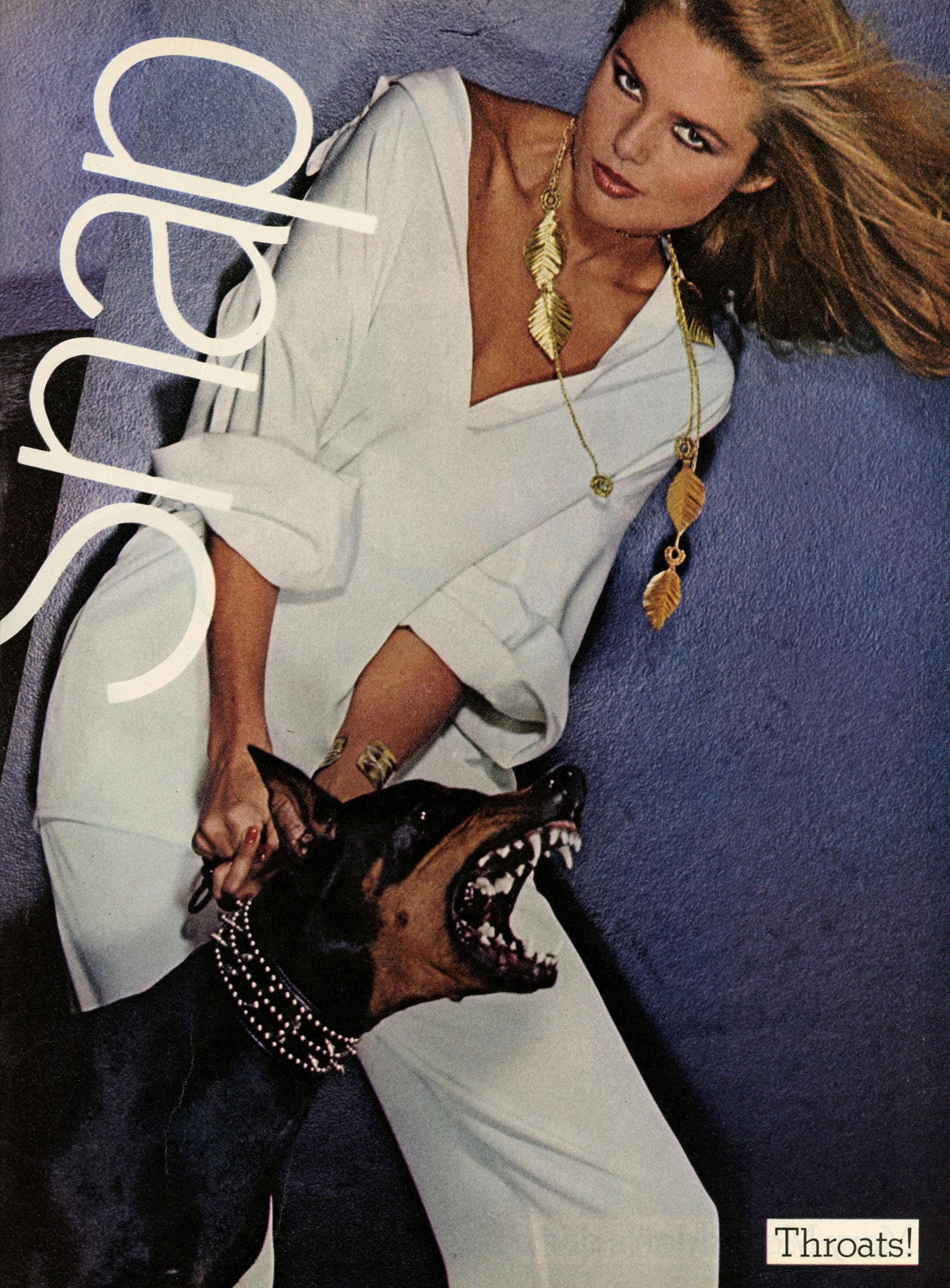
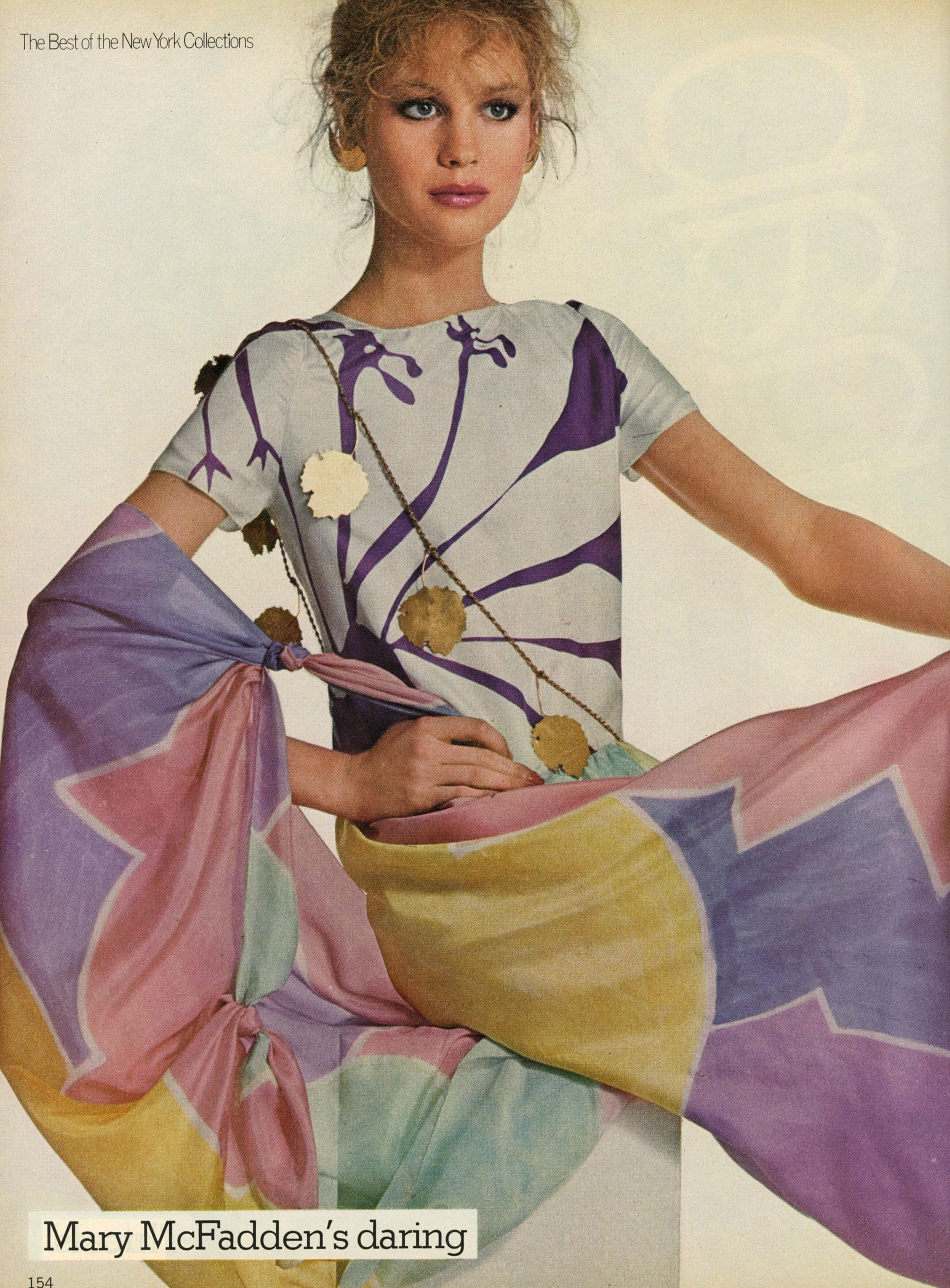
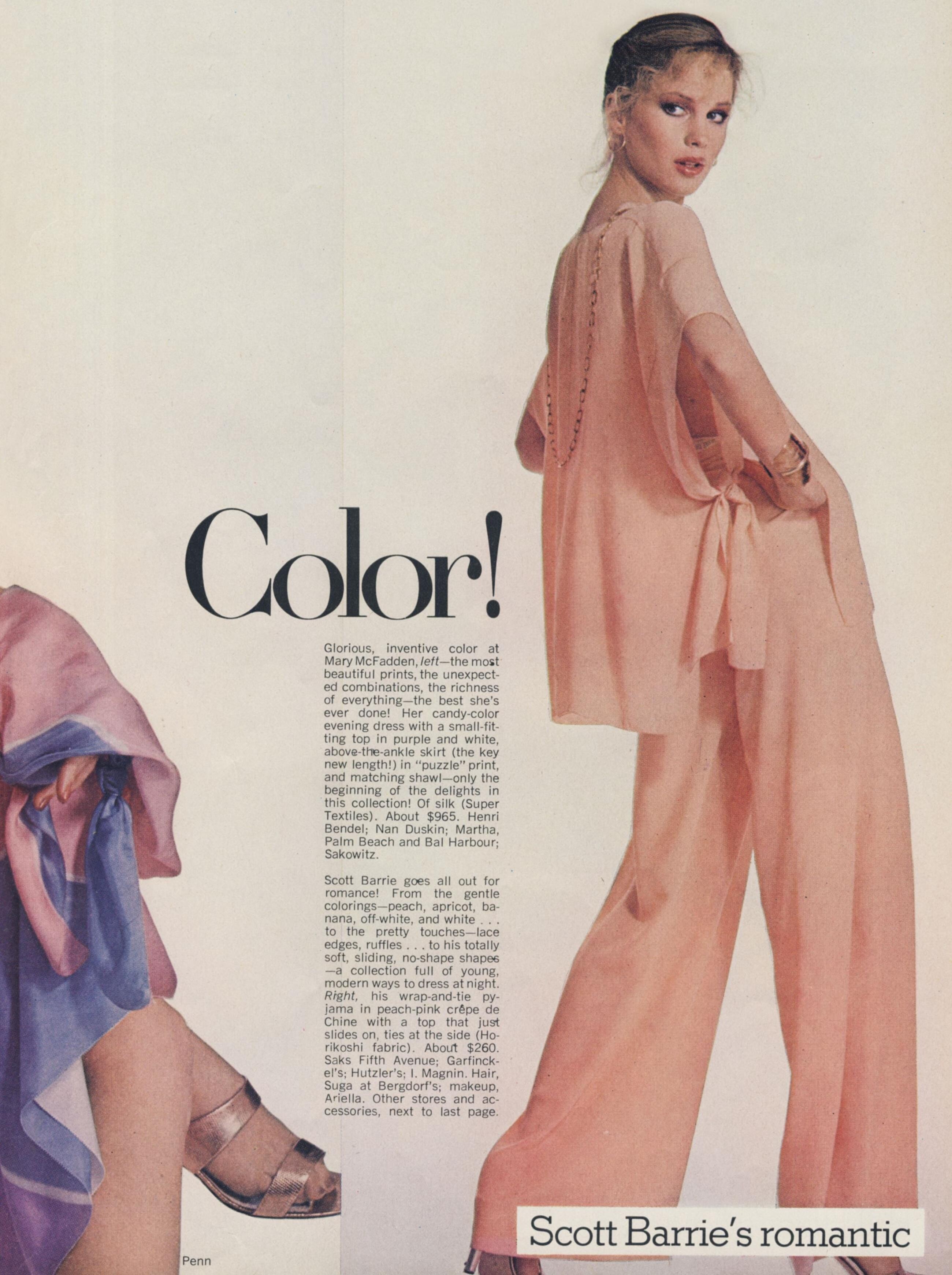
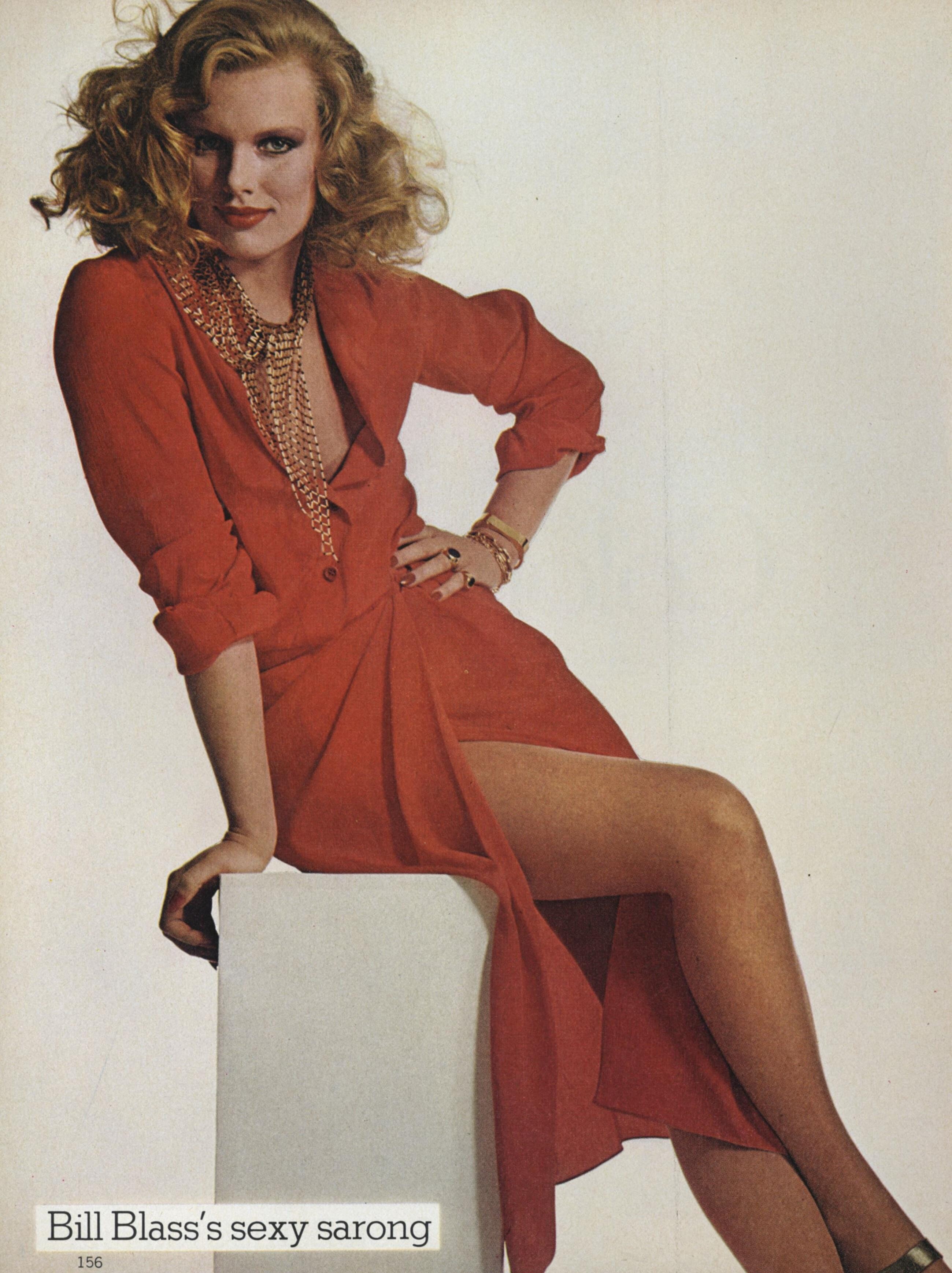
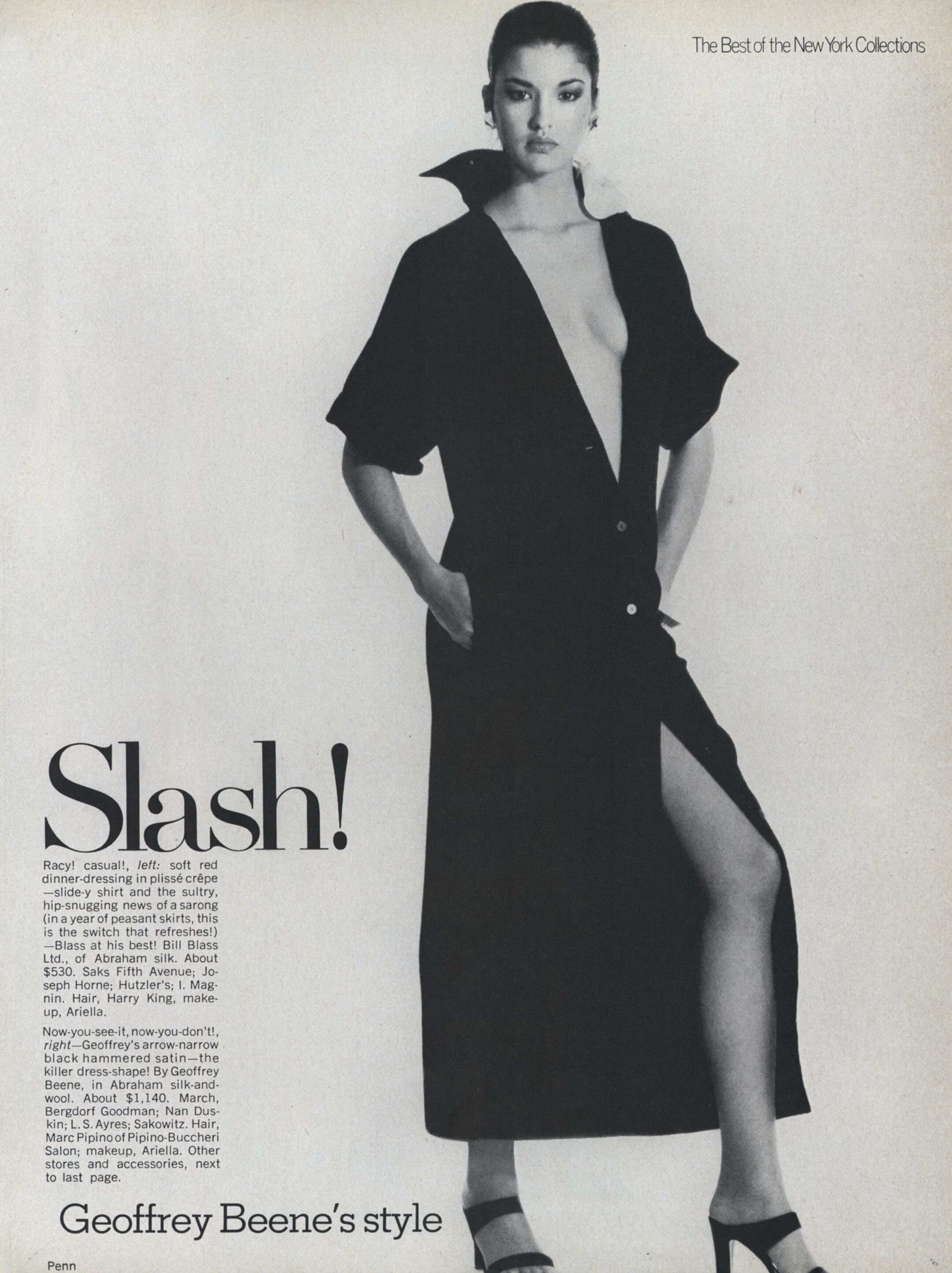
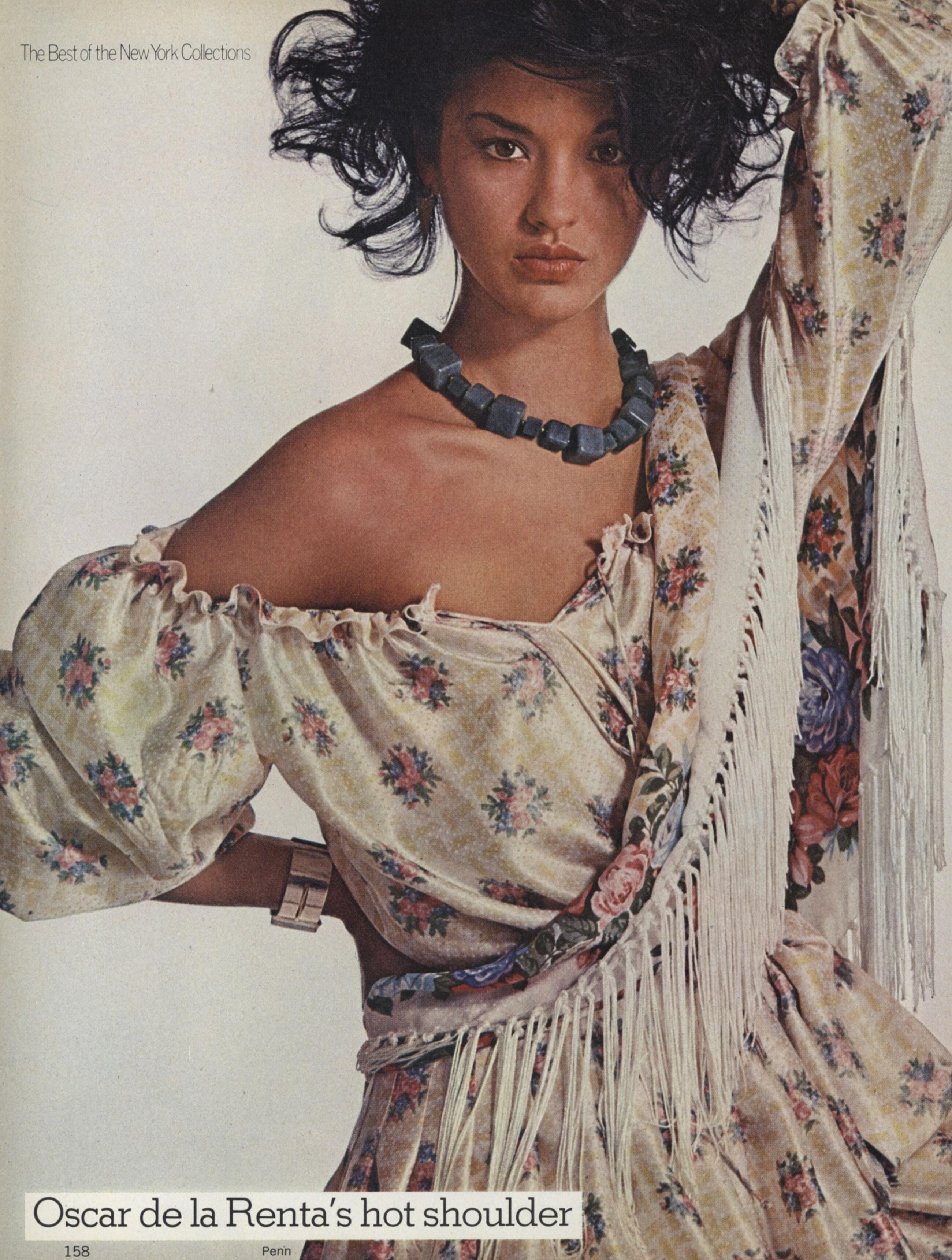
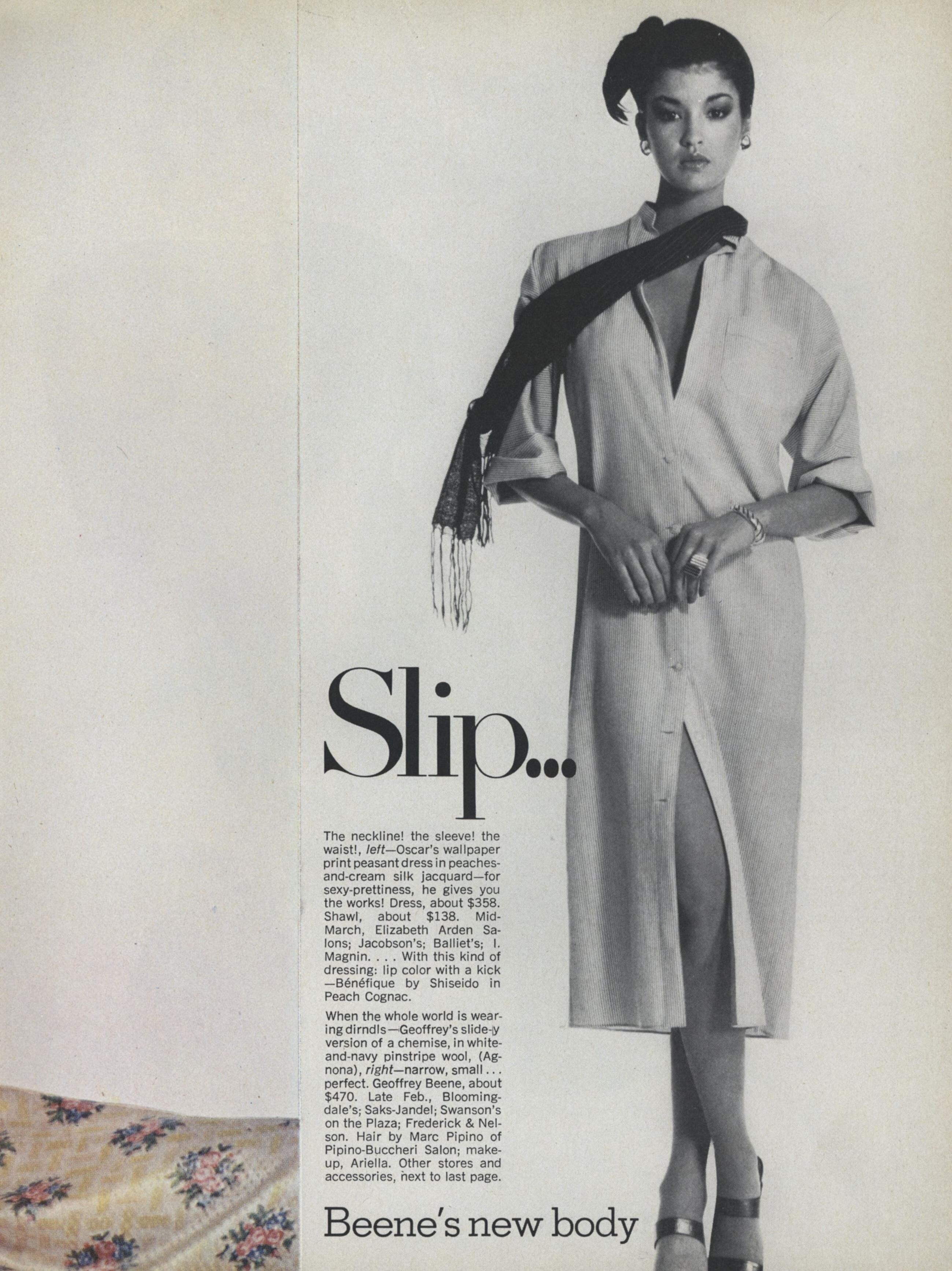
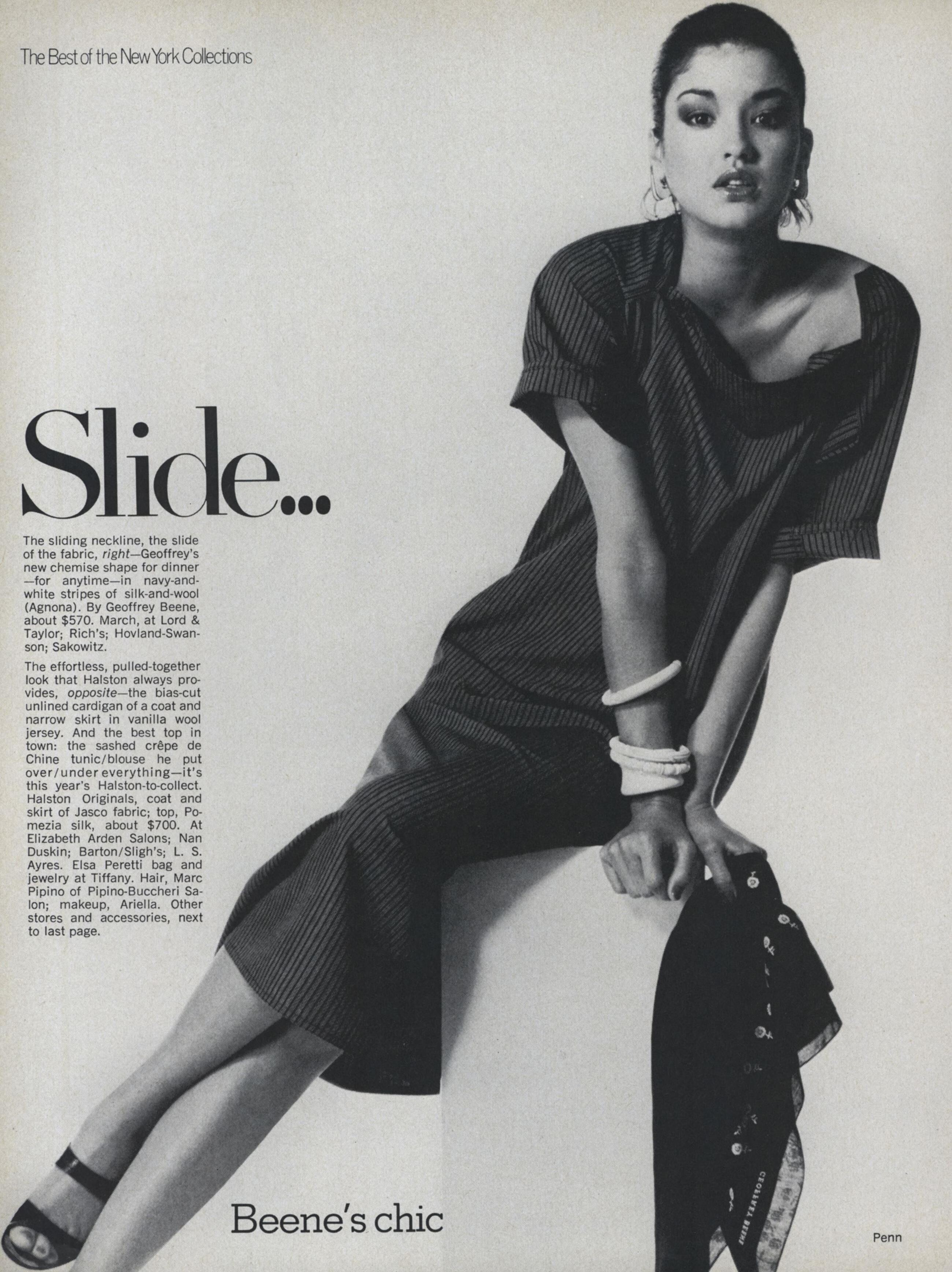
US Vogue February 1977
"The Best of The New York Collections: The Mood Has Changed"
Models: Patti Hansen, Christie Brinkley, Rosie Vela & Janice Dickinson
Photographers: Irving Penn & Chris von Wangenheim
Hair: Marc Pipino, Harry King & Suga
Makeup: Way Bandy & Ariella
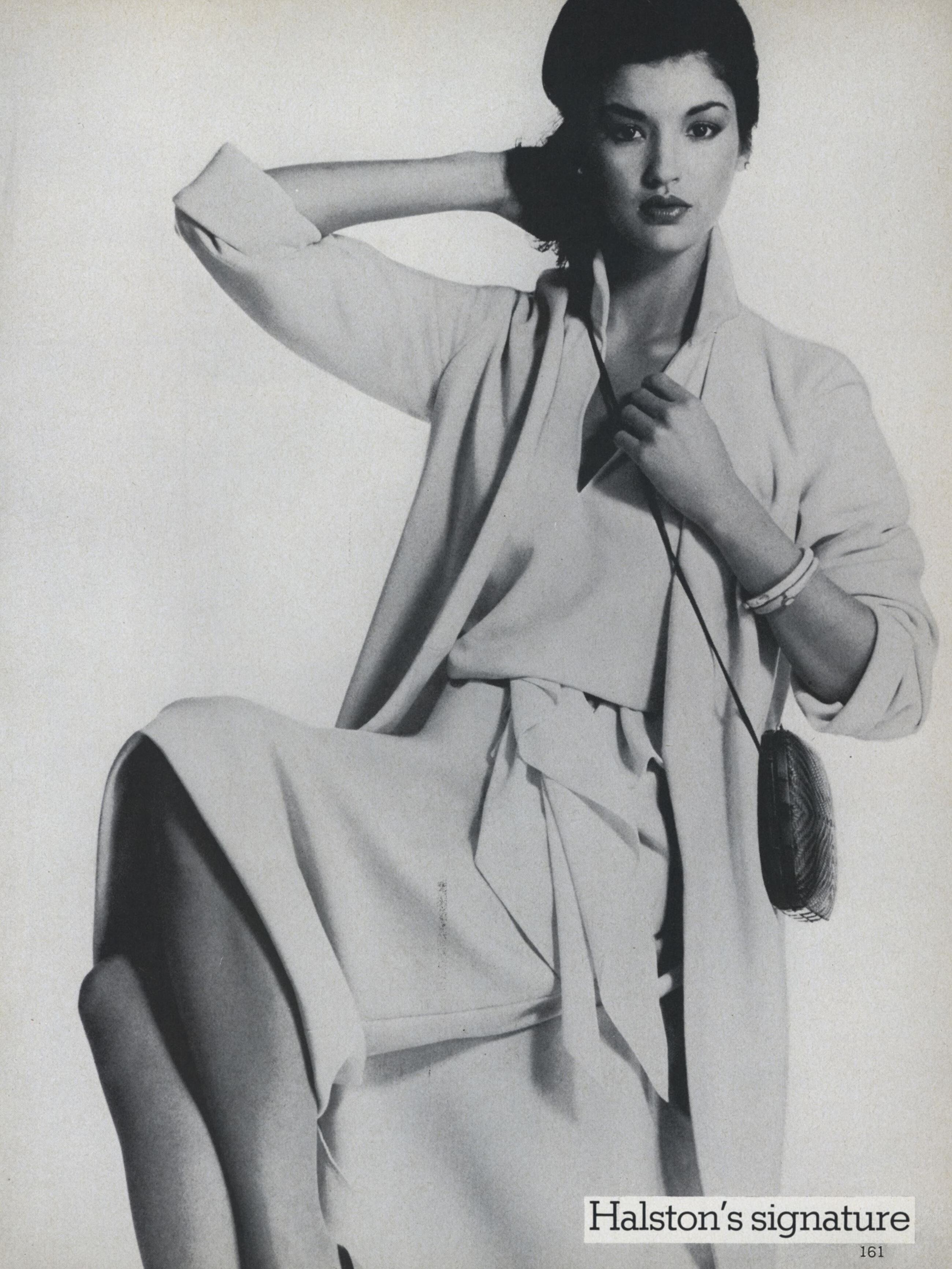
Vogue Archive