Cult Icon
2585 replies · 37603 views

For several months after her husband’s death, she continued to set a place for him at the dinner table. She would sit down, talk to him, and ask his advice, as if he were still sitting there across the table from her.
Gradually, she said, that habit stopped, but she would still hear his voice inside her head. And when it came time to make decisions, she still would base her plans on what he would have said or done. After about a year of loving attention to him and her grief, she began to notice that the responses to her questions were coming in her own voice, not his.
“I lead my own life now,” she said. “He travels with me everywhere, but I decide where we’ll go on vacation!”
When someone close to us dies, we experience a tremendous sense of loss. At first, it’s like reaching for a hand that has always been there, only to discover that it is no longer available. Gradually we see that the relationship continues. The person is in some way internalized, and you can carry them with you wherever you go. They might surprise you when a memory of them shows up when you least expect it. You can talk to them, they can talk to you, they can be with you, and you can be with them. You are not crazy because you feel the presence of your loved one in your heart.
The grieving process is like a transitional space in your relationship. The physical presence of the other person used to be at the center of the relationship, but now that there is no physical presence, the center of the relationship is the sensitivity and love that lives within you.
Grieving the death of someone we love is like being thrown into a raging river of powerful and conflicting emotions. It pulls us down, down beneath the surface of our lives and into dark waters where we cannot breathe. Frantically, we try to escape the whirlpool of this inner journey. Surrendering, we feel ourselves carried forward by gentle currents to a new destination. Emerging from the water, we step ashore with refreshed eyes, and we enter the world in a new way."
It is the basic message of both Buddhism and Freudian theory. Desire never learns; it never wakes up. Even when eliciting nothing but suffering, it perseveres. Our indefatigable pursuit of pleasure keeps us doing some awfully strange things. Certainly,Nasruddinismodelingourlivesforus:Struggling against the tide of disappointment, we continue to search for a sweetone.Ashisfriendsmustbewonderingastheygazeathim incredulously, would it not be better just to give up? In this versionof thestory,Nasruddinisrenderingaconventionalspiritual teaching. Our desires bind us to the wheel of suffering. Even though we know that they bring us pain, we cannot convince ourselvestorelinquishourgrip.AsFreudlikedtosay,thereisan “unbridgeable gap”1 between desire and satisfaction, a gap that isresponsibleforbothourcivilizationandourdiscontent"
"Rick had shown up with his fear and darkness. He knew he was staring at his own destiny. He, too, would die within a matter of weeks, and that scared him. But because Steven had opened to his own suffering, he could be with Rick’s fear without adding more fear. Steven looked at Rick with such unbelievable love and compassion. It was a soul connection that, at least in that moment, provided Rick with a healing salve."
"
A misconception many people hold about compassion is that we should help the other person to feel safe, that there is no danger. This is fine, of course, if you can do it. But I work with people who are dying, and for many, dying does not feel safe.
I have found that when I am really present, sitting in my own seat, so to speak, and grounded in compassion, the other person can sense that and begins to trust and open up—not because there is no danger, but because they feel that they are not alone. Genuine understanding and compassionate companionship offer them the support and encouragement they need in order to go toward what feels dangerous.
Laughing to myself at her raw honesty, two things became clear to me. One, Adele wanted straight talk and authentic relationship. She didn’t want to process her dying or talk about moving into the light. She had no interest in sentimental ideas. Second, despite having been given all the appropriate interventions, Adele was still struggling. There is a labor to dying as there is a labor to giving birth."
“Adele, would you like to struggle a bit less?”
“Yes.” She nodded.
“I noticed that at the end of your exhale, there is a little pause. Can you put your attention there on that pause for a little while?” I suggested. Now Adele didn’t care beans about Buddhism and had never meditated in her life. But she was highly motivated in the moment to be free of suffering. So she agreed to try. “I’ll breathe with you,” I said.
After a while, Adele was able to place her attention on that small gap between exhale and inhale. As she did, the fear gradually drained from her face. We continued to breathe together for some time.
Eventually, Adele put her head back on the pillow. A short while later, she died quite peacefully.
We often think of rest as something that will come to us when everything else in our lives is complete: at the end of the day, when we take a bath; once we go on holiday or get through all our to-do lists. We imagine that we can only find rest by changing our circumstances.
The Fourth Invitation teaches us that, like Adele, we can find a place of rest within us, without having to alter the conditions of our lives. After all, the conditions of Adele’s life remained the same—her breathing didn’t change; she was still dying. Nevertheless, she found a place of rest.
This place of rest is always available to us. We need only turn toward it. It is experienced when we bring our full attention, without distraction, to this moment, to this activity. With sincere practice, after some time, we can come to know this spaciousness as a regular part of our lives. It manifests as an aspect of us that is never sick, is not born, and does not die."
We are affected by whatever winds are blowing at the time, the conditions of daily life, the busyness of the day, the stress, the anxiety. Most people live at this level, with a fair amount of mental agitation, with emotional storms threatening to drown us. It can feel like it is all about us. We see ourselves as the center of the universe. This painfully narcissistic mind-set, driven by our survival instinct, can lead to expectations that the world owes us or an inflated belief that we are responsible for much of what is happening."
"In the Buddhist tradition, we say, “The obstacles become the path.” The missteps we make as we demand, defend, and distract are also gateways to the innate beauty of our inner being. When we allow ourselves to rest in our natural openness, we can come to know these poisons clearly and recognize their detrimental impact on our lives. Once the blinders come off, we are no longer fooled. We see our conditioning, our identification with the poisons, with clear awareness. Then we wake up to the fact that our suffering was fueled by a drive to ignore the truth all along."
"This is a moment of liberation. The truth that was obscured, yet was always present, now sets us free. It’s a bit like the way our eyesight can change almost imperceptibly over time, blurring our perceptions of beauty. We get fitted for glasses and suddenly we see without distortion. The magnificence of the world becomes more apparent to us."
“Find a place of rest in the middle of things,” it said.
I thought, Okay, Frank, just try to rest.
Then I smiled.
The thing is, trying to rest is not resting; it’s just more trying.
We can’t seek the deepest rest through striving to change the way things are. We can only relax the activity that obstructs our contact with rest.
When we look closely, we see that desire is almost continuous. It’s a fire that is always burning within us, and it ignites and fuels our seeking. Being a seeker—an identity I myself have been proud to adopt at times—is an inevitable step on the spiritual path. It can easily become a hindrance. Energetically, seeking feels agitated, restless. It implies that I am deficient, disconnected from something essential in my life. I think something is missing, and that belief perpetuates my seeking.
Agitated looking won’t ever connect us to our true nature. And trying to get rid of our desires, to stop seeking, doesn’t work either. That’s just more seeking, more effort, and more trying.
This is the real paradox of the spiritual life: that which can save us also can drive us mad. Don’t get me wrong. Seeking has a place in this world. It isn’t all bad. In order to begin our spiritual journeys, we must be motivated by seeking a better life—deeper connections with ourselves and others; explanations for our existential questions; relief from our pain and suffering. Yet too often our quests for peace and fulfillment get entangled with striving. We read books, seek out teachers, and go looking for our tribes. We accumulate practices, beliefs, and strategies as we seek solutions. We continuously search for answers outside of ourselves when in fact we already have everything we need, here, within us."
There is one form of seeking that I find useful. I call it wholesome desire. This is the desire to be free, to know what is true and be completely ourselves.
Wholesome desire does not feel agitated. In fact, it removes the restlessness because we stop looking outside ourselves for approval or satisfaction. It feels more like love. We love our true nature, we love presence, and because we so love it, we want to be close to it, to get intimate with it. It’s a kind of love affair with truth. It’s like when we are with our partners, we long to see them with as few clothes on as possible. We want them as they are, naked. Just so in spiritual life, we long to see the naked truth, unobstructed by preferences or the clothing of our treasured beliefs.
“I am here now. We are here now.”
One of the qualities of a truly open mind is deep restfulness. We come to this restfulness by accepting and understanding our desires, not by rejecting them. We surrender our strategies and resistance."
"
And so I found myself resting in allowing. And in that moment, there was no disconnection, nothing missing, and therefore nothing left to seek. Lying in my bed, I dropped like a stone falling through thick liquid until I came to lie at the bottom of the dark, silent ocean. I gave myself completely to rest. Body at rest. Heart at rest. Mind at rest. Consciousness at rest.
Seeking doesn’t end by finding. Seeking just ends. It ends when our awareness comes to rest in the peaceful depths of our essential nature.
"he realized that the monsters didn’t exist. They were only stories inside his head.
It turns out it’s not so different for us grown-ups."
"I didn’t provide Rose with a solution. I simply inquired about her experience, and that inquiry helped her question her assumptions. Rose then came to a new understanding of her life circumstances. She realized how wedded she had been to the notion that she had to care for her husband. By letting go of her attachment to this idea and cultivating don’t know mind, a new option emerged, one she hadn’t allowed herself to consider before—that she could ask her husband to care for her."
One characteristic of all humans that death illuminates is our desire for security in an ever-changing world. We believe who we are and how things are for us should remain fixed and permanent. We want to know what the future will bring. Most of all, we don’t want who we think we are to die.
When we take our personalities, our separate sense of self, to be all that we are, death becomes “the external other” that we fear. It threatens our long-held belief in the primacy of a bounded and unique identity. Who will “I” be without my familiar story of self? It’s no wonder we are afraid of letting go. We don’t know anything else but this all-powerful “me.” We cling to the known, and we fear entering into the unknown.
Even with superficial reflection, we can see that our attempts to make ourselves solid, separate things opposes the way reality works. When we mistakenly attempt to pull ourselves out of the river of change, we wind up feeling increasingly alone, isolated, and afraid. This causes a great deal of suffering at the time of our dying, but also right
now in the middle of our lives today. In the end, pursuing security leaves us feeling even more insecure.
We are in a fight against nature.
Reality cannot be mapped. It is beyond description or any one view. It is not a single static truth, but rather an endless, unfolding mystery. It is alive, dynamic, and constantly being expressed through form and formlessness.
To know the sacred is not to see new things, but rather to see things in a new way. The sacred is not separate or different from all things; it is hidden in all things. And dying is an opportunity to uncover what is hidden."
"Literally, sacred means “to make holy.” The root, sacra, also means “to set apart what is highly valued or important.”
Childbirth is an invitation to enter the sacred. The key that unlocks its door is love, a love unlike any we may have known before. Ask any mother.
Death offers us the same invitation. In fact, birth and death come very close to one another. It’s difficult for us to say precisely when life begins or ends. Both can be times of great aliveness. Both ask us to accept our vulnerability, to be open to the unexpected, and to let go of life as we have known it.
Both birth and death can serve as portals to the sacred. Or not.
For many, death is utterly mundane, a purely biological event, a matter of physical science devoid of any mystery. Some people’s dying time is spent watching the Wheel of Fortune game show on TV. That’s okay with me; I’ve become very good at the puzzles. For some, death is full of tragedy. But for others, dying is a time of spiritual transformation that takes them beyond personal identity, bringing forward a sense of absolute safety, fearlessness, and even perfection in the face of the unknown. In the dying process, many ordinary people come to know themselves as what I can only call “an undying love.”
A Gallup survey showed that “people overwhelmingly want to reclaim and reassert the spiritual dimensions in dying.”
Spiritual support is not a matter of esoteric practices and existential discussions. It can be as simple as offering our kind and reassuring presence or chicken soup made with affection. At Zen Hospice Project, we adopted the view that when people are dying, they need intensive
care—intensive love, intensive compassion, and intensive presence. Ultimately, spiritual support is the fearless commitment to honor the individual’s unique way of meeting death.
Early on in the dying process, people often need help discovering what has value and purpose in life. Without meaning, life becomes mechanical, empty, soulless, too small for human beings to exist. Victor Frankl identified self-transcendence as an indispensable human capacity for meaningful living when he wrote, “Man is not destroyed by suffering; he is destroyed by suffering without meaning.”
At some point, however, meaning loses its importance to people who are dying. They withdraw from the external world as they are pulled into a more inward journey. If we—their well-intentioned friends, family members, and caregivers—keep distracting them by pulling them back to the world of time, objects, and meaning, we may break their connection to the flow of the sacred. Grandma doesn’t want to talk anymore about her first kiss on the Ferris wheel at the county fair. Playing your father’s favorite song no longer sends him into a reverie about his wedding day. Auntie Ellen’s heroic expedition to Antarctica, which was once the defining adventure of her life, fades in importance."
It is common for people at the time of dying to demonstrate distressing physical symptoms, mental agitation or grogginess, and emotional turmoil. In order to care for them, we must effectively address the pain, appropriately manage the symptoms, and attend to any disturbing issues. This requires mastery. "
"Dying happens on two levels simultaneously—the physical and the spiritual. The body is closing down, while the consciousness is opening up. In order to compassionately companion the dying, ideally we attend to both processes at once. It can prove challenging for one person to manage all this. I find it difficult even with three decades of experience. That is why I often find it valuable to have more than one person in the room. One cares for the physical needs of the individual; the other accompanies the person on a spiritual journey."
"
In the process of dying, a gradual awakening occurs. Almost imperceptibly, we begin a long, slow process of letting go, relinquishing what we know we can no longer hold on to or control.
Letting go is an entry into unknown territory. Grief is the toll that we pay. Tears are the fluids that ease the release.
We relinquish the roles we played in our families, workplaces, and communities and release the dreams we have carried with us for a lifetime but never achieved. In our dying, we must even let go of the future and everything and everyone that we loved.
Letting go is how we prepare for dying. Suzuki Roshi said that renunciation is not giving up the things of the world, but accepting that they go away. An acceptance of impermanence helps us learn how to die. It also reveals the flip side of loss, which is that letting go is an act of generosity. We let go of old grudges, and give ourselves peace. We let go of fixed views, and give ourselves to not knowing. We let go of self-sufficiency and give ourselves to the care of others. We let go of clinging and give ourselves to gratitude. We let go of control and give ourselves to surrender.
Surrender is not the same thing as letting go. Normally, we think of letting go as a release often accompanied by a sense of freedom from previous restraints. Surrender is more about expansion. There is a freedom in surrender, but it is not really about setting something down or distancing ourselves from an object, person, or experience, as it is with letting go. With surrender, we are free because we have expanded into a spaciousness, a boundless quality of being that can include but not be constrained by the previously limiting beliefs that once defined us, keeping us separate and apart. We release the fruitless habit of clinging to changing objects as a source of happiness. In surrender, we are reconstituted. We are no longer enslaved by our pasts. No longer imprisoned by our former identities. We become intimate with the inner truth of our essential nature. In surrender, we feel ourselves not gaining distance, but rather coming closer."
"
Chaotic patterns shifted into a perceived order. I felt a growing sense of ease, some kind of mercy, and then a complete release. Consciousness was no longer confined to form. The river sucked me down, dragged me along the bottom, and spit me out in an eddy downstream. When I emerged, I felt like I had a new set of eyes. I could see my life in a fresh way, with pristine clarity.
I would not call this a near-death experience. However, my encounter with total surrender has helped me come closer to the reality experienced and described by patients who are dying."
"I have a sense of what Barbara meant when she said, “I am no longer in charge.” I could relate to the ease in Ruth’s voice when she told me, “Now I just fall back into the breath, and it catches me.” I recognized the smile in Joshua’s eyes when he almost sang, “Got no more worries. I’m just resting my head in the hands of Jesus.”
"
Surrender is infinitely deeper than letting go. Letting go is still a strategy of the mind occupied with the past. It is an activity of the personality, and the personality is primarily concerned with perpetuating itself. Letting go is still me making a choice. Ego cannot surrender. Surrender is the effortless, easeful non-doing of our essential nature without interference. We are simply aware.
Surrender is more like an initiation, in which the dispensable is sacrificed to the essential. While we may resist, our fighting ultimately proves ineffective. The dissolution of the false will naturally stimulates a sense of fear, and the voices in our heads tell us to pull back. But the sacred is so magnetizing, the surrender so compelling, that fear does not stop us. In time, the struggle ceases. Our consciousness recognizes that the power we feel, once so terrifying, is our own deep being. We surrender to the reality of non-separation.
Surrender is the end of two and the opening to the one."
The preceding quotes are from
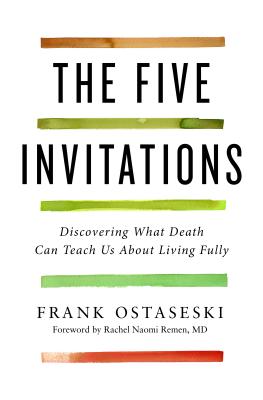
A very insightful book that I recommend to all.
" Our desires bind us to the wheel of suffering. Even though we know that they bring us pain, we cannot convince ourselvestorelinquishourgrip.AsFreudlikedtosay,thereisan “unbridgeable gap”1 between desire and satisfaction, a gap that isresponsibleforbothourcivilizationandourdiscontent. But Nasruddin’s perseverance is a clue to how impossible it is to abandon ship. He is an enlightened teacher, after all, not just a fool. Like it or not, he is saying, desire will not leave us alone. There is a hopefulness to the human spirit that will just not accept no for an answer. Desire keeps us going, even as it takes us for a ride. As Freud was also fond of saying, desire “presses ever forward unsubdued,”2 pushing us to find and make use of our creativity, propelling us toward an elusive but nonetheless compelling goal."
In his unself-conscious weeping, in his implicit acceptance of both the perils and the promises of longing, lies a hidden wisdom in relationship to desire’s relentless demands. Nasruddin makes no apologies for his desire; it persists unperturbed despite his apparent suffering. "
"I am drawn to this story because of the way it embodies both the disturbing and the compelling nature of desire. As a psychiatrist and psychotherapist, I am confronted every day with clients whose stories resemble Nasruddin’s. Over and over again, they engage in behaviors that from any rational standpoint they should abandon. Their frustrations spill out in my office like Nasruddin’s tears. I am tempted, at times, to respond as Nasruddin’s friends do. “Why not just stop?” I want to say to them. “Why not just throw in the towel?"
Apathy ruled. For want of desire, life’s vitality began to evaporate. The problem with denying any aspect of the self is that it persists as a shadow. Clearly, it is not possible to eliminate desire by pretending it is not there. It resurfaces, insistently, as Freud indicated in his famous phrase, “The return of the repressed.” With a regularity that has been mirrored in more traditional Western religious communities, those who believed they were stronger than their desires were proven wrong. As the French say, “Chassez le naturel, il revient au galop.” Chase away the natural, and it comes back at a gallop."
This is why the story of Nasruddin has such poignancy for me. As he defiantly indicates, there is more to desire than just suffering. There is a yearning that is as spiritual as it is sensual. Even when it degenerates into addiction, there is something salvageable from the original impulse that can only be described as sacred. Something in the person (dare we call it a soul?) wants to be free, and it seeks its freedom any way it can. This is one of the major insights to have precipitated out of my study of the psychologies of East and West. There is a drive for transcendence that is implicit in even the most sensual of desires.
Rather than treating it as the cause of suffering, desire is embraced as a valuable and precious resource, an emotion that, if harnessed correctly, can awaken and liberate the mind. In this way of thinking, desire is the human response to the discontent described in the Buddha’s First Noble Truth. It is the energy that strives for transcendence but, if it is to truly
accomplish its goals, the seeker must learn to relate to it differently. He or she must learn how to use desire instead of being used by it. In this sense, desire is the foundation for all spiritual pursuits."
"“The problem is not desire. It’s that your desires are too small.”3 The left-handed path means opening to desire so that it becomes more than just a craving for whatever the culture has conditioned us to want. Desire is a teacher: When we immerse ourselves in it without guilt, shame or clinging, it can show us something special about our own minds that allows us to embrace life fully."
" If we are out of touch with our desires, we cannot be ourselves. In this way of thinking, desire is our vitality, an essential component of our human experience, that which gives us our individuality and at the same time keeps prodding us out of ourselves. Desire is a longing for completion in the face of the vast unpredictability of our predicament. It is “the natural,” and if it is chased away it returns with a vengeance.
For in a certain way, desire does not know quite what to do with itself. It seeks union, possession or complete satisfaction, but never completely achieves it. As the Buddha recognized in his First Noble Truth and as Freud agreed many centuries later, there is a residual dissatisfaction in even the most satisfying experience. The object always disappoints."
"to certain teachings of Buddhist psychology, one of the routes to true happiness is to learn how to remove the filter of idealization that creates distorted mental images of our objects of affection. These distortions often lead to disappointment, because the actual reality can never live up to the idealized one. "
"