Cult Icon
2585 replies · 37566 views

wow!
--
Subjects that I've been interested in as of late
1. Game of Thrones, Vikings
2. History of the 10.Pz and 8.Pz Regiment, War in Hungary 1945
3. War in North Africa 1940-1943
4. Hellboy in Hell: I have mixed feelings about the end of this excellent folklore-based comic strip. It has high points but also drab points. The ending is very, very ambiguous but fitting.
http://readcomiconline.to/Comic/Hellboy-In-Hell
New interests, now that I've moved on from this:
1. Battle of Belorussia 1943-1944 : Glantz releases another breakthough tome. It is in the mail right now! I have a book that focuses on Operation Cobra (the breakthrough in Normandy) also coming in. Also, my second Rommel Biography.
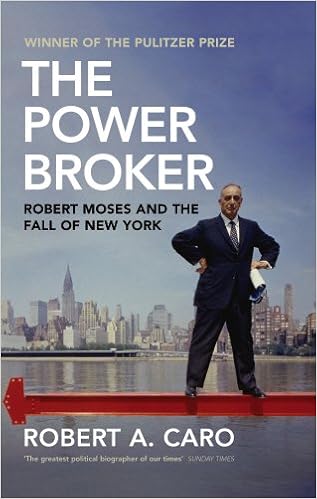
2. Robert A. Caro's books. The Power Broker and years of Lyndon Johnson I-IV. I've had them for years but have always struggled to get "into" them due to their great length (4,000 pages of dense reading), subject matter (not as interesting as military history and other subjects), and complexity. I get put off from the energy investment needed but at the same time, am always curious if they are as valuable to work through as professionals say. I have "Power Broker" on my to do list but I don't know if I'd ever get into it.
Interesting story

Beautiful!!!!!
 Master Biographer: Robert A. Caro
I think I will read his first book. Obama likes it, and people have told me that it's an essential part of learning about politics. It is taught in 251 political science curriculums.
My reading list:
- The Power Broker
-Years of Lyndon Johnson I-IV
Next, after completion:
-History of the 8th Panzer Regiment plus supplements
-Battle of Belorussia
-Battle of Caen
Some first rate Russian historians have released their books for the English market!:
Coming fall 2017:
Panzers East and West: The German 10th SS Panzer Division from the Eastern Front to Normandy Hardcover – August 1, 2017
Case Red: The Collapse of France Hardcover – November 21, 2017
Battle of the Odon
By Georges Bernage
Sep 2017


The Power Broker, notes;
"his brilliance and idealism would not take him to the top in the world of Yale, he made, within Yale, a world of his own, and a world, moreover, in which, in collegiate terms, he had power and influence.
He never went out for the Lit but he made himself an important member of the staff of a less prestigious publication. He never went out for a major sport but he was active in a minor one. He was never invited to join one of the better clubs but he was president of the lesser club he did join. And if he was not included in the more select social circles of the class, he created a circle of his own, a small coterie of persons with like interests, a coterie within which he was the acknowledged leader. The men in the coterie admired Bob Moses. The men he chose to be his friends were happy to be chosen."
"Unlike European cities, which also mushroomed in the Industrial Age but which had been built atop previous centuries' strong administrative foundations, America's had sprung into gianthood relatively overnight, often organized around nothing but the factory or the mill, and had no such tested governmental framework. What framework they did have was undermined by blatant corruption, their governments controlled by private interests and by political bosses who, with their Christmas baskets and everything the baskets symbolized, marshaled hundreds of thousands of ignorant voters into vast, seemingly impregnable political machines."

Interesting, I never knew that they made a movie about that.
I speed read the first 180 (out of 1160 pages) of the "Power Broker". I aim to speed read all 4,000 pages of Caro's books from a educational perspective. I would say that the books are way too detailed for those that don't have particular fascination with the topics so some of the contextual color can be quickly skimmed.
Robert Moses was one of the biggest infrastructure builders in world history (his infrastructure projects, accumulated in 44 years, totaled about 300 Billion $ in today's dollars). The money was taken from taxpayers, toll-payers, and private investors. The book is about how he was able to become a virtual socialist/soviet style minister and steadily subvert democracy and control 11 public posts. He built by robbing the New York taxpayer/tollpayer.
He had a Ph.D in Political Science and consistently won with his organizational planning, deal making and political maneuvering. He was finally able to centralize his power with various staffs and even buy off the media to silence any criticism of his dominion for decades. He tried to keep his public profile as quiet as possible. For decades, the public saw him as a great genius and public servant. Due to his power, Moses survived several governors and mayors, and was technically the most powerful individual in the state of New York. He had a personal security force of 200 personnel and only fell from power when the media slowly started to turn on him and his projects. After this happened, he was axed by Rockefeller. He was in his 80s at this point.
Notes (pg 1-180)
-Besides the primary and secondary research, Caro interviewed 255 individuals for this book.
- young Robert Moses is a scholarly but egotistical young man who believes in the power of great men (common in his time) and less so in free enterprise and democracy. He is an elitist statist who wants to make government less of a social parasite than it is known for. He gets a Ph.D in Poliscience (Yale, Oxford). He believes that government could be made more efficient, provided it be organized properly and lead by an intellectual elite like in the civil service of the UK. (the subject of his thesis).
-He becomes a gov't staffer and even gets a job as a public sector "efficiency expert". This job, (in the private sector it is called management consulting) naturally excites him and he makes as much noise as possible about his "gov't reform" strategy while working a gov't staffer. After years of work, he is fired and accomplishes nothing for his years of effort. He is ignorant of the practical side of politics (essentially his work threatened the jobs of other gov't employees). But this is sufficient to get him noticed by a local liberal politician, who hires him for a job and gives him practical training on how agency politics work.
-*This highlights the importance of luck and exposure in one's career- Moses got his Big Break by being contacted and hired by someone he never met eg. the importance of linkedin.
-He graduates from this experience to another political mentor, who eventually gives him his first real gov't post- a job near the governor. He sheds the idealism of his 30s and becomes more grounded in how to get things done in government, which involves bribes, corruption, and political games.
-Robert Moses learns that "there is no justice in the world, unless we make it".
"It was exciting watching how he maneuvered. If one was close enough to Smith, there was little one couldn't learn about the game of politics— the game that wasn't a game at all—and Moses was close enough. He could watch the Governor twist arms, offer incentives and drop, one by one, with matchless guile, the veils from in front of threats. Watching Smith banter with reporters, seeing how much time he devoted to winning their friendship, Moses learned how important the press was in politics. Seeing that Smith used the banter to cover up the fact that he wasn't telling the reporters anything he didn't want them to know, Moses learned how the press could be used.
He could learn to keep things simple. The Governor wanted no technicalities in his speeches: he himself, with the genius that made him the greatest campaigner of his time, reduced every argument to its most basic terms."
""Being close to Smith was exciting to Moses for another reason. For a decade, ever since he had entered public service, his mind had been teeming with ideas. But not a single one had become reality.
Now, for the first time, when Moses had an idea, he had a good chance of seeing it implemented. If something was wrong and he knew—just knew— exactly how to make it right, there was a real chance that it would be made right. Ultimately, he had learned through his experience with John Purroy Mitchel, it all came down to a question of power. An idea was no good without power behind it, power to make people adopt it, power to reward them when they did, power to crush them when they didn't. If he still had no position and no power of his own, if his only power was the confidence of one man, still, in Al Smith's Albany, when that one man was Al Smith, that was a not inconsiderable amount of power. "Executive support," he had learned, was the essential that one could not do without if one did not have power of one's own. Now he had that support"
"remembers that "when I first used to see Moses in Albany, before he had any power, he was a striking figure, dark and handsome, tall and gangly, striding down the corridors with those long strides of his, but he was withdrawn, he was within himself. But then, when Smith brought him up there, he began to be, quite suddenly and quite
noticeably, a lot more arrogant, stiff-necked and self-assertive." Belle Moskowitz's son, Carlos Israels, noticed the same transformation when Moses visited the Moskowitzes. "Now he attitudinized when he talked. He would lean back, cross his knees and hold his pipe in an affected attitude.""
-Robert Moses ends as the President of the Long Island State Park commission-thanks to years of service to the Governor.
I got through the first 100 pages (out of 2,700, lol) of Lyndon Johnson.
-Johnson was born of a fallen "Hill country" minor politician in Texas. His father struggled to support his big family after falling out of favor. Critical in his failings was his idealism (of being a man of the people) and refusal to engage in corrupt dealings or receive bribes from railroads, banks, and energy. However, he imparted in his boy knowledge about how politics works and a lot of political experience for such an early age.
-Lyndon's mother was a college-educated woman that was deeply interested in literature, art, and poetry...which took away from her responsibilities as a mother.


The years of Lyndon Johnson is easy to speed read
I think I will currently commit myself to the first 3 books and not read the 4th and TBA 5th. I might change my mind later.
That is 2,200 pages. I am up to pg 215, Volume I.
Caro's insane writing career
Notes, Moses up to pg. 225:
-Moses, upon receiving his new post, immediately uses public money to buy furnishings, chauffeur and a luxury car. This is charged to the public as "overhead". A great leap from a cubicle to the corner office..
-Bills are passed and bonds are sold - he has a budget now to build roads and parks. This is tens of millions of dollars in today's money.
-The first thing Moses does is to negotiate and buy off journalists and most importantly, the New York Times. The Times takes his side for the majority of his career. Moses postures the issue as the "greedy rich vs. the public" . He wins the propaganda war before it even starts.
-Moses seizes land from a collection of ultra-rich new york landowners with state power. The state overspends the private lawsuits in legal firepower and clogs up the machinery of justice. The ultra rich are forced to walk away and they lose their land. The governor, his patron, shields him from attacks.
-Moses knows that it is difficult for bureaucrats with jurisdiction over his projects to end them if he have already started. Like disarming a mine, by stepping on it. Politically damaging. So begins the tradition of vastly underestimating projected costs of public works.
-About Moses' growing arrogance...a great bit that happens all the time in real life:
"When the idealism died, the arrogance was already well rooted and strong. If it was given nourishment, it would expand. And power feeds arrogance. As Moses obtained power, therefore, the traits symptomatic of his arrogance became steadily more noticeable. The pattern's hue darkened.
His mother had always displayed—as a Madison House trustee and as a wife—a conviction of her own infallibility and a predisposition to impose her will on others, an unwillingness to listen to others, a burning impatience to see her solutions to problems implemented, to Get Things Done. Moses' imagination seemed most easily fired, as his mother's had been, by physical problems and physical solutions, problems that could be solved by construction, by the shaping of concrete and steel. And the resemblance in traits between mother and son went beyond that. As a staffer at the Bureau of Municipal Research, he had displayed the same dogmatism and the same impatience. Bob Moses had wanted his own way—and he had wanted it when he wanted it.
And now that he had power, he was going to see that he got it.
He had never wanted to listen to people who disagreed with him. Now, in the main, he didn't have to. "When he talked to you," recalls Leonard W. Hall, then a state assemblyman, "he'd just tell you what he was going to do. If you disagreed with him and tried to explain your feelings, or even started asking questions, he would cut right in, slash at you, without answering the questions, making you feel stupid for asking. And if you were talking to him on the phone, he'd just hang up on you. I remember talking to him on the phone and disagreeing with him about something and I was in the middle of a sentence and the damn phone was slammed down."
Notes, LBJ pg. 215
-LBJ grows up as an 'unusual' child- traits of an attention whore that is believed by Caro to be the result of his father's failure. He is very social and is prone to doling out flattery. Caro believes this as a result of deep insecurities and sadness over his family situation. He learns a lot of political skills from his legislator father but rejects his father's ideals and moral principles entirely, as his college behavior later showed.
-Caro tracked down and interviewed a large number of LBJ's classmates.
-LBJ literally establishes the politics on campus; this is implied to the result of his political father. LBJ goes to college with a unusually precocious political sense. LBJ has no qualms using blackmail, cheating, lying, and bragging to win and he does. He brown noses his way to a position where he lives at the college administrator's basement- rent free and is given a position where he can dole out on campus jobs to students. He wins some college posts and elections through aggressive social strategies.
-LBJ's nickname during his college years is "bull johnson"- as in "bullshit johnson". He is respected and hated on campus for his brown-nosing and ruthless ambition. He is an indifferent student but highly successful in his extra-curricular activities. He goes on to teach for a year and half, in which he excels at teaching a "debate/public speaking course".
-LBJ gets his big break by getting a call for a job as a congressman's aide. Apparently, unsolicited.
Moses pg. 260:
-Moses eliminates the 5 park commissioners, one by one and erases their existence from history by firing their park historian and hiring his own. He also removes all physical reminders of the past and replaces them with his name.
-he accomplishes them by rewriting the bylaws- due to his powers as a bill drafter.
"Politicians failed to grasp the new reality until too late. By the time they finally realized—one can see the realization growing in their correspondence of 1927 and 1928—that a new organ of state government was being created that would dispense yearly millions of dollars in construction contracts and thousands of jobs, Moses had the state park system too firmly in his control for it to be pried loose. He would remain president of the Long Island State Park Commission and chairman of the State Parks Council until 1962, and during the thirty-eight years of his reign over state parks these parks would, even as his activities expanded into other fields, be a constant source of power that he could use to expand his influence in those fields.
In politics, power vacuums are always filled. And the power vacuum in parks was filled by Robert Moses. The old park men saw beauty in their parks. Moses saw beauty there, too, but he also saw power, saw it lying there in those parks unwanted. And he picked it up—and turned it as a weapon on those who had not thought it important and destroyed them with it. Whether or not he so intended, he turned parks, the symbol of man's quest for serenity and peace, into a source of power.
Moses could have done nothing, of course, without Al Smith's constant support."
-Moses believes that without his learning and employment from Governor Smith.. he would have been doomed to a life of obscurity and failure as just another academic researcher.
-Moses had a father-son relationship with the Governor- with him as the son.
* A common theme: the key to rise to power is to maneuver oneself into an indispensable position or in a position where one can write their own rules.
"The Secretary of State was made responsible for accepting and filing incorporation papers, compiling election results and county-by-county enrollment figures, supervising the Hell Gate Pilots and the Wardens of the Port of New York and licensing auctioneers, private detectives, real estate salesmen, theater-ticket agencies and poolrooms.
Unexciting as these functions were, they all required manpower—and manpower was jobs and jobs were patronage. The Secretary of State would control a sizable harvest of the carrots that kept political workers straining at the ropes that pulled political machines"
-Moses, after defeating the commissioners, is made Secretary of State.





Moses:
-Learns how to use threats of resignation as a weapon to force the governor and others to give him what they want.
LBJ- pg. 284: Terrific analysis (derived from interviewing a great number of people). Reminds me of office politics!!!
-LBJ's psychology: an attention whore who has a pathological need to be loved by a large number of people. Without this, he falls into depression. He hungers for gratitude and giving gratitude. He ages incredibly fast and looks 15 years older than he is. This is likely due to his high stress, 100 hour weeks and his habit of working everyday and never taking a day off.
-LBJ strategically places himself to garner maximum knowledge. He has a passion for secrecy. He never tells anyone that he aims to become a Senator.
-LBJ already is engaged in bribery and corruption.
-LBJ gets himself a willing slave/yesman who works for him for 35 years. His aides, over the next decade, are chosen based on their servile nature. Dignity, pride, and individualism is not permitted. Looks for those that will surrender their personality. He works them incredibly hard.
-LBJ learns to borrow the Congressman's resources to vastly broaden his network of friends in two districts. He intentionally tries to make himself look as powerful, indispensable, and rich as possible while concealing his lack of wealth and formal power at the same time. His chief weapon is flattery and giving the impression that he loves everyone so much. He works hard to maintain his social network and eventually becomes known as a man to get 'free' help from by the powerful.
-Social tactic: "seizes their lapels and bent toward their faces, eye to eye".
-LBJ does not date young, pretty women but look for older woman, particularly those that are married to politicians or powerful men. He makes sure that he will marry rich.
-LBJ has zero political ideology- he takes all sides of issues whenever he needs to and courts individuals of opposite persuasions. He practices taking multiple sides of issues.
-LBJ, after a couple of years, becomes known as one of the best Congressional secretaries and rises above his peers in his ability and great resourcefulness in getting things done. He accumulates connections in 20 congressional districts. A critical fact: LBJ hires for the Congressman and awards his friends his jobs. These people become his information network.
-LBJ calls it his "nucleus of a political organization".
-LBJ's second yes man (LBJ's slave for 40 years) was 100% loyal to LBJ and was "coldly domineering" in his orders to underlings: habit to not give employees his full attention when talking to them.
"I've always wanted responsibility because I want the power responsibility brings".
LBJ pg. 368
- House speaker Rayburn's method: act taciturn/tight lipped. Took a lot of strength to keep his mouth closed as it was opposed to his nature.
-If Rayburn was turned down once, men learned that you would never again ask you for anything.
-Rayburn was one of the few non-corrupt politicians and died with only $15 grand in savings. He lived in the same 2 bed-room town house his entire life and had no family. "In politics an honest man does not get rich".
-If you were arguing with him and raising a point, he'd give you the same answer every time. *conclusive remark to show dominance.
-LBJ used Rayburn's loneliness and became his "professional son". This eventually led to advancement, but it took many years of being social with Rayburn. *Women do the same thing, and become professional daughters.
-LBJ's new slave imitated his closing, speaking style, and stance form childhood to adulthood.
-LBJ employed curses/bullying as he employed competition: to control men. He humiliated them in front of others. He also gave their opinions and suggestions short shrift. He wanted men that could work all day, everyday and without resentment. This is how he hired.
-The distinguishing characteristic of Johnson's slaves was not intelligence or talent, but fanatical loyalty , gratitude, and belief. Desperate people who took his abuse over the years and eventually their personalities morphed into sycophantic/servile types.
-Johnson played on their ambition, with him as the Leader who was destined to win. He brought them to his home, and made them feel like they were part of his team, part of his family. He also frequently promoted their cause as something worthwhile. He pours out enthusiasm and overwhelms his slaves with the spell of a holy duty.
-Curses his men, then removes the curses with hugs. Compliments were infrequent but as extreme as the far more frequent personal attacks. The effect is that the rare compliments effected his men greatly and made them feel like they were needed.
-Jokes had an extreme edge- the point of which was like everything else: Where Johnson could display his dominance over his men.
-Observing his men at work, he assessed their personalities and potentialities. He could dispense with those that were not suited to his purposes. LBJ weeded them out to a 'core cadre' of 40 men with various talents.
-LBJ found a speechwriter and a public relations man.
-"he had spent four years learning about which men to talk to and what to say to them."
*Intro to volume II, Means of Ascent:
-"in his ascent displaying not only a genius for discerning a path to power but an utter ruthlessness in destroying obstacles in that path, and a seemingly bottomless capacity for deceit, deception and betrayal. Once he was in Congress, these traits were accentuated rather than softened—but along with them there was displayed a rare gift for mobilizing the powers of government"
-"And while he had previously done much for his district—had been not only a diligent and energetic but a creative representative—now, with his programs in place and being carried forward by an efficient staff, he implemented no
significant new programs. "
-"He grabbed for money as greedily as he had grabbed for power, and his financial rise was as rapid and spectacular as his political rise had been. At the close of the first volume of this biography, Lyndon Johnson had less than a thousand dollars in the bank. By the end of this volume, he is telling intimates that he is worth a million, a substantial fortune at the time.
That growth, too, will continue, as the story continues. When, in 1963, Lyndon Johnson became President, his “family’s” assets totaled perhaps $20 million. This son of an impoverished father from the impoverished Texas Hill Country, who for most of his life had no stated sources of income except his governmental salary, entered the Oval Office as possibly the richest man ever to occupy it."
-"the role and significance of favoritism and influence "
Moses pg. 362
-Judge Seabury had a "pontifical air" (nickname was Bishop) and did not like Moses because he was not deferential to him. Moses would not call FDR "governor" because he did not like him- just "Frank".
-Moses is seen as indispensable as a virtue of his ability to get "highly visible" things done through gov't- so he is highly valued by the mayor and governor as a political chip to boost their own political power and electoral chances. Moses is now in control of 7 government agencies.
LBJ on the campaign trail:
-Tactics in establishing rapport: He memorized particular things about everyone he met. Then he had a habit of treating people that he barely knew (Eg. 10 years ago) like they were close friends. He made physical displays that showed that he was "excited" to meet them. Then he would engage in small talk about "exciting" old events. Ask about family and friends.
-Rapport would be cemented with a physical display of affection. Men: handshake. Women: Hug and kiss.
-"Will you give me a helping hand:? Then ask- Oh I know so and so...then a connection would be made.
- Project a "friendliness and sincerity, a deep love of the people". Create an "instant empathy".
-Practice, critique, and talk to oneself out-loud between meetings.
-After becoming a Congressman, LBJ, in just 24 hours started to make friends again with his former political enemies. He had thick skin and no ego in these tasks; even when insulted he took quick steps to mend relations. This involved trading political favoritism and openness to future associations.
-"No effort was spared to win the friendship". Johnson was "so humble" that "he made you feel like he was dirt under your feet".
-Johnson was disarming current and future opponents. He suppressed pride, embarrassment, and the natural desire to gloat over defeated enemies in an instant. "These were not luxuries that he would indulge himself in".
LBJ p.445
-Tactic: LBJ displayed a talent for making a favorable impression on older men who possessed power and making it with extreme speed. "5 minutes"
-"smiling and deferential", he could say what they wanted to hear before they knew that this was what they wanted to hear. "follow someone's mind around, and get there before the other fellow knew where it was going".
-parties: storyteller, joker, "life of the party".
-"He possessed an amazing store of knowledge about individual Congressman and their districts. "working to insert friends and allies into key positions in gov't agencies".
-Johnson ran minor favors/chores for them but in return they gave him much, much more. He did not reveal his plans for what they gave him.