Cult Icon
2585 replies · 37594 views
There's an excellent section from "How Emotions are made" that discusses how there is no such thing as "separating" emotion from reason (eg. the archetype of a Judge). This is called the theory of affective emotions. It is a cliche, a myth- another piece of contemporary "wisdom" that should bite the dust.

On 8/3/2018 at 12:18 PM, Cult Icon said:
This happens to me all the time with WW2 films and shows- I see the errors everywhere.
"king rat" by james clavell takes place in a japanese p.o.w. camp near singapore. it stems from personal experiences of the writer, but eschews first-person narrative, featuring imaginary characters. i found it more interesting than "papillon". clavell's other books are good too.
On 7/27/2018 at 9:19 PM, Cult Icon said:There's an excellent section from "How Emotions are made" that discusses how there is no such thing as "separating" emotion from reason (eg. the archetype of a Judge). This is called the theory of affective emotions. It is a cliche, a myth- another piece of contemporary "wisdom" that should bite the dust.
nowadays it is considered as an established theory rather than a hypothesis.
On 8/5/2018 at 8:41 AM, 17 Moments of Spring said:
"king rat" by james clavell takes place in a japanese p.o.w. camp near singapore. it stems from personal experiences of the writer, but eschews first-person narrative, featuring imaginary characters. i found it more interesting than "papillon". clavell's other books are good too.
do you like Shogun? I remember the "Bridge from the river Kwai"
On 8/5/2018 at 8:46 AM, 17 Moments of Spring said:
nowadays it is considered as an established theory rather than a hypothesis.
It makes sense in a way- as common sense. Later on in that book, she talks about the reflex violence - largely caused by people who had strongly embedded stereotypes in their heads. Then, when a situation occurred, their minds first "visualized" the situation as it "should be" out of a protection for themselves, and then they acted inappropriately.
I finished listening to this recently:

Like Altered Traits, I can't really recommend it because it is mostly a narrative history. But the author was one of the leaders of establishing "Affective neuroscience" at Harvard and the book (mixed with a general intro to the field and a history of how it came to be) , like altered traits, covers the brainscans of spiritual experts. In this case it's Tibetian monks rather than Goleman's Hindu Yogis.
13 hours ago, Cult Icon said:
do you like Shogun?
yeah, i saw the series and read the book several times.
QuoteI remember the "Bridge from the river Kwai"
i saw the movie but didn't read the book, interesting that boulle wrote "planet of the apes" too.
On 8/7/2018 at 4:24 PM, 17 Moments of Spring said:
yeah, i saw the series and read the book several times.
i saw the movie but didn't read the book, interesting that boulle wrote "planet of the apes" too.
Did you see "war for the planet of the apes?" I thought the design concepts were pretty interesting.
I just did a back-of the napkin inventory and I think I'm mostly tapped out with what I sought to learn from psychology. Just a few books on grief and survivor psychology left; literally I've done the core 80% of what I wanted to do and the rest is additional info that can be obtained by browsing.
With WW2 I have about ~50 books I want to read before I'm done with that the core "90%". The rest would be new releases and additional info.
How is your journey with Psychology going?
I am currently in the process of listening to NYU's "How to publish your book" course. It is very good and I'm learning important things on how to commercialize creative work.
https://www.amazon.com/Wars-Summit-Mountains-Cambridge-Histories/dp/1108424627
At War's Summit: The Red Army and the Struggle for the Caucasus Mountains in World War II
Breaking new ground: This is one of the most important campaigns of WW2 which was the high water mark of the Axis in WW2 and cost 628,000 casualties- but there are only two major english language sources. A translation of Tiecke's rather dated "Caucasus and the Oil" and some 130 pages from Glantz's Stalingrad . Trilogy. Besides that, there is a short booklet from Osprey. I read all these materials and this campaign is one of the most fascinating ones.
Just got the new book!
Another WW2 topic that I want to tackle: III SS PzK and the battle for Narva, Courland, Berlin.
On 8/9/2018 at 4:02 AM, Cult Icon said:
Did you see "war for the planet of the apes?" I thought the design concepts were pretty interesting.
I just did a back-of the napkin inventory and I think I'm mostly tapped out with what I sought to learn from psychology. Just a few books on grief and survivor psychology left; literally I've done the core 80% of what I wanted to do and the rest is additional info that can be obtained by browsing.
With WW2 I have about ~50 books I want to read before I'm done with that the core "90%". The rest would be new releases and additional info.
How is your journey with Psychology going?
i saw only the original "planet of the apes" movie from 1968.
crisis psychology is a rather broad field, treating developmental crises (e.g. adolescence, retiring) and accidental crises (e.g. bereavement, catastrophes). i have read interesting books about crisis in general, and particular areas (e.g. divorce, mourning) as well.
http://dustinkmacdonald.com/crisis-theory-types-crisis/
i have half a bookshelf psych books to read, and a lot of e-books too. these days i read a book about evolutionary pschology.
On 8/11/2018 at 6:38 AM, 17 Moments of Spring said:
i have half a bookshelf psych books to read, and a lot of e-books too. these days i read a book about evolutionary pschology.
what book are you reading?
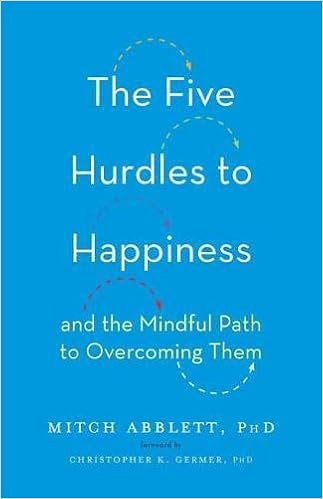
I personally enjoy listening to audiobooks on mindfulness (self compassion, stress/anxiety reduction, happiness). They say that you should meditate one hour a day but so far the only thing that produces results is walking outside with the audio on. I find that I am definitely a lot more mindful and enjoying myself when I am doing this, and the stresses kind of fade a way in an incremental way.
Oddly enough, the guided mindful practices haven't done much for me but the lectures on mindfulness tend to shift my attention/perspective into a slightly more transcendental state- it clears my head and I'm functioning better for a day. I have not explored the audios done by buddhists but only the PhD psychotherapists.
It was raining heavily yesterday and I listened to this while walking and found the experience of walking for 45 minutes surprisingly enjoyable and I was in a good mood for the remains of the day and into the next:
44 minutes ago, Cult Icon said:
what book are you reading?
"rise and glory of the woman"
https://www.goodreads.com/book/show/4925868-a-n-felemelked-se-s-t-nd-kl-se
https://en.wikipedia.org/wiki/Tom_Scharpling
I read an interview with Tom Scharpling and I felt that he has some good points to talk about legacy. I believe that untold millions of people have framed their lives around achieving a legacy and have had a miserable attitude for most of their life. You have cosmically destructive political ideologies like nazism that was based on creating a new world today for "future generations" no matter what horrific things they forced themselves to do.
These miserable people may or may not have achieved their greatest goals but that victory was bound to very short lived- and I'm talking hours and at most, weeks. To live like this is a lie, and in the end it feels like one has wasted their life. I remember my first big win- the high lasted no more than 2 weeks and my feelings went downhill. I wonder if that's all there was to life with the work put into it infinitely greater than the sum total of the feelings.
-Appreciate your current experiences or else you'll never be happy. This is absolutely correct.
- it's "fool's gold" to worry about one's legacy because it is in fact the type of thing a person doesn't have control over. People who were once enormous in the culture are now mean almost nothing. The concept of "future generations" is fool's gold. There are best selling authors that didn't stand the test of time while artists and authors that didn't sell are now revered. Legacy is out of your hands as the world moves on.
-Having your work valued after you're dead- what's the purpose of this? It's not even that important that your work is valued NOW- on some level. All that matters is that it fulfills you to the highest level and hopefully you make money & connect with people.
On 8/14/2018 at 5:09 PM, 17 Moments of Spring said:
"rise and glory of the woman"
https://www.goodreads.com/book/show/4925868-a-n-felemelked-se-s-t-nd-kl-se
is this good?
What are your favorite psychology books so far?
I'm starting to read "Grieving the Death of your mother".
Prior to this (related subject), I listened to "Grief works", "Dead Mom's Club" and "The Orphaned Adult". And maybe something else but the title eludes me as of this moment. I found Grief works the most enlightening in a general sense as it examines many different types of grief. Dead Mom's Club is a mildly humorous, very sad, and vividly written account reflections on the death of the author's mother. It is a example of the emotions one goes through when and after their mother dies. The Orphaned Adult was also good but I don't remember much that was specific.
17 hours ago, Cult Icon said:I'm starting to read "Grieving the Death of your mother".
Prior to this (related subject), I listened to "Grief works", "Dead Mom's Club" and "The Orphaned Adult". And maybe something else but the title eludes me as of this moment. I found Grief works the most enlightening in a general sense as it examines many different types of grief. Dead Mom's Club is a mildly humorous, very sad, and vividly written account reflections on the death of the author's mother. It is a example of the emotions one goes through when and after their mother dies. The Orphaned Adult was also good but I don't remember much that was specific.
i liked liked this one:
https://daimon.ch/catalog/product_info.php?products_id=5613
it's related to the concept of "posttraumatic growth"
https://en.wikipedia.org/wiki/Posttraumatic_growth
QuoteWhat are your favorite psychology books so far?
i don't have fave books, only fave authors: c. g. jung, carl rogers, victor frankl, eric berne, m. scott peck are the ones i can think of now.
recently i've started to like the material of jordan peterson i found online, interestingly he seems to be the follower of jung.
There can be no knowledge without emotion. We may be aware of a truth, yet until we have felt its force, it is not ours. To the cognition of the brain must be added the experience of the soul.
— Arnold Bennett
The intellect without the emotions is like the jockey without the horse.
On 8/20/2018 at 3:32 PM, 17 Moments of Spring said:
i liked liked this one:
https://daimon.ch/catalog/product_info.php?products_id=5613
don't have fave books, only fave authors: c. g. jung, carl rogers, victor frankl, eric berne, m. scott peck are the ones i can think of now.
recently i've started to like the material of jordan peterson i found online, interestingly he seems to be the follower of jung.
Thanks for the recommendation.
I never read those authors except for Frankl's "Man search for meaning". I learned a lot about Jung through the courses but not through reading his books.
looks amazing! Way better than Doom reboot.
Red Dead looks like it be a very good game.

I never played Red Dead because it was exclusive to consoles and I am a PC gamer. 
@SympathysSilhouette leaks on the new Witcher TV series (2020)
<___base_url___>/topic/64464-the-witcher/?do=embed