Cult Icon
2585 replies · 37577 views

18 hours ago, Cult Icon said:This film is a 5 out of 5 movie. My personal enjoyment of the film was more like 4 out of 5.
Good review. I quit trying to review because I could never be so clear. Also, I have a hard time reviewing without giving away spoilers.
I quoted the sentences above because it reminded me of something. I was talking with someone about my favorite movies from last year and I said something like "Movie X is my favorite from last year, but movie Z is probably the best movie from last year". The person I was talking to could not accept the idea that the two could be separate. I guess your favorite should be the one you think is best, according to this person.
(not sure why I thought of that)

Storming the Reichstag and the Flag Raising
On 7/25/2017 at 9:30 AM, jkjk said:
Good review. I quit trying to review because I could never be so clear. Also, I have a hard time reviewing without giving away spoilers.
I quoted the sentences above because it reminded me of something. I was talking with someone about my favorite movies from last year and I said something like "Movie X is my favorite from last year, but movie Z is probably the best movie from last year". The person I was talking to could not accept the idea that the two could be separate. I guess your favorite should be the one you think is best, according to this person.
(not sure why I thought of that)
thanks
I thought of No Country for old Men. It's a special film but I didn't enjoy it up to that level because of the subject matter.
I subtracted -1 from my personal enjoyment of Dunkirk because 1. the soundtrack was very "Hitchcock" ish, which was better than silence I guess but I'm not a fan. And it is present throughout the duration of the film. 2. The biggest factor: I like stories with strong character development 3. Nolan's prop/saturation choice. There is minimal CGI and less saturation of props/extras, unlike most war films, so it pushes one away from the historical aspect.
But Nolan knew this of course and made intentional decisions.
I definitely need to see Dunkirk again in under to understand it more. Like a lot of Nolan films, it's overwhelming and difficult to fully process at the first go. A lot of things are missed due to the cinematic concentration. This might be his most skillfully shot movie and is clearly distinct from the ho-hum movies out there. A lot of shots are very unique and I've never seen directors execute these techniques before.
I think I'm going to do a full review for
Luna Bijl and Kirsten Kraph Liljegren!
*stories pull, facts push
I'm reading the classic study "Love and Limerance". I'll be posting interesting excerpts.
I've been in Limerance for about three years of my life.
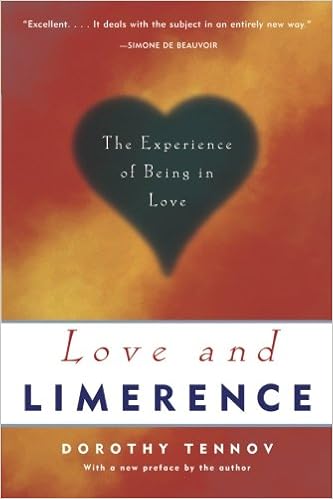
"I want you.
I want you forever, now, yesterday, and always. No matter where I am or what I am doing, I am not safe from your spell. At any moment, the image of your face smiling at me, of your voice telling me you care, or of your hand in mine, may suddenly fill my consciousness rudely pushing out all else."
"The pain of one love seemed only to cease with the advent of the next..."
“I was always more or less in love. Even when the man showed little interest, I would find myself totally involved. It wasn’t as painful as it probably sounds, because whenever I knew I would see him, even if only at a public gathering, I would spend my time imagining things that might happen and doing everything I could think of in the way of preparation—hairdressers, shopping for clothes, trying out a new lipstick. Those activities made me feel really happy in a way. Sometimes I was happier when something might happen, like when Bill might be at the skating rink on Saturday night—than when I was actually with whichever man was ‘right’ at that time.”"
"Describing the intricacies of romantic attachments to Helen was like trying to describe the color red to one blind from birth. “It doesn’t make sense,” she would say. “I simply don’t understand how anyone could feel like that, how anyone could be so important to another person.” She described her confusion over the strange “positive” behavior of persons in love with her. Their claims of ecstasy were as incomprehensible as was their obvious suffering. At one point she consulted a psychotherapist, who assured her that if she were only able to conquer her “neurosis,” love would some day come to her as to others. That experience left her feeling no better, only more perplexed."
"You suddenly feel a sparkle of interest in somebody else, an interest fed by the image of returned feeling. Maybe the eyes lock. The eyes, as we shall see again and again, are so important in limerence that they, not the genitals or even the heart, may be called the organs of love. In any case, the beginning is a transformation that is sometimes so distinct that the French use the term coup de foudre, or thunderbolt.
Sometimes, on the other hand, limerence sneaks up on you. At the time, you insist that it has not in fact occurred, and it is only later, in ever repeated retrospection, that the moment is recognized for what it was"
I had similar experiences:
"“Dr. Ashton had remained in my office after the faculty meeting, apparently writing out some of her thoughts. I thought absolutely nothing of it at the time except to note, in an entirely detached manner, the way one regards a painting or an impressive landscape, that she was an attractive woman and we were quite fortunate to have her as a new addition to the department, not only because of her superb professional credentials but because of the aesthetic uplift she provides as well. I was amused at the thought but that was all. I was much more interested in her research findings than in the way the sunlight caused those little sparkles in her hair. (Obviously I had noticed them.) And I was rather taken by the intensity of her concentration as she wrote. That was all. I mean I wasn’t actually staring at her."
"“Suddenly, Dr. Ashton—Elena her name is—looked up and seemed startled to find herself the only leftover from the meeting. She flushed a bit and gathered her things saying that she hoped she had not kept me. Then just before she went out, she looked at me and smiled! It was that smile and that look that started the whole thing off, and I still find the whole thing embarrassing to speak of; but I had this flash, this thrill, a running sensation of excitement, and I don’t even remember what I said. It was not, and I emphasize, it was not a matter of actually believing either then or now that she had on that occasion deliberately delayed her departure or had any romantic ideas of me. It was ridiculous to think anything at all, but the fact was that I felt strongly at the time, even that first time, that some spark of communication had passed between us and that it was communication of a very personal and delightful sort. But I forgot it. By the time I had the publishers on the line, Dr. Ashton was entirely out of my mind, at least for the moment. It was only much later that I recognized that that smile had actually been the beginning.”"
"A constellation of features constitute an experience that has a certain “wholeness” about it. One thing is certain. Limerence is not mere sexual attraction. Although something you may interpret as sexual attraction may be, or seem to be, the first feeling, sometimes nothing you would label sexual interest is ever consciously felt. Sex is neither essential nor, in itself, adequate to satisfy the limerent need. But sex is never entirely excluded in the limerent passion, either. Limerence is a desire for more than sex, and a desire in which the sexual act may represent the symbol of its highest achievement: reciprocation. Reciprocation expressed through physical union creates the ecstatic and blissful condition called “the greatest happiness,” and the most profound glorification of the achievement of limerent aims."
Falling in Love, a wonderful description of the experience. lots of Oxytocin and other chemicals are being released in the brain:
"After our first night together, I woke up with this strange and wonderful feeling like nothing describable or nothing I had ever felt before. Problems, troubles, inconveniences of living that would normally have occupied my thoughts became unimportant. I looked at them over a huge gulf of sheer happiness. I even enjoyed the prospect of dealing with them—with Rick. The landlord had given me notice and the bank loan had not gone through, and I could not bring myself to care! Whatever happened, it would be wonderful somehow.
“My delight in simply existing eclipsed everything else, and I literally could scarcely feel the ground as I walked. In some ways, my perceptions grew stronger. Colors seemed more brilliant. The warmth of the sunlight on my arm as I drove to work was so acutely pleasurable that I marveled at never before appreciating it. I relived our moments of intimacy as I drove—the loving pressure of Rick’s arms around me, the softness of his lips, and, most of all, his eyes. His look was an embrace.
“I could recall every word he had said, even the most ordinary things. I glowed and the world glowed back at me. When I stopped for a red light, I waved at children playing in the street and they waved back. It was as if they somehow shared my experience, almost as if in some way, they—everyone—knew.
“At the office, I could hardly keep from shouting out how deliriously happy I felt. The work was easy; things that had annoyed me on previous occasions were taken in stride. And I had strong impulses to help others; I wanted to share my joy. When Mary’s typewriter broke down, I virtually sprang to my feet to assist. Mary! My former ‘enemy’! No one was an enemy anymore! My affection included the universe. I loved every single creature. A fly landed on my desk, I hadn’t the heart to brush it away.”
Limerence may begin as a barely perceptible feeling of increased interest in a particular person but one which if nurtured by appropriate conditions can grow to enormous intensity. In most cases, it also declines, eventually to zero or to a low level. At this low level, limerence is either transformed through reciprocation or it is transferred to another person, who then becomes the object of a new limerent passion. Under the best of conditions, the waning of limerence through mutuality is accompanied by the growth of the emotional response more suitably described as love. In either case, as the poets have acknowledged, the state is an inconstant one.
Limerence has certain basic components:
• intrusive thinking about the object of your passionate desire (the limerent object or “LO”), who is a possible sexual partner
• acute longing for reciprocation
• dependency of mood on LO’s actions or, more accurately, your interpretation of LO’s actions with respect to the probability of reciprocation
• inability to react limerently to more than one person at a time (exceptions occur only when limerence is at low ebb—early on or in the last fading)
• some fleeting and transient relief from unrequited limerent passion through vivid imagination of action by LO that means reciprocation
• fear of rejection and sometimes incapacitating but always unsettling shyness in LO’s presence, especially in the beginning and whenever uncertainty strikes
• intensification through adversity (at least, up to a point)
• acute sensitivity to any act or thought or condition that can be interpreted favorably, and an extraordinary ability to devise or invent “reasonable” explanations for why the neutrality that the disinterested observer might see is in fact a sign of hidden passion in the LO
• an aching of the “heart” (a region in the center front of the chest) when uncertainty is strong
• buoyancy (a feeling of walking on air) when reciprocation seems evident
• a general intensity of feeling that leaves other concerns in the background
• a remarkable ability to emphasize what is truly admirable in LO and to avoid dwelling on the negative, even to respond with a compassion for the negative and render it, emotionally if not perceptually, into another positive attribute.
"Several persons described the rejections they encountered when “throwing caution to the wind” and “wearing their hearts on their sleeves,” they took the honest course of immediate, open declaration. Said one:
“I should have held back. I can see that now all too clearly."
"Indeed, too early a declaration on the limerent’s part or, on the other hand, too early evidence of reciprocation on LO’s part may prevent the development of the full limerent reaction. Something must happen to break a totally positive interaction. Not that totally positive reactions are without highly redeeming features in themselves; it is only that they stop the progression to full or maximum limerence."
"Every once in a while she seemed to search out my eyes, and just before they left, she gave me this long look which could only mean that her interest had not died completely just because Gerald had arrived on the scene.”"
"That look was the flicker of hope that sustained, and even intensified, Teddy’s limerent response to Sue; without Gerald’s presence and the threat he posed, the initial pleasantness might have remained just that.
The degree of objective attractiveness necessary to initiate limerence varies considerably. The relative admiration you feel for your LO as compared with others may be based on peripheral, even trivial factors, which, however, like the moment of initial interest, tend to be remembered."
"What features of LO are truly important? Can you become limerent about someone who is objectively not attractive? Although my interviewees tended to speak in glowing terms of their LOs, physical attractiveness was not always mentioned.
“I had known Phil for almost seven years without ever thinking of him as more than a friend, and not even as a close friend. But I had a good feeling about him as far as it went. He was cheerful and dependable—the kind of person you felt you could go screaming to if the world started crashing in. Knowing him, even slightly, was something of a comfort, Phil was what you’d call a natural leader. Everybody looked to him whenever they didn’t know what to do."‘Lets go see what Phil thinks,’ they’d say. I thought that was a marvelous trait. It really impressed me.”
"The good qualities endlessly revisualized in the limerent consciousness are not pure inventions, but as the salt crystals on a twig magnify the attractive features of the twig,
. . . the original naked branch is no longer recognizable by indifferent eyes, because it now sparkles with perfections, or diamonds, which [others] do not see or which they simply do not consider to be perfections.10
Similarly you may seize on objectively trivial aspects of LO’s appearance or behavior—a look in the eye, a way of walking, a hesitation in speech or a dialect, an article of clothing—and imbue it with meaning. LO’s eyes reflect “intense concentration,” “impassioned concern for the welfare of others,” “empathie sorrow,” “lively wit,” “extreme intelligence,” or “deep understanding.” LO’s walk suggests “gaiety,” “seriousness of purpose,” or “savoir faire.” LO’s manner of speech may seem aesthetically pleasurable; the way LO is attired reveals favorable aspects of character that might range from sophistication to disdain for current fashion or else it might suggest or reveal pleasing aspects of the underlying anatomy. However LO may appear to others, the limerent bias brings forth the positive and plays down the unfavorable.
Not only does limerence overemphasize and exaggerate what is actually positive, but neutral aspects of the person are perceived as charming and delightful.
"Once I fall, really fall, everything about her becomes wonderful, even things that would otherwise mean nothing at all are suddenly capable of evoking curiously positive reactions. I love her clothes, her walk, her handwriting (its illegibility would seem charming, or if it were clear and readable, that would be equally admirable), her car, her cat, her mother. Anything that she liked, I liked; anything that belonged to her acquired a certain magic."
"
idealization differs from crystallization in its implication that the image is molded to fit a preformed, externally derived, or emotionally needed conception. In crystallization, the actual and existing features of LO merely undergo enhancement. Idealization implies that unattractive features are literally overlooked; in limerence these features are usually seen, but emotionally ignored. In a study of 2,000 couples, two-thirds of the men and three-fourths of the women were able to indicate their partner’s character defects, physical defects and bad habits"
"
INTRUSIVE THINKING
Limerence is first and foremost a condition of cognitive obsession.
**Female sexual attraction is highly variable and is highly biased on what is happening in the short-term.
OK Cupid:
set up ~40,000 dates in 2015
of these, ~3,000 resulted in long term relationships
of these, 200 weddings
Those seem like good ratios. It's too early to know if the marriages will be successful and last.
16 minutes ago, jkjk said:Those seem like good ratios. It's too early to know if the marriages will be successful and last.
There's another 2015 study that concluded that in the USA, around 3/4ths of relationships were obtained via three sources: (Bars, Friend/Family connections, Online dating). Each took around 25% share.
This book is really excellent.
"Limerence is first and foremost a condition of cognitive obsession. Stendhal wrote:
The most surprising thing of all about love is the first step, the violence of the change that takes place in [the] mind. . . . A person in love is unremittingly and uninterruptedly occupied with the image of [the] beloved."
"During the earliest stages of limerence, those who are experiencing it may sense only a general longing for love and may vacillate between two or more possible LOs. For example, Isabella, one of my interviewees, estimated that she spent almost two-thirds of her time desiring a “love.” But the kind of speculation this desire produced was spread over five different men. She was “very attracted” to both Gary and Bill and thought she might be falling in love with either of them. She also admired Jim and Al in a special way, although she was not really attracted romantically. She was somewhat more interested in Lou. A week later, after a special moment with Bill, her limerence for him developed fully. Bill was now the only one of the five to occupy her mind, and he did so almost totally. She no longer thought of the others as potential partners; in fact, she rarely thought of them.
Just as all roads once led to Rome, when your limerence for someone has crystallized, all events, associations, stimuli, experience return your thoughts to LO with unnerving consistency. At the moment of awakening after the night’s sleep, an image of LO springs into your consciousness. And you find yourself inclined to remain in bed pursuing that image and the fantasies that surround and grow out of it. Your daydreams persist throughout the day and are involuntary. Extreme effort of will to stop them produces only temporary surcease."
"“This obsession has infected my brain. I cannot shake those constantly intruding thoughts of you. Every thought winds back to you no matter how hard I try to direct its course in other directions.”
Very interesting:
Kung Fu movies needs another star like Bruce Lee
"The connections need not be logical or even close. It is not the “other thing” that reminds one of LO, but rather that the perpetual presence of LO in your head defines all other experience in relationship to that presence. If a certain thought has no previous connection with LO, you immediately make one. You wonder or imagine what LO would think of the book in your hand, the scene you are witnessing, the fortune or misfortune that is befalling you. You find yourself visualizing how you will tell about it, how LO will respond, what will be said between you, and what actions will—or might—take place in relation to it. As you engage in the ordinary tasks that constitute your daily activities, you invent intricate scenarios for possibly upcoming events. Endlessly, you plan the next encounter going over every detail of exactly what you will do in order to improve your image in LO’s eyes. You imagine LO’s reaction and your further responses."
You hope and you anticipate. You recall with vividness what LO said and did. You search out alternative meanings of those behaviors. It’s as if each word and gesture is permanently available for review, especially those which can be interpreted as evidence in favor of “return of feeling.”
In his limerence, Larry’s preoccupation was almost 100 percent. Only the most habitual actions were easily accomplished. It was near torture to wrench his mind free of Margaret in order to deal effectively with his work. As soon as he could, he returned to his limerent mooning. He sought out moments of solitude in which he could pursue his daydreams undisturbed.
The compulsive daydreams that dominate the limerent’s consciousness are clearly directed toward a goal. You imagine a possible meeting, the conversation that might take place and yourfantasies all lead toward a moment of mutuality, of the expression of returned feelings, and it is this and not any particular action that is the goal or “moment of consummation” of the limerent fantasy.
Because limerent fantasy depends on how you actually perceive reality, its content, which leads up to and renders plausible the ecstatic finale, varies not only from person to person, but from day to day as new knowledge becomes available."